
Pacifier Teeth: How Prolonged Pacifier Use Affects Your Child's Bite
What 'pacifier teeth' really means, why it happens, and why stopping early usually lets the bite recover.
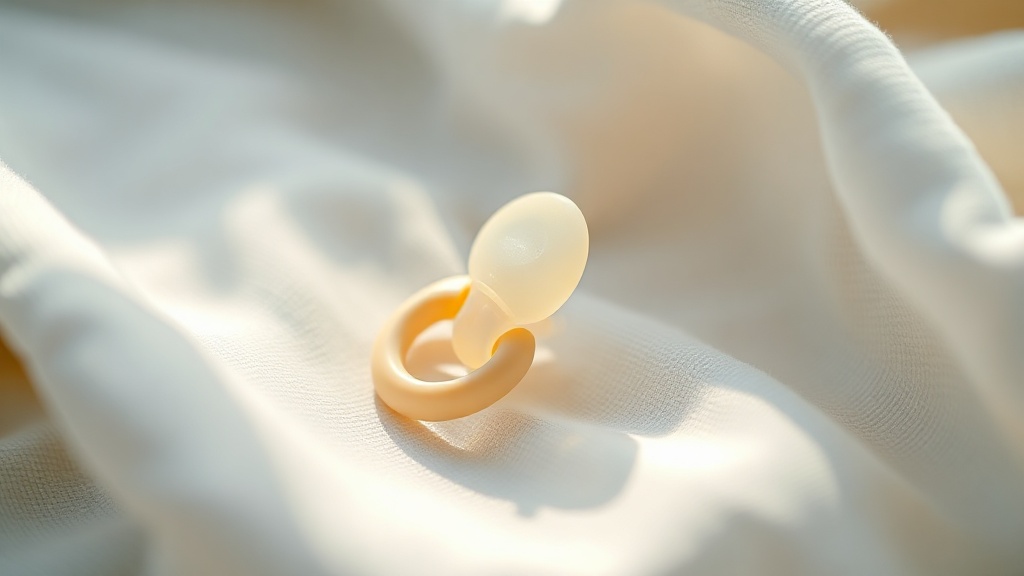
- 'Pacifier teeth' is not a disease - it is the way months or years of steady sucking pressure can gently reshape a young child's bite, most often as an anterior open bite (the upper and lower front teeth no longer meet) or a posterior crossbite (a narrowed upper arch).
- It is dose-related: how long the habit lasts and how often it happens matter far more than the pacifier itself. Daily and all-night use over years is what leaves a lasting mark.
- In pooled data, daily pacifier use was linked to about 10 times higher odds of an anterior open bite, and using a pacifier for a year or more raised the odds of a posterior crossbite.
- The reassuring part: when the habit stops early - ideally before the permanent front teeth come in - an open bite often improves or corrects on its own as the teeth keep developing.
- A thumb is usually harder on the bite and harder to stop than a pacifier, because you cannot simply take it away. Either way, gentle weaning beats force - never shame, restrain, or tape a child's mouth.
Prolonged pacifier or thumb sucking can change a child's bite by tipping the front teeth apart into an open bite and narrowing the upper jaw into a crossbite. The effect depends on how long and how often it happens. If the habit stops early - by about age three - the bite often recovers on its own, so gentle weaning is the goal.
What 'pacifier teeth' actually means
When a child sucks a pacifier or thumb, the nipple sits between the upper and lower front teeth while the lips and cheeks squeeze inward. Held there for a few minutes, this does nothing lasting. Held there for hours a day across months and years, though, it becomes a gentle but relentless mould. Two changes show up most. First, the upper front teeth get tipped forward and the lower ones held back, and because something is always propping the front of the mouth open, the top and bottom front teeth stop meeting when the child bites - an anterior open bite, a visible gap at the front even when the back teeth are together. Second, the constant inward squeeze of the cheeks during sucking, combined with the tongue resting low instead of against the palate, can narrow the upper arch so that it no longer sits correctly over the lower teeth - a posterior crossbite. The key idea is that this is pressure over time, not damage from any single moment. Baby teeth sit in soft, growing bone that responds to steady force, which is exactly why the habit can move them - and also why stopping it early gives the bite room to bounce back.
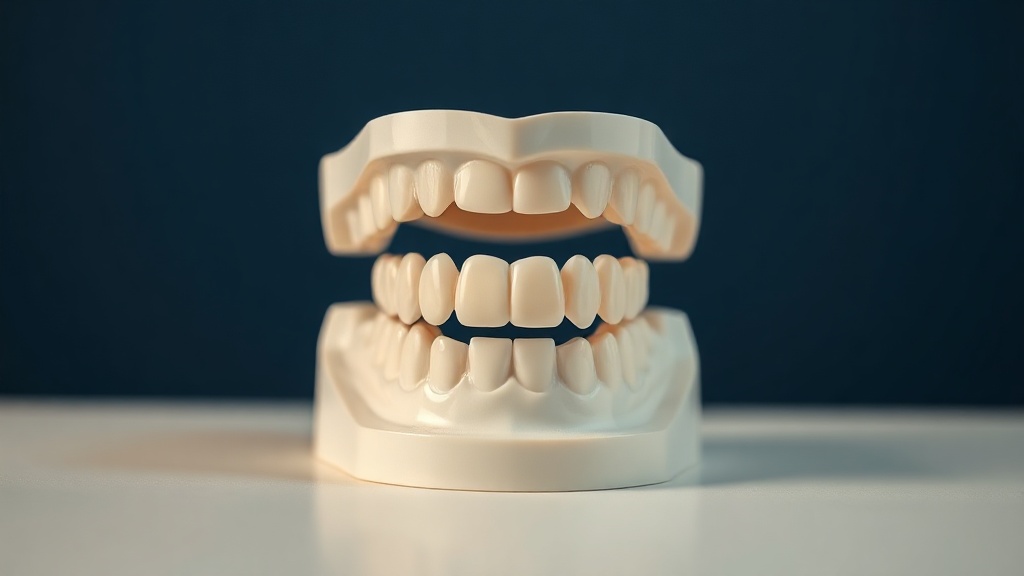
An anterior open bite: with something propping the front of the mouth open for hours a day, the top and bottom front teeth stop meeting.
What the research actually shows
Every claim below maps to a named, peer-reviewed source in the Sources section. According to PubMed.
| Claim | Evidence | Source |
|---|---|---|
| Daily pacifier use was associated with about 10 times higher odds of an anterior open bite (pooled OR 10.22), and longer habits carried more risk than shorter ones. | Systematic review and meta-analysis of 33 studies. | Gao et al., 2025 |
| Children who used a pacifier for 12 months or more had more posterior crossbite than those who stopped sooner (7% vs 1%); the authors advise reducing or stopping pacifier use after the first birthday. | Prospective randomized controlled trial, followed to age 7. | Arpalahti et al., 2024 |
| Anterior open bites decreased significantly over time, and self-correction of the open bite was associated with stopping the sucking habit. | Longitudinal study of children aged 4 to 6 years. | Heimer et al., 2008 |
| Ever having been breastfed - which tends to mean less non-nutritive sucking - was associated with markedly lower odds of malocclusion overall (OR 0.34). | Systematic review and meta-analysis (about 27,000 children). | Peres et al., 2015 |
| Prolonged non-nutritive sucking was strongly linked to posterior crossbite, with odds as high as 8.78 compared with children without the habit. | Systematic review and meta-analysis of sucking habits and crossbite. | Boronat-Catala et al., 2017 |
What makes bite changes more or less likely
| Factor | Which way it pushes | Can you change it? |
|---|---|---|
| How long the habit lasts | Years of use is the biggest driver of a lasting open bite | Yes - gentle, early weaning |
| How often, and during sleep | Daily and all-night use applies the steadiest pressure | Yes - limit to comfort moments, then phase out |
| Thumb versus pacifier | A thumb is always available and usually harder to stop | Partly - a pacifier can be removed |
| Age when the habit stops | Stopping before the permanent front teeth erupt gives the bite the best chance to recover | Yes - aim to stop by about age 3 |
| Jaw shape and genetics | Some children are simply more prone to crossbite | No - but worth a dentist's eye |
Why duration and frequency matter most
It is tempting to ask whether pacifiers are simply 'bad' for teeth, but the honest answer is that a pacifier is not the villain - unchecked time is. The studies point the same way: risk climbs with how many months or years the habit runs and how much of the day it fills. A toddler who uses a pacifier only to fall asleep and gives it up around the first or second birthday is in a very different position from one who has it in most of the day at age four. This is also why a thumb often does more than a pacifier over the long run - not because a thumb pushes harder, but because it is always attached, comforting, and much harder to phase out. The flip side is genuinely encouraging. Because these are baby teeth in growing bone, and because the changes are driven by ongoing pressure rather than permanent injury, removing the pressure early often lets things settle: open bites in particular tend to improve once the sucking stops, well before the adult front teeth arrive. That is the whole case for calm, early weaning instead of worry - you are not undoing damage, you are simply lifting a gentle force off a moving target.
Evidence you can act on.
Occasional emails — new research, new protocols, no noise.
Gentle ways to wean off the pacifier
The goal is to ease the habit down without a battle - comfort, not shame. None of this treats a medical condition; it simply lifts steady pressure off a developing bite. If you are unsure, your pediatric dentist can coach you.
- 1
Start easing off after the first birthday
from about age 1This is the window the research keeps pointing to. You do not have to stop cold - begin trimming when and where the pacifier is allowed, so the habit is already shrinking well before age three.
- 2
Limit it to sleep and comfort, then shrink that too
over a few weeksMove from all-day use to naps and bedtime only, then to falling asleep, then out. Narrowing the moments it is offered does most of the work with the least upset.
- 3
Never dip it in anything sweet
alwaysSugar or honey on a pacifier feeds decay, and honey is unsafe for babies under one. Keep the pacifier plain - a sweet coating turns a bite issue into a decay issue as well.
- 4
Comfort and praise, do not punish
throughoutOffer a substitute comfort - a favourite soft toy or extra cuddles - and praise pacifier-free stretches. Avoid shaming, bitter paints on a young child, restraint, or anything forceful; these backfire and are not appropriate for toddlers.
- 5
Loop in the dentist
by age 3, or sooner if worriedMention the habit at your child's dental visits. If it is still going strong near age three, or you already see the front teeth not meeting, ask the pediatric dentist for a tailored plan.
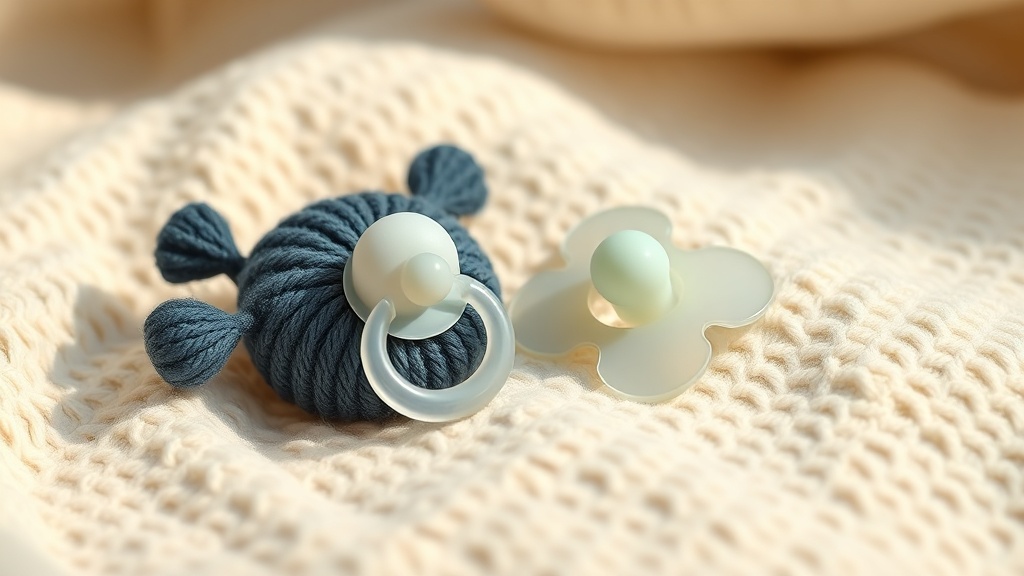
Gentle weaning works best with comfort, not conflict - swap the pacifier for another source of reassurance and praise the pacifier-free stretches.
Check in with a pediatric dentist if the pacifier or thumb habit is still strong past about age three or four, if you can see the front teeth not meeting or the upper teeth biting inside the lower ones, or before the permanent front teeth come in. A dentist can tell a habit-related bite change from other causes and, if needed, suggest a gentle appliance or a referral - the earlier this is looked at, the simpler it usually is. Never use force, restraint, or mouth taping to stop a habit. This article is educational and does not replace an in-person exam.
Frequently asked questions
Sources
- 1.
- 2.
- 3.
- 4.
- 5.

Fix your breath at the source.
The complete science-backed protocol — engineered to eliminate volatile sulfur compounds at the biological source.
Start the Breath Protocol →Related reading
Educational purposes only. The content on this page is not medical advice and is not a substitute for consultation with a qualified dental or medical professional.
More from the library
 Guides8 min
How to Stop Thumb Sucking: A Gentle, Age-Appropriate Guide
Most children give up thumb sucking on their own. Here is the calm, positive, no-shame way to help - and the honest signs it is time to involve a pediatric dentist.
Read →→ Best Of8 min
Best Thumb Sucking Guards to Break the Habit
Most children stop thumb sucking on their own - here is an honest guide to guards and when a dentist-fitted option actually makes sense.
Read →→ Guides8 min
Baby Teeth Chart: When They Come In and Fall Out
A reassuring guide to the order baby teeth arrive and fall out, why the timing varies so widely, and when a check-in with the dentist makes sense.
Read →→ Answers8 min
When Do Kids Lose Teeth? Age and Order Explained
The baby-teeth timeline in plain terms - the usual order, how wide normal really is, and the few signs worth a pediatric dentist visit.
Read →→ Guides9 min
Early Childhood Caries: Gentle Prevention for Little Smiles
What early childhood caries is, why it happens, and the calm daily habits - diet, bottle routines, brushing, dental visits - that lower a young child's risk.
Read →→ Best Of8 min
Best Teething Gel for Babies: Safer Soothing Options Compared
Why the honest best is non-medicated relief - and why the FDA warns against benzocaine and lidocaine teething gels for babies and toddlers.
Read →→