
NTI Night Guard Review: What It Does, the Real Risks, and Who It Suits
An honest review of the NTI anterior night guard - what it does for clenching, the bite-change risk sellers skip, and how it compares to a full night guard and self-care.
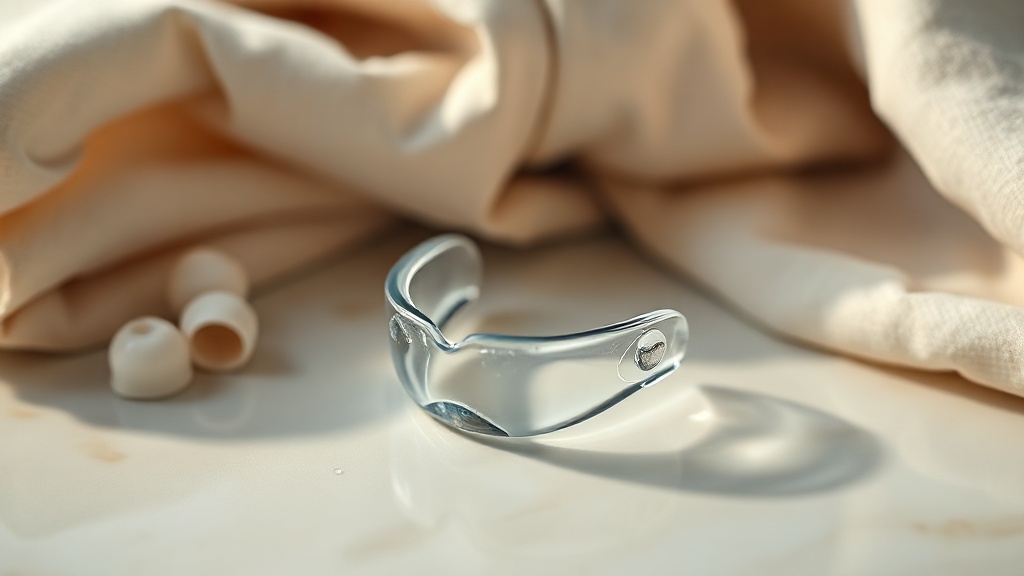
- The NTI is a small, hard device that clips over only your front teeth at night. By holding the back teeth apart, it is designed to lower the force your jaw-closing muscles can generate while you clench or grind.
- It can genuinely reduce clenching intensity for some people and shield the front teeth from wear, but it does not cure bruxism or a TMJ disorder - grinding is a sleep behaviour driven by brief arousals, not something an appliance switches off.
- In a randomised trial, adding an NTI to standard first-line jaw-pain care gave no significant extra benefit over guidance and self-care alone, and a Cochrane review found only very-low-certainty evidence that splints of any kind relieve TMD.
- The real trade-off is safety: because it covers only the front teeth, an unsupervised or all-day NTI can let the back teeth drift and change your bite. Dentists fit it, adjust it, and cap how long you wear it for exactly this reason.
- For most people, low-cost self-care performs about as well as an appliance at 3, 6 and 12 months - so an NTI is best seen as one supervised tool for protecting teeth, not a stand-alone fix.
The NTI is a small anterior night guard that can reduce clenching intensity and shield the front teeth, and some clenchers find it comfortable. But it does not cure bruxism or TMJ, the trial evidence for pain relief is weak, and worn unsupervised it can shift your bite. Treat it as a dentist-fitted tool, not a cure.
What the NTI night guard actually is
NTI stands for Nociceptive Trigeminal Inhibition Tension Suppression System - a mouthful for a very small appliance. Instead of capping every tooth like a conventional night guard, it is a hard acrylic piece that fits over just the two front teeth. When you close, your incisors meet a smooth ramp and the back teeth are held slightly apart so they never touch. That design has one honest purpose: your masseter and temporalis muscles generate their hardest bite when the molars are in contact, so keeping the molars apart limits how forcefully you can clench. It is a force-limiter, not a bruxism switch. The grinding signal itself comes from brief arousals during sleep - a healthy sleeper has several an hour - so the brain keeps sending the message and the device only blunts the output. The NTI is one of several appliance designs a dentist can choose from, sitting at the opposite end of the shelf from the familiar full-coverage guard that protects the whole arch. Knowing which problem you are actually solving - tooth wear, muscle soreness, or morning headaches - is what decides whether this particular shape is the right one for you.
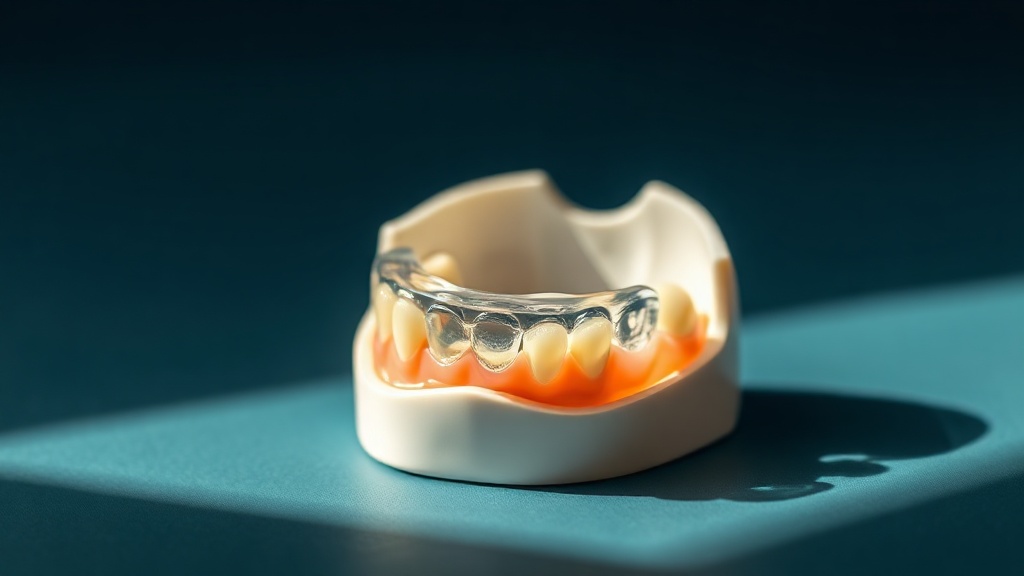
The defining feature of the NTI: it covers only the front teeth and holds the back teeth apart - which is both how it works and where its risk comes from.
What the research actually shows
Every claim below maps to a named, peer-reviewed source in the Sources section. According to PubMed.
| Claim | Evidence | Source |
|---|---|---|
| Adding an NTI device to standard first-line care for jaw-muscle pain gave no significant extra benefit over guidance, counselling and self-care alone at six weeks. | Randomised controlled trial of 40 patients with myofascial pain. | Hasanoglu Erbasar et al., 2017 |
| Dentist-prescribed self-care - education, jaw rest, thermal packs and gentle exercise - matched both a hard splint and a soft guard at 3, 6 and 12 months. | 200-subject randomised trial. | Truelove et al., 2006 |
| There is insufficient, very-low-certainty evidence that occlusal splints of any design reliably relieve temporomandibular disorders. | Cochrane systematic review; 57 trials, only 1 at low risk of bias. | Singh et al., 2024 |
| Splints protect the dentition from wear, but irreversible changes to the bite have no basis in the evidence - reversibility is the safety principle. | Clinical guidance review on bruxism management. | Beddis et al., 2018 |
| Reducing muscle output is not the same as fixing the behaviour: even a botulinum injection lowers jaw-muscle burst amplitude without reducing how often sleep grinding is generated. | Polysomnography-controlled trial of sleep bruxism. | Shim et al., 2020 |
NTI vs a full night guard vs self-care
| Option | What it does well | The trade-off |
|---|---|---|
| NTI (anterior-only device) | Small and low-profile; limits clenching force; can protect front teeth and ease some morning muscle tension | Covers only front teeth, so unsupervised or all-day wear can shift the bite; needs professional fitting and monitoring |
| Full-coverage night guard | Caps every tooth, spreading force evenly and protecting the whole arch from grinding wear; lower bite-change risk | Bulkier; protects teeth but the evidence it reduces jaw pain is still weak |
| Dentist-guided self-care | No appliance, no cost, no bite risk; matched splints for pain and function in trials | Requires consistency and habit change; will not physically stop tooth grinding at night |
The risk most sellers skip
Here is the part the marketing tends to gloss over. Because an NTI touches only the front teeth, the back teeth are left free - and teeth that never meet an opposing surface can slowly drift or over-erupt. Worn correctly, for a limited window and under a dentist who checks the fit, this is managed. Worn all day, every night for years, or bought unfitted online, it can quietly change how your teeth come together, sometimes leaving the back teeth no longer touching at all. That is why the sensible clinical rule is reversibility: an appliance should protect your teeth without permanently rearranging your bite, and any device that can move teeth needs a professional watching it. There is also a smaller, real hazard - a tiny hard device can be dislodged and, rarely, swallowed or inhaled during sleep, which is another reason a proper fit matters. None of this makes the NTI a bad appliance. It makes it a prescription-grade one. The people who do best with it are those whose dentist chose it deliberately for their pattern of clenching, fitted it precisely, and set clear limits on how and how long to wear it - not those who reached for the cheapest anterior gadget hoping it would cure grinding on its own.
Evidence you can act on.
Occasional emails — new research, new protocols, no noise.
How to use an NTI sensibly
An NTI can be a reasonable tool in the right hands. If you and your dentist decide to try one, these habits keep the benefit while containing the risk. None of this treats a disease - it simply uses the device the way it was designed to be used.
- 1
Get it fitted and reviewed by a dentist
initial visit + check-upsThis is the single most important step. A dentist confirms the device suits your bite, adjusts the contact so force is shared sensibly, and schedules follow-ups to catch any tooth movement early. An unfitted online copy skips every one of those safeguards.
- 2
Wear it only as prescribed - usually at night, not around the clock
as directedThe bite-change risk climbs with time in the mouth. Follow the specific wear window your dentist sets and resist the urge to leave it in longer because it feels good; more hours is not more benefit here.
- 3
Watch for changes in how your teeth meet
ongoingIf your back teeth start to feel like they no longer touch, or your bite feels different in the morning, stop and call your dentist. Early changes are far easier to address than ones left for months.
- 4
Pair it with the self-care that actually moves the needle
dailyDaytime jaw-clench awareness, gentle stretching, warmth, stress management and good sleep habits are what the strongest evidence supports. The device protects teeth; these habits work on the behaviour behind the grinding.
- 5
Keep it clean and check it for damage
dailyRinse and brush it, store it dry, and inspect for cracks. A worn or damaged hard device fits poorly and is more likely to come loose in the night.

The people who do best with an NTI are those whose dentist chose it deliberately, fitted it precisely, and set clear limits on wear.
See a dentist before buying any NTI, and especially if you have jaw pain, locking, a bite that suddenly feels off, or teeth that no longer meet the way they used to. Ongoing jaw pain, clicking with pain, headaches on waking, or loosening teeth deserve an in-person assessment rather than a self-fitted device. A dentist can confirm whether an anterior appliance suits you at all, choose a safer full-coverage guard if it does not, and rule out other causes. If a device ever comes loose in your mouth during the night, stop using it and have it checked.
Frequently asked questions
Sources
- 1.
- 2.
- 3.
- 4.
- 5.
- 6.
- 7.
- 8.

Fix your breath at the source.
The complete science-backed protocol — engineered to eliminate volatile sulfur compounds at the biological source.
Start the Breath Protocol →Related reading
Educational purposes only. The content on this page is not medical advice and is not a substitute for consultation with a qualified dental or medical professional.
More from the library
 Best Of8 min
The Best Night Guards for Teeth Grinding: An Honest Guide
Custom, boil-and-bite or over-the-counter, soft or hard — an honest look at night guards for grinding, where protection is the real job.
Read →→ Guides8 min
Teeth Grinding: How to Manage It
Grinding is a behaviour, not a disease to cure — here is what actually helps.
Read →→ Answers8 min
How to Stop Clenching Your Jaw at Night
Clenching your jaw at night is mostly involuntary and sleep-driven — here is what honestly reduces it and what only a professional can help with.
Read →→ Guides9 min
TMJ Disorder: The Complete Guide
What TMJ disorder really is, how common it is, and the conservative-care-first path most people never hear about.
Read →→ Guides8 min
Jaw Relaxation Exercises: A Step-by-Step Comfort Guide
A step-by-step down-regulation routine for a tight, clenched jaw, built on gentle relaxation rather than force.
Read →→ Guides9 min
Does Mewing Actually Work? An Honest, Evidence-Based Breakdown
The honest, evidence-based answer to whether tongue posture can reshape an adult jaw — what the research really shows, and why forcing it can backfire.
Read →→