Best Electric Toothbrush for Sensitive Teeth: What to Look For
For sensitive teeth the right electric brush is the one that stops you pressing too hard: pressure sensor, soft mode, soft bristles, and gentle technique beat any premium badge.
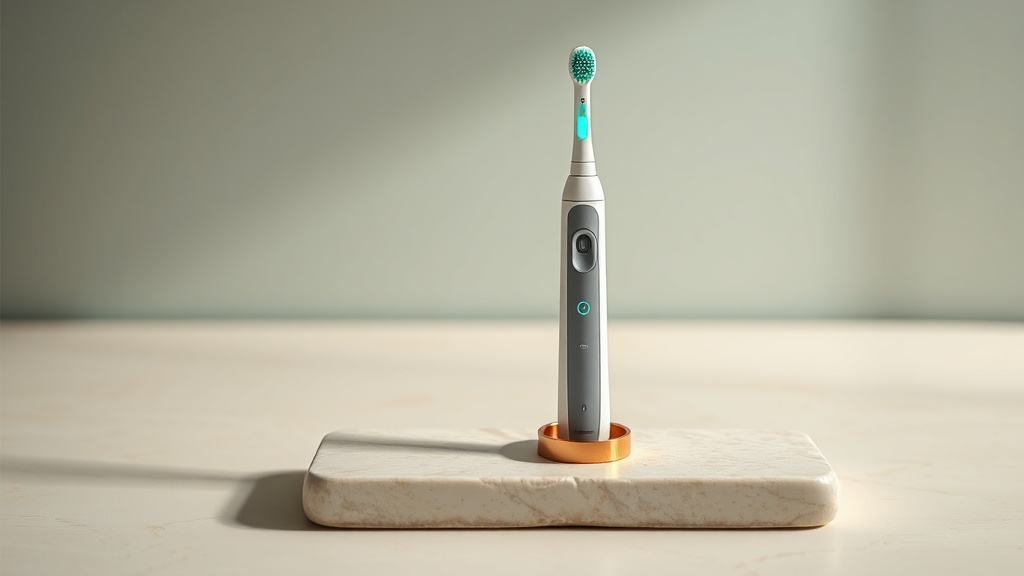
- For sensitive teeth, the single most useful feature is a pressure sensor, because much everyday sensitivity comes from brushing too hard at the gumline, not from brushing too little.
- A soft or sensitive mode plus genuinely soft bristles lets an electric brush clean thoroughly without scrubbing exposed dentine.
- Powered brushes remove modestly more plaque than manual ones on average, but that edge is small and only helps if you let the brush do the work instead of pressing and scrubbing.
- Technique beats brand: light contact, small movements, and a gentle desensitising toothpaste matter more than which premium handle you buy.
- An electric brush soothes sensitivity by protecting the gumline over time; it cannot fix a cavity, crack or exposed root, which is a dentist's job.
The best electric toothbrush for sensitive teeth is one with a pressure sensor that warns you when you press too hard, a soft or sensitive cleaning mode, and soft bristles. Those features protect the exposed dentine at your gumline. Beyond that, technique and a desensitising toothpaste matter more than the brand or price.
Why brushing habits, not brand, drive sensitivity
Most everyday tooth sensitivity follows the hydrodynamic theory: when the gum recedes or the softer dentine at the neck of the tooth is exposed, tiny tubules that lead toward the nerve are opened up, and cold, sweet or air makes the fluid inside them move enough to trigger pain. One of the most common reasons that dentine gets exposed in the first place is years of heavy, side-to-side brushing with a firm brush. In the laboratory, sustained hard brushing can wear distinct wedge-shaped notches into the tooth right at the gumline, exactly where sensitivity tends to concentrate. This is the key insight for choosing a powered brush: the goal is not maximum force or the most aggressive setting, but controlled, gentle cleaning that removes plaque without scrubbing away more of the surface. That is why a pressure sensor, which lights up or eases the motor when you press too hard, is the most valuable feature for sensitive teeth, and why a soft head matters more than raw power.
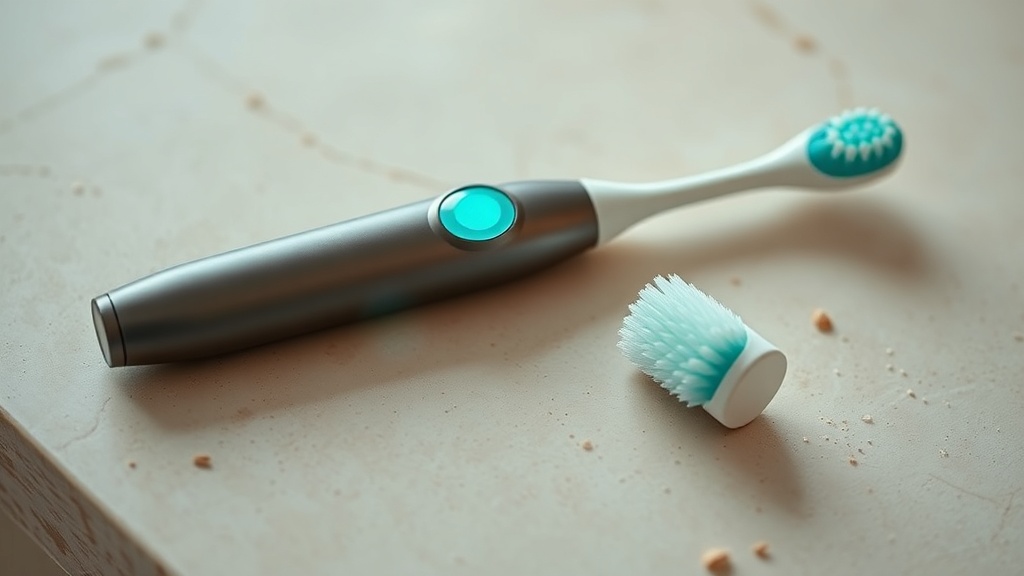
A pressure sensor and a genuinely soft head do more for sensitive teeth than any premium cleaning mode.
What the research actually shows
Every claim below maps to a named, peer-reviewed source in the Sources section. According to PubMed.
| Claim | Evidence | Source |
|---|---|---|
| Across 56 trials, powered toothbrushes reduced plaque more than manual brushes, by about 11% in the short term and 21% over more than three months, with a parallel reduction in gingivitis. | Cochrane systematic review and meta-analysis of powered versus manual toothbrushing. | Yaacob et al., Cochrane 2014 |
| Sustained hard toothbrushing in the laboratory carved wedge-shaped notches into the neck of the tooth, reproducing the cervical wear associated with gumline sensitivity. | Laboratory toothbrushing-machine study with scanning electron microscopy. | Litonjua et al., Am J Dent 2004 |
| Sensitivity relief still relies on the toothpaste, not the brush: stannous-fluoride pastes occlude open dentine tubules, an effect that persisted after an acid challenge. | Randomised in-situ crossover study of tubule occlusion. | West et al., J Dent 2018 |
| The fluoride the brush helps deliver matters: fluoride-remineralised enamel is more acid-resistant than the original surface. | Review of the mechanisms of action of fluoride. | Buzalaf et al., Monogr Oral Sci 2011 |
What to look for, ranked by usefulness for sensitivity
| Feature | Why it matters for sensitive teeth | Priority |
|---|---|---|
| Pressure sensor | Warns or eases off when you press too hard, the main cause of gumline wear | Essential |
| Soft or sensitive mode | Lower-intensity cleaning that is gentler on exposed dentine | High |
| Genuinely soft bristles | Soft heads clean plaque without scrubbing the surface | High |
| Two-minute timer | Encourages thorough but time-limited cleaning instead of harder scrubbing | Moderate |
| Oscillating vs sonic action | Both work; choose by comfort, not marketing claims | Low |
| Premium extras (apps, travel case) | Convenience only; no direct effect on sensitivity | Optional |
Why a powered brush helps only if you let it work
The honest reading of the evidence is that powered brushes have a real but modest advantage over manual ones for plaque and gum health, and that advantage only materialises if you change how you brush. The whole point of a good electric brush for sensitive teeth is that it removes the temptation to scrub. You are meant to guide the head slowly from tooth to tooth and let the motion do the cleaning, using barely any pressure. If you grip it like a manual brush and bear down, you cancel the benefit and can accelerate the gumline wear that caused your sensitivity in the first place, which is why the pressure sensor is so valuable as a real-time coach. It is also worth being clear about what the brush does not do. The relief from sensitivity itself comes mostly from the toothpaste, whether that is a nerve-calming potassium-nitrate paste or a tubule-sealing stannous-fluoride one, and from the fluoride that keeps the surface mineralised. The brush protects the gumline and delivers the paste; it is not itself a treatment. So the best choice is a brush that makes gentle, consistent technique easy, not the one with the longest feature list.
Evidence you can act on.
Occasional emails — new research, new protocols, no noise.
How to choose and use an electric brush for sensitive teeth
Prioritise the features that protect your gumline, then brush in the way those features are designed for.
- 1
Insist on a pressure sensor
onceMake a working pressure sensor your non-negotiable feature. It is the single most useful thing an electric brush can do for sensitive teeth, because it retrains you out of pressing too hard.
- 2
Choose a soft head and a sensitive mode
oncePick genuinely soft bristles and use the soft or sensitive setting if one exists. Replace the head as soon as the bristles start to splay, because a worn head tempts you to press harder.
- 3
Let the brush do the work
dailyGuide the head slowly along the gumline with almost no pressure and let the motion clean. Do not scrub back and forth; that is the habit the brush is meant to replace.
- 4
Pair it with a desensitising toothpaste
dailyThe brush protects the gumline, but the paste relieves the sensitivity. Use a potassium-nitrate or stannous-fluoride paste, spit without rinsing, and give it a few weeks.
- 5
Ease off the triggers
ongoingGive acidic drinks less contact time and wait a while before brushing after them, since enamel is temporarily softened. Technique and habits decide whether the sensitivity returns.
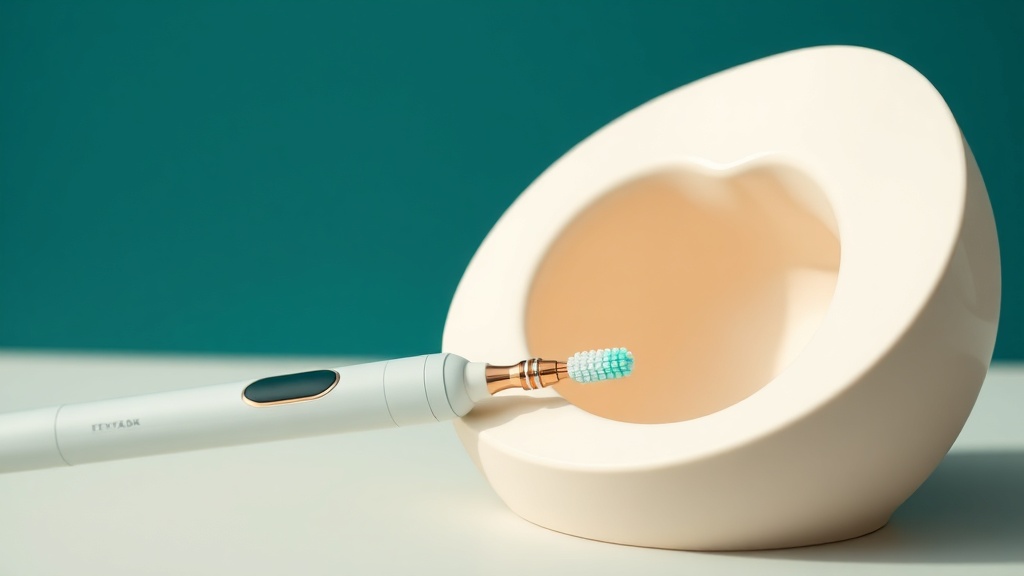
Guide the head gently along the gumline; the motor cleans, so your hand does not have to press.
If sensitivity is sharp in one tooth, lingers after cold or sweet is gone, or comes with visible gum recession, a notch at the gumline, swelling or a dark line, see a dentist. Those signs point to a cavity, crack or exposed root that no toothbrush can treat. A dentist can also check whether your brushing has already worn the gumline and coach your technique.
Frequently asked questions
Sources
- 1.
- 2.
- 3.
- 4.
- 5.

Fix your breath at the source.
The complete science-backed protocol — engineered to eliminate volatile sulfur compounds at the biological source.
Start the Breath Protocol →Related reading
Educational purposes only. The content on this page is not medical advice and is not a substitute for consultation with a qualified dental or medical professional.
More from the library
 Best Of8 min
Best Sensodyne Toothpaste: How to Choose by Active Ingredient
The best Sensodyne is the one whose active ingredient matches your teeth: nerve-calming potassium nitrate, tubule-sealing stannous fluoride, or low-abrasion Pronamel for acid wear.
Read →→ Best Of8 min
Best Mouthwash for Sensitive Teeth: An Honest, Ingredient-First Guide
The best sensitive-teeth mouthwash is an alcohol-free fluoride or arginine rinse used as a daily top-up over a desensitising toothpaste, chosen for its active ingredient rather than its sting.
Read →→ Ingredients8 min
How Fluoride Toothpaste Remineralizes Teeth
The chemistry behind fluoride's remineralizing power, and the honest line between the early lesions it can rebuild and the cavities it cannot.
Read →→ Reviews8 min
PreviDent 5000 Review: Prescription-Strength Fluoride, Honestly Assessed
PreviDent 5000 sits at the strong end of the fluoride dose-response curve, which is exactly why it is prescription-only rather than a general upgrade.
Read →→ Answers8 min
How to Get Rid of White Spots on Teeth: Your Options, Ranked
An honest, evidence-based ladder of options, from what you can do at home to what only a dentist can fix.
Read →→ Ingredients8 min
Hydroxyapatite Toothpaste Benefits: What the Evidence Actually Supports
A calm, science-first look at what hydroxyapatite toothpaste can genuinely do for your enamel, and where the evidence stops.
Read →→