The Best Breath Mints That Actually Work (and Why Most Only Mask)
Mints buy you a fresh-smelling window, not a cure. Here is how to choose the ones that help, and why cleaning still does the real work.

- Breath mints work by masking, not fixing: they cover odour with flavour for a short window but do not remove the tongue coating and bacteria that create the smell.
- The single most important label decision is sugar-free: sugar mints feed the very bacteria you are trying to quiet, so a sugar mint can leave your breath worse once the flavour fades.
- Xylitol-sweetened mints are the standout pick, because xylitol is not fermented into acids and, with regular use, lowers the plaque bacteria behind a lot of oral odour.
- Mints that stimulate saliva or pair flavour with zinc do a little better than flavour alone, because both saliva and zinc act on the sulfur gases behind the smell.
- No mint replaces cleaning: the evidence is consistent that mechanical cleaning — brushing, flossing, tongue scraping — is what actually reduces odour, with mints as a finishing touch.
The best breath mints are sugar-free and ideally sweetened with xylitol, because sugar mints feed odour-causing bacteria while xylitol helps starve them. But be clear about what a mint can do: it masks odour with flavour for a short window, and in some formulas mildly neutralises sulfur gases — it does not remove the tongue coating and bacteria that cause bad breath. Use a mint as a quick cosmetic top-up, not as your breath strategy.
What a breath mint actually does
A breath mint has two possible jobs, and most only do the first. The obvious one is masking: a strong flavour temporarily sits on top of the smell so, for a few minutes, your nose registers peppermint instead of odour. In blind breath-panel testing, mints and dental flavours freshened breath mainly through this sensorial masking. The second, less common job is chemical: a handful of flavour ingredients modestly inhibit the bacteria that make hydrogen sulfide, and some mints add zinc, which binds the sulfur in odour gases and converts it into non-volatile, odourless compounds. That is genuinely useful, but it is still cosmetic — it deactivates a portion of the smell rather than removing its source. The source of everyday bad breath is a film of anaerobic bacteria, mostly on the back of the tongue, quietly breaking down proteins and releasing volatile sulfur compounds. A mint never reaches that film. This is also why the sweetener matters so much: a sugar mint drops a fresh flavour on your tongue while feeding the exact bacteria producing the smell, so once the flavour burns off you can be worse off than when you started. Sugar-free mints avoid that trap, and xylitol goes one better by actively working against plaque bacteria.

A mint lays fresh flavour over the smell for a short window; it never reaches the tongue bacteria that produce it.
What the research actually shows
Every claim below maps to a named, peer-reviewed source in the Sources section. According to PubMed.
| Claim | Evidence | Source |
|---|---|---|
| In blind breath-panel testing, mints and flavours freshened breath mainly by sensorial masking, though carefully chosen flavour ingredients also modestly inhibited hydrogen sulfide production. | Double-blind crossover breath-freshness panel studies of oral-care flavours. | Bradshaw et al., 2005 |
| A review of anti-malodour approaches found most — including cosmetic products and rinses — were inefficient or short-lasting, while mechanical debridement (brushing, flossing, tongue cleaning) was the most successful. | Review of treatment strategies for oral malodour. | Quirynen et al., 2002 |
| Habitual xylitol consumption consistently decreased mutans streptococci counts across nine fair-to-high-quality trials, behaving like an oral prebiotic. | Systematic review of xylitol and erythritol effects on the oral microbiota. | Soderling & Pienihakkinen, 2020 |
| Xylitol is not fermented into cariogenic acids and reduces both plaque and the number of mutans streptococci in the plaque and saliva of regular users. | Review of xylitol action on mutans streptococci and dental plaque. | Trahan, 1995 |
| A sugar-free gum improved judged (organoleptic) breath scores but did not significantly lower measured sulfur gases, underlining that chewing and flavour help temporarily rather than removing the source. | Randomised double-blind crossover trial in adults with malodorous morning breath. | Keller et al., 2011 |
Breath mints compared, by type
| Mint type | Best for | How it works | Honest tradeoff |
|---|---|---|---|
| Xylitol sugar-free mints | Everyday, best all-round pick | Freshens and, used regularly, works against plaque bacteria | The plaque effect is gradual, not instant magic |
| Zinc or flavour-plus-zinc mints | Covering odour on the go | Flavour masks while zinc neutralises some sulfur gases | Still a top-up; wears off in an hour or two |
| Standard sugar-free (sorbitol/mannitol) | A quick, cheap freshen | Masking flavour, no sugar to feed bacteria | Purely cosmetic; no lasting benefit |
| Sugar mints and candies | Best avoided | Flavour masks briefly | Sugar feeds odour bacteria; breath can end up worse |
| Strong alcohol 'medicated' mints | A sharp short-term hit | Intense flavour masking | Can dry the mouth, which worsens odour over time |
Why the strongest mint is not the fix
It is tempting to treat a powerful mint as a solution: if the smell disappears, surely the problem is handled. It is not. The odour returns as soon as the flavour fades because nothing has changed on the tongue, and the broader evidence is blunt about this — reviews of anti-malodour products repeatedly find that cosmetic approaches are short-lasting and that mechanical cleaning is what actually works. So the smart way to use a mint is narrow and deliberate: reach for a sugar-free, ideally xylitol, mint after you have already cleaned, when you want a fresh finish before a meeting or a date. Two traps are worth naming. The first is the sugar mint, which freshens for a minute while feeding the bacteria that cause the smell. The second is the very strong, high-alcohol mint, which delivers an intense hit but can dry the mouth — and a dry mouth is a breath problem in its own right, because saliva is the mouth's natural rinse. If you find yourself working through a tin of mints across the day, that is not a mint to upgrade; it is a signal that the source needs attention through cleaning, hydration, and possibly a look at your tongue and gums.
Evidence you can act on.
Occasional emails — new research, new protocols, no noise.
How to choose and use breath mints well
Pick by the label, then use the mint in the one role it is actually good at.
- 1
Check for sugar-free, and ideally xylitol
once, at the shelfTurn the pack over and read the sweetener before the brand. Sugar-free is the baseline; xylitol is the upgrade, because it freshens without feeding bacteria and, used regularly, works against the plaque bacteria that drive odour. Avoid anything with sugar or glucose syrup near the top of the list.
- 2
Treat the mint as a top-up, not a routine
as neededA mint is for the moment before you speak to someone, not a substitute for cleaning. Used that way it is genuinely handy; leaned on all day, it just masks a problem that keeps coming back.
- 3
Clean first, then freshen
dailyBrush, floss and scrape the tongue, then let a mint put a fresh finish on an already-clean mouth. A mint dropped onto an uncleaned tongue is only ever cosmetic.
- 4
Favour saliva-stimulating over drying
ongoingSugar-free mints and gum that get you salivating help, because saliva rinses and dilutes odour gases. Very strong high-alcohol mints can do the opposite by drying the mouth, so skip them if your mouth already runs dry.
- 5
If you are reaching for mints all day, fix the source
ongoingConstant mint use is a clue, not a solution. Persistent odour usually means the tongue, gums, hydration or diet need attention — that is where lasting fresh breath is won.
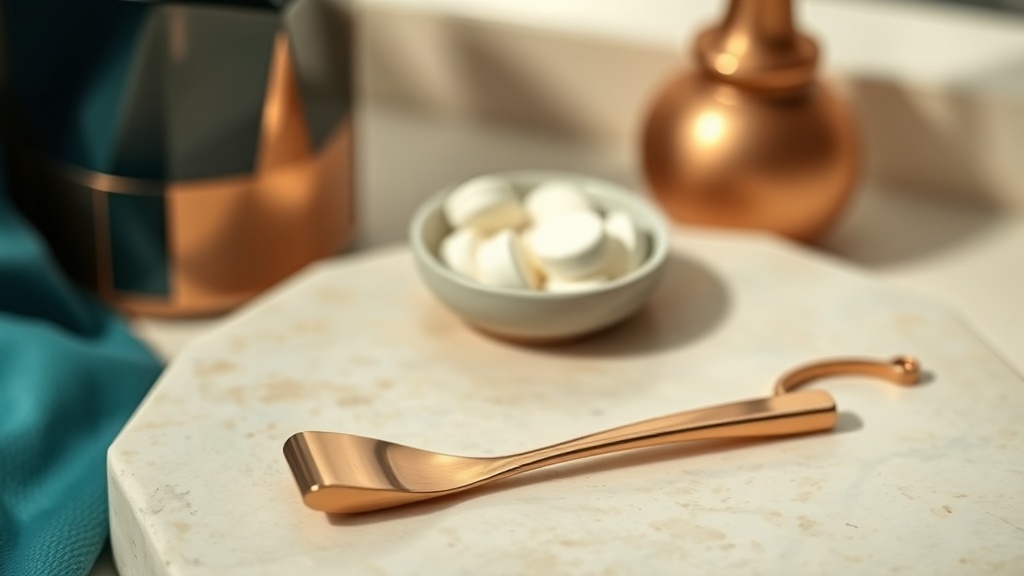
Cleaning is the foundation and the mint is the finish: scrape and brush first, then let a sugar-free mint do its short cosmetic job.
If you need mints constantly because odour keeps returning despite good brushing, flossing and tongue cleaning, see a dentist. Persistent bad breath can point to gum disease, a dry mouth, tonsil stones or other issues that a mint only masks. A dentist can find and address the actual source rather than covering it.
Frequently asked questions
Sources
- 1.
- 2.
- 3.
- 4.
- 5.
- 6.
- 7.

Fix your breath at the source.
The complete science-backed protocol — engineered to eliminate volatile sulfur compounds at the biological source.
Start the Breath Protocol →Related reading
Educational purposes only. The content on this page is not medical advice and is not a substitute for consultation with a qualified dental or medical professional.
More from the library
 Best Of8 min
The Best Mouthwash for Bad Breath, by Active Ingredient
There is no single winner, only the right rinse for the right job. Here is how the active ingredients compare on the evidence, and which suits everyday fresh breath.
Read →→ Best Of8 min
The Best Oral Probiotics for Bad Breath
Oral probiotics aim to shift the balance of bacteria in your mouth toward fresher breath — here is which strains have the evidence and how to choose one.
Read →→ Guides8 min
How to Get Rid of Bad Breath Permanently: An Evidence-Based Plan
The honest version: "permanently" means ongoing control, not a one-time fix. Here is the daily routine the research actually supports, and when to get help.
Read →→ Guides9 min
Morning Breath: Why It Is Worst on Waking (and How to Fix It)
Nearly everyone wakes with it. The reason is a simple overnight saliva drop - and that is exactly what tells you how to fix it.
Read →→ Guides7 min
Bad Breath Even After Brushing? The Biological Reason (and Fix)
You brushed, flossed and rinsed — and the smell is still there. The reason usually isn't hygiene; it's where the odour-causing bacteria actually live.
Read →→ Ingredients9 min
Probiotics for Bad Breath: Do Oral Probiotics Actually Work?
Oral probiotics try to fix bad breath at the source, by shifting which bacteria live on your tongue. The idea is promising; the evidence is still early.
Read →→