Why Does My Breath Smell Like Poop?
A blunt, honest look at what makes breath smell fecal, where it usually comes from, and the point at which it is worth seeing a professional.

- Breath that reads as fecal or strongly foul is almost always driven by volatile sulfur compounds (VSCs) - the same gases behind ordinary bad breath, only more concentrated.
- In the large majority of cases (around 85-90%) the source sits inside the mouth: a coated tongue, trapped food, gum-line bacteria or tonsil debris feeding sulfur-producing anaerobes.
- A smaller share comes from outside the mouth - the sinuses and post-nasal drip, and more rarely the gut or a systemic cause - which is why a smell that ignores good oral care deserves a proper look.
- Because the odour is made by living bacteria, brushing over the top rarely fixes it; the coating and debris they live on has to be physically cleared and their environment made less hospitable.
- Most fecal-smelling breath is harmless and controllable at home, but a persistent, one-sided or worsening odour - especially alongside other symptoms - is a signal to see a dentist or doctor rather than mask it.
Breath that smells like poop is almost always volatile sulfur gas produced by anaerobic bacteria - usually on a coated tongue, around the gums, or inside tonsil debris. Less often the source is the sinuses, post-nasal drip or, rarely, the gut. Clearing those bacterial reservoirs, rather than masking the smell, is what actually helps.
Where that smell actually comes from
The unpleasant part of bad breath is not really an odour you make - it is a set of gases that bacteria make for you. Certain anaerobic bacteria, the kind that thrive in low-oxygen corners of the mouth, break down the proteins in food debris, dead cells and mucus. As they do, they release volatile sulfur compounds: hydrogen sulfide, which smells like rotten eggs, and methyl mercaptan, which is the one people describe as fecal, manure-like or barnyard. That is the specific molecule behind a poop-like note. The single biggest source of these gases is the coating on the back of the tongue, a soft carpet of bacteria, food residue and shed cells that ordinary brushing skips entirely. The gum line, the spaces between teeth and the pockets of the tonsils are the other main reservoirs. Estimates put the intra-oral share of bad breath at roughly 85 to 90 percent, which is genuinely good news: it means the cause is usually somewhere you can reach and manage, not a mystery.
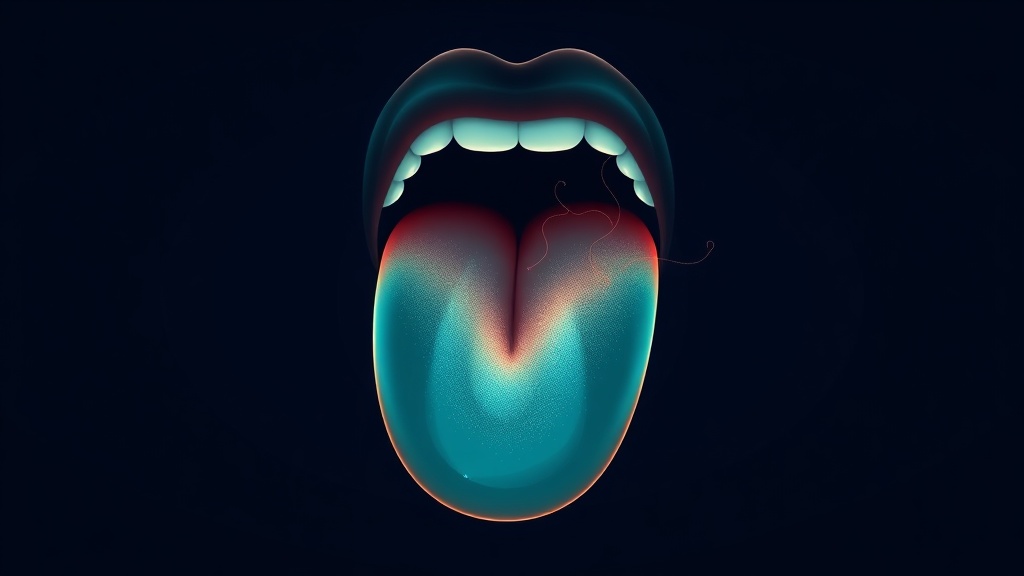
Most fecal-smelling breath begins as sulfur gas released by bacteria living in the coating on the back of the tongue.
What the research actually shows
Every claim below maps to a named, peer-reviewed source in the Sources section. According to PubMed.
| Claim | Evidence | Source |
|---|---|---|
| The great majority of bad breath - on the order of 85-90% - originates inside the mouth rather than from the stomach or lungs. | Clinical review of halitosis, BMJ. | Scully & Porter, 2008 |
| The odour is produced by anaerobic bacteria that break down proteins into volatile sulfur compounds such as hydrogen sulfide and methyl mercaptan. | Review of the microbiology and treatment of halitosis. | Loesche & Kazor, 2002 |
| The coating on the back of the tongue is a principal reservoir; scraping or cleaning the tongue measurably lowers sulfur-gas readings. | Cochrane systematic review of tongue scraping. | Outhouse et al., 2006 |
| Both mechanical cleaning and antibacterial measures reduce oral malodour, but no single step permanently removes it. | Cochrane review of interventions for halitosis. | Kumbargere Nagraj et al., 2019 |
| Antibacterial mouthrinses (for example chlorhexidine) lower the bacterial load and the sulfur gases that cause the smell. | Cochrane review of chlorhexidine mouthrinse. | James et al., 2017 |
Where the smell is likely coming from
| Possible source | How it tends to present | Can home care manage it? |
|---|---|---|
| Coated tongue | The strongest and most common source; worst at the back of the tongue and first thing in the morning | Yes - gentle tongue cleaning plus good hygiene |
| Gum line and plaque | Foul odour that is worse when the gums are red or tender | Partly - thorough cleaning helps; see a dentist for ongoing gum problems |
| Tonsil debris or stones | Intermittent foul taste, sometimes a small pale lump you cough up | Partly - gentle clearing and hydration |
| Sinuses / post-nasal drip | Smell seems to come from the back of the nose, worse with congestion or a cold | Partly - manage the drip; see a pro if it persists |
| Gut or systemic (rare) | Constant, and barely changes no matter how well you clean your mouth | No - this is the case to have a doctor assess |
Why brushing alone doesn't stop it
If you brush twice a day and the smell keeps coming back, it is not a discipline problem - it is a reach problem. The bacteria responsible live as a biofilm, an organised, sticky community that clings to surfaces a toothbrush was never designed to clean: the rough back third of the tongue, the crevices between teeth, the gum margin and the pockets of the tonsils. A brush glides over the tongue coating without lifting it, and mouthwash swished for a few seconds cannot penetrate a mature biofilm. On top of that, a dry mouth quietly makes everything worse. Saliva is the mouth's natural rinse and its oxygen supply; when it drops - overnight, after coffee or alcohol, or when you breathe through your mouth - the anaerobic bacteria get exactly the still, low-oxygen conditions they prefer, and sulfur-gas production climbs. That is why the smell is often strongest in the morning. Masking it with mints or a quick rinse changes the top note for a few minutes while the reservoir underneath keeps producing. Lasting control comes from clearing the reservoir and keeping the mouth moist, not from covering the smell.
Evidence you can act on.
Occasional emails — new research, new protocols, no noise.
What genuinely helps
None of this treats a disease - it simply clears the bacterial reservoirs that make the gas and keeps the mouth in a state that produces less of it. Give it a couple of weeks of consistency before judging.
- 1
Clean the tongue, not just the teeth
under a minute dailyBecause the tongue coating is the main source, this is the highest-value step. Use a tongue scraper or the back of a soft brush, reaching as far back as is comfortable, with gentle strokes front to back. Reviewed evidence shows this measurably lowers the sulfur gases behind the smell. Rinse the scraper and stop before you gag - firmer is not better.
- 2
Lower the overall bacterial load
twice dailyBrush for two minutes, clean between the teeth with floss or interdental brushes, and finish with an alcohol-free antibacterial rinse. This will not reach inside every crypt, but it steadily drops the population of odour-producing bacteria across the whole mouth so there is less raw material to turn into gas.
- 3
Keep saliva flowing
all dayA dry mouth is a smell amplifier. Sip water through the day, especially after coffee, alcohol or exercise, and favour nose-breathing over mouth-breathing where you can. Sugar-free gum or a sip of water on waking can blunt the worst of the morning odour by getting saliva moving again.
- 4
Deal with the back of the nose
as neededA steady drip of mucus from the sinuses feeds the bacteria at the back of the mouth and tongue, and tonsil debris adds its own foul note. Managing allergies or congestion at the source cuts the supply. Gentle, low-pressure rinsing can help clear tonsil debris - never dig with anything sharp.
- 5
Book a dental check and stop masking a smell that won't quit
as neededA dentist can find and clean the reservoirs you cannot see and flag anything gum-related. If the odour is constant, one-sided, or unchanged by good mouth care, that is exactly the pattern that warrants a professional look rather than another mint.

Clearing the tongue coating and keeping the mouth moist does more for a foul smell than any mint or quick rinse.
Most fecal-smelling breath is oral and manageable at home. See a dentist or doctor if the odour is constant and unchanged by good oral care for two to three weeks, if it comes with red, bleeding or tender gums, if it is clearly one-sided or paired with a persistently blocked nose or sinus pain, or if there are other symptoms such as unexplained weight loss, reflux, vomiting or a change in bowel habits. A strong fecal breath odour that appears suddenly with abdominal pain or vomiting is a reason to seek prompt medical care. When in doubt, have it assessed in person rather than masking it.
Frequently asked questions
Sources
- 1.
- 2.
- 3.
- 4.
- 5.
- 6.

Fix your breath at the source.
The complete science-backed protocol — engineered to eliminate volatile sulfur compounds at the biological source.
Start the Breath Protocol →Related reading
Educational purposes only. The content on this page is not medical advice and is not a substitute for consultation with a qualified dental or medical professional.
More from the library
 Answers7 min
Why Does My Breath Smell in the Morning? The Overnight Biology
It is not something you did wrong before bed. It is what your mouth does while you sleep.
Read →→ Guides9 min
How to Fix Bad Breath: A Practical, Step-by-Step Action Plan
The practical fix-it plan: four everyday moves — tongue, teeth, hydration, and microbiome — that target where bad breath actually starts.
Read →→ Guides7 min
Bad Breath Even After Brushing? The Biological Reason (and Fix)
You brushed, flossed and rinsed — and the smell is still there. The reason usually isn't hygiene; it's where the odour-causing bacteria actually live.
Read →→ Best Of8 min
The Best Mouthwash for Bad Breath, by Active Ingredient
There is no single winner, only the right rinse for the right job. Here is how the active ingredients compare on the evidence, and which suits everyday fresh breath.
Read →→ Guides8 min
How to Get Rid of Bad Breath Permanently: An Evidence-Based Plan
The honest version: "permanently" means ongoing control, not a one-time fix. Here is the daily routine the research actually supports, and when to get help.
Read →→ Ingredients9 min
Probiotics for Bad Breath: Do Oral Probiotics Actually Work?
Oral probiotics try to fix bad breath at the source, by shifting which bacteria live on your tongue. The idea is promising; the evidence is still early.
Read →→