What Does Gingivitis Look Like?
A plain-language visual guide to recognising what gingivitis looks like, and how to tell it from healthy gums.
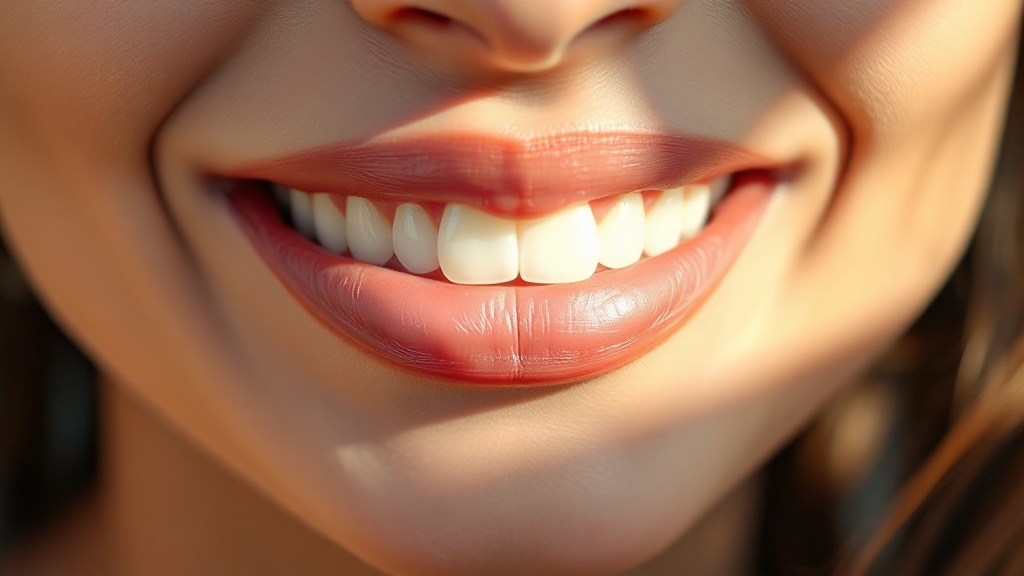
- Gingivitis looks like redness and puffiness concentrated along the gumline, where healthy gum is pale pink and firm.
- The gum margins often appear rounded and swollen rather than thin and knife-edged, and the surface can look shiny where healthy gum has a dimpled, orange-peel texture.
- A very common visual clue is blood: a trace of pink after brushing, or gums that redden and bleed when touched.
- Appearance alone cannot separate gingivitis from early periodontitis, and colour can be misleading in smokers, so a dentist visit confirms what you are seeing.
- The look is reversible: as plaque is controlled, the redness fades, the swelling settles and the healthy pale-pink, stippled appearance returns.
Gingivitis looks like red, swollen, shiny gums along the gumline, with margins that are puffy and rounded rather than firm and thin. Gums often bleed easily and may leave a trace of pink after brushing. Healthy gums, by contrast, are pale pink, firm and stippled. The inflamed look reverses as plaque is controlled.
What you are actually seeing
When you look at gums with gingivitis, you are looking at inflammation made visible. Plaque along the gumline irritates the tissue, its small blood vessels widen and fill with blood, and that extra blood near the surface is what gives inflamed gums their redder, sometimes almost angry colour compared with the calm pale pink of health. The same process draws fluid into the tissue, so the gum swells; margins that should be thin and tightly hugging each tooth become puffy and rounded, and the little scallops of gum between teeth look fuller. Healthy gum has a faintly dimpled, orange-peel surface called stippling, and as the tissue swells that texture is smoothed out, leaving a glossy, stretched appearance. Put together, the picture is a gumline that reads as red, shiny and slightly bloated, most obvious right where tooth meets gum. And because those engorged vessels sit close to the surface, the tissue bleeds at the lightest contact, which is why the look so often comes with a trace of pink in the sink. None of this involves the teeth loosening or the gum receding, which are different, later changes.
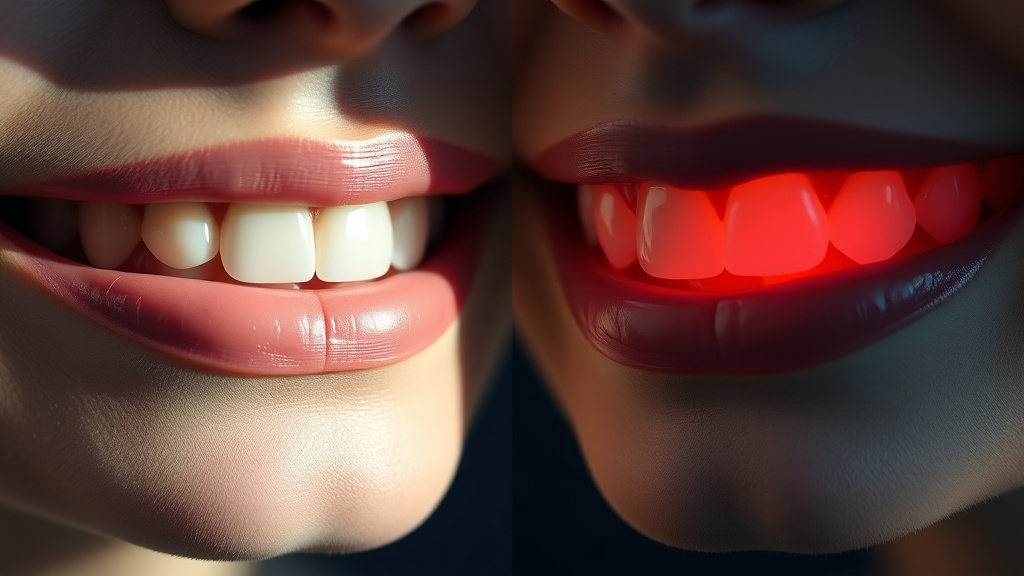
Gingivitis reads as redness, gloss and puffy margins at the gumline; healthy gum is pale pink, firm and stippled.
What the research actually shows
Every claim above maps to a named, peer-reviewed source listed in Sources. According to PubMed.
| Claim | Evidence | Source |
|---|---|---|
| Bleeding gums are the single most prevalent sign of periodontal disease worldwide, so the visible trace of blood is the most common giveaway. | Global public-health review of periodontal disease. | Petersen & Ogawa, 2012 |
| The inflamed appearance is reversible: clinical measures of redness, swelling and bleeding rise with plaque and return to baseline once plaque control resumes. | Experimental gingivitis clinical trial. | Wellappuli et al., 2017 |
| Stopping oral hygiene visibly inflames the gums within about two to three weeks; resuming it restores their healthy appearance. | Original experimental-gingivitis-in-man study. | Loe et al., 1965 |
| Appearance alone cannot confirm the diagnosis, because not all gingivitis progresses and clinicians cannot reliably predict which cases will. | Review of gingivitis and periodontitis prevention. | Jin et al., 2011 |
| Smoking can mask the redness and bleeding that make gingivitis visible, so the gums of a smoker may look deceptively healthy. | Meta-analysis of smoking and periodontal disease. | Leite et al., 2018 |
Healthy, gingivitis and beyond, at a glance
| What you see | Healthy gums | Gingivitis | Possible periodontitis |
|---|---|---|---|
| Colour | Pale, even pink | Red, especially at the margins | Red or purplish, sometimes dusky |
| Shape of the margin | Thin, hugs the tooth | Puffy and rounded | Receding, exposing more tooth or root |
| Surface | Firm, stippled | Shiny, swollen | Shiny plus visible gaps or pockets |
| Bleeding | None with normal brushing | Bleeds easily | Bleeds, sometimes with pus |
| Teeth | Stable | Stable | May look longer, loose or drifted |
Why the mirror is not enough on its own
It is genuinely useful to know what gingivitis looks like, but appearance has real limits as a diagnosis. The most important is that the inflamed look of gingivitis and the early look of periodontitis overlap: both can show red, bleeding gums, and the crucial difference, loss of the attachment and bone beneath, is not something you can see in a mirror. That hidden loss is what a dentist measures. Appearance can also mislead in specific ways. Smoking constricts the gum blood vessels, which can suppress the redness and bleeding that would otherwise reveal inflammation, so a smoker gums may look calmer than they are. Natural gum colour varies between people too, with some having healthy gums that are naturally darker or mottled with pigment, which can complicate a colour-only judgement. And because roughly one in three people are high responders whose gums inflame more visibly to the same plaque, the intensity of the look does not map neatly onto the amount of plaque present. The sensible way to use appearance is as a prompt: if your gums look red, puffy or shiny, or leave pink in the sink, treat that as a reason to improve plaque control and get a professional to confirm what you are seeing.
Evidence you can act on.
Occasional emails — new research, new protocols, no noise.
How to check your gums, and restore the healthy look
A quick, regular look is a good habit, and controlling plaque is what returns gums to their healthy appearance. This is a self-check to guide you toward care, not a substitute for a dental diagnosis.
- 1
Look in good light
1 minuteUse bright, natural light and a mirror, and gently lift your lip to see the gumline clearly. Compare the margins around different teeth; inflammation is often patchy, worst where plaque gathers, so uneven redness and puffiness are telling.
- 2
Note colour, shape and shine
1 minuteHealthy gum is pale pink, firm and matte with fine stippling. Look for redness at the margins, puffy rounded edges, and a glossy, stretched surface, the visual signature of gingivitis.
- 3
Check for easy bleeding
as you cleanNotice whether brushing or interdental cleaning leaves a trace of pink. Bleeding is the most common visible clue, so recurring pink in the sink is worth taking seriously rather than blaming on brushing too hard.
- 4
Improve plaque control and watch the look change
1-2 weeksAngled gumline brushing and daily cleaning between teeth lower the plaque driving the inflammation. As plaque falls, the redness fades and the swelling settles, and you can often see the healthier appearance returning within a couple of weeks.
- 5
Confirm it with a dentist
at your next visitBecause appearance cannot separate gingivitis from early periodontitis, have a professional confirm what you are seeing, remove any hardened tartar, and check that the structures beneath are healthy.
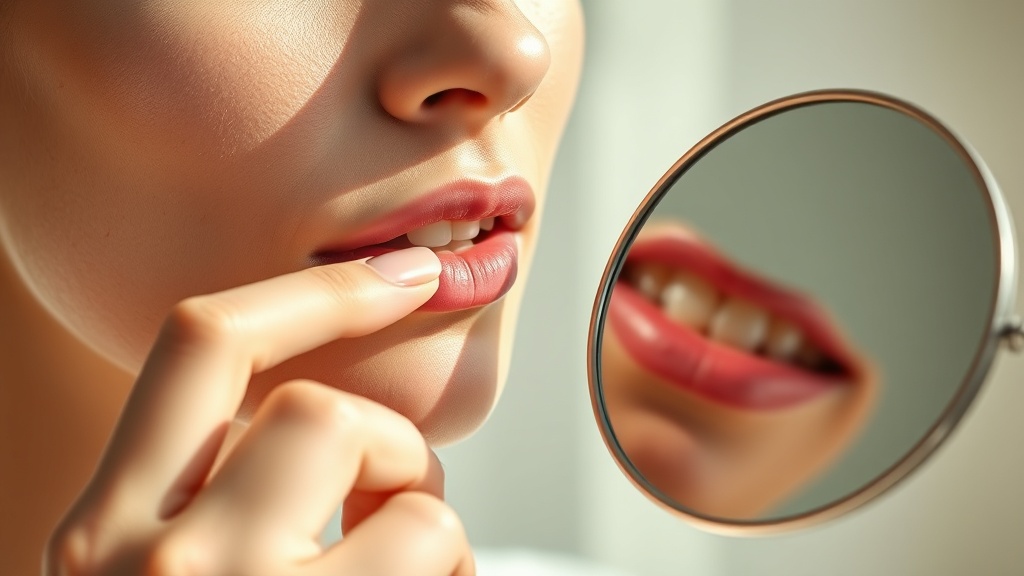
A quick look in good light, comparing colour, margin shape and shine around your teeth, is a useful self-check between dental visits.
Use the mirror as a guide, not a verdict, and let a dentist confirm what you see, since gingivitis and early periodontitis can look alike. See a dentist if your gums look persistently red, puffy or shiny or bleed easily, and go promptly if they look like they are receding or pulling away from the teeth, if teeth appear longer, loose or drifted, or if you see any pus. Those appearances suggest loss of attachment, which points beyond gingivitis and needs professional care.
Frequently asked questions
Sources
- 1.
- 2.
- 3.
- 4.
- 5.
- 6.

Fix your breath at the source.
The complete science-backed protocol — engineered to eliminate volatile sulfur compounds at the biological source.
Start the Breath Protocol →Related reading
Educational purposes only. The content on this page is not medical advice and is not a substitute for consultation with a qualified dental or medical professional.
More from the library
 Guides9 min
Signs of Gingivitis: What a Dentist Looks For
The objective, clinically observable signs of gingivitis, explained so you understand what a dentist is actually assessing.
Read →→ Guides8 min
Gingivitis Symptoms: What Early Gum Disease Feels Like
A patient-focused rundown of the symptoms of gingivitis you can notice yourself, and what each one is telling you.
Read →→ Answers8 min
What Is Gingivitis? A Plain-English Guide to Early Gum Disease
A clear, honest explainer on what gingivitis is, why it happens, and why the early stage can return to full health.
Read →→ Answers8 min
Can Receding Gums Grow Back? The Honest Answer
It is the question everyone with recession asks. The straight answer, and what you can realistically do instead.
Read →→ Guides8 min
Gum Disease Symptoms: The Early Warnings You Can Feel
The symptoms of gum disease you can feel and notice yourself, why bleeding comes first, and when a symptom means see a dentist now.
Read →→ Guides8 min
Periodontal Disease: The Full Spectrum, Explained
A clear, honest overview of periodontal disease as a spectrum: the difference between gingivitis and periodontitis, what the colloquial phrase gum disease misses, and why early bleeding is the signal to act.
Read →→