
Gingivitis Symptoms
A patient-focused rundown of the symptoms of gingivitis you can notice yourself, and what each one is telling you.

- The symptom almost everyone notices first is bleeding: pink in the sink when you brush or floss, even though it feels gentle.
- Other everyday signs include gums that look red or puffy, feel tender or itchy, and a persistent bad taste or bad breath that will not clear.
- Healthy gums do not usually bleed with normal brushing, so regular bleeding is a signal worth acting on rather than ignoring.
- Gingivitis is often painless, which is why it is easy to miss; the absence of pain does not mean the absence of a problem.
- Some symptoms, such as gums pulling away from teeth, loose teeth or pus, point beyond gingivitis and mean you should see a dentist promptly.
The main symptoms of gingivitis are gums that bleed easily when you brush or floss, look red or swollen, and feel tender, often with lingering bad breath or a bad taste. It is usually painless. Because bleeding is the earliest and most reliable clue, treat it as a prompt to tighten your routine and see a dentist.
Why gingivitis produces the symptoms it does
Every symptom of gingivitis traces back to one thing: inflammation of the gum in response to plaque. When plaque bacteria irritate the gumline, the small blood vessels in the tissue widen and become leaky. That is why the gums look redder and fuller than usual, and why they bleed at the slightest disturbance, because fragile, engorged vessels sit close to the surface. The same swelling can make gums feel tender, tight or oddly itchy, and it can leave them looking glossy where healthy gum has a matte, stippled texture. The bad taste or bad breath that often comes along is produced by the bacteria themselves, which release odour compounds as they build up along the gumline and between teeth. Notice what is missing from that list: sharp pain. Gingivitis is frequently painless, because the inflammation has not yet reached the deeper structures that generate strong pain signals. This is precisely why it is so easy to overlook, and why the quiet, unglamorous symptom of a little bleeding is the one worth paying attention to.
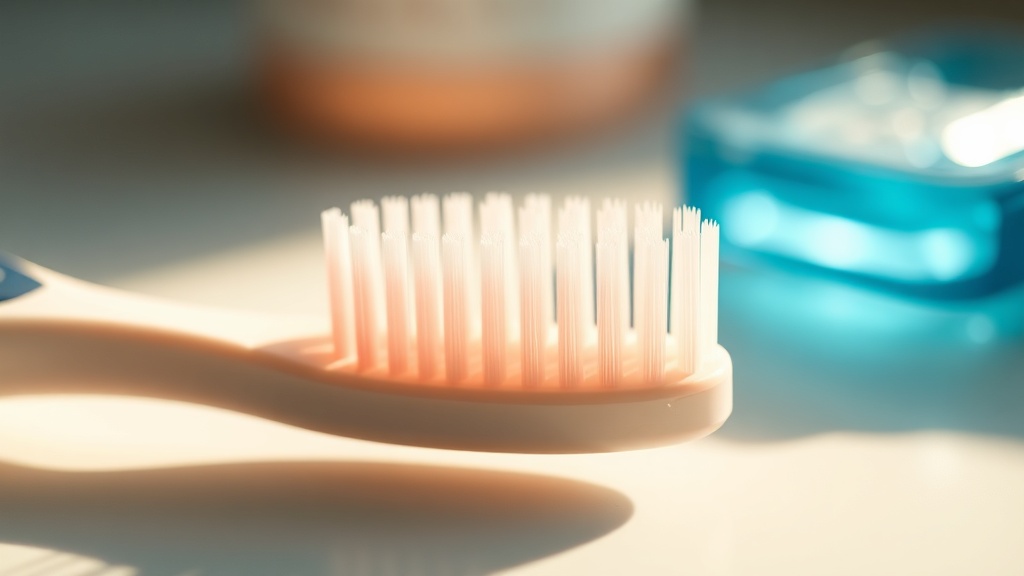
A little pink when you brush or floss is the earliest and most common symptom of gingivitis, and the easiest to act on.
What the research actually shows
Every claim above maps to a named, peer-reviewed source listed in Sources. According to PubMed.
| Claim | Evidence | Source |
|---|---|---|
| Gingival bleeding is the single most prevalent sign of periodontal disease worldwide, making it the most reliable everyday symptom to watch. | Global public-health review of periodontal disease. | Petersen & Ogawa, 2012 |
| In the experimental model, symptoms such as bleeding rise within about two to three weeks of stopping hygiene and settle again once cleaning resumes. | Original experimental-gingivitis-in-man study. | Loe et al., 1965 |
| Every clinical parameter, including bleeding and gingival index, returned to baseline during the resolution phase after plaque control resumed. | Experimental gingivitis clinical trial. | Wellappuli et al., 2017 |
| Vitamin C supplementation improves gingival bleeding in gingivitis, especially where intake is low, but does not affect deeper structural disease. | Systematic review of vitamin C and periodontal outcomes. | Fageeh et al., 2021 |
| An anti-inflammatory, whole-food diet lowered the gingival index from 1.04 to 0.61 in four weeks despite unchanged plaque, showing bleeding responds to more than brushing alone. | Four-week randomised controlled trial (n=30). | Woelber et al., 2019 |
What each symptom is telling you
| Symptom you notice | What it usually means | Everyday reassurance or caution |
|---|---|---|
| Pink in the sink when brushing | Inflamed, engorged gum vessels bleeding easily | Common and reversible; act on it, do not ignore it |
| Red or puffy gum margins | Active inflammation at the gumline | Typical of gingivitis; improves as plaque drops |
| Tender, tight or itchy gums | Swelling of the gum tissue | Usually mild; see a dentist if it worsens |
| Persistent bad breath or bad taste | Bacteria accumulating along the gumline | Often improves with better cleaning and a professional clean |
| Gums pulling back, loose teeth or pus | Possible progression beyond gingivitis | See a dentist promptly; this is past the reversible stage |
Why painless does not mean harmless
The most important thing to understand about gingivitis symptoms is how gentle they are. There is rarely any real pain, the bleeding is minor, and the redness is easy to explain away as brushing too hard. That mildness is a trap. Because gingivitis whispers rather than shouts, many people tune it out for months or years, and in the susceptible minority whose gums over-react to plaque, quiet inflammation is the runway toward periodontitis, where the damage stops being reversible. The research offers a clear way to read the signals. Bleeding is the most prevalent and dependable sign, so recurring bleeding is the symptom to respect most, even when nothing hurts. It is also encouraging: because these symptoms are driven by a live inflammatory response, they respond quickly once the trigger is reduced. Studies show bleeding and other measures return to baseline within weeks of consistent plaque control, and that bleeding even eases with better nutrition, such as adequate vitamin C and an anti-inflammatory diet. The takeaway is not to panic at a spot of pink, but to treat it as a useful, actionable message rather than background noise.
Evidence you can act on.
Occasional emails — new research, new protocols, no noise.
What to do when you notice the symptoms
Noticing symptoms is the moment to tighten plaque control and get a professional opinion. These steps support gum health; a dentist provides the diagnosis and any cleaning the symptoms call for.
- 1
Do not stop cleaning the area that bleeds
immediatelyIt is tempting to avoid a spot that bleeds, but that lets plaque build up and keeps the inflammation going. Keep cleaning it gently but thoroughly; in most early cases the bleeding eases within a couple of weeks as the gum calms.
- 2
Sharpen your gumline technique
2 minutes, twice dailyAngle a soft brush into the gumline and add daily cleaning between the teeth, where symptoms often start. Better technique, not harder scrubbing, is what lowers the plaque driving the bleeding.
- 3
Support your gums from the inside
dailySip water through the day, and make sure your diet includes enough vitamin C, a required building block for gum collagen. An anti-inflammatory, whole-food diet is linked with less gum bleeding independent of plaque.
- 4
Track how long symptoms last
1-2 weeksGive a tightened routine a week or two. Symptoms that clearly improve are reassuring; symptoms that persist, spread or worsen are your cue to get seen rather than to keep waiting.
- 5
Book a dental check-up
as soon as practicalA dentist can confirm whether it is gingivitis, remove the hardened tartar you cannot reach, and rule out anything more advanced. This is the step that turns guesswork into a clear answer.

Hydration, adequate vitamin C and an anti-inflammatory diet are linked with less gum bleeding, alongside good daily cleaning.
Any gum symptom that keeps coming back deserves a dentist visit, because only a professional can confirm gingivitis and rule out more advanced disease. See a dentist promptly if bleeding is heavy or will not stop, if gums are visibly pulling away from your teeth, if teeth feel loose or have shifted, if there is pus or swelling, or if bad breath persists despite good cleaning. These signs can mean the problem has moved past the reversible early stage and needs hands-on care.
Frequently asked questions
Sources
- 1.
- 2.
- 3.
- 4.
- 5.
- 6.
- 7.

Fix your breath at the source.
The complete science-backed protocol — engineered to eliminate volatile sulfur compounds at the biological source.
Start the Breath Protocol →Related reading
Educational purposes only. The content on this page is not medical advice and is not a substitute for consultation with a qualified dental or medical professional.
More from the library
 Guides9 min
Signs of Gingivitis: What a Dentist Looks For
The objective, clinically observable signs of gingivitis, explained so you understand what a dentist is actually assessing.
Read →→ Answers9 min
What Does Gingivitis Look Like? A Visual Guide
A plain-language visual guide to recognising what gingivitis looks like, and how to tell it from healthy gums.
Read →→ Guides9 min
Gingivitis: Causes, Symptoms and How It Is Treated
The whole picture on gingivitis in one place, from plaque and bleeding to professional treatment and everyday gum-supporting habits.
Read →→ Answers8 min
What Is Gingivitis? A Plain-English Guide to Early Gum Disease
A clear, honest explainer on what gingivitis is, why it happens, and why the early stage can return to full health.
Read →→ Guides8 min
Gum Disease Symptoms: The Early Warnings You Can Feel
The symptoms of gum disease you can feel and notice yourself, why bleeding comes first, and when a symptom means see a dentist now.
Read →→ Answers8 min
Can Receding Gums Grow Back? The Honest Answer
It is the question everyone with recession asks. The straight answer, and what you can realistically do instead.
Read →→