
What Is Gingivitis?
A clear, honest explainer on what gingivitis is, why it happens, and why the early stage can return to full health.
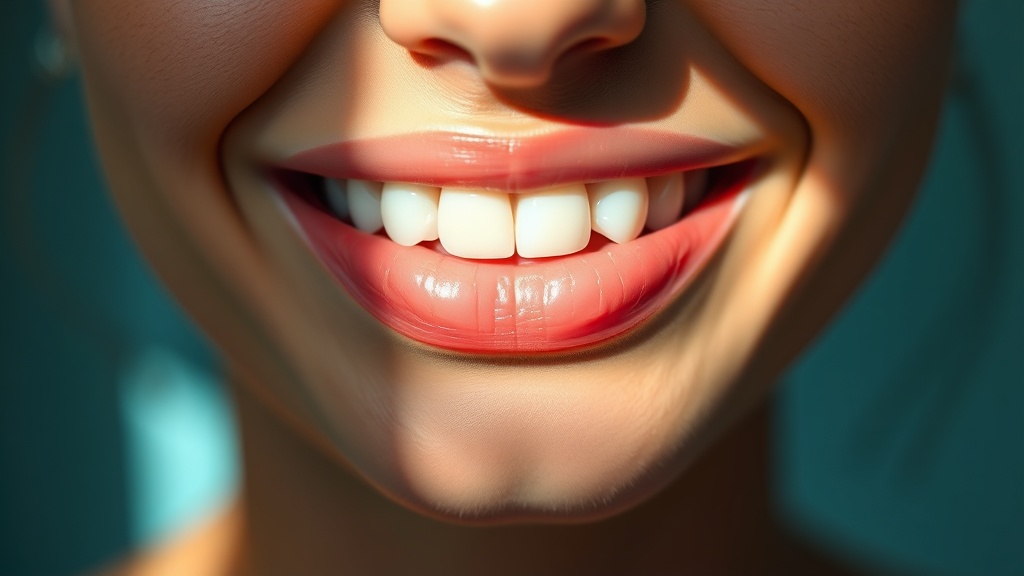
- Gingivitis is the earliest and mildest stage of gum disease: inflammation of the gum tissue driven mainly by dental plaque collecting along the gumline.
- It is genuinely reversible. Classic experiments show that when plaque is cleared, the redness, swelling and bleeding settle and the gums return to their healthy baseline within weeks.
- It is extremely common: gum bleeding is the single most prevalent sign of periodontal disease worldwide, and most adults notice it at some point.
- The key line is tissue depth: gingivitis affects only the soft gum and heals fully, while periodontitis, the later stage, destroys bone and attachment and does not.
- A dentist diagnoses and treats gingivitis; a consistent daily routine at home supports healthy gums between visits by keeping plaque under control.
Gingivitis is early-stage gum disease: inflammation of the gums caused by plaque bacteria building up along the gumline. It shows up as red, puffy gums that bleed easily when you brush. Unlike advanced gum disease, gingivitis is reversible: professional cleaning plus steady daily plaque control returns the gums to health.
What gingivitis actually is
Gingivitis is inflammation of the gingiva, the collar of gum tissue that hugs each tooth. It begins with dental plaque, the soft, sticky film of bacteria that forms on teeth every day. When plaque is left along the gumline, the bacteria multiply and release irritants, and your immune system answers with inflammation: the tiny blood vessels in the gum widen and become leaky, which is why the tissue turns red, swells, and bleeds so readily when brushed. Crucially, at this stage the trouble is confined to the soft tissue. The fibres and bone that anchor each tooth are still untouched. That single fact separates gingivitis from its more serious successor, periodontitis, and it is why gingivitis can heal completely. The experiments that first defined the condition showed the sequence run both ways: healthy volunteers who stopped brushing developed gingivitis within two to three weeks, and once they resumed cleaning, their gums returned to health. So gingivitis is less like damage already done and more like an active reaction that quiets down the moment its trigger, plaque, is removed.
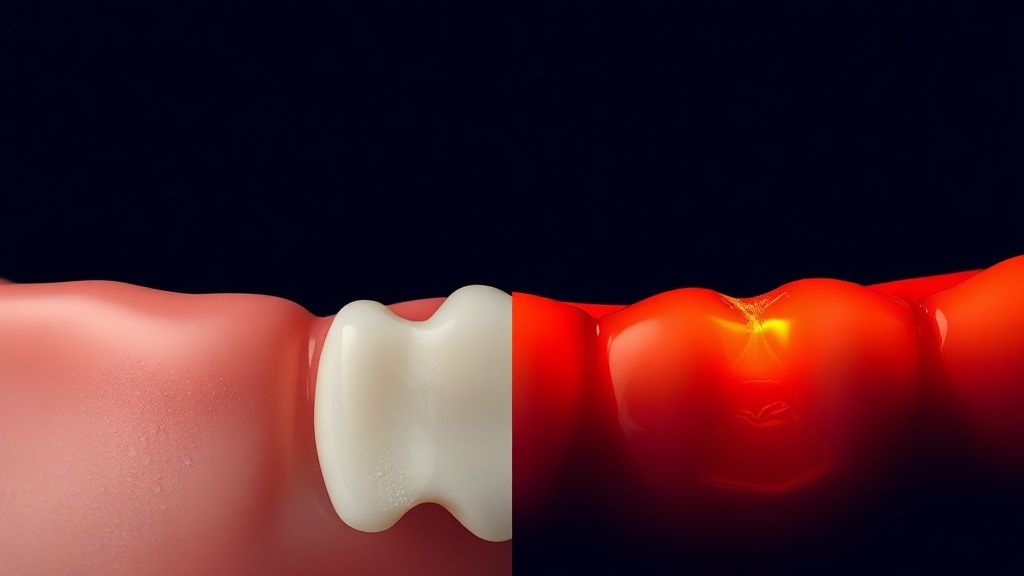
In gingivitis the gum collar swells and reddens as blood vessels widen; the bone and fibres holding the tooth stay intact, which is why it can fully recover.
What the research actually shows
Every claim above maps to a named, peer-reviewed source listed in Sources. According to PubMed.
| Claim | Evidence | Source |
|---|---|---|
| Gingival bleeding is the single most prevalent sign of periodontal disease worldwide, and deep destructive pockets affect only a minority of adults. | Global public-health review of periodontal disease burden. | Petersen & Ogawa, 2012 |
| Stopping oral hygiene induces gingival inflammation within about 2-3 weeks; resuming plaque control returns bleeding, swelling and other clinical parameters to baseline. | The original experimental-gingivitis-in-man study. | Loe et al., 1965 |
| In the experimental model, every clinical parameter rose during two weeks without hygiene and returned to baseline during the resolution phase. | Experimental gingivitis clinical trial. | Wellappuli et al., 2017 |
| Reversible inflammation is widespread while progression to severe disease is uncommon: a cohort showed 61% mild plus 27% moderate gingivitis but only 1% severe periodontitis. | Reproductive-age population cohort (n=647). | Oyaro et al., 2022 |
| Gingivitis is described as reversible with plaque control, whereas periodontitis is a ubiquitous and irreversible condition where lost bone and attachment are not regained. | EFP consensus on primary prevention of periodontitis. | Chapple et al., 2015 |
Gingivitis versus periodontitis at a glance
| Feature | Gingivitis (early) | Periodontitis (advanced) |
|---|---|---|
| Tissue affected | Soft gum only | Gum plus bone and attachment fibres |
| Reversible? | Yes, with professional care and daily plaque control | No; loss can be arrested and stabilised but not undone at home |
| Bone loss | None | Progressive and permanent |
| Typical sign | Red, puffy gums that bleed when brushed | Bleeding plus receding gums, pockets, loosening or drifting teeth |
| Who manages it | Dentist or hygienist, supported by home routine | Dentist or periodontist; deep cleaning and ongoing maintenance |
Why nearly everyone gets it, and why it clears
Gingivitis is almost a fact of life because plaque reforms on clean teeth within hours, and the gumline is the one place a rushed brushing routine misses most. That is why some bleeding when you floss or brush is so common, and it is rarely a sign of a serious problem on its own. What varies from person to person is how strongly the gums react. Research suggests roughly one in three people are high responders whose gums over-inflame to the same amount of plaque, which is a useful flag that they may be more prone to trouble if plaque is left unchecked. The reassuring half of the picture is that most gingivitis never progresses, and clinicians cannot reliably predict which mild cases would, which is exactly why the sensible strategy is simple, universal prevention rather than alarm. Because the inflammation is a live response to a live trigger, removing the trigger works quickly: clear the plaque thoroughly and consistently and the gum tissue calms, firms up and stops bleeding. Home care does not cure a disease so much as remove the daily fuel that keeps the inflammation burning.
Evidence you can act on.
Occasional emails — new research, new protocols, no noise.
How healthy gums are kept healthy
None of the steps below treat a disease. They simply keep plaque, the trigger, under control so the gums have the calm conditions they need. Diagnosis and any needed cleaning come from your dentist.
- 1
Brush along the gumline twice a day
2 minutes, twice dailyMost plaque that irritates the gums sits right where tooth meets gum. Angle a soft brush at about 45 degrees to the gumline and use short, gentle strokes for a full two minutes. Reviews of brushing technique find that twice-daily brushing with this approach supports lower plaque and healthier gingival scores.
- 2
Clean between the teeth daily
1 minute dailyA brush cannot reach the surfaces between teeth, where plaque quietly accumulates. Daily interdental cleaning with floss or interdental brushes reduces gum inflammation in these gaps. Interdental brushes, where they fit, are especially well supported for gum health.
- 3
Keep regular professional cleanings
every 6-12 monthsHardened plaque, called tartar or calculus, cannot be brushed off; only a dentist or hygienist can remove it. Regular professional cleaning clears what home care leaves behind and lets a clinician catch changes early. This is the part of gum care that home routines cannot replace.
- 4
Do not smoke
ongoingSmoking is the single biggest modifiable risk factor for gum disease and can mask bleeding, hiding early trouble. Not smoking, and stopping if you do, meaningfully lowers the risk of gum problems progressing.
- 5
Support your gums with hydration and diet
dailySaliva is the mouth natural rinse, so sip water through the day. Getting enough vitamin C matters too, because it is a required building block for the collagen in healthy gum tissue, and an anti-inflammatory, whole-food diet is linked with less gum bleeding independent of plaque.

Gentle, angled brushing along the gumline clears the plaque that triggers gingivitis; consistency matters far more than force.
Gingivitis is diagnosed and treated by a dental professional, so book a check-up if your gums bleed regularly, look red or swollen, or feel tender. See a dentist sooner if bleeding is heavy or persistent, if your gums are pulling away from your teeth, if teeth feel loose or have shifted, or if bad breath or a bad taste will not clear, as these can signal that the problem has moved beyond the reversible early stage. A professional can remove hardened tartar you cannot reach and confirm what stage your gums are actually in.
Frequently asked questions
Sources
- 1.
- 2.
- 3.
- 4.
- 5.
- 6.
- 7.
- 8.

Fix your breath at the source.
The complete science-backed protocol — engineered to eliminate volatile sulfur compounds at the biological source.
Start the Breath Protocol →Related reading
Educational purposes only. The content on this page is not medical advice and is not a substitute for consultation with a qualified dental or medical professional.
More from the library
 Guides9 min
Gingivitis: Causes, Symptoms and How It Is Treated
The whole picture on gingivitis in one place, from plaque and bleeding to professional treatment and everyday gum-supporting habits.
Read →→ Answers9 min
Is Gingivitis Reversible? The Honest Answer
The honest, evidence-based answer on whether gingivitis is reversible, how it happens, and the point at which it no longer is.
Read →→ Guides8 min
Gingivitis Symptoms: What Early Gum Disease Feels Like
A patient-focused rundown of the symptoms of gingivitis you can notice yourself, and what each one is telling you.
Read →→ Answers8 min
Can Receding Gums Grow Back? The Honest Answer
It is the question everyone with recession asks. The straight answer, and what you can realistically do instead.
Read →→ Guides8 min
Gum Disease Symptoms: The Early Warnings You Can Feel
The symptoms of gum disease you can feel and notice yourself, why bleeding comes first, and when a symptom means see a dentist now.
Read →→ Guides8 min
Periodontal Disease: The Full Spectrum, Explained
A clear, honest overview of periodontal disease as a spectrum: the difference between gingivitis and periodontitis, what the colloquial phrase gum disease misses, and why early bleeding is the signal to act.
Read →→