
How to Relax Your Jaw
Quick, everyday techniques to release a tense, clenched jaw, and the simple resting cue worth remembering.

- The fastest way to relax your jaw is to reset its resting position: lips gently together, teeth slightly apart, tongue resting softly on the roof of your mouth.
- Most jaw tension is a stress-linked clenching habit, not weakness, so the fix is to notice and release, not to work the jaw harder.
- Awake clenching is common, affecting roughly one in five to one in six adults, and it often flares during focus, screen time, and stress.
- Slow breathing, a warm compress, and a light self-massage give quick relief; a daily awareness cue keeps the clench from creeping back.
- These are everyday comfort tips. Jaw pain that persists, worsens, locks, or damages teeth is a reason to see a dentist or a TMJ specialist.
To relax your jaw, let it drop into its resting position: lips together, teeth slightly apart, tongue softly on the roof of your mouth, so your teeth are not touching. Add a few slow breaths, unclench your shoulders, and gently massage the cheek muscles. Repeat the cue whenever you notice tension. It eases comfort; it does not treat a jaw disorder.
Why your jaw tenses up in the first place
A tense jaw is usually a bracing habit. The masseter and temporalis, the big muscles that close your jaw, are among the strongest in the body, and they quietly clamp down when you are concentrating, stressed, driving, or scrolling on a phone. Most of the time your teeth should not be touching at all; they only meet briefly when you chew or swallow. But under stress the jaw drifts into a low-grade clench that you hold for minutes or hours without realising, and that sustained tension is what you feel later as tightness, aching, or fatigue. This is why relaxing the jaw is mostly about awareness and release rather than any special exercise. The muscle is not weak; it is over-worked and stuck in the on position. When you catch the clench and deliberately let the jaw go slack, breathe out slowly, and drop your shoulders, you interrupt that bracing loop. Do it often enough and the resting, unclenched position starts to feel more natural than the clench. That is the whole game: notice, release, repeat.

The target is this: a soft, unclenched jaw with teeth apart and lips lightly together, not a face held tight.
What the research actually shows
Every claim below maps to a named, peer-reviewed source in the Sources section. According to PubMed.
| Claim | Evidence | Source |
|---|---|---|
| Awake bruxism is essentially the awareness of jaw clenching, and about 20% of adults report it, usually linked to stress rather than the bite. | Clinical overview of bruxism physiology. | Lavigne et al., 2008 |
| Daytime clenching is very common, with pooled estimates around 16 to 32%, or roughly one in six adults on population data. | Systematic review of awake bruxism prevalence. | Oliveira et al., 2023 |
| In healthy people, clenching is best treated as a habit that can be nudged, not a disease to cure. | International expert consensus statement. | Lobbezoo et al., 2018 |
| Jaw tension tracks with stress: anxiety and depression are significant risk factors linked to jaw-disorder symptoms. | Study of 570 patients (anxiety OR 2.20, depression OR 1.74). | Ye et al., 2022 |
| Heavy smartphone use is associated with more jaw-disorder symptoms, part of why screen time so often triggers clenching. | Systematic review of 7 studies, 3,568 participants (OR 1.9). | Sayed Abdul, 2025 |
Everyday cues and when to use them
| Cue | Best moment to use it | Why it works |
|---|---|---|
| Lips together, teeth apart | Any time you notice a clench | Resets the jaw to its true resting position |
| One long slow exhale | During stress or focused work | Calms the nervous system so the jaw lets go |
| Drop the shoulders | At a desk or on the phone | Tension in the neck and shoulders feeds the jaw |
| Warm cloth on the jaw | End of a tense day | Relaxes tight muscles for quick comfort |
| Light cheek massage | When the jaw feels achy | Eases resting tension in the closing muscles |
The one position worth memorising, and the neck link
If you remember nothing else, remember this: lips together, teeth apart. That short phrase captures the natural resting posture of a relaxed jaw. Your teeth are meant to have a small freeway space between them almost all the time; letting them touch and press is the clench you are trying to undo. Keep the tongue resting lightly on the roof of the mouth and the jaw simply hangs, loose and comfortable. It is worth pairing the jaw with the neck, because the two are connected. In people with jaw problems, it is the presence of neck pain, more than any exact posture angle, that tracks with jaw-muscle tenderness, so easing a stiff, hunched neck often takes pressure off the jaw too. That is why the everyday cues that help most are the ones that relax the whole upper body: soften the jaw, drop the shoulders, lengthen the neck, and breathe out. Small resets like this, done many times a day, do more for a tense jaw than any single big effort.
Evidence you can act on.
Occasional emails — new research, new protocols, no noise.
Quick everyday cues to relax your jaw
None of these takes more than a minute, and the point is to use them often rather than perfectly. Sprinkle them through your day, especially during screen time and stress. They are comfort cues, not a treatment for a disorder.
- 1
The lips-together, teeth-apart reset
10 secondsWhenever you notice tension, gently close your lips, let your teeth separate so they are not touching, and rest your tongue lightly on the roof of your mouth. This is the single most useful cue; the more often you return to it, the more natural it becomes.
- 2
One slow breath and a shoulder drop
20 secondsBreathe out slowly and, as you do, deliberately let your jaw, shoulders and neck go slack. A long exhale signals your body to stand down from a braced state, and the jaw follows.
- 3
A gentle warm-and-massage break
1 minuteWhen the jaw aches, hold a warm cloth to the sides of your face or make slow, light circles with your fingertips over the cheek muscles. Keep the pressure gentle; this is for comfort, not a deep-tissue workout.
- 4
Set a screen-time trigger
a few secondsSince phones and focused screen work are common clench triggers, tie the reset to a habit: every time you pick up your phone, check that your teeth are apart. Turning an existing habit into a reminder makes the cue automatic.
- 5
Loosen the jaw before sleep
1 minuteAt bedtime, do a few slow breaths, let your face go completely slack, and settle into lips together, teeth apart. Winding down the whole body first makes it easier for the jaw to rest overnight.

Screens are a common trigger. Tying a jaw reset to picking up your phone turns the cue into a habit.
These cues are for everyday comfort, not for a jaw problem that will not settle. See a dentist or a TMJ specialist if you have jaw pain that persists or keeps returning, if your jaw locks, catches or will not open fully, if your teeth are worn, chipped or newly sensitive, or if you regularly wake with jaw pain or headaches. Frequent grinding may also call for a professionally fitted night guard. Relaxing your jaw supports that care; it does not replace it.
Frequently asked questions
Sources
- 1.
- 2.
- 3.
- 4.
- 5.
- 6.
- 7.
- 8.

Fix your breath at the source.
The complete science-backed protocol — engineered to eliminate volatile sulfur compounds at the biological source.
Start the Breath Protocol →Related reading
Educational purposes only. The content on this page is not medical advice and is not a substitute for consultation with a qualified dental or medical professional.
More from the library
 Answers8 min
How to Unclench Your Jaw (Quick Relief in Under a Minute)
Daytime jaw clenching is a common stress habit, not a disorder. You can unclench it in under a minute with a few gentle resets.
Read →→ Guides8 min
Jaw Tension: Why It Happens and How to Ease It
A tight jaw is usually an over-worked muscle, not a broken joint — here is what drives jaw tension and how to gently let it go.
Read →→ Guides8 min
Jaw Exercises for Tension and Comfort
A calm, honest guide to jaw exercises that ease tension and improve movement, plus the honest limits of what they can and cannot change.
Read →→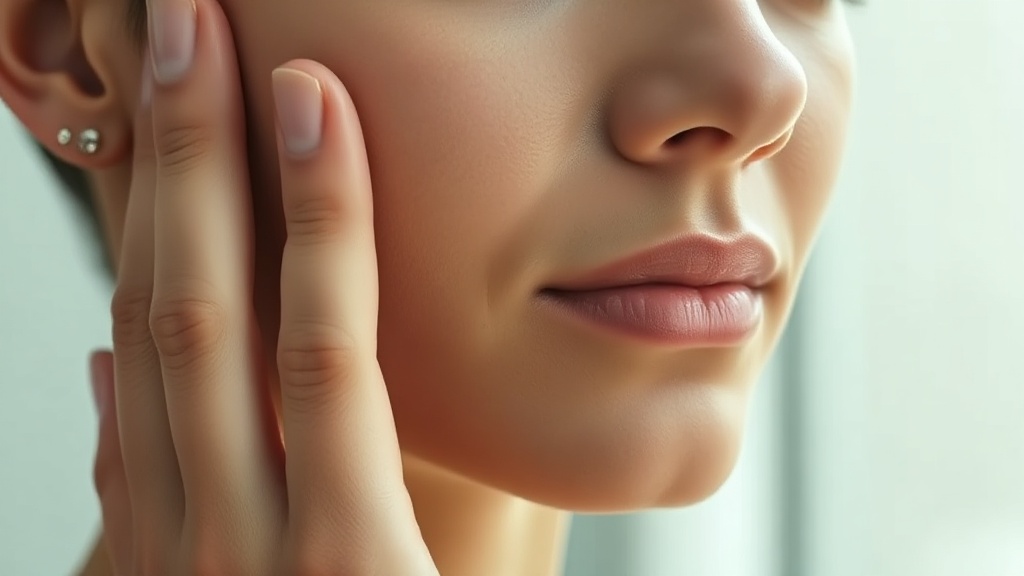 Guides8 min
Masseter Tension Relief: Easing a Tight, Overworked Jaw
The masseter is the powerful cheek muscle that closes your jaw; when it is overworked it gets tight — here is how to ease it, and why training it harder backfires.
Read →→ Guides8 min
Jaw Relaxation Exercises: A Step-by-Step Comfort Guide
A step-by-step down-regulation routine for a tight, clenched jaw, built on gentle relaxation rather than force.
Read →→ Guides9 min
Does Mewing Actually Work? An Honest, Evidence-Based Breakdown
The honest, evidence-based answer to whether tongue posture can reshape an adult jaw — what the research really shows, and why forcing it can backfire.
Read →→