Clove Oil for Toothache: Does It Really Work?
An honest look at why clove oil dulls tooth pain, how long the relief lasts, and how to use it without harming your gums.

- Clove oil works because of eugenol, a plant compound that briefly numbs the nerve endings around an aching tooth and calms the bacteria on the surface — a genuine, well-documented comfort effect.
- The relief is temporary and topical: eugenol dulls the pain signal for a short while but does nothing to repair the cavity, crack, or exposed nerve that is actually causing it.
- Dentistry has leaned on eugenol for over a century — it is the active part of the zinc-oxide-eugenol dressings dentists still place — so the folk remedy has a real pharmacological basis rather than being a myth.
- Used carelessly, undiluted clove oil can irritate or even burn the gum and tongue, so it should be diluted and dabbed only on the tooth, never swished or swallowed in quantity.
- A toothache is a signal, not a diagnosis. Clove oil can make the wait more bearable, but persistent or severe pain needs a dentist, because only a professional can find and fix the cause.
Clove oil can ease a toothache because its main compound, eugenol, has a mild numbing and antibacterial action on the tissue it touches. It is a short-term comfort measure, not a cure: it quiets the pain for a while but cannot repair whatever is causing it. Dilute it, apply it sparingly, and still see a dentist.
What eugenol actually does
Clove essential oil is an unusually concentrated source of a single active molecule: eugenol makes up the large majority of the oil, and it is the whole reason the remedy does anything at all. When eugenol contacts the tissue around a tooth it acts in two useful ways. First, it is a mild local anaesthetic — it dampens the excitability of the sensory nerve endings it reaches, so the pain signal travelling from the tooth is briefly turned down. In controlled laboratory work, clove-bud oil and isolated eugenol reduced sensation on contact and even boosted the numbing of a standard local anaesthetic used alongside them. Second, eugenol is antibacterial and anti-inflammatory, which is why an irritated, exposed tooth surface can feel calmer and cleaner after it is applied. This is not fringe folklore. Eugenol has been a dental workhorse for more than a hundred years: mixed with zinc oxide it forms the soothing temporary dressings and cements dentists still use over sensitive dentine and after extractions. So the kitchen-cupboard remedy and the professional material share the same active ingredient — the difference is dose, control, and what sits underneath.
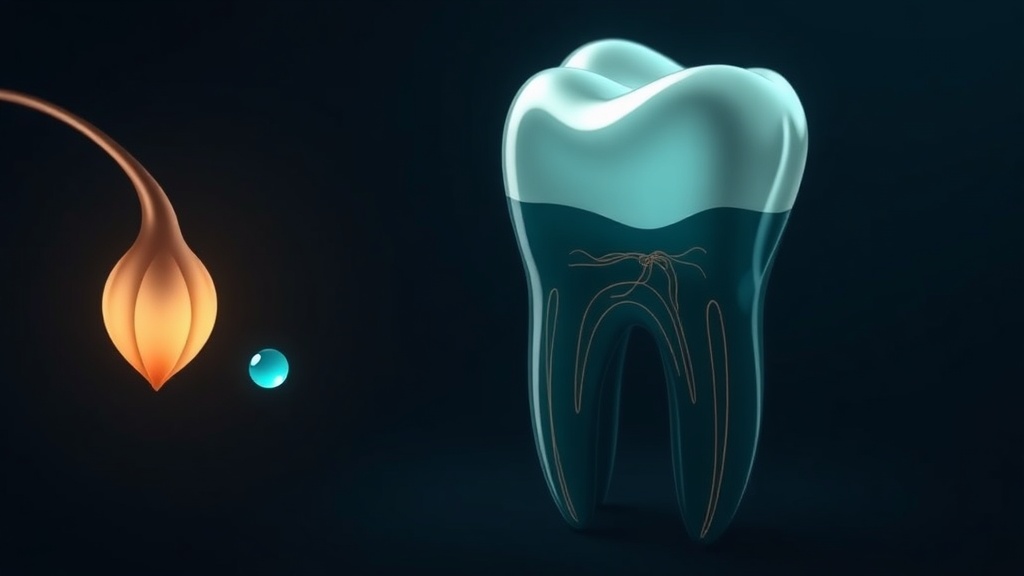
Eugenol acts on the surface it touches — briefly numbing nearby nerve endings and calming surface bacteria — but it never reaches the inner pulp.
What the research actually shows
Every claim below maps to a named, peer-reviewed source in the Sources section. According to PubMed.
| Claim | Evidence | Source |
|---|---|---|
| Topical clove-bud oil and its isolated eugenol produced a measurable local-anaesthetic effect, reducing sensation on contact and adding to the numbing of a standard anaesthetic. | Controlled analgesia and local-anaesthesia study of clove-bud essential oil and eugenol. | Daniel et al., 2016 |
| Reviews of eugenol pharmacology describe consistent analgesic and anti-inflammatory activity — the basis for its long use in dental materials. | Comprehensive review of eugenol pharmacological properties. | Ulanowska & Olas, 2021 |
| Eugenol shows broad antibacterial activity, which helps explain the cleaner, calmer feeling on an irritated tooth surface. | Review of the biological properties of eugenol. | Mahboubi, 2021 |
| Clove essential oil ranks among the most strongly antibacterial of common plant oils in laboratory testing. | Review of essential-oil antibacterial properties. | Burt, 2004 |
Clove oil in context
| Approach | What it does for a toothache | Honest limit |
|---|---|---|
| Diluted clove oil dabbed on the tooth | Briefly numbs and calms the surface | Wears off in roughly one to two hours; does not touch the cause |
| An over-the-counter pain reliever, as directed | Turns down the pain signal body-wide | Masks rather than fixes; always follow the label |
| Warm salt-water rinse | Soothes irritated gum and flushes away debris | Comfort only |
| Seeing a dentist | Finds and repairs the actual cause | The only route to lasting relief |
Why it can only ever be temporary
To understand the ceiling on clove oil, picture where a toothache comes from. Most tooth pain starts deep: decay that has burrowed through the hard enamel into the softer, nerve-rich dentine; a crack that flexes when you bite; a worn or lost filling; or, at the serious end, inflamed or infected pulp and the beginnings of an abscess. Eugenol works only on what it can physically touch, and what it touches is the outer surface. It cannot travel into the living pulp inside the tooth, it cannot re-seal a cavity, and it certainly cannot drain or cure an infection sitting at the root tip. That gap between symptom and cause is exactly why the remedy is a comfort, not a repair. There is also a subtler risk: because eugenol is genuinely effective at dulling pain, it can quiet the warning signal of a problem that is still quietly worsening underneath. A tooth that stops hurting for an afternoon has not healed — and an abscess that is masked is an abscess that keeps advancing. Treat the calm that clove oil buys you as borrowed time to get seen, not as evidence that the trouble has passed.
Evidence you can act on.
Occasional emails — new research, new protocols, no noise.
How to use clove oil safely
None of this treats a disease — it simply makes an aching tooth more bearable while you arrange proper care. Used gently, clove oil is a reasonable bridge; used carelessly, it can burn the very tissue you are trying to soothe.
- 1
Dilute it first
30 secondsUndiluted clove oil is harsh on soft tissue. Mix a drop or two into a teaspoon of a neutral carrier oil such as olive or coconut oil. This keeps the eugenol strong enough to numb but gentle enough not to chemically irritate your gum or tongue.
- 2
Apply to the tooth, not the gum
a few secondsSoak the tip of a cotton bud or a small piece of cotton wool in the diluted oil and dab it directly onto the aching tooth. Try to keep it off the surrounding gum, cheek and tongue, which are far more easily irritated than the tooth itself.
- 3
Keep it small and infrequent
as neededA little goes a long way. Do not swish concentrated oil around your mouth and do not swallow it in any quantity — eugenol can upset the stomach and, in large amounts, is genuinely toxic. A light reapplication every couple of hours is plenty.
- 4
Pair it with gentle basics
1–2 minutesA warm salt-water rinse can settle an irritated gum and clear food from around the sore tooth. Keep the area clean and, for now, steer very hot, very cold and sugary things away from that side of your mouth.
- 5
Book the dentist anyway
same or next dayThink of clove oil as a bridge to your appointment, never a substitute for it. Arrange to be seen promptly — and sooner still if the pain is severe, spreading, or comes with swelling or fever.

Diluted into a carrier oil and dabbed on with cotton, clove oil soothes without scorching the surrounding gum and tongue.
Clove oil buys comfort, not safety. See a dentist promptly — and treat it as urgent — if you have severe or throbbing pain, swelling of the face, gum or jaw, a fever, a foul taste that suggests pus, pain that wakes you at night, or any ache that lasts more than a day or two. These can signal infection that a surface remedy cannot touch. If you are pregnant or thinking of using clove oil for a child, check with a dentist or doctor first rather than applying it on your own.
Frequently asked questions
Sources
- 1.
- 2.
- 3.
- 4.

Fix your breath at the source.
The complete science-backed protocol — engineered to eliminate volatile sulfur compounds at the biological source.
Start the Breath Protocol →Related reading
Educational purposes only. The content on this page is not medical advice and is not a substitute for consultation with a qualified dental or medical professional.
More from the library
 Guides8 min
Home Remedies for Bad Breath: What the Evidence and Tradition Say
Salt water, baking soda, parsley and oil pulling, weighed honestly by both evidence and tradition, so you know what removes the source of odour and what only masks it.
Read →→ Guides8 min
Remineralizing Tooth Powder: The Hydroxyapatite Angle, Honestly
What nano-hydroxyapatite is, how a mineral powder supports enamel, what the studies genuinely show, and the honest caveats the marketing tends to skip.
Read →→ Answers9 min
How to Remove Plaque From Teeth at Home (and When You Can't)
A practical, science-based routine for controlling soft plaque yourself — and an honest line on where home care stops and the dentist begins.
Read →→ Best Of9 min
Best Toothpaste for Bad Breath: What Ingredients Actually Matter
The active ingredient, not the brand on the tube, decides whether a toothpaste actually helps freshen your breath.
Read →→ Guides8 min
How to Get Rid of Bad Breath Permanently: An Evidence-Based Plan
The honest version: "permanently" means ongoing control, not a one-time fix. Here is the daily routine the research actually supports, and when to get help.
Read →→ Guides7 min
Bad Breath Even After Brushing? The Biological Reason (and Fix)
You brushed, flossed and rinsed — and the smell is still there. The reason usually isn't hygiene; it's where the odour-causing bacteria actually live.
Read →→