Are Amber Teething Necklaces Safe? What Parents Should Know
Pediatric and safety authorities say no. Here is the honest science on the risks, the debunked succinic-acid theory, and what to soothe with instead.
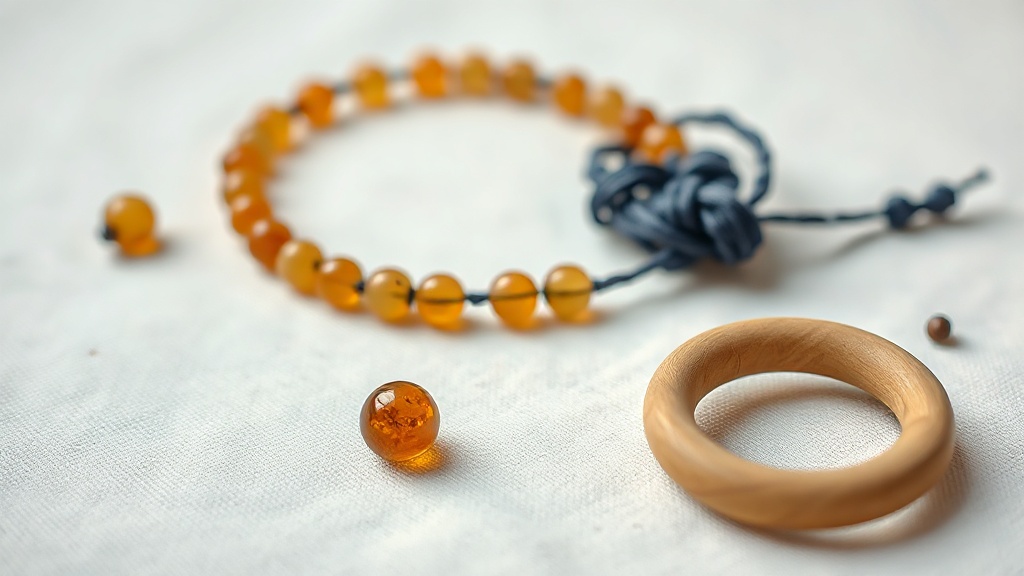
- No - major safety and pediatric authorities do not consider amber teething necklaces safe. The US Food and Drug Administration (FDA) and the American Academy of Pediatrics (AAP) advise against teething jewelry because of two documented dangers: strangulation and choking.
- There is no sound evidence they relieve teething pain. The popular idea that body heat releases a soothing compound called succinic acid does not hold up - laboratory testing found amber beads release virtually none.
- The risk is not hypothetical. A necklace can tighten around a sleeping child's neck, and a single bead that breaks loose is a choking hazard for a baby who mouths everything.
- Teething itself is usually milder than the internet suggests: the most common signs are sore gums, drooling and fussiness, and a slight rise in temperature is not the same as a true fever.
- Safer comfort works and carries no strangulation risk: a chilled (not frozen) solid teether, a clean finger or cool damp cloth to rub the gums, and your pediatrician's guidance on any pain relief.
No. Major safety and pediatric authorities, including the FDA and the American Academy of Pediatrics, advise against amber teething necklaces because they pose real strangulation and choking risks, and there is no sound evidence they ease teething pain. Safer options - a chilled solid teether and gentle gum massage - soothe just as well.
What amber necklaces claim to do - and what actually happens
The selling story goes like this: Baltic amber contains a compound called succinic acid, your baby's body heat gently warms the beads worn against the skin, and the released succinic acid is absorbed to calm inflammation and ease teething pain. It is a tidy narrative, and it is not supported by the science. Amber is fossilized tree resin, and the amount of succinic acid it could shed at ordinary skin temperature is negligible. In a 2024 laboratory study, researchers submerged Baltic amber beads and measured what came off them: the beads released essentially no meaningful succinic acid, and the small trace that did appear in the samples was actually produced by common skin bacteria, not by the amber at all. So the proposed mechanism has no real biological footing. There is also a basic contradiction at the heart of the product. If the necklace is worn and not chewed, there is no plausible route for a soothing dose to reach the gums. If a desperate parent lets the child chew it, that is precisely the scenario that turns a decorative bead into a choking hazard. Either way, the comfort is a story, and the danger is real.
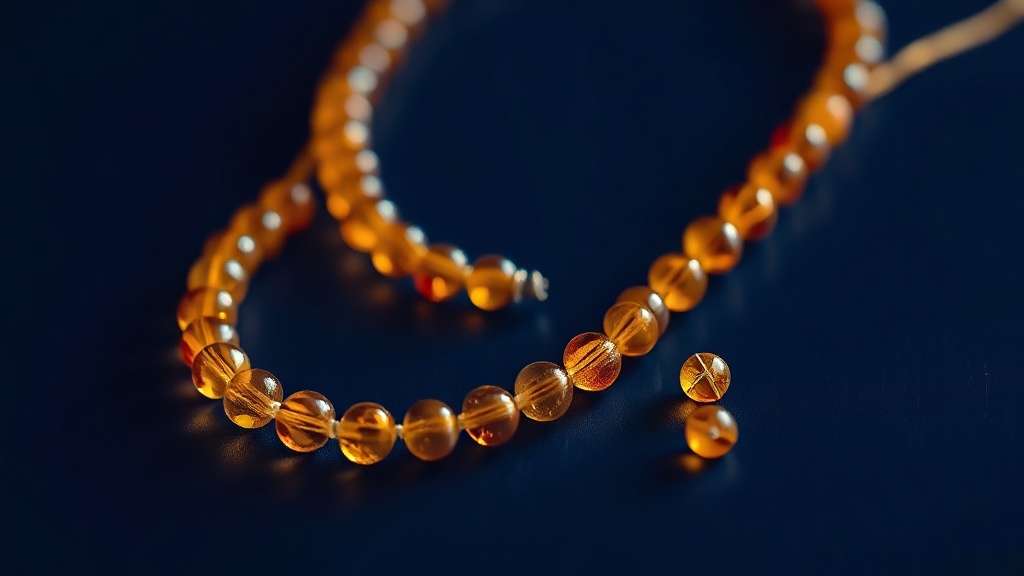
A strand of small round beads on a cord carries two separate hazards for a baby: the cord can tighten, and a single loosened bead can be swallowed or inhaled.
What the research and the authorities actually show
Every claim below maps to a named, peer-reviewed source in the Sources section. According to PubMed.
| Claim | Evidence | Source |
|---|---|---|
| Amber beads release essentially no meaningful succinic acid at body-relevant conditions - the small amount detected came from ordinary skin bacteria, not the amber, so the pain-relief rationale is unjustified. | Laboratory analysis of Baltic amber beads (nuclear magnetic resonance). | de Azevedo et al., 2024 |
| Teething signs are mostly mild and local - gum irritation, irritability and drooling are the most common - and while eruption can nudge temperature up slightly, it was not characterized as fever. | Meta-analysis of 16 studies (3,506 children, 0-36 months). | Massignan et al., 2016 |
| Social-media posts promoting amber necklaces for teething are created predominantly by commercial profiles with a financial interest in selling the product. | Analysis of 500 Facebook posts. | Jorge et al., 2024 |
| Teething misinformation is prevalent online, particularly around amber necklaces, amber teething toys and topical anesthetics - the same channels parents turn to for advice. | Year-long analysis of teething-tagged Facebook content. | Alhumaidan & Al-Haj Ali, 2024 |
| Amber-necklace posts keep spreading despite explicit warnings from health organizations and the lack of scientific evidence of benefit, and online safety concerns tend to fade over time. | Engagement analyses of Instagram and Facebook amber-necklace posts. | Strieder et al., 2024; Jorge et al., 2024 |
Amber necklace versus safer ways to soothe
| Option | How it is meant to soothe | The honest safety picture |
|---|---|---|
| Amber teething necklace | Worn on the neck or wrist; claims skin-absorbed succinic acid eases pain | Strangulation and choking risk; no sound evidence of pain relief |
| Chilled (not frozen) solid teether | Cold plus a firm surface for gum counter-pressure | Safe when it is one solid piece, chilled not frozen, and used with supervision |
| Clean finger or cool damp cloth gum rub | Gentle counter-pressure massage on sore gums | Very safe, free, and always available |
| A necklace worn only when awake and supervised | Same unproven claim, marketed as a compromise | Still unsafe - strangulation can happen silently and a bead can loosen in seconds |
| Pediatrician-guided pain relief | Appropriate dose of an approved analgesic if needed | Safe only when a clinician advises the medicine and dose |
Why the necklaces keep spreading anyway
If the evidence is this clear, why are amber necklaces everywhere? The answer is less about biology and more about how parenting advice travels. Studies of teething content on Facebook and Instagram find that posts promoting amber necklaces come mostly from commercial accounts with something to sell, that they are dressed in warm, natural, on-trend language, and that they consistently out-perform the sober safety messages from health organizations. Researchers also noticed something quietly troubling: as these posts circulate, the share of comments raising safety concerns, fear of accidents, or a dentist's caution actually goes down over time. In other words, the more a community shares the product, the more normal it feels and the quieter the warnings become. Add an exhausted parent at 3 a.m. with a screaming, drooling baby, and a beautiful, natural-looking necklace that promises relief is an easy thing to reach for. None of that makes it work, and none of it makes it safe. Recognizing the marketing for what it is makes it easier to choose the calmer, genuinely safe options instead.
Evidence you can act on.
Occasional emails — new research, new protocols, no noise.
Safer ways to soothe a teething baby
None of this treats a disease - teething is a normal stage - and none of it goes around your child's neck. The goal is simple, supervised comfort while the gums are sore.
- 1
Offer a chilled, solid teether
as neededCool a one-piece teether in the fridge, never the freezer - a rock-hard frozen teether can bruise sore gums. Choose a solid design with no small parts, no beads and no cord. The cold plus gentle counter-pressure is what actually helps.
- 2
Rub the gums with a clean finger or cool cloth
about a minuteWash your hands, then gently massage the sore gum with a clean fingertip or a cool, damp washcloth. The steady pressure is soothing and completely safe, and you can repeat it as often as your baby likes.
- 3
Wipe drool and protect the skin
as neededTeething means extra drool, which can leave a red rash on the chin and cheeks. Pat - do not rub - the skin dry through the day and use a plain barrier ointment if it looks irritated.
- 4
Ask your pediatrician before any medicine
as neededIf your baby is truly uncomfortable, your pediatrician can advise whether an approved pain reliever is appropriate and the correct dose for your child's weight. Skip benzocaine teething gels and homeopathic belladonna tablets, which have been the subject of safety warnings and a recall.
- 5
Keep everything off the neck and wrist
alwaysDo not use amber, silicone or wooden necklaces or bracelets for teething, awake or asleep, and never tape a child's mouth for any reason. The safest soothers are the ones your child holds, not the ones they wear.
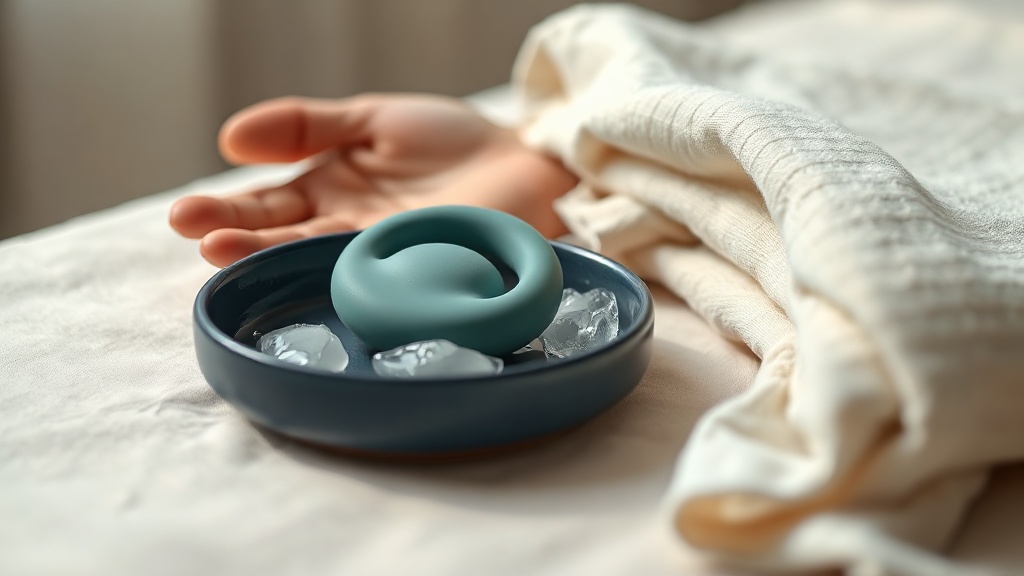
A chilled - not frozen - solid teether and a clean gum massage give real, supervised comfort with none of the strangulation or choking risk.
Blame teething only for mild, local symptoms. A true fever (above 100.4F / 38C), diarrhea, vomiting, a rash beyond the drool area, or a baby who will not feed is not caused by teething - call your pediatrician, because something else needs looking at. Plan a first visit with a pediatric dentist by your child's first birthday to catch any early problems and to get soothing advice tailored to your baby. And if an amber necklace has already been used, check it now for loose or cracked beads and retire it.
Frequently asked questions
Sources
- 1.
- 2.
- 3.
- 4.
- 5.
- 6.

Fix your breath at the source.
The complete science-backed protocol — engineered to eliminate volatile sulfur compounds at the biological source.
Start the Breath Protocol →Related reading
Educational purposes only. The content on this page is not medical advice and is not a substitute for consultation with a qualified dental or medical professional.
More from the library
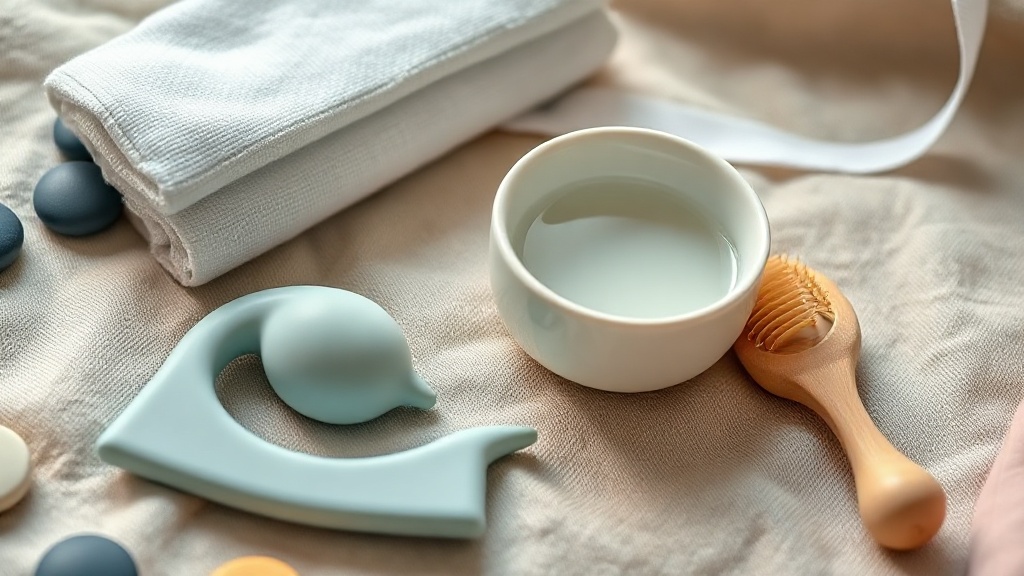 Guides9 min
Natural Teething Remedies: Safe, Gentle Ways to Soothe Sore Gums
Sore gums, endless drool, a miserable baby. Here are the gentle, genuinely safe natural teething remedies, and the natural-sounding ones that are best left on the shelf.
Read →→ Guides9 min
Teething Pain Relief: How to Soothe Your Baby Without Medicine
When a teething baby is in real distress, you want relief that is both effective and safe. Here is the step-by-step ladder, from cold and cuddles to careful use of medicine.
Read →→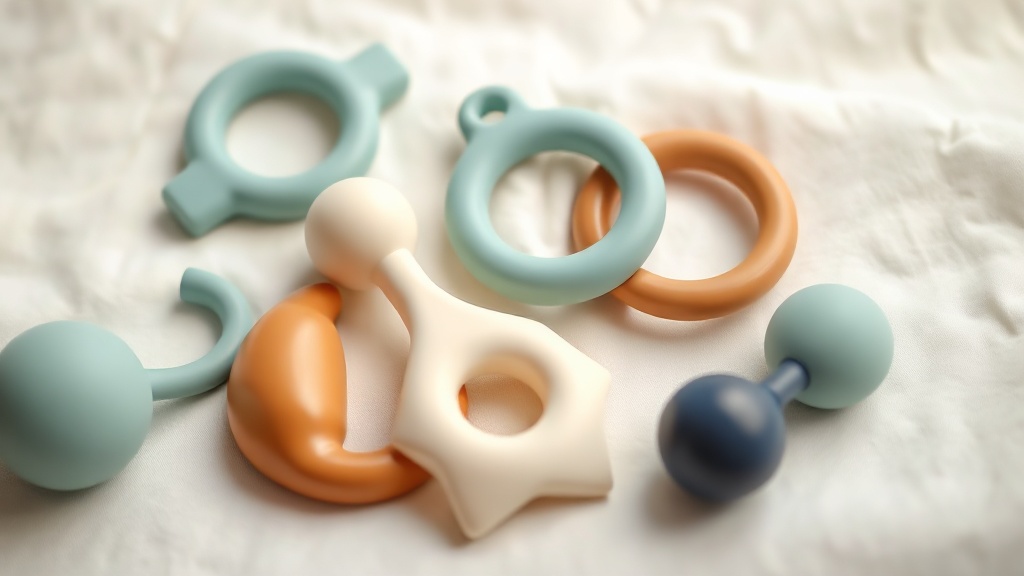 Best Of8 min
Best Teething Toys for Babies (2026): Safe, Simple Picks
Forget the gadgets. A solid, one-piece teether you can chill in the fridge is the honest best - here is how to choose one safely and what to avoid.
Read →→ Answers8 min
Signs of Teething: How to Tell Your Baby Is Teething
What teething actually looks like, and the warning signs that are not teething at all.
Read →→ Guides9 min
Early Childhood Caries: Gentle Prevention for Little Smiles
What early childhood caries is, why it happens, and the calm daily habits - diet, bottle routines, brushing, dental visits - that lower a young child's risk.
Read →→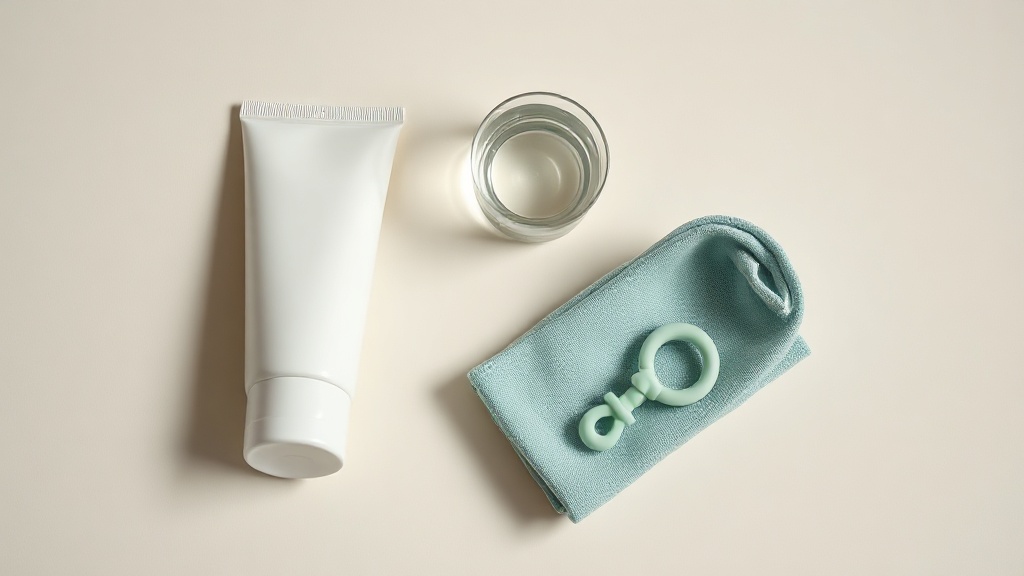 Best Of8 min
Best Teething Gel for Babies: Safer Soothing Options Compared
Why the honest best is non-medicated relief - and why the FDA warns against benzocaine and lidocaine teething gels for babies and toddlers.
Read →→