
The K12 Probiotic Revolution
One friendly bacterium from healthy human mouths is rewriting fresh-breath care, not by scorching the tongue, but by out-competing the microbes behind chronic bad breath.
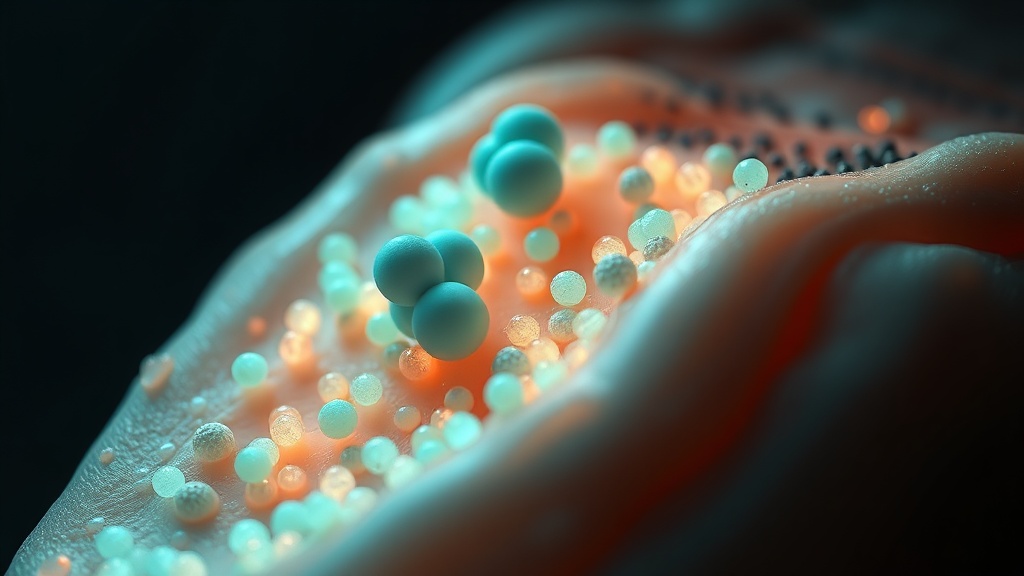
- Streptococcus salivarius K12 is not a drug or a disinfectant. It is a friendly bacterium first isolated from the tongue of a healthy child, and the whole idea is to add good microbes rather than kill everything in sight.
- K12 works by competition: it settles on the tongue and releases natural antibacterial compounds called bacteriocins that suppress the sulfur-producing microbes behind most chronic bad breath.
- In a controlled study, 85% of people who took K12 after an antiseptic rinse saw large drops in breath sulfur compounds, versus 30% on placebo, a striking signal, though from a small, early trial.
- Timing is the trick. K12 appears to work best in the window right after you clear space with an antiseptic, when the freshly-opened tongue is ready to be repopulated.
- K12 is best understood as a promising adjunct, not a magic fix. The safety record is unusually strong and the mechanism is real, but the breath research is still early-stage.
Streptococcus salivarius K12 is a beneficial bacterium that lives in healthy human mouths. Instead of scorching the tongue the way an antiseptic does, it colonises the surface and releases natural compounds that crowd out the sulfur-producing microbes behind chronic bad breath. The early studies are genuinely promising, but K12 is a supportive adjunct, not a stand-alone fix.
Meet K12: a good bacterium with a job to do
For most of the last century, fresh breath was framed as an act of destruction: the more bacteria you killed, the fresher you would be. K12 turns that logic inside out. Instead of scorching the mouth, it adds one carefully chosen good bacterium and lets it compete. The strain was tracked down in New Zealand by microbiologist John Tagg, who spent decades fascinated by a simple observation, that some people's own oral bacteria seem to keep them out of trouble. K12 is a strain of Streptococcus salivarius, one of the most abundant and most harmless residents of the human mouth, and among the very first microbes to colonise a newborn's tongue. What makes K12 special is chemistry. It is an unusually prolific producer of what scientists call bacteriocin-like inhibitory substances, or BLIS, small protein weapons that one bacterium uses to hold territory against its rivals. When researchers characterised the strain, they found it produces two of them at once: lantibiotics named salivaricin A2 and salivaricin B. That double arsenal is rare, and it gives K12 an unusually broad ability to suppress competing microbes and defend the patch of tongue it settles on. This matters for breath because chronic bad breath is, overwhelmingly, a microbial problem. Specific bacteria on the back of the tongue break down proteins and release volatile sulfur compounds, the rotten-egg smell of hydrogen sulfide and the sour note of methyl mercaptan. The usual suspects are oxygen-avoiding species such as Porphyromonas gingivalis and Treponema denticola. K12's whole proposition is to move into the same neighbourhood, deploy its bacteriocins, and tilt the balance away from those sulfur-producers, without carpet-bombing the entire ecosystem.

K12's edge is chemical. It releases bacteriocins, salivaricin A2 and salivaricin B, that suppress rival microbes and help it hold territory on the tongue.
What the research actually shows
Every claim below maps to a named, peer-reviewed study. According to PubMed.
| Claim | Evidence | Source |
|---|---|---|
| After an antiseptic clears space, K12 produced large drops in breath sulfur compounds | In a controlled study, 85% of the K12 group achieved substantial reductions (over 100 ppb) in volatile sulfur compounds one week in, versus 30% of the placebo group. | Burton et al., J Appl Microbiol, 2006 |
| The effect can hold for weeks in people with confirmed halitosis | Using a chlorhexidine rinse followed by K12 lozenges, the majority of subjects with confirmed halitosis (8 of 13) maintained reduced breath sulfur levels for at least two weeks. | Burton et al., Oral Dis, 2005 |
| K12 directly suppresses the specific microbes that generate mouth odour | In the lab, S. salivarius K12 reduced the volatile sulfur compounds produced by Porphyromonas gingivalis and Treponema denticola and showed antimicrobial activity against both. | Yoo et al., Clin Exp Dent Res, 2019 |
| K12's mechanism is two natural antibacterial peptides, not an antiseptic | K12 is a strongly-inhibitory strain shown to produce two distinct lantibiotics, salivaricin A2 and salivaricin B, the first single streptococcus known to make two, which gives it a broad ability to suppress rival bacteria. | Hyink et al., Appl Environ Microbiol, 2007 |
| K12 is a natural commensal with an unusually documented safety profile | Extended testing found no genotoxicity and no acute or subacute toxicity, established the dose needed to reach natural colonisation levels, and concluded K12 is safe for human consumption. | Burton et al., Probiotics Antimicrob Proteins, 2010 |
Two ways to fight bad breath
| Kill it (antiseptic approach) | Reseed it (probiotic approach) | |
|---|---|---|
| Core idea | Wipe out as many tongue bacteria as possible | Add a friendly strain to out-compete the bad ones |
| Effect on odour | Drops fast, then returns as bacteria regrow | Aims to hold the rebalance for longer |
| Good bacteria | Cleared out alongside the bad | Introduced and encouraged |
| Typical pattern | Repeated resets and rebound regrowth | A more stable, self-competing community |
| Best role | A short, sharp clearing of the field | Replanting the field right after it is cleared |
Why timing is the whole trick: clear the field, then plant
The single most important, and most overlooked, detail about K12 is sequence. In the studies that show the biggest effects, K12 was not used on its own. It was used right after a short antiseptic rinse. The logic is agricultural. An established tongue community is like a field already thick with weeds: scatter good seed on top and there is nowhere for it to root. Clear the field first, and the freshly-opened surface is ready to be planted. The 2005 work laid this out directly, using a chlorhexidine rinse to temporarily deplete the microbiota and then repopulating with K12 to keep the undesirable bacteria from moving back in. That reframes a fight most people assume they have to pick. K12 and mouthwash are not really rivals, they can be sequential partners. A harsh antiseptic used forever just resets the same problem on a loop, wiping the slate only for the same bacteria to recolonise. A brief clearing followed by deliberate reseeding is a different strategy entirely: use the antiseptic once to open space, then hand that territory to a strain you actually want to keep. Our companion feature, The Oral Microbiome: Your Body's Command Center, explains why a permanently scorched mouth carries costs of its own. Honesty demands the caveats, too. The headline breath studies are small and preliminary, a few dozen people each, early-stage, and several were conducted by researchers connected to the strain's development. K12's ability to colonise the mouth and its safety have been mapped in detail, one reason its safety profile is so well established even while the breath evidence stays modest. Researchers can even detect the strain's bacteriocin signature in the saliva of people who carry it. But a promising mechanism plus encouraging early trials is not the same as proven for everyone. K12 is a smart, low-risk thing to try. It is not a sure thing, and it is not a substitute for finding out why breath is off in the first place.
Evidence you can act on.
Occasional emails — new research, new protocols, no noise.
How to give K12 a real chance
If you want to try K12, the research points to a specific way to use it, not just popping a lozenge at random. Here is the evidence-informed approach.
- 1
Clear the field first
1 to 3 daysThe biggest results in the research came after a short antiseptic rinse opened up space on the tongue. A brief, dentist-guided antiseptic course, not a forever habit, gives a new strain room to take hold.
- 2
Reseed inside the window
Then dailyIntroduce K12 in the window right after clearing, when the tongue surface is most receptive to a newcomer. Lozenges are the common format because they let the strain bathe the tongue and mouth as they slowly dissolve.
- 3
Let it melt, do not rush it
Each useDo not chew and swallow fast. The point is prolonged contact with the tongue and mouth surfaces so the strain can settle in, so let the lozenge dissolve slowly, ideally as the last thing you do after brushing at night.
- 4
Give it a few weeks
2 to 4 weeksColonisation is not instant, and the strain does not necessarily take up permanent residence. Give it daily consistency for a few weeks before you decide whether it is doing anything for you.
- 5
Keep the basics going
OngoingK12 is an add-on, never a replacement. Gentle tongue cleaning, cleaning between the teeth, and staying well hydrated all reduce the raw material that odour-producing bacteria feed on in the first place.

The reseeding window: K12 seems to work best planted onto a freshly-cleared tongue, not dropped into an established crowd.
Persistent bad breath can be a signal, not just a nuisance, and it can point to gum problems, tonsil stones, dry mouth, sinus or digestive issues, or dental decay that a probiotic cannot address and this article cannot diagnose. If fresh-breath habits and a strain like K12 have not helped within a few weeks, or if you notice bleeding gums, a constant bad taste, or pain, see your dentist. And if you are immunocompromised or have a heart-valve condition, check with your doctor before starting any oral probiotic.
Frequently asked questions
Sources
- 1.
- 2.
- 3.
- 4.
- 5.
- 6.

Fix your breath at the source.
The complete science-backed protocol — engineered to eliminate volatile sulfur compounds at the biological source.
Start the Breath Protocol →Related reading
Educational purposes only. The content on this page is not medical advice and is not a substitute for consultation with a qualified dental or medical professional.
More from the library
 Ingredients7 min
S. salivarius K12: The Fresh-Breath Probiotic, Explained
The idea is not to sterilise your mouth. It is to repopulate it with the right bacteria.
Read →→ Best Of8 min
The Best Oral Probiotics for Bad Breath
Oral probiotics aim to shift the balance of bacteria in your mouth toward fresher breath — here is which strains have the evidence and how to choose one.
Read →→ Answers7 min
Does Mouthwash Kill Good Bacteria? What the Evidence Says
Antibacterial rinses do not tell friendly bacteria from unfriendly ones. Here is what that means for your breath, and how to use mouthwash without working against yourself.
Read →→ The Journal9 min
The Oral Microbiome: Your Body's Command Center
Most of the bacteria in your mouth are allies — and keeping them in balance may matter far beyond your breath.
Read →→ Guides8 min
How to Get Rid of Bad Breath Permanently: An Evidence-Based Plan
The honest version: "permanently" means ongoing control, not a one-time fix. Here is the daily routine the research actually supports, and when to get help.
Read →→ Guides7 min
Bad Breath Even After Brushing? The Biological Reason (and Fix)
You brushed, flossed and rinsed — and the smell is still there. The reason usually isn't hygiene; it's where the odour-causing bacteria actually live.
Read →→