Xylitol for Teeth: How It Fights Cavities
How a sugar the mouth bacteria cannot use supports enamel, and an honest read on how strong the evidence really is.
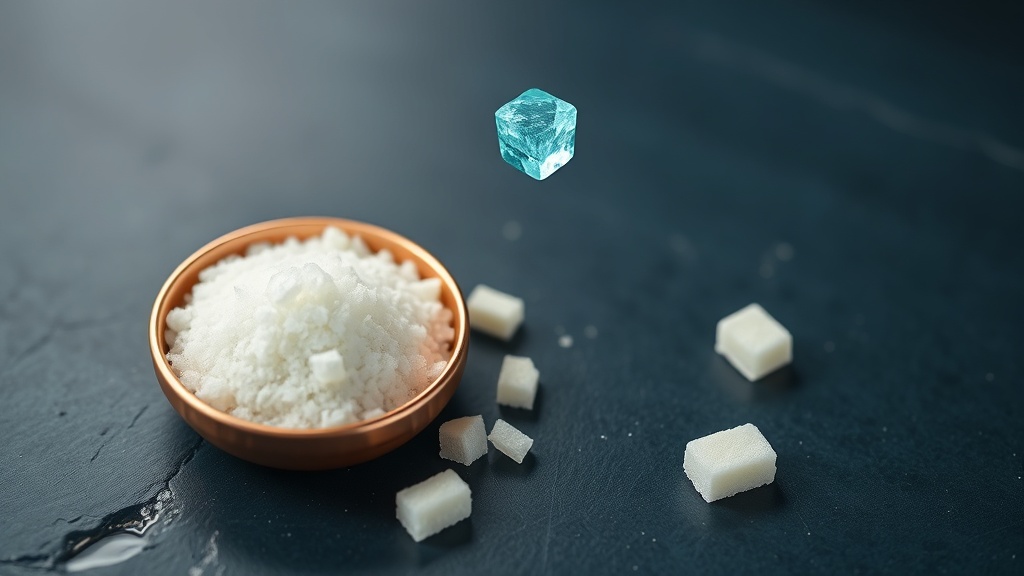
- Xylitol is a sugar alcohol that tastes sweet but the main decay-causing bacteria cannot ferment, so it does not feed the acid attack that erodes enamel.
- Beyond being non-fermentable, xylitol appears to interfere with those bacteria directly — they take it up, cannot use it, and their acid production and stickiness fall.
- Because it is used most often in gum and mints, xylitol also works by stimulating saliva — the mouth’s natural rinse and mineral supply — which supports enamel.
- The evidence is real but modest and mixed: reviews find xylitol can reduce new decay versus no treatment, while others rate the certainty low, especially for gum alone. It is a helper, not a replacement for fluoride and brushing.
- Xylitol supports a healthier mouth environment; it does not treat gum disease or cure cavities, it can upset the stomach in large amounts, and it is dangerous to dogs.
Xylitol is a natural sweetener the decay-causing bacteria in your mouth cannot ferment, so it starves the acid attack on enamel and may curb those bacteria directly. In gum and mints it also stimulates saliva. Reviews show a modest reduction in new decay — a useful supporting habit alongside fluoride and brushing, not a substitute for them.
The sugar the bacteria cannot use
Ordinary sugars are a feast for Streptococcus mutans and its relatives, the bacteria most associated with decay. They ferment those sugars and excrete acid, and that acid is what dissolves minerals out of enamel. Xylitol breaks the chain at the first step. Its molecule has five carbons rather than the six these bacteria are built to metabolise, so when they take xylitol up they cannot ferment it into acid. In effect the microbe swallows a key that does not fit its lock, wasting energy on a sugar it can neither use nor turn into acid — a futile cycle that, repeated over time, is associated with lower counts of these bacteria in plaque and saliva and with less sticky plaque overall. Layered on top is a simple physical benefit: xylitol is most often delivered in gum or lozenges, and chewing stimulates saliva. Saliva is the mouth’s own defence, washing away debris, buffering acid, and carrying the calcium and phosphate that enamel needs. So xylitol helps on two fronts at once — it denies the bacteria their fuel and it recruits your own saliva to protect the tooth.

Decay bacteria take up xylitol but cannot ferment its five-carbon structure into acid — starving the acid attack on enamel.
What the research actually shows
Every claim below maps to a named, peer-reviewed source in the Sources section. According to PubMed.
| Claim | Evidence | Source |
|---|---|---|
| A Cochrane review found xylitol-containing products may reduce decay compared with no treatment, though it rated the overall evidence low-certainty. | Cochrane systematic review of xylitol products for preventing caries. | Riley et al., 2015 |
| A meta-analysis found xylitol lowered decayed/missing/filled scores versus controls and reduced mutans streptococci in plaque and saliva. | Systematic review and meta-analysis of xylitol in preventing caries. | Janakiram et al., 2017 |
| A 2024 meta-analysis found xylitol significantly reduced new decay in the permanent teeth of children and adolescents versus placebo. | Meta-analysis of sugar substitutes for caries prevention in permanent teeth. | Luo et al., 2024 |
| A 2024 systematic review concluded xylitol can contribute to caries prevention, most convincingly as part of a wider routine. | Systematic review of xylitol effectiveness in caries prevention. | Systematic review, 2024 |
| A review of xylitol gum alone rated the evidence insufficient — a reminder the effect is modest and depends on dose and format. | Systematic review of xylitol chewing gum for caries prevention. | Mota et al., 2021 |
How xylitol is used
| Format | What it does | Realistic benefit |
|---|---|---|
| Sugar-free gum after meals | Stimulates saliva and delivers xylitol | The best-studied format; helps clear acid and support enamel |
| Mints or lozenges | Delivers xylitol without chewing | Useful when gum is impractical; keep the daily dose up |
| Xylitol toothpaste | Adds xylitol alongside fluoride | Supports, but does not replace, fluoride’s role |
| Xylitol as a table-sugar swap | Removes a fermentable sugar from the diet | Fewer acid attacks across the day |
Dose, honesty, and safety
The single most common reason xylitol disappoints is dose. The benefit appears to be dose-dependent and spread across the day: studies that show an effect tend to use several grams of xylitol split into a few exposures, not one piece of gum once in a while. A single mint after dinner is pleasant but unlikely to move the needle. It is also worth being candid about the evidence itself, which is genuinely mixed — some high-quality reviews find a modest reduction in decay, while others, particularly of gum used on its own, rate the certainty as low or insufficient. That is not a reason to dismiss xylitol; it is a reason to treat it as one supporting habit in a routine built on fluoride, brushing and flossing, rather than the centrepiece. Two safety notes matter. In large amounts xylitol can cause bloating and a laxative effect, so it is sensible to build up gradually. And xylitol is highly toxic to dogs even in small amounts, so any gum, mints or baking with it must be kept well out of a pet’s reach.
Evidence you can act on.
Occasional emails — new research, new protocols, no noise.
How to get real value from xylitol
None of this treats disease. It reduces the acid challenge on enamel and supports saliva — a helper alongside, not instead of, the basics.
- 1
Check that xylitol is the main sweetener
at purchaseRead the label and choose products where xylitol is listed first, or as the only sugar alcohol. Many mints and gums blend in cheaper sweeteners that do not carry the same benefit.
- 2
Aim for a few small exposures
across the dayBecause the effect is dose-dependent and spread out, several small exposures beat one large one. A piece of gum or a mint at a few points in the day is the pattern most studies use.
- 3
Use it when acid is highest
after meals and snacksChewing xylitol gum after eating both delivers the xylitol and stimulates the saliva that clears the post-meal acid — the moment your enamel most needs help.
- 4
Keep it an add-on, not a swap
ongoingXylitol supports your routine; it does not replace fluoride toothpaste, brushing or flossing. Treat it as the extra that tips the balance, with the fundamentals still doing the heavy lifting.
- 5
Ease in, and keep it from pets
ongoingIntroduce xylitol gradually to avoid stomach upset, and store anything containing it well away from dogs, for whom it is dangerous even in tiny amounts.
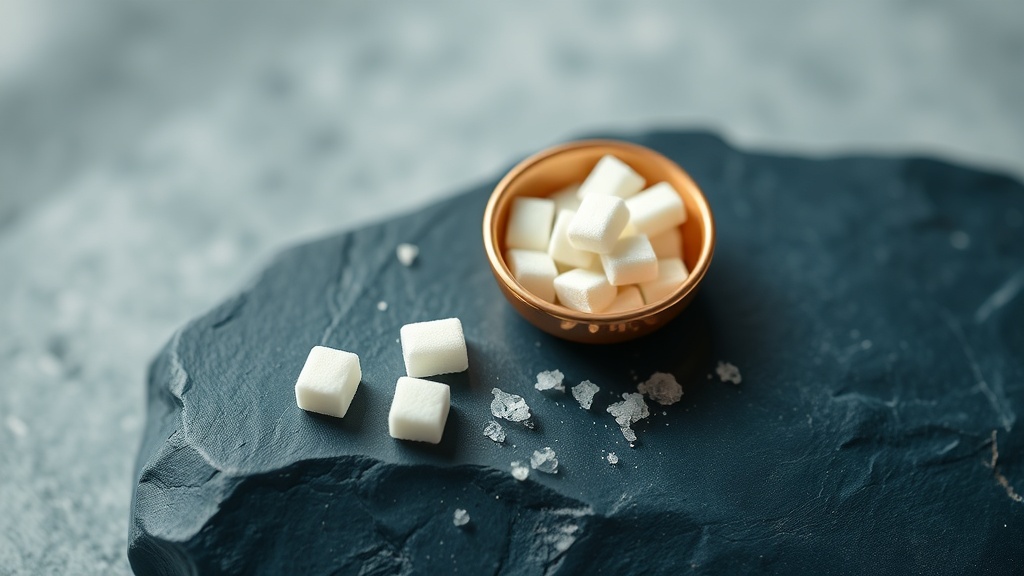
Xylitol pays off in small, repeated doses across the day — most reliably in gum, where it also stimulates saliva.
Xylitol supports the mouth environment, but it cannot diagnose or treat anything. See a dentist for tooth sensitivity, visible white spots or holes, or bleeding, swollen gums. A professional can tell you whether your routine is enough or whether something needs treating — xylitol is an add-on to that care, not a replacement for it.
Frequently asked questions
Sources
- 1.
- 2.
- 3.
- 4.
- 5.

Fix your breath at the source.
The complete science-backed protocol — engineered to eliminate volatile sulfur compounds at the biological source.
Start the Breath Protocol →Related reading
Educational purposes only. The content on this page is not medical advice and is not a substitute for consultation with a qualified dental or medical professional.
More from the library
 Best Of8 min
The Best Sugar-Free Gum: Xylitol vs Sorbitol and the ADA Seal
Sugar-free gum earns its dental reputation by stimulating saliva rather than feeding bacteria; here is how xylitol and sorbitol compare, what the ADA Seal means, and how to pick one.
Read →→ Best Of8 min
The Best Gum for Teeth: What Actually Supports Enamel
The best gum for your teeth is not about a magic ingredient; it is about stimulating saliva after meals and choosing sugar-free so you support enamel instead of feeding decay.
Read →→ Best Of8 min
The Best Chewing Gum for Bad Breath (and Why It Is Only Temporary)
Chewing gum can freshen breath in two honest ways, by stimulating saliva and by masking odour with flavour, but the effect is temporary; here is how to use it well and when to look deeper.
Read →→ Guides8 min
Remineralizing Tooth Powder: The Hydroxyapatite Angle, Honestly
What nano-hydroxyapatite is, how a mineral powder supports enamel, what the studies genuinely show, and the honest caveats the marketing tends to skip.
Read →→ Guides8 min
How to Get Rid of Bad Breath Permanently: An Evidence-Based Plan
The honest version: "permanently" means ongoing control, not a one-time fix. Here is the daily routine the research actually supports, and when to get help.
Read →→ Guides7 min
Bad Breath Even After Brushing? The Biological Reason (and Fix)
You brushed, flossed and rinsed — and the smell is still there. The reason usually isn't hygiene; it's where the odour-causing bacteria actually live.
Read →→