
Brushing Teeth With Baking Soda: What It Does
What the DIY habit of brushing with baking soda genuinely does, where it helps, and the one thing it cannot do.
- Baking soda is gentler than its gritty reputation. Because it is softer than enamel and dentin, its abrasivity sits at the low end of the scale and well within accepted safety limits.
- Its most solid benefit is buffering acid. Baking soda genuinely raises the pH in the mouth and helps neutralise the acids that dissolve enamel.
- It can lift some surface stain, but it is not a whitening miracle. Any stain removal comes from mild mechanical polishing, not from bleaching the tooth.
- The evidence that it removes more plaque than ordinary toothpaste is mixed and largely industry-funded, and baking soda does not biologically suppress plaque or gum inflammation.
- The decisive catch is that plain baking soda contains no fluoride, the best-proven anti-cavity ingredient there is, so it should sit alongside a fluoride toothpaste, never replace it.
Brushing with plain baking soda is reasonably safe because it is low in abrasivity, and it helps by buffering mouth acid and lifting some surface stain. But it contains no fluoride, the most proven cavity fighter, and does not reliably reduce plaque or gum disease. Use it as an occasional extra, not as a replacement for fluoride toothpaste.
What baking soda does when you brush with it
Baking soda, or sodium bicarbonate, does two chemically real things in your mouth. First, it is a mild abrasive. When you brush with it, the fine crystals help scrub away the soft film and some of the surface stains that sit on enamel. What surprises people is how gentle this actually is: sodium bicarbonate is softer than both enamel and dentin, so its intrinsic abrasivity is low, and reviews of dentifrice abrasivity place baking soda toward the bottom of the scale, comfortably within the safety limits regulators set. Second, and more usefully, baking soda is an alkaline buffer. Tooth decay begins when the plaque on your teeth turns acidic and starts dissolving enamel, and baking soda neutralises that acid, raising the resting pH and blunting the acid drop that follows a sugary snack. That buffering is its strongest evidenced action. What baking soda does not do is just as important: on its own it does not kill or biologically suppress the bacteria in plaque, it does not reduce gum inflammation, and, crucially, it carries no fluoride, so it does nothing to build the acid-resistant, remineralized enamel surface that actually prevents cavities. Understood honestly, it is a gentle cleaner and an acid buffer, not a decay treatment.
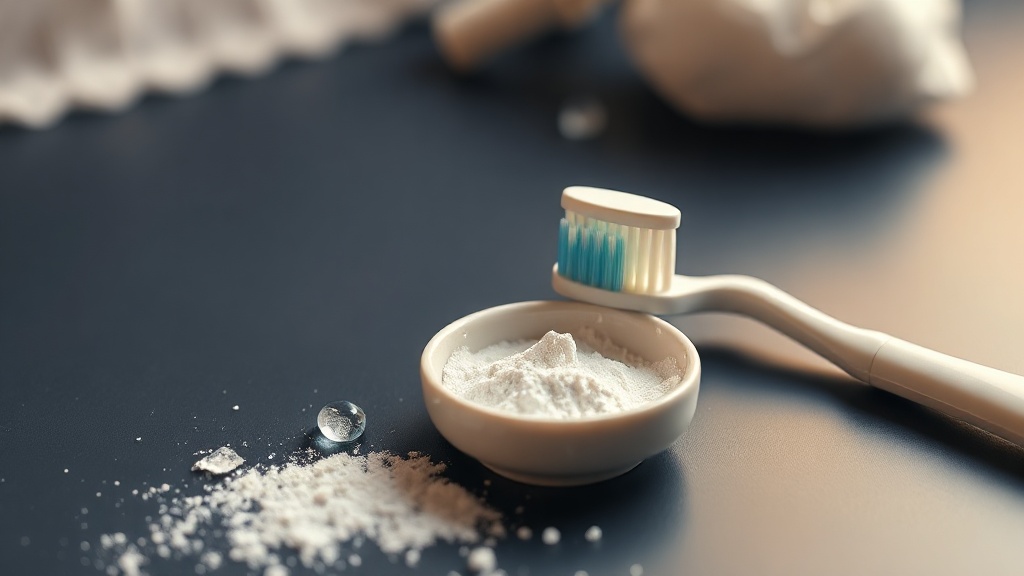
Plain baking soda is a gentle abrasive and an acid buffer, but it brings no fluoride to the brush.
What the research actually shows
Every claim below maps to a named, peer-reviewed source in the Sources section. According to PubMed.
| Claim | Evidence | Source |
|---|---|---|
| Baking soda has an intrinsically low-abrasive nature because it is softer than enamel and dentin, and formulations stay within regulatory safety limits. | JADA review of baking soda abrasivity. | Hara & Turssi, 2017 |
| On the standard RDA abrasivity scale, sodium bicarbonate dentifrices generally have lower abrasivity values than many silica-based pastes. | In vitro abrasivity and stain-removal comparison. | Schemehorn et al., 2011 |
| Baking soda is an effective buffering agent that neutralises plaque acids and stabilises mouth pH. | Clinical plaque-pH study. | Blake-Haskins et al., 1997 |
| Baking soda buffers acid but does not inhibit plaque growth or gingivitis on its own. | Periodontal clinical study. | Ozanich et al., 1993 |
| Fluoride toothpaste, which plain baking soda lacks, reduces new cavities by about 24% and is the established anti-caries standard. | Cochrane review of 70 trials. | Marinho et al., 2003 |
Baking soda, honestly weighed
| Claim | Verdict | Why |
|---|---|---|
| Too abrasive, wears enamel | Mostly myth | Softer than enamel; low RDA, within safety limits |
| Neutralises acid | True | Alkaline buffer that raises mouth pH |
| Removes surface stain | Partly true | Mild mechanical polishing, not bleaching |
| Removes more plaque than toothpaste | Unclear | Evidence mixed and mostly industry-funded |
| Prevents cavities | False on its own | Contains no fluoride; does not suppress plaque |
The fluoride problem, and the mixed plaque evidence
The single most important thing to understand about brushing with plain baking soda is what is missing from the brush. Fluoride is the most thoroughly proven cavity-fighting ingredient in dentistry, cutting new cavities by roughly a quarter across dozens of trials, and it works by helping enamel rebuild into a more acid-resistant surface. Baking soda offers none of that. So a person who swaps their fluoride toothpaste for a box of baking soda may enjoy a cleaner-feeling, acid-buffered mouth while quietly giving up their best defence against decay. The plaque-removal story is murkier than the marketing suggests. Several manufacturer-funded studies have reported that baking soda toothpastes physically remove somewhat more plaque than non-baking-soda pastes, especially from harder-to-reach surfaces. But an independent dose-response trial found no significant difference in plaque removal between a high-baking-soda paste and a fluoride-free control, and baking soda does not biologically inhibit plaque or gum inflammation the way antibacterial agents do. The honest reading is that any plaque benefit is modest, inconsistent, and no reason to abandon fluoride. The sensible place for baking soda is therefore as a complement: a gentle occasional cleaner and acid buffer used alongside a proper fluoride toothpaste, not as a stand-in for it.
Evidence you can act on.
Occasional emails — new research, new protocols, no noise.
How to brush with baking soda sensibly
If you like using baking soda, here is how to get its real benefits without giving up cavity protection or roughing up your enamel.
- 1
Keep fluoride as your main toothpaste
twice dailyDo your core brushing with a 1,000 to 1,500 ppm fluoride toothpaste. This is the non-negotiable part; baking soda is an add-on, not a replacement.
- 2
Use baking soda occasionally, not every brush
a few times a week at mostIf you want the acid-buffering and light stain-lifting benefit, use plain baking soda now and then rather than as your everyday paste. There is no need to do it daily to get its effect.
- 3
Make a wet paste and brush gently
2 minutesDip a damp brush into a small amount, or mix it into a light slurry with water, and brush with soft, light strokes. It is low in abrasivity, but gentle technique protects enamel and gums with any product.
- 4
Do not add lemon, vinegar or peroxide
—Mixing baking soda with acids like lemon juice cancels its buffering and creates an acidic, enamel-eroding paste. Keep it simple; the acid-neutralising benefit depends on it staying alkaline.
- 5
Skip it if you wear braces or certain dental work
check firstAbrasive home mixtures can affect orthodontic glue and some restorations. If you have braces, bonding or veneers, ask your dentist before making baking soda a habit.
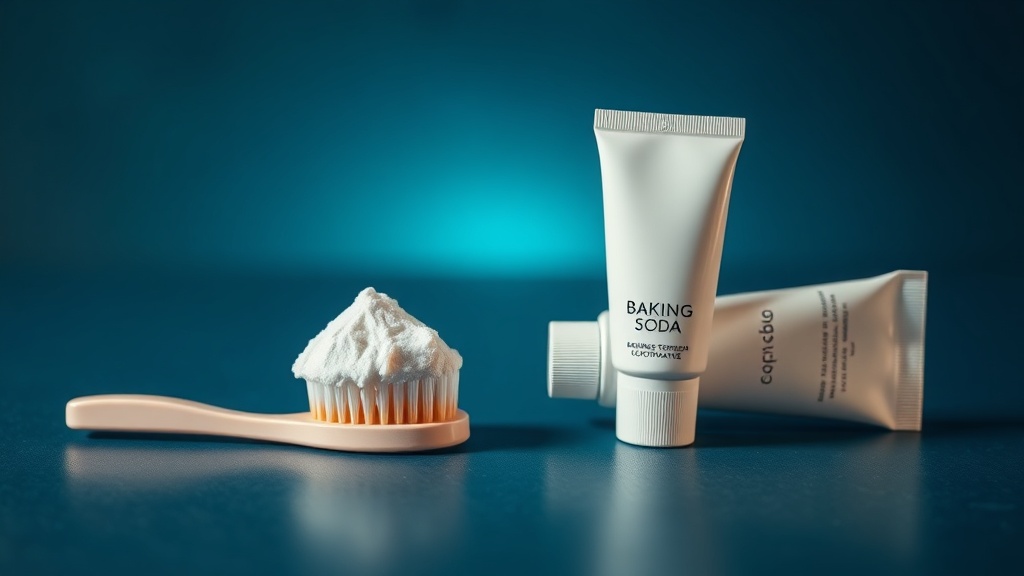
The sensible setup: fluoride toothpaste as your daily workhorse, baking soda as an occasional acid-buffering extra.
Baking soda is a home habit, not a diagnosis. See a dentist if the stains you are trying to scrub away will not budge, since deeper discolouration often needs professional cleaning or reflects something a brush cannot reach. Book a visit too for any sensitivity, a white or brown spot, bleeding gums, or a rough edge, rather than intensifying your brushing, which can make gum recession and enamel wear worse. If you have decided to go fluoride-free, tell your dentist so they can watch your cavity risk more closely and suggest evidence-based alternatives. A quick professional check is the best way to know whether a home routine is genuinely serving your teeth.
Frequently asked questions
Sources
- 1.
- 2.
- 3.
- 4.
- 5.
- 6.
- 7.
- 8.

Fix your breath at the source.
The complete science-backed protocol — engineered to eliminate volatile sulfur compounds at the biological source.
Start the Breath Protocol →Related reading
Educational purposes only. The content on this page is not medical advice and is not a substitute for consultation with a qualified dental or medical professional.
More from the library
 Ingredients9 min
Baking Soda Toothpaste: What the Evidence Actually Shows
How commercial baking soda pastes actually perform, and the one ingredient on the label that matters most.
Read →→ Ingredients8 min
How Fluoride Toothpaste Remineralizes Teeth
The chemistry behind fluoride's remineralizing power, and the honest line between the early lesions it can rebuild and the cavities it cannot.
Read →→ Ingredients8 min
Baking Soda Mouthwash: What a DIY Rinse Can and Cannot Do
How a simple baking-soda rinse buffers acid, why it is not a plaque-buster, and how to mix and use it without overdoing it.
Read →→ Guides8 min
How to Prevent Cavities: What Actually Works
The handful of habits that genuinely lower cavity risk, ranked by the strength of the science behind them.
Read →→ Answers8 min
How to Get Rid of White Spots on Teeth: Your Options, Ranked
An honest, evidence-based ladder of options, from what you can do at home to what only a dentist can fix.
Read →→ Ingredients8 min
Hydroxyapatite Toothpaste Benefits: What the Evidence Actually Supports
A calm, science-first look at what hydroxyapatite toothpaste can genuinely do for your enamel, and where the evidence stops.
Read →→