TMJ Surgery Cost: What to Expect (and Conservative Options First)
A calm, sober look at the price of jaw-joint surgery, why it is rarely the first step, and the questions to ask before you commit.
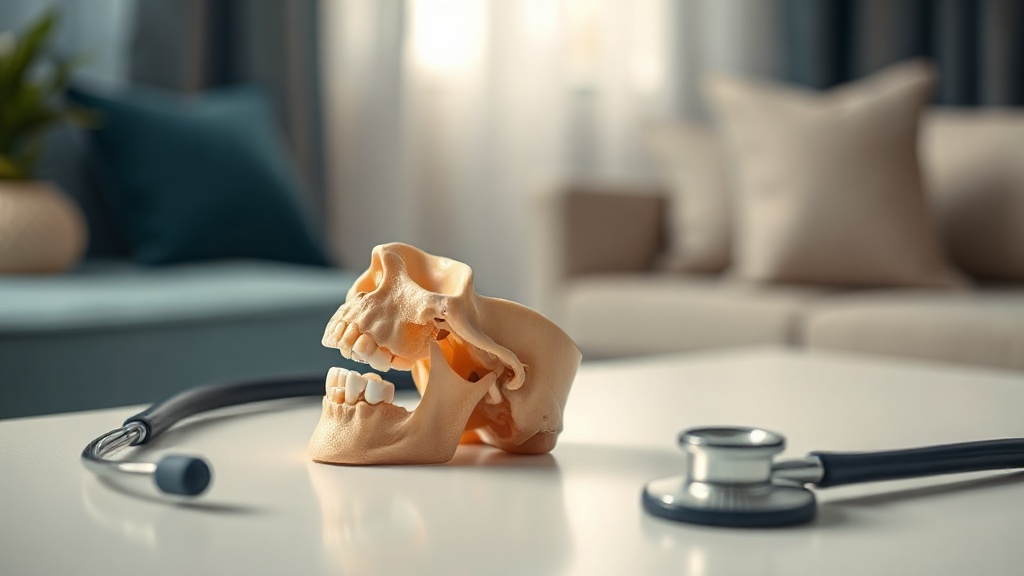
- TMJ surgery is uncommon: it is generally considered only after conservative, non-surgical care has been given a fair trial, and most people manage jaw problems without an operation.
- Reported US self-pay costs range enormously — from roughly a few hundred dollars for a minimally invasive joint flush to well over $50,000 for a total joint replacement, before insurance.
- The biggest driver of your bill is the type of procedure, followed by facility fees, anesthesia, imaging and how your insurance classifies the treatment.
- About 1 in 3 adults has a sign or symptom of a jaw-joint disorder, yet only a small minority ever become surgical candidates.
- No honest guide can quote you a firm price online — only an in-person oral and maxillofacial surgeon can give you a real, itemized estimate for your situation.
TMJ surgery costs vary widely by procedure. In the US, a minimally invasive joint flush is often a few hundred to about $1,500, keyhole arthroscopy roughly $5,000 to $15,000, and major open or joint-replacement surgery from around $20,000 to well over $50,000 before insurance. Surgery is usually a last resort, not a first step.
What 'TMJ surgery' actually means
The temporomandibular joint (TMJ) is the small, hard-working hinge just in front of each ear that lets you chew, talk and yawn. 'TMJ surgery' is not one operation but a spectrum, and cost tracks almost perfectly with how invasive that operation is. At the gentle end sits arthrocentesis, where a surgeon flushes the joint with fluid through a needle to wash out inflammation and free up movement. A step up is arthroscopy, a keyhole approach using a tiny camera and instruments. At the far end are open-joint surgery, where the joint is opened to repair or reposition the disc, and total joint replacement, where a damaged joint is removed and replaced with a prosthesis. What unites them is that they are reserved for specific structural problems — not for ordinary jaw tension or the occasional click. Because high-quality studies comparing these surgeries head-to-head are limited, the decision is highly individual, and any reputable surgeon will frame an operation as one option among several, weighed carefully against its cost and recovery.

Cost climbs with invasiveness: a joint flush sits at the bottom of the ladder, total joint replacement at the top.
What the research actually shows
Every claim below maps to a named, peer-reviewed source in the Sources section. According to PubMed.
| Claim | Evidence | Source |
|---|---|---|
| Around 31% of adults show a sign or symptom of a temporomandibular disorder, yet the large majority are managed with conservative care rather than surgery. | Pooled global prevalence, systematic review and meta-analysis. | Valesan et al., 2021 |
| In a 200-person trial, dentist-guided self-care — education, jaw rest, thermal packs and gentle exercise — matched splint therapy for jaw symptoms at 3, 6 and 12 months. | Randomized controlled trial. | Truelove et al., 2006 |
| A 2023 international guideline found that for chronic TMD pain the most effective options promote coping and movement, and it advised against invasive and irreversible first-line measures. | GRADE clinical practice guideline drawing on 153 randomized trials. | Busse et al., 2023 |
| A Cochrane review found only very low-certainty evidence that occlusal splints reduce TMD pain — a reminder that even simple appliances, let alone surgery, lack strong proof for routine use. | Cochrane systematic review of 57 trials. | Singh et al., 2024 |
Typical TMJ procedures and their reported cost bands
| Procedure | What it involves | Typical US self-pay range* | Invasiveness |
|---|---|---|---|
| Arthrocentesis | Needle flushing of the joint, often under local or light sedation | ~$300 to $1,500 (more with facility and anesthesia fees) | Minimally invasive |
| Arthroscopy | Keyhole camera and small instruments used inside the joint | ~$5,000 to $15,000 | Minimally invasive |
| Open-joint surgery (arthrotomy) | The joint is opened to repair or reposition the disc | ~$10,000 to $25,000+ per side | Major |
| Total joint replacement | The damaged joint is removed and replaced with a prosthesis | ~$50,000 to $100,000+ | Major |
Why the price swings so wildly
Two people can be quoted numbers that differ by a factor of ten for the same-named procedure, and the reasons are mostly structural rather than mysterious. The procedure itself is the first lever: a needle flush in a clinic chair and a hospital joint replacement are different worlds of staffing, time and equipment. On top of the surgeon's fee sit facility charges — an outpatient surgery center is usually cheaper than a hospital operating room — plus anesthesia, which climbs when general anesthesia and an anesthesiologist are involved. Pre-surgical imaging such as an MRI or CT scan adds several hundred to a couple of thousand dollars before anyone touches the joint. Then there is geography: the same operation costs far more in a major coastal city than in a smaller market. Finally, insurance is the wildcard. TMJ care sits awkwardly on the line between medical and dental coverage, and many plans exclude or heavily limit it, which is why a written estimate and a pre-authorization matter so much. None of these figures is a quote — they are informational ranges to help you ask sharper questions.
Evidence you can act on.
Occasional emails — new research, new protocols, no noise.
Smart steps before you pay for surgery
Surgery is one option, and rarely the first. These steps help you avoid paying for an irreversible procedure before gentler, cheaper measures have had a fair chance.
- 1
Get a proper diagnosis first
week 1Jaw pain has many causes, and not all of them are structural joint problems that surgery can help. A qualified dentist, orofacial-pain specialist or oral surgeon can use a validated assessment to pinpoint what is actually going on before anyone discusses operating.
- 2
Give conservative care a real trial
6 to 12 weeksEducation, jaw rest, warmth, gentle exercise and physical therapy resolve or ease symptoms for many people, and in trials this kind of self-care has matched appliances. A genuine trial of conservative care is both the cheapest path and the one most guidelines ask you to complete first.
- 3
Ask for a full, itemized written estimate
before bookingA trustworthy surgeon will break the number down: surgeon fee, facility, anesthesia, imaging, implants if any, and follow-up. If you cannot get the cost in writing, treat that as a warning sign, not a detail.
- 4
Sort out medical versus dental coverage
before bookingBecause TMJ care straddles both, call both insurers, ask about pre-authorization, and keep records. Many initial denials are overturned on appeal when the medical necessity is documented.
- 5
Get a second opinion on any irreversible procedure
before bookingFor open-joint surgery or joint replacement especially, a second independent surgeon protects you against both unnecessary operations and avoidable cost. It is a normal, expected request.

Only an in-person surgeon can turn these general ranges into a real, itemized estimate for your jaw.
Cost planning aside, some jaw situations are urgent. Seek same-day or emergency care if your jaw locks wide open and will not close, if you cannot open it at all, if the pain follows a blow or accident, or if you have fever and swelling around the joint. For persistent jaw pain, ongoing locking, or a click that comes with pain, book an assessment with a dentist, orofacial-pain specialist or oral and maxillofacial surgeon rather than self-diagnosing online. A surgical opinion should always come from someone who has examined you in person.
Frequently asked questions
Sources
- 1.
- 2.
- 3.
- 4.
- 5.
- 6.

Fix your breath at the source.
The complete science-backed protocol — engineered to eliminate volatile sulfur compounds at the biological source.
Start the Breath Protocol →Related reading
Educational purposes only. The content on this page is not medical advice and is not a substitute for consultation with a qualified dental or medical professional.
More from the library
 Guides8 min
TMJ Treatment Cost: What You Pay OTC vs Dentist (2026)
The conservative-care ladder, priced out rung by rung, with a candid note on what each option actually buys you.
Read →→ Causes8 min
Why Does My Jaw Pop? Causes, When to Worry & How to Ease It
The honest answer to a click that unnerves a lot of people: usually benign, occasionally a signal — and how to tell the difference.
Read →→ Guides9 min
TMJ Disorder: The Complete Guide
What TMJ disorder really is, how common it is, and the conservative-care-first path most people never hear about.
Read →→ Guides8 min
TMJ Physical Therapy: Exercises, Timeline, and What to Expect
A clear-eyed look at what physical therapy can and cannot do for jaw pain — and how to start safely.
Read →→ Guides8 min
Jaw Relaxation Exercises: A Step-by-Step Comfort Guide
A step-by-step down-regulation routine for a tight, clenched jaw, built on gentle relaxation rather than force.
Read →→ Guides9 min
Does Mewing Actually Work? An Honest, Evidence-Based Breakdown
The honest, evidence-based answer to whether tongue posture can reshape an adult jaw — what the research really shows, and why forcing it can backfire.
Read →→