
Why Does My Jaw Pop? Causes, When to Worry & How to Ease It
The honest answer to a click that unnerves a lot of people: usually benign, occasionally a signal — and how to tell the difference.
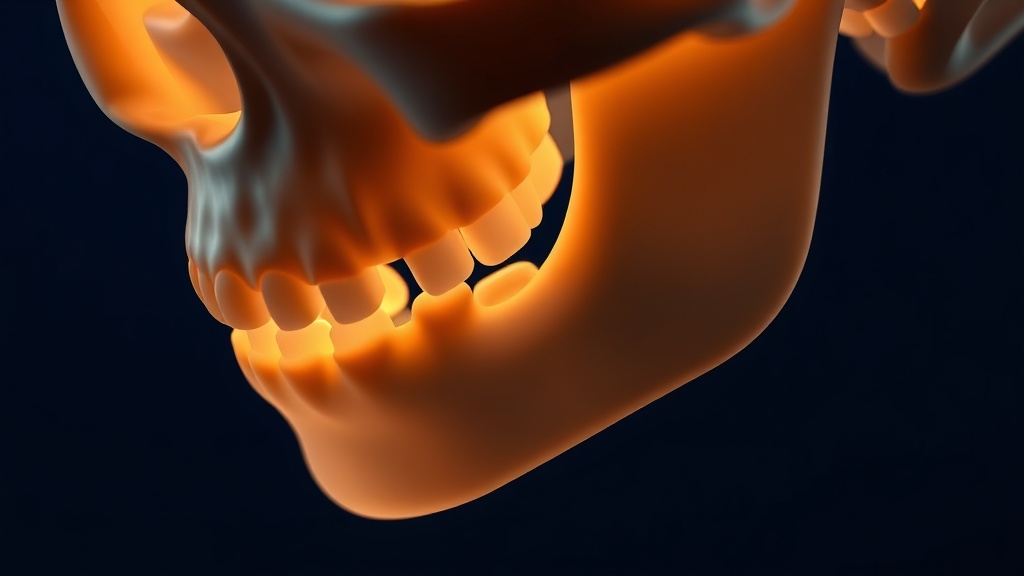
- A jaw that pops or clicks is extremely common, and when it happens without pain it is usually harmless — often just the joint's small cartilage disc slipping on and off as you open and close.
- The medical name for the classic painless click is disc displacement with reduction, and it is the single most common jaw-joint finding in adults.
- What changes the picture is pain, locking or catching: a click with lasting soreness, or a jaw that gets stuck, deserves an in-person assessment.
- You cannot reliably diagnose your own jaw from a click alone; a validated exam is what separates a harmless noise from a joint problem.
- Most clicking needs no treatment, but if you want to ease it, gentle self-care is the sensible, low-risk first step.
Your jaw usually pops because a small cushioning disc inside the joint slips on and off the bone as you open and close — a common, often harmless event called disc displacement with reduction. A painless click rarely needs treatment. But clicking with pain, locking or catching should be checked by a professional.
What is actually clicking
The jaw joint just in front of each ear is unusual: between the rounded top of the lower jaw bone and the socket in the skull sits a small, soft cartilage disc that acts as a cushion and lets the joint both hinge and glide. In a smoothly working jaw, that disc travels neatly with the bone as you open and close. Very often, though, the disc sits slightly forward of where it should. When you open your mouth, the bone slips back underneath it and the disc snaps into place — that is the pop you hear. Close your mouth and the disc slides forward again, sometimes with a second, quieter click. Clinicians call this disc displacement with reduction, because the disc reduces, or returns, onto the bone with a click. It is the most common finding in the jaw joint, and on its own — with no pain and no locking — it is generally considered a normal variation rather than a disease. The noise can be startling, but the mechanism behind it is usually gentle and benign.
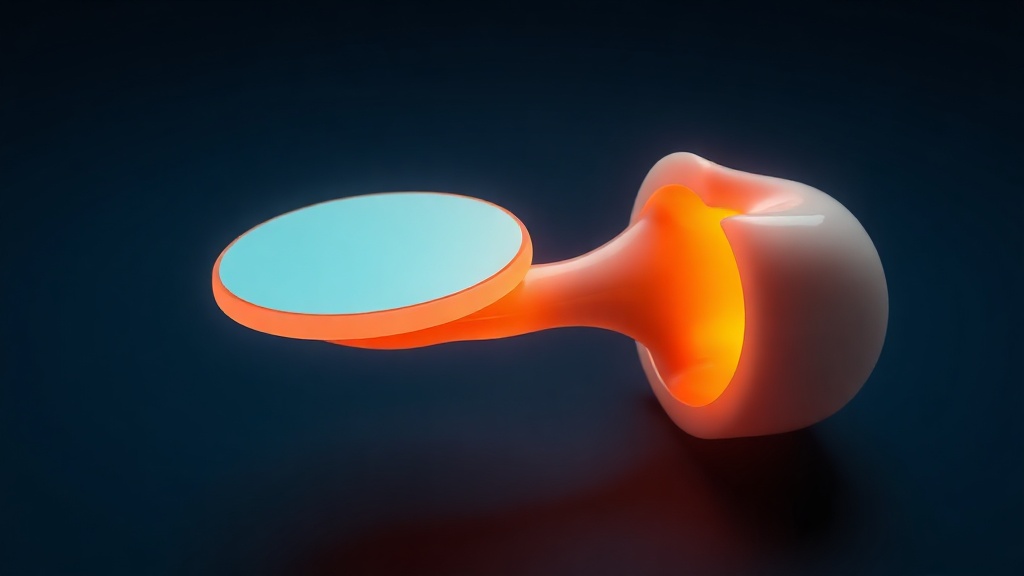
The pop is the disc snapping back onto the bone as you open — the mechanism behind most painless clicks.
What the research actually shows
Every claim below maps to a named, peer-reviewed source in the Sources section. According to PubMed.
| Claim | Evidence | Source |
|---|---|---|
| Disc displacement with reduction — the disc slipping on and off, the classic cause of a painless click — is the single most common temporomandibular finding in adults (around 25.9%). | Systematic review and meta-analysis of prevalence. | Valesan et al., 2021 |
| Validated diagnostic criteria (DC/TMD) allow a clinician to reliably distinguish a harmless click from a painful joint disorder — which is why persistent or painful clicking is worth an in-person exam. | Consensus diagnostic standard with high accuracy. | Schiffman et al., 2014 |
| When a click does come with jaw discomfort, dentist-guided self-care matched splint therapy for symptoms at 3, 6 and 12 months — a reassuring, low-cost first step. | Randomized controlled trial (200 participants). | Truelove et al., 2006 |
| For chronic jaw pain, a 2023 international guideline found coping- and movement-based care most effective and advised against invasive first-line measures — noise alone is not a reason to escalate. | GRADE clinical practice guideline. | Busse et al., 2023 |
Is your jaw pop a worry?
| What you notice | What it often means | Sensible action |
|---|---|---|
| A painless click when opening or closing | The disc slipping on and off — very common, usually benign | Reassurance; no treatment usually needed |
| A click with occasional mild soreness | Mild joint or muscle irritation | Gentle self-care; keep an eye on it |
| A click plus pain that lingers | Possible joint or muscle disorder | See a dentist or orofacial-pain specialist |
| Catching or locking, or trouble opening fully | The disc may be blocking smooth movement | Book a prompt professional assessment |
| Jaw locked open, after an injury, or with fever and swelling | A potentially urgent problem | Seek urgent or emergency care |
When a click is worth a second look
Reassurance is the right starting point, but it is not the whole story, so here is the honest boundary. A click that is painless, unchanging and does not interfere with eating or talking is one you can usually live with and ignore. The signals that deserve attention are different in kind, not just degree. Pain that lingers around the joint or the muscles, a jaw that catches or locks so you cannot open or close it fully, a noise that is steadily getting worse, or clicking that is clearly worse on one side and accompanied by discomfort — these are the patterns that warrant an in-person look. Jaw-joint disorders are also more commonly reported in women than in men, and they often travel with clenching, stress and neck tension, which is useful context when you weigh your own symptoms. The key point is that you cannot tell from the sound alone which camp you are in. A clinician using a validated jaw exam can, quickly and without imaging in most cases, and that is exactly what turns an anxious guess into a clear answer.
Evidence you can act on.
Occasional emails — new research, new protocols, no noise.
Gentle ways to ease a noisy jaw
None of these treats a disorder or is guaranteed to silence a click, but they lower the load on the joint and support everyday comfort — a low-risk place to start while a painless click settles.
- 1
Give the joint softer work for a while
1 to 2 weeksDuring a noisy or tender spell, favour softer foods, cut food into smaller pieces, and avoid hard, chewy or crunchy items that make the joint work overtime. Less strain often means a quieter, calmer joint.
- 2
Do not force a wide yawn or big bite
ongoingOpening as wide as you can, or biting into a tall sandwich, exaggerates the disc slip. Support your chin gently during a yawn and keep openings modest to reduce the pop.
- 3
Ease daytime clenching
ongoingMany people hold their teeth together without realising it. A simple cue — lips together, teeth slightly apart, tongue resting up — relaxes the jaw muscles that load the joint. Sticky notes or a phone reminder help build the habit.
- 4
Use warmth and gentle relaxation
as neededA warm compress over the joint and slow, unforced jaw-relaxation movements can soothe tight muscles around a clicking joint. Keep everything gentle — this is comfort, not a workout.
- 5
Go easy on the chewing gum
ongoingLong, vigorous gum chewing overworks the same muscles that load the jaw joint. If your jaw is clicking or tender, cutting back is a simple, free experiment worth trying.

Feeling for a click is easy; telling a harmless noise from a problem takes an in-person exam.
See a dentist or orofacial-pain specialist if your jaw click comes with pain that lingers, if the jaw catches or locks, if opening or chewing becomes difficult, or if the noise is steadily worsening or clearly one-sided with discomfort. Seek urgent or emergency care if your jaw locks wide open and will not close, will not open at all, follows a blow or accident, or comes with fever and swelling around the joint. A click alone is usually nothing; these patterns are the ones a professional should see in person.
Frequently asked questions
Sources
- 1.
- 2.
- 3.
- 4.
- 5.

Fix your breath at the source.
The complete science-backed protocol — engineered to eliminate volatile sulfur compounds at the biological source.
Start the Breath Protocol →Related reading
Educational purposes only. The content on this page is not medical advice and is not a substitute for consultation with a qualified dental or medical professional.
More from the library
 Guides9 min
Jaw Clicking: Why It Happens and When to Worry
Painless jaw clicking is common and usually harmless. Here is why the joint clicks, what the research shows about how it changes over time, and when to get it checked.
Read →→ Causes10 min
Jaw Pain on One Side: Common Causes and When to Worry
Why does one side of your jaw hurt? The common causes - joint, muscle, dental and neck - explained honestly, with the red flags that mean it is time to get help.
Read →→ Guides8 min
How to Unlock a Locked Jaw: Gentle Self-Relief Steps
Calm, evidence-based ways to coax a recently stuck jaw open again — and the red flags that mean it is time to get help.
Read →→ Guides9 min
TMJ Disorder: The Complete Guide
What TMJ disorder really is, how common it is, and the conservative-care-first path most people never hear about.
Read →→ Guides8 min
Jaw Relaxation Exercises: A Step-by-Step Comfort Guide
A step-by-step down-regulation routine for a tight, clenched jaw, built on gentle relaxation rather than force.
Read →→ Guides9 min
Does Mewing Actually Work? An Honest, Evidence-Based Breakdown
The honest, evidence-based answer to whether tongue posture can reshape an adult jaw — what the research really shows, and why forcing it can backfire.
Read →→