Scaling and Root Planing: What It Is and What to Expect
What scaling and root planing does, why a toothbrush cannot replace it, and what to expect in the chair.

- Scaling and root planing (SRP) is a professional deep clean below the gumline: a hygienist or dentist removes hardened tartar and bacterial film from the tooth roots inside gum pockets and smooths the root so the gum can reattach.
- It is the core, non-substitutable therapy for gum disease that has moved below the gumline; on average it reduces pocket depth by about 1.4 mm and closes roughly 74% of pockets.
- A home toothbrush or rinse physically cannot reach the tartar packed into deep pockets, which is why SRP is done by a professional, not at home; the two work together, they are not interchangeable.
- It is usually done under local anaesthetic, often over one or two visits split by area of the mouth; expect some soreness and temporary sensitivity for a few days afterwards.
- SRP controls and arrests gum disease rather than curing it; keeping the result means ongoing maintenance cleanings, because under regular care most people then lose no teeth at all.
Scaling and root planing is a professional deep clean beneath the gumline. Using hand and ultrasonic instruments, a clinician removes hardened tartar and bacteria from the roots inside gum pockets and smooths the root surface so the gum can reattach and pockets shrink. It is the established way to arrest gum disease, done under local anaesthetic, and cannot be replaced by home care.
What scaling and root planing actually does
To understand SRP you have to picture where gum disease lives. As gingivitis progresses into periodontitis, the gum detaches slightly from the tooth and a pocket forms. Down inside that pocket, on the root surface, bacteria organise into a sticky film and, over time, that film mineralises into hard tartar, or calculus, cemented to the root below the gumline where no brush can reach. That subgingival tartar keeps the inflammation running, which deepens the pocket, which shelters more bacteria: a self-feeding loop. Scaling and root planing breaks it. Scaling is the removal of that hardened deposit and biofilm from the root, using ultrasonic tips that vibrate it loose and fine hand instruments that scrape the surface clean. Root planing is the finishing step: smoothing the root so the surface is clean and less hospitable to bacteria, which lets the inflamed gum settle back down and re-adapt to the tooth. The measurable result is real and consistent: across the evidence, subgingival instrumentation reduces pocket depth by around 1.4 millimetres and closes roughly three-quarters of pockets, and adds about half a millimetre of reattachment on average. It is not cosmetic and it is not a normal polish; it is the mechanical dismantling of the disease process at its source.
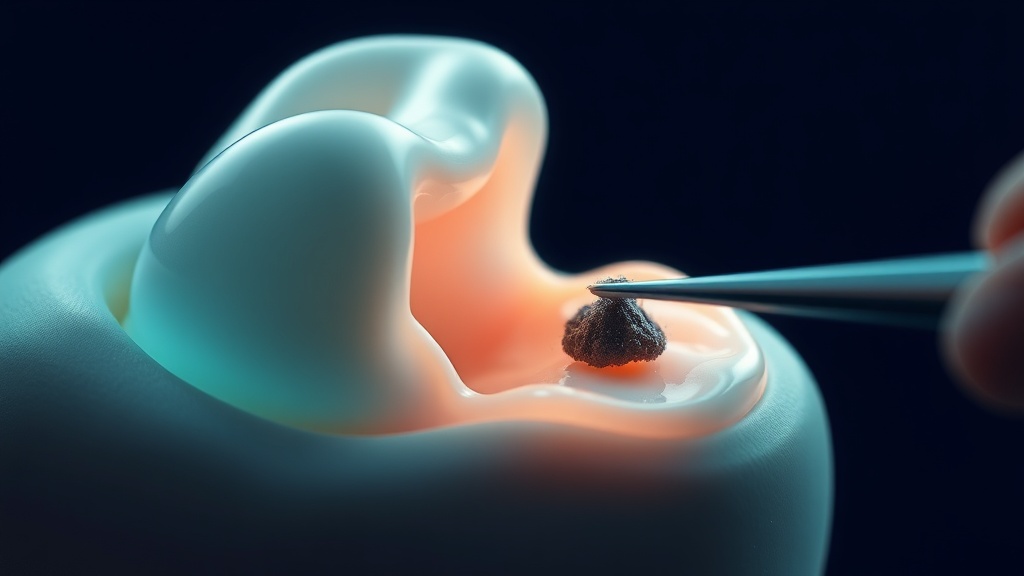
SRP removes hardened tartar from the root inside the pocket, where a brush cannot reach.
What the research actually shows
Every claim below maps to a named, peer-reviewed source in the Sources section. According to PubMed.
| Claim | Evidence | Source |
|---|---|---|
| Subgingival instrumentation reduces pocket depth by about 1.4 mm and closes roughly 74% of pockets. | European Federation of Periodontology systematic review and meta-analysis. | Suvan et al., 2020 |
| SRP produces an average gain in clinical attachment of about 0.5 mm, and add-on antibiotics or lasers add only a further 0.2 to 0.6 mm. | American Dental Association systematic review and meta-analysis. | Smiley et al., 2015 |
| A home toothbrush cannot reach subgingival tartar; residual deposit rises steeply with pocket depth, easy under 3 mm and hardest beyond 5 mm. | Study of calculus removal by pocket depth. | Rabbani et al., 1981 |
| Hand and ultrasonic instruments give no clinically meaningful difference in outcome; powered instruments are about 37% faster. | Systematic review of instrumentation methods. | Tunkel et al., 2002 |
| Under regular maintenance after treatment, tooth loss averages about 0.1 tooth per patient per year, and most people lose none. | Systematic review of tooth loss during supportive care. | Carvalho et al., 2021 |
Routine cleaning versus a deep clean (SRP)
| Feature | Routine cleaning (prophylaxis) | Deep clean (scaling and root planing) |
|---|---|---|
| Where it works | Above the gumline | Below the gumline, inside the pockets |
| Who it is for | Healthy gums, upkeep and prevention | Gums with pockets and tartar under the gum |
| Anaesthetic | Usually none | Usually numbed with local anaesthetic |
| Visits | One | Often one or two, sometimes split by area of the mouth |
| Goal | Keep healthy gums healthy | Arrest active gum disease and shrink pockets |
Why home care cannot replace it, and why maintenance matters
The most important thing to understand about SRP is why it exists at all: because no amount of diligent home care can reach where the disease is. Once a pocket is established, the tartar cemented to the root inside it sits beyond the reach of any toothbrush, floss, or rinse, and studies show that even for professionals, the deeper the pocket the more deposit is left behind, in pockets of five to ten millimetres, nearly half of root surfaces still had residual calculus after a single closed cleaning. That is not an argument against SRP; it is the argument for it, and for careful, sometimes repeated, professional work. It also explains why maintenance is not optional. SRP arrests the disease, but the bacteria that cause it never leave the mouth, so pockets can slowly re-colonise. This is why leaving a deep pocket untreated is so costly: a residual pocket of seven millimetres or more raises the odds of eventually losing that tooth many times over. The reassuring flip side is that people who have SRP and then keep up regular maintenance cleanings, typically every three to four months, do remarkably well: tooth loss drops to a fraction of a tooth per decade, and most lose none. The deep clean is the reset; maintenance is what protects it.
Evidence you can act on.
Occasional emails — new research, new protocols, no noise.
What to expect, step by step
SRP is a planned professional procedure. Here is what the process usually looks like. None of this is a home treatment; it is done by a dentist or hygienist.
- 1
Assessment and pocket charting
one visitA clinician measures the depth of your gum pockets around each tooth and takes x-rays to see bone level. These numbers define where SRP is needed and become the baseline you are later compared against.
- 2
Numbing the area
a few minutesThe gums are numbed with local anaesthetic so the deep cleaning is comfortable. You stay awake; you should feel pressure and vibration but not pain. Anxious patients can ask about additional options.
- 3
The scaling and root planing
45 to 90 minutes per areaUltrasonic and hand instruments remove tartar and biofilm from the roots inside the pockets and smooth the root surface. Extensive cases are often split into halves or quadrants across two visits so each area gets thorough attention.
- 4
The first few days
3 to 5 daysExpect some tenderness, mild bleeding, and temporary sensitivity to hot and cold as the gums settle. Warm salt-water rinses, gentle brushing, and over-the-counter pain relief usually manage it well.
- 5
Re-evaluation and maintenance
from 6 weeks onwardA few weeks later the clinician re-measures your pockets to see how much they shrank. From there you move onto a maintenance schedule, often every three to four months, which is what keeps the disease arrested long term.
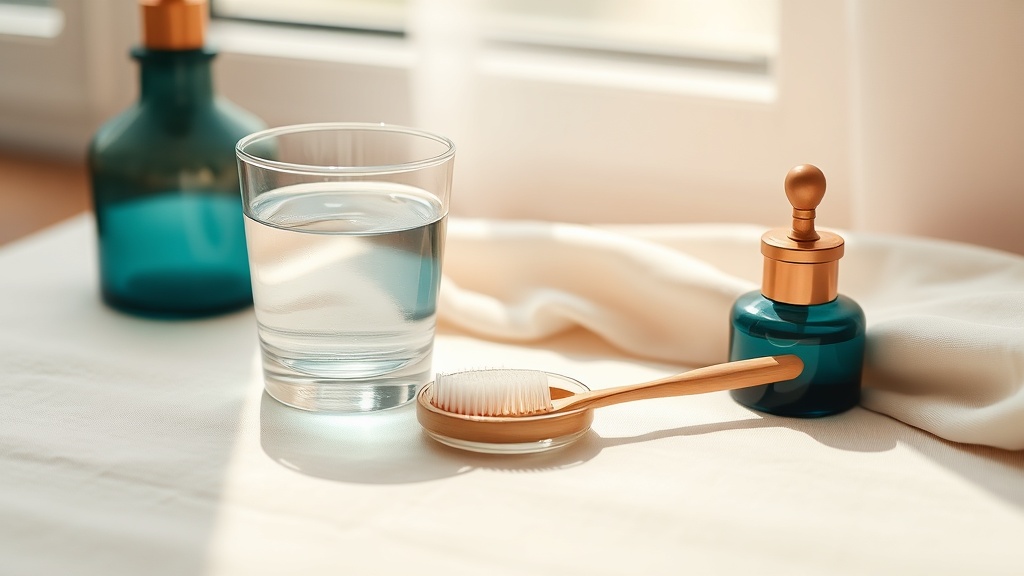
Recovery is gentle: warm salt-water rinses, careful brushing, and regular maintenance cleanings.
Scaling and root planing can only be done by a dentist or hygienist, because reaching tartar inside gum pockets requires professional instruments and technique. If your gums bleed, feel sore, or you have been told you have deep pockets or gum disease, book an assessment. The earlier gum disease is treated, the more predictable the result, and no home routine, however diligent, can substitute for the deep clean itself.
Frequently asked questions
Sources
- 1.
- 2.
- 3.
- 4.
- 5.
- 6.
- 7.

Fix your breath at the source.
The complete science-backed protocol — engineered to eliminate volatile sulfur compounds at the biological source.
Start the Breath Protocol →Related reading
Educational purposes only. The content on this page is not medical advice and is not a substitute for consultation with a qualified dental or medical professional.
More from the library
 Guides8 min
Deep Cleaning Teeth: The Plain-English Guide
What a deep cleaning actually is, how it differs from a regular clean, and whether you really need one.
Read →→ Guides8 min
Scaling and Root Planing Cost: What Actually Drives the Price
The honest cost drivers behind scaling and root planing, how it is billed, and where insurance fits.
Read →→ Guides9 min
Gum Disease Treatment: The Professional Path and How Home Care Supports It
The evidence-based treatment path for gum disease, why professional care is non-negotiable, and how home habits support but never replace it.
Read →→ Guides8 min
Periodontal Pockets: How They Are Measured and Reduced
A precise, honest explainer of periodontal pockets: how they form, how a dentist measures probing depth, what the millimetre numbers mean, and why deep pockets are closed by professional care rather than any rinse or paste.
Read →→ Guides8 min
Gum Disease Symptoms: The Early Warnings You Can Feel
The symptoms of gum disease you can feel and notice yourself, why bleeding comes first, and when a symptom means see a dentist now.
Read →→ Answers8 min
Can Receding Gums Grow Back? The Honest Answer
It is the question everyone with recession asks. The straight answer, and what you can realistically do instead.
Read →→