
Deep Cleaning Teeth: The Plain-English Guide
What a deep cleaning actually is, how it differs from a regular clean, and whether you really need one.

- A deep cleaning is the everyday name for scaling and root planing (SRP): a professional clean that reaches below the gumline to remove tartar and bacteria from the tooth roots inside gum pockets.
- It is not the same as a regular cleaning; a regular clean polishes above the gumline for healthy gums, while a deep clean treats active gum disease that has moved into pockets beneath the gum.
- You need it when a dentist finds deeper pockets, bleeding, and tartar below the gumline, usually confirmed by measuring your pockets and checking x-rays, not just from how your teeth look.
- A home toothbrush cannot reach the tartar cemented inside a pocket, which is why a deep clean is done by a professional; it works alongside good home care, not instead of it.
- A deep clean arrests gum disease rather than curing it, so it is followed by maintenance cleanings; under regular upkeep most treated people go on to lose no teeth.
A deep cleaning is the plain-English name for scaling and root planing. Unlike a regular polish above the gumline, it reaches below the gum to remove tartar and bacteria from the roots inside gum pockets, so the gum can reattach and pockets shrink. It treats active gum disease, is done under local anaesthetic, and cannot be replaced by brushing at home.
What a deep cleaning actually is
If your dentist has told you that you need a deep cleaning, it can sound alarming, or like an upsell, so it helps to know exactly what the term means. A deep cleaning is the same procedure clinicians call scaling and root planing. The difference from the cleaning you are used to is where it happens. A regular cleaning, or polish, works on the parts of your teeth above the gumline; it is upkeep for healthy gums. A deep cleaning goes beneath the gumline, into the small pockets that form between the gum and the tooth when gum disease takes hold. Down inside those pockets, on the root, bacteria collect and harden into tartar that no toothbrush can reach. Left there, it keeps the gum inflamed, and the pocket deepens. A deep cleaning removes that below-the-gum tartar with ultrasonic and hand instruments, then smooths the root surface so the gum can settle back against the tooth and the pocket can shrink. The reason it needs a professional is simple: the deposits sit in a place your brush, floss, and rinse physically cannot get to. It is not a fancier version of a polish; it is a targeted treatment for a specific problem, and the evidence behind it is strong, closing roughly three-quarters of treated pockets on average.
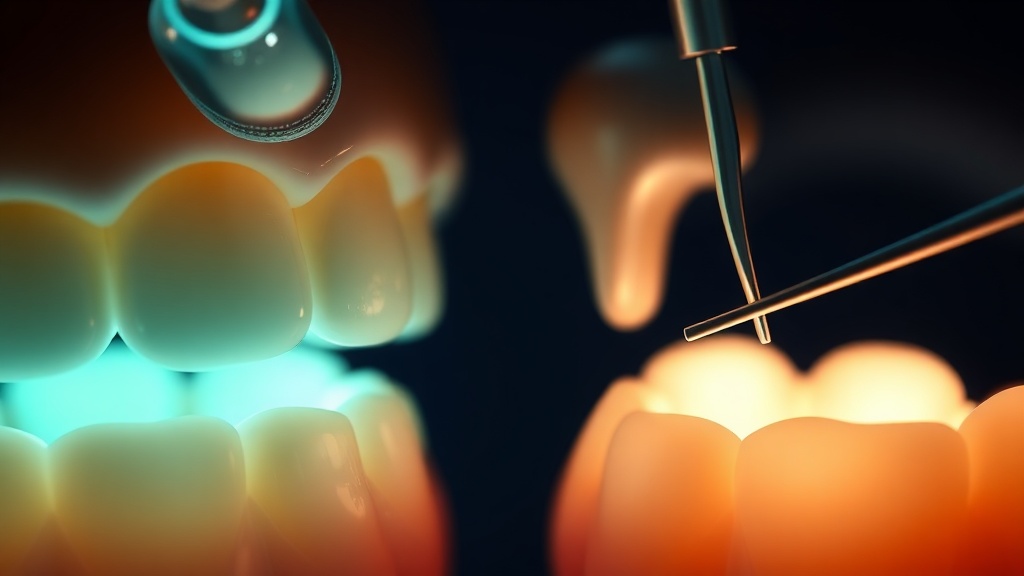
A regular clean works above the gumline; a deep clean reaches the roots inside gum pockets.
What the research actually shows
Every claim below maps to a named, peer-reviewed source in the Sources section. According to PubMed.
| Claim | Evidence | Source |
|---|---|---|
| A deep cleaning (scaling and root planing) reduces pocket depth by about 1.4 mm and closes roughly 74% of treated pockets. | European Federation of Periodontology systematic review. | Suvan et al., 2020 |
| A home toothbrush cannot reach tartar below the gumline; the deeper the pocket, the more is left behind, so it is easy under 3 mm and hardest beyond 5 mm. | Study of calculus removal by pocket depth. | Rabbani et al., 1981 |
| Nearly half of root surfaces in 5 to 10 mm pockets still had tartar after a single closed cleaning, which is why thoroughness and sometimes repeat visits matter. | Study of residual calculus after scaling. | Shen et al., 1997 |
| Leaving a deep pocket untreated sharply raises the odds of eventually losing that tooth, so a recommended deep clean is not just precautionary. | Long-term cohort of residual pockets and tooth loss. | Matuliene et al., 2008 |
| After treatment, under regular maintenance, tooth loss averages about 0.1 tooth per patient per year and most people lose none. | Systematic review of tooth loss during supportive care. | Carvalho et al., 2021 |
Is it a regular clean or a deep clean?
| What the dentist finds | Points to a regular clean | Points to a deep clean |
|---|---|---|
| Gum pocket depth | 1 to 3 mm (healthy) | 4 mm or more |
| Bleeding on probing | Little or none | Bleeding in several places |
| Where the tartar sits | Above the gumline | Below the gumline, on the roots |
| Bone level on x-ray | Normal | Signs of bone loss |
| Purpose of the visit | Keeping healthy gums healthy | Treating active gum disease |
Do you really need it, or is it a money-grab?
This is the honest question a lot of people are quietly asking, and it deserves a straight answer. A deep cleaning should be recommended on the basis of evidence you can see, not a hunch. The clinical case for it is written in your pocket measurements and x-rays: if a dentist or hygienist is charting pockets of four millimetres or more, bleeding, and tartar below the gumline, then there is active disease in a place home care cannot reach, and that is precisely what a deep clean treats. You are entitled to ask to see those numbers, and a good practice will happily show you, that transparency is how you tell a justified recommendation from an unnecessary one. What the deep clean is not is optional in the sense of harmless to skip. Untreated pockets tend to deepen, and a residual deep pocket sharply raises the risk of losing the tooth down the line, so declining recommended treatment usually means the disease keeps progressing rather than staying still. At the same time, be wary of the opposite error: a deep cleaning is not something healthy gums need. If your pockets are shallow and there is no bleeding or bone loss, a regular cleaning is appropriate, and it is reasonable to ask why a deep clean is being proposed. The right test in both directions is the same, ask to see the measurements.
Evidence you can act on.
Occasional emails — new research, new protocols, no noise.
What to expect, step by step
A deep cleaning is a straightforward professional procedure. Here is how it usually goes, and how to look after the area afterwards. It is done by your dental team, not at home.
- 1
Charting and diagnosis
one visitThe clinician measures the pockets around each tooth and reviews x-rays. These numbers confirm whether you need a deep clean, which teeth, and become the baseline your results are checked against later.
- 2
Getting numb
a few minutesThe area is numbed with local anaesthetic so the cleaning is comfortable. You are awake and feel pressure and vibration rather than pain. If you are nervous, ask what options the practice offers to help you relax.
- 3
The deep clean itself
45 to 90 minutes per areaUltrasonic and hand instruments clear tartar from the roots inside the pockets and smooth the surface. Larger cases are often done in two visits, one side or half of the mouth at a time, so each area is cleaned properly.
- 4
Aftercare for a few days
3 to 5 daysExpect some tenderness, a little bleeding, and sensitivity to hot and cold. Warm salt-water rinses, gentle brushing, softer foods, and over-the-counter pain relief keep you comfortable while the gums settle.
- 5
Re-check and upkeep
from 6 weeks onwardA few weeks on, the pockets are re-measured to see how much they shrank. You then move to regular maintenance cleanings, often every three to four months, which is what keeps the disease from coming back.

Aftercare is gentle: softer foods, warm salt-water rinses, and careful brushing for a few days.
A deep cleaning can only be done by a dentist or hygienist, because reaching tartar inside gum pockets needs professional instruments. If your gums bleed, feel tender, or you have been told you have deeper pockets, book an assessment, and ask to see your pocket measurements so you understand why it is recommended. Home care supports the result but cannot replace the deep clean, and catching gum disease early makes treatment simpler.
Frequently asked questions
Sources
- 1.
- 2.
- 3.
- 4.
- 5.
- 6.

Fix your breath at the source.
The complete science-backed protocol — engineered to eliminate volatile sulfur compounds at the biological source.
Start the Breath Protocol →Related reading
Educational purposes only. The content on this page is not medical advice and is not a substitute for consultation with a qualified dental or medical professional.
More from the library
 Guides8 min
Scaling and Root Planing: What It Is and What to Expect
What scaling and root planing does, why a toothbrush cannot replace it, and what to expect in the chair.
Read →→ Guides8 min
Deep Cleaning Teeth Cost: What Actually Drives the Price
Why a deep clean costs more than a regular clean, the real drivers, and how to avoid billing surprises.
Read →→ Guides9 min
Gum Disease Treatment: The Professional Path and How Home Care Supports It
The evidence-based treatment path for gum disease, why professional care is non-negotiable, and how home habits support but never replace it.
Read →→ Guides8 min
Gum Pockets: What Those Numbers at the Dentist Mean
A plain-English guide to gum pockets: what they are, why your hygienist calls out numbers like two, three and five, what counts as healthy, and why the deeper ones need a professional clean.
Read →→ Guides8 min
Gum Disease Symptoms: The Early Warnings You Can Feel
The symptoms of gum disease you can feel and notice yourself, why bleeding comes first, and when a symptom means see a dentist now.
Read →→ Answers8 min
Can Receding Gums Grow Back? The Honest Answer
It is the question everyone with recession asks. The straight answer, and what you can realistically do instead.
Read →→