Proper Tongue Posture: How to Rest Your Tongue Correctly
The calm, neutral resting position for your tongue, lips and jaw, explained honestly.

- Proper resting tongue posture simply means the tongue rests lightly against the roof of the mouth, the lips are gently together, the teeth are slightly apart, and you breathe through your nose.
- It is a normal, comfortable neutral position, not a special technique, and for most people the tongue already drifts there when the face is relaxed.
- The honest, evidence-backed benefits are modest: it pairs naturally with nasal breathing and gives the jaw muscles a rest from clenching, so teeth are not pressed together all day.
- It does NOT reshape an adult jawline. There is no controlled clinical evidence that tongue posture remodels the adult jawbone, and craniofacial bone growth is essentially finished after the second decade of life.
- Never force it. Pushing the tongue up hard (aggressive mewing) can turn into jaw clenching, which is exactly the kind of overload linked to jaw tension and grinding.
Your tongue should rest lightly and evenly against the roof of your mouth, just behind the front teeth, with your lips together, teeth slightly apart, and breathing through your nose. It is a relaxed neutral position that supports nasal breathing and rests the jaw. It will not, however, reshape an adult jaw.
What a resting tongue posture actually is
A resting posture is just where your mouth sits when you are not talking, chewing or swallowing. In a relaxed, neutral position the body of the tongue sits gently against the palate (the roof of the mouth), the tip rests a little behind the upper front teeth without pushing on them, the lips are closed softly, and there is a small gap between the upper and lower teeth so they are not touching. Air moves in and out through the nose. None of this is forced. For most people the tongue finds this position on its own the moment the face relaxes, which is why proper tongue posture is better understood as a habit to notice than a manoeuvre to perform. Two things make it genuinely worth caring about. First, a tongue-up, lips-together rest posture and nasal breathing go hand in hand, because the tongue sealing to the palate encourages you to breathe through the nose rather than the mouth. Second, keeping the teeth slightly apart means the powerful jaw-closing muscles are resting rather than lightly clenching, which is a real comfort benefit for people who tend to hold tension in the jaw. What a resting posture is not is a lever that reshapes bone. That is the part the internet gets wrong, and it is worth being precise about it.
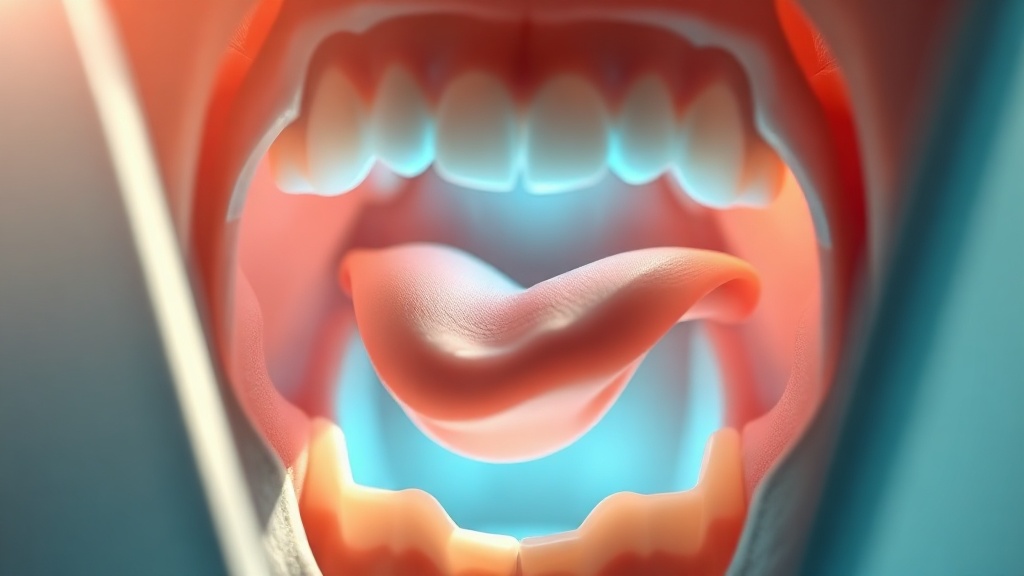
In a neutral resting posture the body of the tongue rests lightly and evenly against the palate, with the tip just behind the upper front teeth.
What the research actually shows
Every claim below maps to a named, peer-reviewed source in the Sources section. According to PubMed.
| Claim | Evidence | Source |
|---|---|---|
| There is no controlled clinical evidence that tongue posture remodels the adult jawbone; craniofacial skeletal growth is clinically insignificant after roughly the second decade of life. | Review of craniofacial growth and the adult growth window. | Fudalej et al., 2007 |
| In adults, tongue position showed no significant association with vertical facial morphology, so where the tongue sits is not what sets adult face shape. | Cephalometric analysis of adult tongue posture and facial form. | Ghafoor et al., 2024 |
| The most-cited pro-orthotropics evidence is a lay-panel attractiveness study of a dozen of the practitioner's own patients, rated at high risk of bias. | Small, non-randomised case series judged by an untrained panel. | Mew, 2007 |
| Structured oral and tongue muscle training reduced adult sleep-disordered-breathing severity by roughly half — a muscle-tone and airway effect, not a change in bone. | Systematic review and meta-analysis of myofunctional therapy. | Camacho et al., 2015 |
| Even dedicated myofunctional appliances in still-growing children change the teeth, not the vertical skeletal frame of the face. | Clinical study of myofunctional appliances in growing children. | Balian et al., 2025 |
What resting tongue posture can and cannot do
| Claim you will hear | What the evidence supports | Realistic? |
|---|---|---|
| Reshapes your adult jawline or gonial angle | No controlled evidence; the adult jawbone does not remodel from posture | No |
| Supports easy nasal breathing at rest | A tongue-up, lips-together posture naturally pairs with breathing through the nose | Yes, modest |
| Gives tight jaw muscles a chance to rest | Keeping teeth slightly apart means the closing muscles are not clenching all day | Yes, modest |
| Widens the palate or straightens teeth in adults | Only orthodontics or appliances move adult teeth; resting posture does not | No |
| Improves tongue and airway muscle tone with practice | Structured myofunctional training shows real airway-tone effects over time | Partly, with genuine training |
Where the jawline claims come from, and why they do not hold up
Most of the excitement around tongue posture traces back to mewing, a term drawn from the orthotropics ideas of a father-and-son pair of orthodontists. The viral version of the claim is that holding your tongue firmly against the roof of your mouth, for months or years, will lift your cheekbones, sharpen your gonial angle and rebuild your jaw without surgery. It is a compelling story, and it is not supported. When researchers went looking, they found no randomised trials, no controlled cohorts and no cephalometric studies showing that tongue posture reshapes the adult skeleton, and the single most-cited piece of pro-mewing evidence turned out to be an attractiveness rating of a handful of the originator's own patients. The underlying biology is the real obstacle: after roughly the second decade of life the bones of the face are effectively set, and soft tongue pressure is nowhere near what would be needed to move them even if the growth window were open. This does not mean people are imagining their results. A layperson on one forum put the honest version well, noting that the habit can make a jawline look a bit sharper without actually changing the structure of the jaw. Standing taller, closing the lips, losing a little facial puffiness and simply carrying yourself with better posture can all change how a jaw looks in a photo, and that is a real and pleasant effect, but it is soft-tissue and posture, not bone. The one place tongue and mouth muscle work genuinely earns its keep is airway tone: supervised myofunctional therapy meaningfully lowers sleep-apnea severity, but that is trained muscle behaviour over time, not a resting posture reshaping your face. And there is a caution worth taking seriously. People who chase the jawline promise often start pushing hard, and forcing the tongue up aggressively can slide into jaw clenching, the very overload pattern tied to jaw tension and grinding. Comfort, not force, is the whole point.
Evidence you can act on.
Occasional emails — new research, new protocols, no noise.
How to find a comfortable resting posture
This is about noticing and gently returning to a relaxed neutral position, not straining to hold one. None of it treats a condition; it simply keeps the mouth and jaw at ease.
- 1
Let the tongue rest against the palate
a few secondsSay the letter N, then relax. Notice where the front of your tongue lands, just behind your upper front teeth. Let the rest of the tongue settle gently and evenly up toward the roof of the mouth. It should feel light and effortless, never pressed.
- 2
Close the lips softly and part the teeth
ongoingBring your lips together without pursing them, and make sure your upper and lower teeth are not touching. A small gap between the teeth is normal and healthy; it keeps the jaw-closing muscles resting instead of quietly clenching.
- 3
Breathe through your nose
ongoingWith the lips sealed and the tongue up, let all your breathing happen through your nose. If nasal breathing feels blocked much of the time, that is worth mentioning to a clinician rather than forcing, because chronic congestion has its own causes.
- 4
Notice, do not force
throughout the dayRather than holding the position rigidly, just check in a few times a day, drop back into the relaxed posture, and move on. Straining to hold a hard tongue press is counterproductive and can encourage clenching.
- 5
Pair it with everyday posture
throughout the dayA tall, easy head-over-shoulders posture makes the resting mouth position feel natural. Slumping forward at a screen pulls the jaw and neck out of line, so the two habits reinforce each other.

The real benefit is calm and simple: lips together, teeth apart, quiet nasal breathing, and a jaw that is resting rather than clenching.
Resting tongue posture is a comfort habit, not a treatment. See a dentist or doctor if you cannot breathe comfortably through your nose most of the time, if you snore or wake unrefreshed, if you have ongoing jaw pain, clicking with locking, or notice yourself clenching or grinding, or if a child mouth-breathes persistently. Airway and jaw concerns deserve a proper in-person assessment rather than a self-fix, and diagnosing sleep-related breathing problems in particular needs a professional, not an app or a social-media habit.
Frequently asked questions
Sources
- 1.
- 2.
- 3.
- 4.
- 5.
- 6.
- 7.

Fix your breath at the source.
The complete science-backed protocol — engineered to eliminate volatile sulfur compounds at the biological source.
Start the Breath Protocol →Related reading
Educational purposes only. The content on this page is not medical advice and is not a substitute for consultation with a qualified dental or medical professional.
More from the library
 Guides9 min
Does Mewing Actually Work? An Honest, Evidence-Based Breakdown
The honest, evidence-based answer to whether tongue posture can reshape an adult jaw — what the research really shows, and why forcing it can backfire.
Read →→ Guides8 min
How to Mew Properly: The Honest, Evidence-Based Guide
The correct tongue-posture technique, described plainly - and the honest science on why it will not reshape an adult jawbone, and how to keep it from doing harm.
Read →→ Guides8 min
Mouth Breathing: Why Nasal Breathing Wins, and How to Switch Back
Why your nose is built for breathing, what chronic mouth breathing does to your mouth and sleep, and the honest, gentle ways to shift the habit back.
Read →→ Guides8 min
Myofunctional Therapy: What It Is, What It Helps, and What It Cannot Do
A grounded guide to orofacial myofunctional therapy: real, modest evidence for snoring, mild sleep apnea and tongue-thrust — and an honest line on the jawline claims it cannot deliver.
Read →→ Guides8 min
Jaw Relaxation Exercises: A Step-by-Step Comfort Guide
A step-by-step down-regulation routine for a tight, clenched jaw, built on gentle relaxation rather than force.
Read →→ Guides8 min
How to Unlock a Locked Jaw: Gentle Self-Relief Steps
Calm, evidence-based ways to coax a recently stuck jaw open again — and the red flags that mean it is time to get help.
Read →→