How to Mew Properly (and What It Can and Cannot Do)
The correct tongue-posture technique, described plainly - and the honest science on why it will not reshape an adult jawbone, and how to keep it from doing harm.

- Mewing means resting your whole tongue against the roof of your mouth, with your lips gently sealed, your back teeth lightly touching, and breathing through your nose. Done gently, it is simply a resting-posture habit.
- There is no reliable evidence that mewing reshapes an adult jawbone. Craniofacial growth is essentially complete after the second decade of life, so posture has no bone left to remodel.
- Any sharper jawline people notice is soft-tissue and posture appearance - how the chin, neck and head are held - not a change to the underlying skeleton.
- Gentle tongue posture is harmless. Forceful, all-day hard mewing is where people run into jaw clenching, muscle soreness and even a feeling of airway strain.
- If you are chasing mewing to change how your face looks and it is starting to affect your mood or self-image, that is worth raising with a professional - the technique cannot deliver what the viral claims promise.
To mew, you rest the entire tongue - tip and back - flat against the roof of your mouth, keep your lips sealed and teeth lightly together, and breathe through your nose. Done gently it is a harmless posture habit. But the honest verdict is that there is no good evidence it reshapes an adult jawbone.
What mewing actually is
Mewing is a name given to a simple idea: resting your tongue flat against the roof of your mouth throughout the day, with your lips gently sealed and your back teeth lightly touching. The term comes from a British orthodontist and his son, who argued that habitual tongue posture could guide the growth of the face - a claim they promoted as an alternative to braces and, later, to jaw surgery. Online it has since grown into a vast self-improvement movement promising a chiselled jawline from posture alone. The mechanical story sounds plausible at first: the tongue is a strong muscle, and it does rest against the palate. But there is a crucial catch. Guiding the growth of a still-forming bone and reshaping a finished one are two completely different things. In a child whose face is still growing, oral-muscle habits and appliances can nudge how teeth come in. In an adult, the scaffolding is already set. So the honest way to understand mewing is as a resting-posture habit, not a construction project for your skeleton.
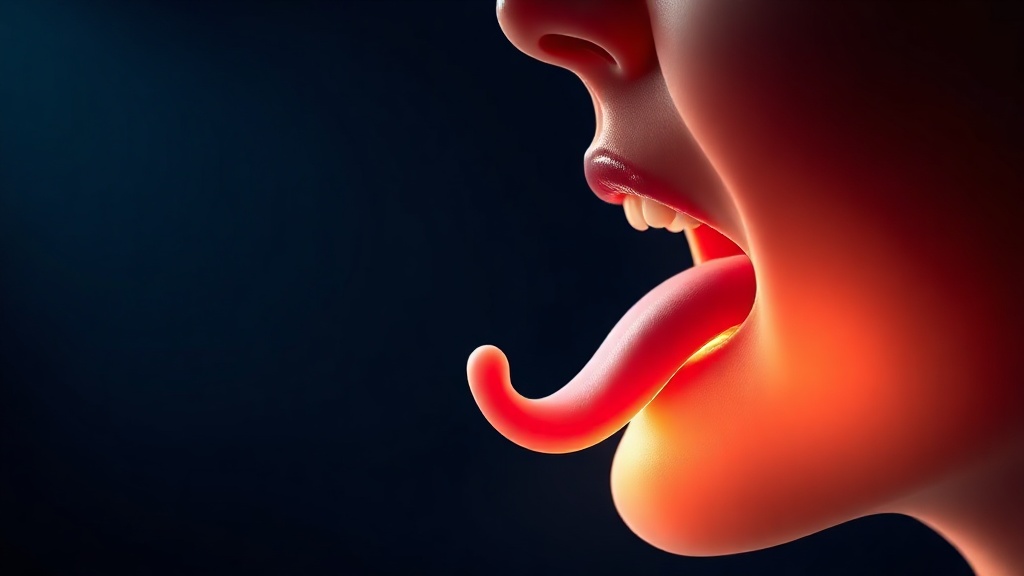
Correct tongue posture rests the whole tongue softly against the palate - a gentle habit, not a force applied to bone.
What the research actually shows
Every claim below maps to a named, peer-reviewed source in the Sources section. According to PubMed.
| Claim | Evidence | Source |
|---|---|---|
| Craniofacial skeletal growth continues after puberty but the amount decreases steadily and, after the second decade of life, is clinically insignificant - so there is no adult growth window for posture to redirect bone. | Cephalometric cohort study tracking facial growth after puberty. | Fudalej et al., 2007 |
| There is no significant association between adult tongue position and vertical facial morphology across different growth patterns. | Study of tongue position and facial morphology in adults. | Ghafoor et al., 2024 |
| The most-cited pro-orthotropics evidence is a lay-panel attractiveness comparison of just 12 identical twins treated by the originator - a high risk-of-bias case series, not a controlled trial of bone change. | Facial changes in identical twins treated by different orthodontic techniques. | Mew, 2007 |
| Surgeons describe mewing as social medias alternative to orthognathic surgery - it is promoted for changes that in reality only surgery achieves. | Clinical commentary in an oral and maxillofacial surgery journal. | Lee, Graves & Friedlander, 2019 |
| Even purpose-built myofunctional appliances in still-growing children change the teeth, not the vertical skeletal pattern - underscoring how little posture moves adult bone. | Systematic review of prefabricated myofunctional appliances in children. | Balian et al., 2025 |
What mewing can and cannot do
| Claim you will see online | What it really is | Realistic? |
|---|---|---|
| Reshapes your jawbone or widens your maxilla | Adult bone does not remodel from tongue pressure | No |
| Gives you a sharper jawline | Posture, and how you hold your head and neck | Appearance only |
| Fixes your bite or facial asymmetry | A job for an orthodontist or surgeon, not posture | No |
| Builds a better nasal-breathing habit | Encourages lips-together nasal breathing | Plausibly, gently |
| Delivers a permanent before-and-after transformation | Photos shift with angle, lighting and posture | No |
Where the results really come from
Scroll through any mewing transformation and you are almost never looking at new bone. You are looking at the oldest tricks in portrait photography working together. Lift the chin and lengthen the neck, and the jawline instantly looks sharper. Add better lighting from above, a slight downward camera angle and a confident posture, and the same face reads as more defined. Lose a little body fat and the jaw looks cleaner still, because there is less soft tissue over it - which has nothing to do with the bone beneath. On top of all that sits expectation: when you have spent months hoping for a result, you notice every flattering frame and quietly discard the rest. None of this is dishonest, exactly - people really do look a little different. But the change lives in posture, lighting and body composition, not in a remodelled mandible. That is why the before is so often a slouched, flat-lit, chin-down snapshot and the after is a poised, well-lit, chin-forward one. Understanding this is not a reason to feel cheated; it is what lets you get the real, immediate benefit - better posture - without waiting years for a skeletal change that is not coming.
Evidence you can act on.
Occasional emails — new research, new protocols, no noise.
How to mew gently, if you want to try it
None of this reshapes bone - it is a gentle resting-posture habit, and the single most important rule is to keep it soft. If any step brings on strain or pain, stop.
- 1
Find the resting spot
10 secondsSwallow normally and notice where your tongue lands. That spot on the roof of your mouth, just behind your front teeth, is where the tip rests. The cue is close and relax, never push.
- 2
Rest the whole tongue, not just the tip
ongoingLet the middle and back of the tongue rise softly toward the palate too, as if gently suctioned. It should feel effortless. If you are actively pressing, you are already doing too much.
- 3
Seal the lips and unclench the teeth
ongoingKeep your lips together and your back teeth lightly touching or a hair apart - never clenched - and breathe slowly through your nose. Lips-together nasal breathing is the genuinely useful part of the habit.
- 4
Never hard mew
alwaysForcing the tongue up hard, all day, is where people report jaw clenching, muscle soreness and even a sense of the airway closing. Hard mewing is the single most common way this harmless habit turns into a problem.
- 5
Let it fade into the background
weeksGood posture is unforced. Over a few weeks the resting position should become an easy default you rarely think about. If you are straining to hold it, ease off - the strain, not the posture, is what causes trouble.
The rule that matters most: keep it gentle. Force is what turns tongue posture into jaw clenching and soreness.
If tongue posture brings on jaw pain, clicking, headaches or clenching, stop and see a dentist. Temporomandibular disorders affect roughly a third of adults and bruxism about one in five, and forcing posture can feed both. Just as importantly, if the drive to change your face is affecting your mood, your self-image or how you feel looking in the mirror, that is a reason to talk to a professional - a dentist, an orthodontist or a mental-health professional. The technique cannot deliver structural change, and no jawline is worth your wellbeing.
Frequently asked questions
Sources
- 1.
- 2.
- 3.
- 4.
- 5.
- 6.
- 7.
- 8.

Fix your breath at the source.
The complete science-backed protocol — engineered to eliminate volatile sulfur compounds at the biological source.
Start the Breath Protocol →Related reading
Educational purposes only. The content on this page is not medical advice and is not a substitute for consultation with a qualified dental or medical professional.
More from the library
 Guides9 min
Does Mewing Actually Work? An Honest, Evidence-Based Breakdown
The honest, evidence-based answer to whether tongue posture can reshape an adult jaw — what the research really shows, and why forcing it can backfire.
Read →→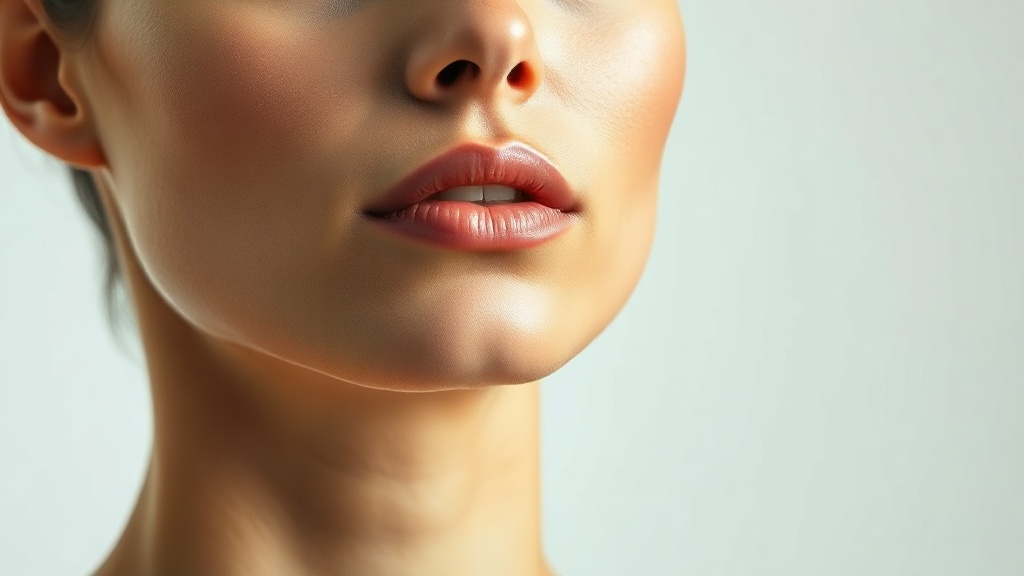 Guides8 min
Proper Tongue Posture: How to Rest Your Tongue Correctly
The calm, neutral resting position for your tongue, lips and jaw, explained honestly.
Read →→ Guides8 min
Mewing Before and After: What Actually Changes
Why the dramatic transformation photos are so convincing - and what is really different between the before and the after. It is not the bone.
Read →→ Guides8 min
How to Get a Sharper Jawline: What Works and What Does Not
The jawline advice online is mostly hype. Here is what genuinely changes how defined your jaw looks, what does nothing, and where the real (sometimes medical) levers are.
Read →→ Guides8 min
Jaw Relaxation Exercises: A Step-by-Step Comfort Guide
A step-by-step down-regulation routine for a tight, clenched jaw, built on gentle relaxation rather than force.
Read →→ Guides8 min
How to Unlock a Locked Jaw: Gentle Self-Relief Steps
Calm, evidence-based ways to coax a recently stuck jaw open again — and the red flags that mean it is time to get help.
Read →→