Myofunctional Therapy: A Complete, Honest Guide
A grounded guide to orofacial myofunctional therapy: real, modest evidence for snoring, mild sleep apnea and tongue-thrust — and an honest line on the jawline claims it cannot deliver.

- Myofunctional therapy is a set of exercises that retrain the tongue, lips and facial muscles and how you rest, swallow and breathe — it is a legitimate therapy for specific problems, not a beauty routine.
- The best-evidenced use is as an adjunct for snoring and mild-to-moderate obstructive sleep apnea, where it reduces the apnea-hypopnea index by roughly half in adults — meaningful, but as a supplement to, not a replacement for, medical care.
- It is generally less effective than CPAP for sleep apnea; guidelines and Cochrane treat it as an add-on, and it should never replace a diagnosed treatment.
- It will not reshape an adult jawline or facial bones — adult facial growth is essentially finished, and even dedicated appliances in growing children move teeth, not the skeletal frame.
- For genuine indications it is best delivered by a qualified myofunctional therapist or clinician, often alongside a dentist, ENT or sleep specialist.
Myofunctional therapy is exercise-based retraining of the tongue and orofacial muscles. It has real but modest evidence for specific uses — reducing snoring and mild-to-moderate sleep apnea as an adjunct, and helping tongue-thrust and swallowing patterns. It does not reshape adult facial bones or sculpt a jawline, and it is not a substitute for medical treatment of sleep apnea.
What myofunctional therapy actually is
Orofacial myofunctional therapy is, at heart, physical therapy for the mouth and face. A trained therapist guides you through repeated exercises for the tongue, lips, cheeks and soft palate, and retrains the everyday patterns those muscles control: where your tongue rests, how you swallow, how your lips seal, and whether you breathe through your nose. The logic is the same as any muscle retraining — the tongue and the muscles around the airway are, after all, muscles, and how they rest and move can be trained over weeks and months. In practice it is used for a handful of specific problems: to help reposition the tongue in people with a tongue-thrust swallowing pattern, to support orthodontic work, and — the use with the most research behind it — to strengthen the muscles that keep the upper airway open during sleep, in people who snore or have mild sleep apnea. What it is not is a cosmetic shortcut. Because it works on muscle and habit, its honest domain is function: how you breathe, swallow and rest your tongue. The moment the promise shifts to reshaping bone or sculpting a jawline, it has left the evidence behind.
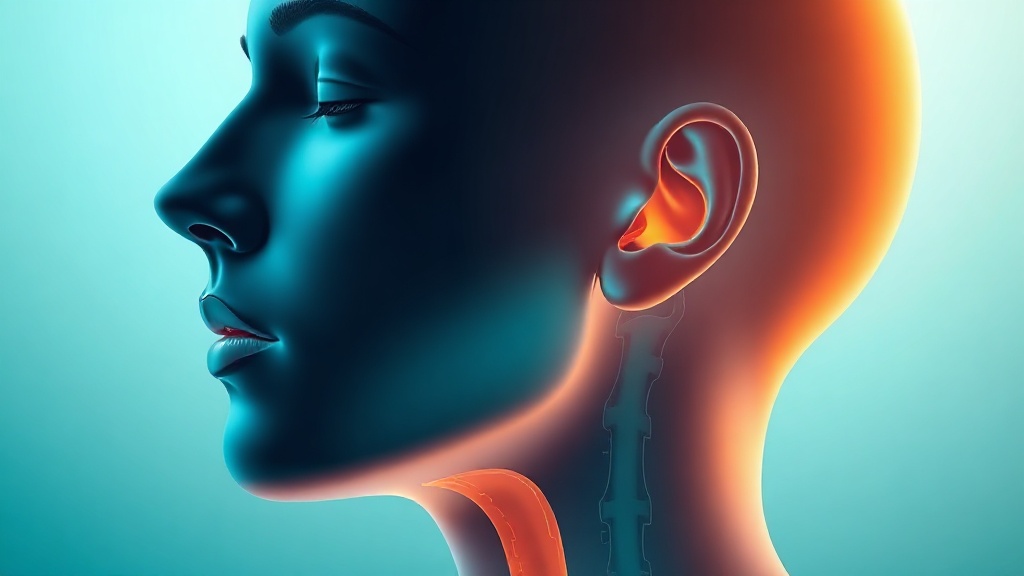
Myofunctional therapy trains the muscles around the airway and the tongue — function, not bone.
What the research actually shows
Every claim below maps to a named, peer-reviewed source in the Sources section. According to PubMed.
| Claim | Evidence | Source |
|---|---|---|
| Myofunctional therapy reduced the adult apnea-hypopnea index by roughly 50% (about 24.5 to 12.3 events per hour) and by about 62% in children, positioned as an adjunct. | Systematic review and meta-analysis. | Camacho et al., 2015 |
| Across seven randomised trials, orofacial myofunctional therapy improved the apnea-hypopnea index versus sham by about 10 events per hour. | Meta-analysis of randomised trials. | Saba et al., 2023 |
| Compared with CPAP, myofunctional therapy may leave a higher apnea-hypopnea index — it is an adjunct, not a replacement for standard treatment. | Cochrane systematic review. | Rueda et al., 2020 |
| In a landmark trial, oropharyngeal exercises reduced moderate sleep apnea from about 22.4 to 13.7 events per hour over three months. | Randomised controlled trial. | Guimaraes et al., 2009 |
| Even dedicated myofunctional appliances in growing children changed the teeth and overbite but did not change the vertical skeletal pattern — the frame of the face. | Clinical study. | Balian et al., 2025 |
What myofunctional therapy can and cannot do
| Goal | Realistic verdict |
|---|---|
| Reduce snoring | Reasonable evidence as an adjunct — snoring intensity and time can drop |
| Ease mild-to-moderate sleep apnea | Real but modest benefit; an add-on to, not a replacement for, medical care |
| Correct a tongue-thrust swallow | A recognised, appropriate use with a qualified therapist |
| Replace CPAP | No — it tends to be less effective than CPAP and should not replace a diagnosed treatment |
| Sculpt or sharpen an adult jawline | No — it does not reshape adult facial bone |
The jawline claim, honestly
Search for myofunctional therapy online and you will quickly meet a very different sales pitch: do these tongue exercises and remodel your jaw, sharpen your profile, transform your face. This is where honesty matters most. Adult facial bones have essentially finished growing — craniofacial skeletal change after the second decade of life is clinically insignificant, so there is no growth window for tongue posture to redirect bone in an adult. The evidence backs this up from both directions. In growing children, even purpose-built myofunctional appliances change the teeth and bite without changing the underlying skeletal pattern; and in adults, when researchers tested tongue exercises directly, the exercises alone did not deliver the airway changes that were hoped for. The tongue is a muscle, and you can absolutely train how it rests and moves — but training a muscle is not the same as remodelling the bone it sits near. The realistic benefits of myofunctional therapy are functional: quieter breathing, better tongue rest and swallowing, a useful supporting role for the airway during sleep. Those are worth having. A new jawline is not on the honest list, and any program that leads with that promise is selling the myth, not the therapy.
Evidence you can act on.
Occasional emails — new research, new protocols, no noise.
How to approach myofunctional therapy sensibly
If you have a genuine indication — snoring, mild sleep apnea, a tongue-thrust pattern — here is how to get real value without falling for the overclaims. None of this treats a disease on its own or replaces medical care.
- 1
Get the underlying problem assessed first
before startingIf your reason is snoring or suspected sleep apnea, start with a proper assessment — apnea is diagnosed with a sleep study and may need CPAP or other treatment. Myofunctional therapy is an adjunct that works best inside a real diagnosis, not instead of one.
- 2
Work with a qualified therapist
typically weeks to monthsThe therapy is a trained skill. A certified myofunctional therapist, often working with a dentist, ENT or sleep clinician, will tailor the exercises and check you are doing them correctly. Generic online routines are hit-or-miss and easy to do wrong.
- 3
Commit to consistent daily practice
a few minutes, most daysLike any muscle retraining, results come from steady repetition over weeks and months, not a single session. The realistic wins are gradual: quieter breathing, better tongue rest, less snoring — measured over time.
- 4
Judge it by function, not your jawline
ongoingTrack the things it can actually change — snoring, sleep quality, swallowing comfort — ideally with objective follow-up for sleep apnea. If a program is promising facial-bone transformation, treat that as a red flag, not a benefit.

For genuine indications, the therapy is best delivered by a qualified therapist, often alongside a dentist or sleep clinician.
See a clinician before relying on myofunctional therapy if you snore loudly, have been told you stop breathing in your sleep, or feel exhausted during the day — these point to possible obstructive sleep apnea, which needs a sleep study and proper treatment. A qualified myofunctional therapist, dentist, orthodontist or ENT can confirm whether the therapy is appropriate for you, deliver it correctly, and coordinate it with any medical treatment. It is an adjunct that belongs inside professional care, not a do-it-yourself replacement for it.
Frequently asked questions
Sources
- 1.
- 2.
- 3.
- 4.
- 5.
- 6.
- 7.
- 8.

Fix your breath at the source.
The complete science-backed protocol — engineered to eliminate volatile sulfur compounds at the biological source.
Start the Breath Protocol →Related reading
Educational purposes only. The content on this page is not medical advice and is not a substitute for consultation with a qualified dental or medical professional.
More from the library
 Guides8 min
Mouth Breathing: Why Nasal Breathing Wins, and How to Switch Back
Why your nose is built for breathing, what chronic mouth breathing does to your mouth and sleep, and the honest, gentle ways to shift the habit back.
Read →→ Answers8 min
Does Mouth Tape Work? An Honest Look at the Evidence and the Risks
The honest answer on nighttime mouth taping: the evidence is limited and low-quality, the benefits are oversold, and there is a genuine safety risk if you have undiagnosed sleep apnea.
Read →→ Guides8 min
Proper Tongue Posture: How to Rest Your Tongue Correctly
The calm, neutral resting position for your tongue, lips and jaw, explained honestly.
Read →→ Guides9 min
Does Mewing Actually Work? An Honest, Evidence-Based Breakdown
The honest, evidence-based answer to whether tongue posture can reshape an adult jaw — what the research really shows, and why forcing it can backfire.
Read →→ Guides8 min
Jaw Relaxation Exercises: A Step-by-Step Comfort Guide
A step-by-step down-regulation routine for a tight, clenched jaw, built on gentle relaxation rather than force.
Read →→ Guides8 min
How to Unlock a Locked Jaw: Gentle Self-Relief Steps
Calm, evidence-based ways to coax a recently stuck jaw open again — and the red flags that mean it is time to get help.
Read →→