Jaw Clicking: What Causes It, and When It Is Worth Checking
Painless jaw clicking is common and usually harmless. Here is why the joint clicks, what the research shows about how it changes over time, and when to get it checked.

- A jaw click is usually the sound of the small cushioning disc inside your jaw joint slipping slightly and then snapping back into place as you open and close - a mechanical noise, not a warning bell.
- Painless clicking is extremely common. Disc displacement with reduction, the clicking pattern, is the single most frequent finding in the jaw joint, and on its own it often needs nothing more than reassurance.
- Over time, most painless clicking stays stable or even fades. In untreated cases followed for around two years, clicking rarely progressed to a locked jaw.
- The signals that change the picture are pain and locking. Clicking that comes with jaw pain, that catches or locks open or closed, or that limits how wide you can open deserves a professional look.
- You cannot force a clicking joint to go silent, and chasing the noise with aggressive stretching or clicking it back yourself can irritate it - gentle, calm self-care is the sensible response to a painless click.
Jaw clicking is usually the cushioning disc in the joint slipping and snapping back as you open and close. Painless clicking is common and, on its own, generally harmless - research shows it rarely progresses to locking. The time to get it checked is when clicking comes with pain, catching, locking, or limited opening.
What is actually clicking
Your jaw joint sits just in front of each ear, where the lower jaw meets the skull. Between the two bony surfaces is a small, firm pad of tissue - the articular disc - that glides with the jaw and stops bone rubbing on bone. In a smoothly working joint, the disc travels with the moving bone the whole way. A click happens when the disc sits slightly forward of where it should, so as you open, the bone has to slip back underneath it and the disc snaps into position - the first click. As you close, it slips off again - sometimes a second, quieter click. Clinicians call this pattern disc displacement with reduction, because the disc reduces, or returns, into place. The key word is mechanical: for most people this is simply a slightly loose-fitting joint doing its job with an audible click, not tissue tearing or a joint wearing out. That is why a painless click, even a loud or long-standing one, is so often nothing to treat. The sound can be unsettling precisely because it is right beside your ear, but volume is not a measure of harm here - a soft click and a sharp pop can mean the same harmless thing.
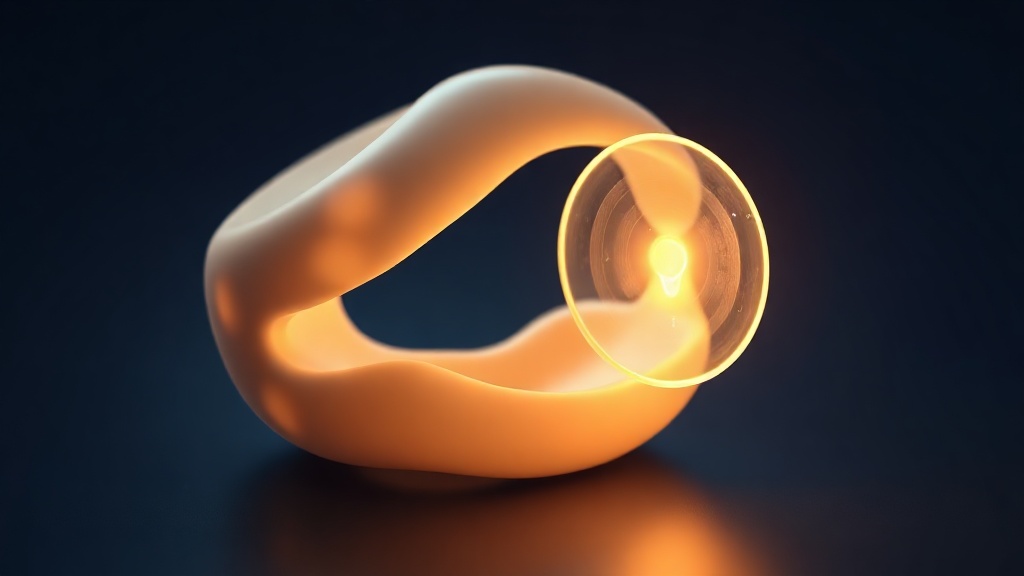
A click is usually the disc slipping slightly forward and snapping back as the joint moves - a mechanical sound, not tissue tearing.
What the research actually shows
Every claim below maps to a named, peer-reviewed source in the Sources section. According to PubMed.
| Claim | Evidence | Source |
|---|---|---|
| About 31% of adults have a sign or symptom of a jaw-joint disorder, and disc displacement with reduction - the clicking pattern - is the single most common subtype at roughly 26%. | Systematic review and meta-analysis of global prevalence. | Valesan et al., 2021 |
| In untreated clicking joints followed for about two years, range of movement stayed unchanged, clicking persisted in most and disappeared in some, and progression to locking occurred in only about 4%. | Natural-course study of 24 untreated patients. | Sato et al., 2003 |
| When a click fades it is usually harmless, but occasional intermittent catching or locking can be an early sign the disc is starting to stay out of place. | Two-year follow-up of disc displacement with reduction. | Kalaykova et al., 2010 |
| When clicking does come with jaw pain, care that encourages coping and gentle movement is the most effective first-line approach. | Network meta-analysis of 153 randomised trials in chronic jaw pain. | Busse et al., 2023 |
| Gentle jaw-exercise therapy produces a moderate reduction in jaw pain, making it a reasonable low-risk option when discomfort accompanies clicking. | Meta-analysis of 16 randomised trials, 812 participants. | de Melo et al., 2023 |
Clicking that is usually fine vs clicking worth checking
| What you notice | What it usually means | Sensible action |
|---|---|---|
| A painless click or pop when you open or chew | A slightly loose-fitting disc reducing normally - very common | Reassurance; avoid poking or forcing it |
| Clicking that has been the same for months or years, with no pain | A stable mechanical pattern | Leave it be; mention it at your next dental visit |
| Clicking with jaw pain, tenderness or headaches | The joint or muscles are irritated | Gentle self-care; see a professional if it persists |
| The jaw catches, locks open or closed, or will not open fully | The disc may be getting stuck out of place | See a dentist or TMJ specialist promptly |
Why a painless click usually does not need fixing
It is tempting to treat any body noise as a problem to solve, but the evidence on jaw clicking is genuinely reassuring. When researchers followed people with clicking joints who had no treatment at all, the joints did not quietly deteriorate: how wide they could open stayed the same over two years, the clicking simply carried on for most and settled on its own for some, and only a small minority ever went on to lock. In other words, a painless click is far more likely to be a stable quirk of your joint than the first step toward something worse. This matters because the instinct to fix it can backfire. Repeatedly clicking the jaw back and forth to hear the sound, forcing wide stretches, or chewing hard to work it loose all load a joint that was coping fine, and can turn a painless click into a sore one. The disc does not slide back into permanent alignment through willpower, and there is no exercise that reliably silences a click for good. The honest goal is not a silent jaw but a comfortable, well-functioning one - and most clicking jaws are already there.
Evidence you can act on.
Occasional emails — new research, new protocols, no noise.
How to look after a clicking jaw
If your click is painless, the aim is simply to keep the joint calm and avoid provoking it. None of this treats a disorder - it is gentle self-care that keeps a normal joint comfortable.
- 1
Resist clicking it on purpose
ongoingDeliberately moving the jaw to reproduce the click, again and again, only irritates the joint. If you catch yourself doing it out of habit, let the jaw rest in a neutral, teeth-apart position instead.
- 2
Rest the jaw with soft, small movements
dailyFavour softer foods when the joint feels busy, cut food into smaller pieces, and avoid wide yawns or big bites that make the disc slip more dramatically. You are giving the joint an easy path, not exercising it hard.
- 3
Keep the closing muscles relaxed
through the dayNotice when your teeth are touching or clenched during the day and let them part - lips together, teeth slightly apart, tongue resting gently. Relaxed muscles put less strain on the joint and its disc.
- 4
Use gentle warmth if there is any tension
10-15 minutes as neededA warm compress over the joint and cheek muscles can ease mild tightness. Keep it comfortable, not hot, and stop if it feels worse rather than better.
- 5
Add gentle, pain-free jaw movement only if comfortable
a few minutes dailySlow, small opening-and-closing within a pain-free range can help the jaw feel looser. If any movement causes pain or makes the catching worse, stop and have it assessed rather than pushing through.

Gentle warmth and rest keep a clicking joint calm; forcing or repeatedly clicking it does the opposite.
See a dentist or a TMJ specialist if your clicking comes with jaw pain or tenderness, if the jaw catches, locks open or locked shut, or if you cannot open as wide as usual. Get prompt help for a jaw that locks and will not release, sudden severe pain, swelling, a change in how your teeth meet, or clicking after a blow to the face. Painless, long-standing clicking on its own rarely needs treatment, but a professional can confirm that and rule out other causes - which is far more reassuring than guessing.
Frequently asked questions
Sources
- 1.
- 2.
- 3.
- 4.
- 5.
- 6.

Fix your breath at the source.
The complete science-backed protocol — engineered to eliminate volatile sulfur compounds at the biological source.
Start the Breath Protocol →Related reading
Educational purposes only. The content on this page is not medical advice and is not a substitute for consultation with a qualified dental or medical professional.
More from the library
 Causes8 min
Jaw Popping: What Causes That Click and When It Matters
The small cartilage disc behind the click, and how to tell a harmless pop from one worth checking.
Read →→ Causes8 min
Why Does My Jaw Pop? Causes, When to Worry & How to Ease It
The honest answer to a click that unnerves a lot of people: usually benign, occasionally a signal — and how to tell the difference.
Read →→ Causes10 min
Jaw Pain on One Side: Common Causes and When to Worry
Why does one side of your jaw hurt? The common causes - joint, muscle, dental and neck - explained honestly, with the red flags that mean it is time to get help.
Read →→ Guides9 min
TMJ Disorder: The Complete Guide
What TMJ disorder really is, how common it is, and the conservative-care-first path most people never hear about.
Read →→ Guides8 min
Jaw Relaxation Exercises: A Step-by-Step Comfort Guide
A step-by-step down-regulation routine for a tight, clenched jaw, built on gentle relaxation rather than force.
Read →→ Guides9 min
Does Mewing Actually Work? An Honest, Evidence-Based Breakdown
The honest, evidence-based answer to whether tongue posture can reshape an adult jaw — what the research really shows, and why forcing it can backfire.
Read →→