Jaw Pain on One Side: The Honest Causes, and When to Get It Checked
Why does one side of your jaw hurt? The common causes - joint, muscle, dental and neck - explained honestly, with the red flags that mean it is time to get help.

- One-sided jaw pain most often comes from the jaw joint and its muscles - a group of conditions called temporomandibular disorders - which affect roughly a third of adults and are the second most common musculoskeletal pain after low-back pain.
- It frequently lands on one side because of one-sided habits: chewing mainly on that side, sleeping on it, or clenching unevenly. A strong link exists between a one-sided chewing preference and jaw-joint disorders.
- The jaw is a crossroads, so pain there can also come from a tooth, the neck, or a sinus on that side. That overlap is exactly why persistent one-sided pain deserves a proper look rather than guesswork.
- Most everyday one-sided jaw pain eases with gentle, conservative self-care, which in trials matched more expensive appliances - rest, warmth, soft foods and relaxed jaw muscles do a lot of the work.
- A few patterns are red flags: a locked jaw, facial swelling with fever, or jaw pain during exertion or alongside chest tightness. These need prompt or emergency care, not self-treatment.
Jaw pain on one side is most often a temporomandibular disorder - the joint or its muscles on that side, frequently from one-sided chewing, clenching or sleeping. It can also come from a tooth, the neck or a sinus. Most eases with gentle self-care, but locking, swelling with fever, or pain during exertion needs urgent professional help.
Why the pain lands on one side
You have a jaw joint just in front of each ear, and a matched set of chewing muscles on both sides. In theory the load is shared, but in daily life it rarely is. Most people have a preferred chewing side, sleep more on one cheek, carry tension in one shoulder and neck, or clench a little unevenly - and the jaw is remarkably good at revealing that asymmetry as pain on the busier side. The most common source is the group of conditions called temporomandibular disorders, or TMD, which covers both the joint itself and the muscles that move it. Muscle-based pain feels like a deep ache or tightness in the cheek and temple that worsens with chewing or stress; joint-based pain sits right at the joint and may come with clicking or catching. But the jaw is also a crossroads. A cracked or infected tooth on that side can broadcast pain across the whole jaw, an irritated upper neck can refer pain forward to the joint, and a blocked sinus can press on the upper jaw. Because these sources overlap so closely, the location alone rarely gives the full answer - which is why the pattern of your pain, and how long it lasts, matters more than which side it is on.
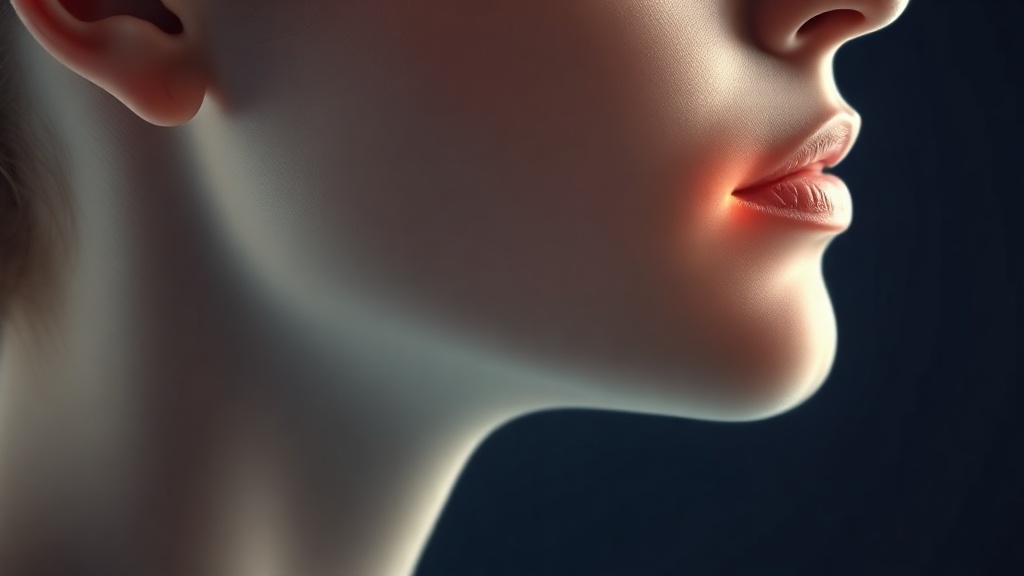
One side of the jaw is a crossroads: pain there can come from the muscles, the joint itself, a tooth, or the neck.
What the research actually shows
Every claim below maps to a named, peer-reviewed source in the Sources section. According to PubMed.
| Claim | Evidence | Source |
|---|---|---|
| Temporomandibular disorders affect about 31% of adults and are the second most common musculoskeletal pain condition after low-back pain - the leading source of ongoing jaw pain. | Systematic review and meta-analysis, plus a clinical practice guideline. | Valesan et al., 2021; Busse et al., 2023 |
| A habit of chewing mainly on one side was strongly associated with having a jaw-joint disorder, which helps explain why jaw pain so often settles on one side. | Study of 616 individuals; unilateral chewing carried an odds ratio of about 12.7. | Yu et al., 2015 |
| Neck pain, more than the geometry of posture, tracks with jaw-muscle tenderness - so an irritated neck is a genuine contributor to one-sided jaw pain. | Study of 145 patients with jaw disorders. | Yao et al., 2022 |
| Clenching and grinding affect roughly 22% of adults and can overload the jaw muscles unevenly, concentrating soreness on one side. | Global prevalence meta-analysis of bruxism. | Zielinski et al., 2024 |
| When jaw pain needs treatment, dentist-guided self-care matched both hard and soft appliances at 3, 6 and 12 months. | 200-subject randomised trial. | Truelove et al., 2006 |
Common sources of one-sided jaw pain
| Possible source | Typical clues | Where it points |
|---|---|---|
| Jaw muscles (myofascial) | Deep ache or tightness in the cheek and temple; worse with chewing, stress or clenching | Conservative self-care; a dentist if it persists |
| Jaw joint itself | Pain right at the joint by the ear, sometimes with clicking, catching or limited opening | A dentist or TMJ specialist |
| A tooth | Throbbing or sharp pain linked to biting, hot or cold, or a specific tooth; sometimes swelling | A dentist promptly, especially with swelling |
| The neck | Pain that spreads from the neck or upper shoulder toward the jaw; stiff neck | Address the neck; physical therapy can help |
| A sinus | Pressure or ache over the upper jaw and cheek, with congestion or a recent cold | Usually settles as congestion clears; see a doctor if it lingers |
What usually helps - and what to be honest about
For the everyday version of one-sided jaw pain - the muscle-based ache that flares after a stressful week, a big chewing session, or a run of poor sleep - the reassuring news is that simple, low-cost measures do most of the work. In careful trials, dentist-guided self-care held its own against far more expensive appliances over a full year. That means resting the jaw, choosing softer foods for a few days, applying gentle warmth, easing daytime clenching and calming the neck and shoulders is not a weak substitute for real treatment; for many people it is the treatment. Where honesty matters is in the limits. Self-care manages comfort and gives an irritated joint or muscle room to settle, but it does not fix a cracked tooth, drain an infection, or resolve a problem that keeps coming back. If your pain is clearly tied to one tooth, comes with swelling, or simply will not settle after a couple of weeks of sensible care, that is your cue to get it looked at rather than pushing harder on home remedies. And a small number of causes are not jaw problems at all - which is the reason the red-flag list below is worth reading even when the pain feels minor. Knowing what does not belong in the self-care lane is as important as knowing what does.
Evidence you can act on.
Occasional emails — new research, new protocols, no noise.
Gentle self-care for everyday one-sided jaw pain
If your pain is mild, muscle-type and not accompanied by any red flags below, these steps can calm it while you see whether it settles. This is comfort care for the jaw, not treatment of a disease.
- 1
Rest the busier side
a few daysGive the sore side a break: chew on the other side or on softer foods, cut food smaller, and avoid gum, tough meat and wide bites that make the joint and muscles work hard.
- 2
Apply gentle warmth
10-15 minutes, a few times a dayA warm compress over the joint and cheek muscle relaxes tight muscle and eases aching. Keep it comfortably warm, not hot. If the area is swollen or feels hot to the touch, do not apply heat - see a professional instead.
- 3
Unclench during the day
ongoingCheck in on your jaw through the day. If your teeth are touching or clenched, let them part - lips together, teeth slightly apart, tongue resting gently on the roof of the mouth. This alone offloads a surprising amount of one-sided strain.
- 4
Ease the neck and shoulders
dailyBecause the neck refers pain to the jaw, gentle neck stretches, better desk posture and relaxing a hitched shoulder can reduce jaw pain indirectly. Keep every movement slow and pain-free.
- 5
Give it a fair trial, then escalate
up to about two weeksConsistent gentle care over a week or two is a fair test. If the pain is not clearly improving, keeps returning, or is tied to a specific tooth, book a professional assessment rather than continuing to self-treat.
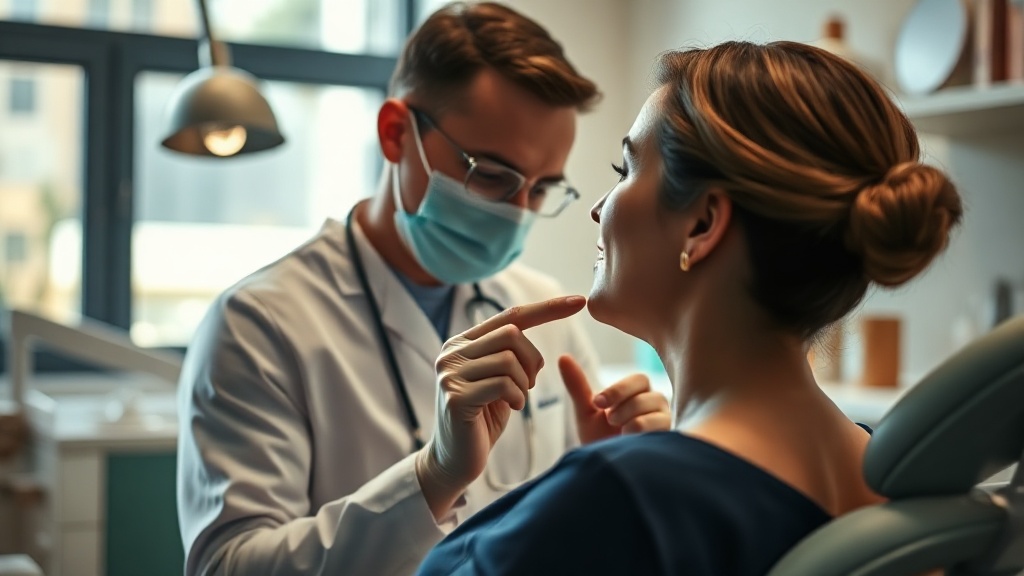
Persistent, severe, or one-tooth-linked jaw pain deserves an in-person assessment to pinpoint the real source.
See a dentist or doctor if one-sided jaw pain lasts more than a week or two, keeps returning, is severe, or is clearly linked to a particular tooth. Seek urgent or emergency care for a jaw that locks and will not open or close, facial swelling with fever or difficulty swallowing, or pain after a blow to the face. Most importantly, jaw pain that comes on with exertion, or alongside chest tightness, shortness of breath, sweating, or pain spreading to the arm, can be a sign of a heart problem - treat that as an emergency and call for help immediately. These patterns are uncommon, but they are the ones where getting seen quickly matters most.
Frequently asked questions
Sources
- 1.
- 2.
- 3.
- 4.
- 5.
- 6.

Fix your breath at the source.
The complete science-backed protocol — engineered to eliminate volatile sulfur compounds at the biological source.
Start the Breath Protocol →Related reading
Educational purposes only. The content on this page is not medical advice and is not a substitute for consultation with a qualified dental or medical professional.
More from the library
 Guides9 min
Jaw Clicking: Why It Happens and When to Worry
Painless jaw clicking is common and usually harmless. Here is why the joint clicks, what the research shows about how it changes over time, and when to get it checked.
Read →→ Guides9 min
TMJ Disorder: The Complete Guide
What TMJ disorder really is, how common it is, and the conservative-care-first path most people never hear about.
Read →→ Guides9 min
TMJ Flare-Up: How to Calm Jaw Pain Fast
What a TMJ flare is, why it happens, and the gentle, proven steps that calm jaw pain fastest — plus when to get help.
Read →→ Guides9 min
Home Remedies for TMJ: 9 Natural Ways to Relieve Jaw Pain at Home
Simple at-home self-care, soft foods, warmth, gentle movement and load reduction, can genuinely ease TMJ jaw discomfort for many people.
Read →→ Guides8 min
Jaw Relaxation Exercises: A Step-by-Step Comfort Guide
A step-by-step down-regulation routine for a tight, clenched jaw, built on gentle relaxation rather than force.
Read →→ Guides9 min
Does Mewing Actually Work? An Honest, Evidence-Based Breakdown
The honest, evidence-based answer to whether tongue posture can reshape an adult jaw — what the research really shows, and why forcing it can backfire.
Read →→