Is Mouth Taping Safe? Who Should Never Do It
The real risks of taping your mouth shut at night, who should never do it, and how to decide safely.

- Mouth taping is not safe for everyone: a 2025 systematic review concluded there is a potentially serious risk of harm, including asphyxiation, for people who tape indiscriminately.
- The greatest danger is a blocked nose. If your nose is obstructed and you seal your mouth, you can take away your only working airway — which is why studies deliberately excluded such people.
- Anyone with untreated sleep apnea, heavy snoring, significant nasal obstruction, a heart or breathing condition, or who has been drinking or taking sedatives should not tape.
- It is strictly an adults-only practice. Children must never have their mouths taped, and no one should tape who cannot instantly remove it themselves.
- If you are healthy, breathe easily through your nose, and have ruled out sleep-disordered breathing, the risk is lower — but even then it is a personal choice best made with professional input, not a cure for anything.
Mouth taping is not universally safe. A systematic review found a serious risk of harm, especially asphyxiation, for anyone with a blocked nose or untreated sleep-disordered breathing. It is adults-only, never for children, and never for people who cannot remove it easily. Only healthy adults with a clear nose and no sleep apnea should even consider it, ideally after professional advice.
Why sealing your mouth can be dangerous
Your body treats breathing as non-negotiable, and it keeps a backup plan: when your nose cannot supply enough air, your mouth takes over automatically. Mouth taping deliberately disables that backup. For a healthy adult whose nose is clear, that is usually a non-event, because the nose was doing all the work anyway. But if the nose becomes blocked in the night — from a cold, allergies, a deviated septum, or the swelling that naturally happens when you lie down — a taped mouth means there is suddenly no easy way to breathe. That is the scenario a recent systematic review singled out as genuinely dangerous, warning of a serious risk of harm up to and including asphyxiation for people who tape without screening. The risk is amplified in anyone with sleep apnea, where the airway already collapses repeatedly during sleep; removing the mouth as an escape route can make those episodes worse rather than better. This is why the research is not neutral about who tapes: nearly every study excluded people with nasal obstruction on purpose, precisely because taping them would be unsafe. The mechanism of harm, in short, is simple — you cannot breathe through a route you have sealed.
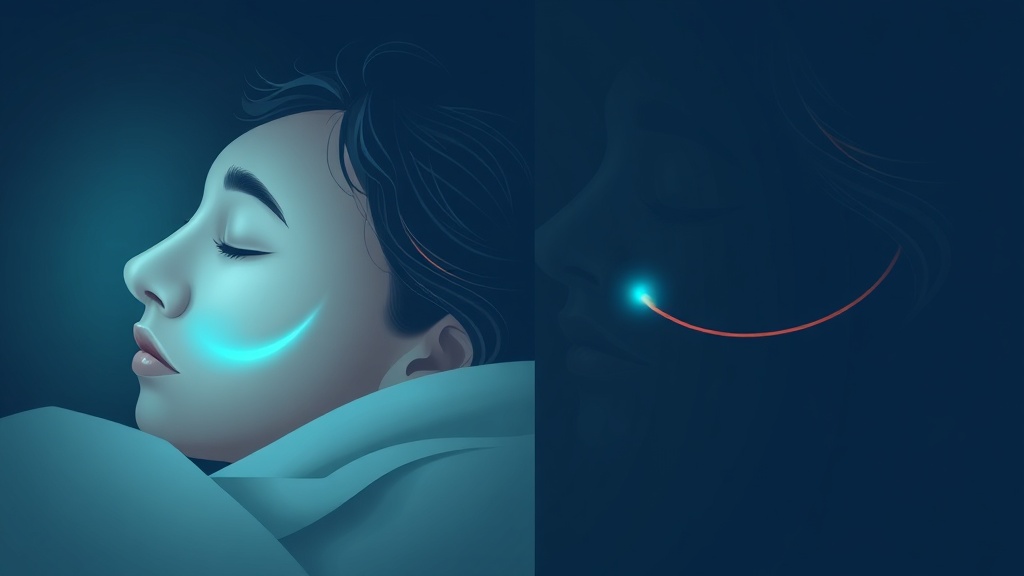
With a clear nose, airflow continues; with a blocked nose, a sealed mouth can leave no easy airway — the core safety risk.
What the research actually shows
Every claim below maps to a named, peer-reviewed source in the Sources section. According to PubMed.
| Claim | Evidence | Source |
|---|---|---|
| A systematic review concluded mouth taping carries a potentially serious risk of harm, including asphyxiation, for people practising it indiscriminately. | PRISMA systematic review of 10 studies (213 patients). | Rhee et al., 2025 |
| Studies of mouth taping deliberately excluded people with nasal obstruction, underscoring that a blocked nose is a key contraindication. | Same systematic review; many included studies excluded nasal pathology. | Rhee et al., 2025 |
| The positive taping study was limited to carefully screened patients with only mild sleep apnea who could tolerate having the mouth sealed. | Preliminary study of 20 screened patients with mild OSA. | Lee et al., 2022 |
| Mouth breathing frequently accompanies obstructive sleep apnea, a condition that needs proper diagnosis rather than a home airway hack. | Literature review of the oral-health impacts of OSA. | Maniaci et al., 2024 |
| Dry mouth from mouth breathing contributes to malodour, so the goal of moisture can be pursued by gentler means than sealing the mouth. | Clinical review of halitosis in the BMJ. | Scully & Porter, 2008 |
Who should NOT tape their mouth
| Group | Why it is unsafe for them | What to do instead |
|---|---|---|
| Anyone with a blocked or congested nose | Sealing the mouth can leave no easy airway | Clear the nose first; never tape while congested |
| People with untreated sleep apnea or heavy snoring | The airway already collapses in sleep; taping can worsen episodes | Get a sleep assessment before anything |
| Children | Cannot reliably remove tape or signal distress | Never tape a child; see a paediatric professional |
| Anyone who has drunk alcohol or taken sedatives | Reduced arousal makes it harder to respond to breathing trouble | Do not tape; these also worsen snoring |
| People with heart, lung or swallowing conditions, or reflux | Higher stakes if breathing or airway protection is compromised | Follow medical advice; avoid taping |
How to decide honestly if it is safe for you
The safest way to think about mouth taping is to start from disqualification, not permission. Rather than asking whether you might benefit, work through whether any reason exists for you not to do it — and if even one applies, the decision is made. Can you breathe comfortably through both nostrils with your mouth closed, right now and reliably at night? Have you ruled out sleep apnea, meaning you do not snore heavily, gasp, or wake exhausted? Are you an adult, free of heart, lung, swallowing or reflux conditions, and sober at bedtime? Only if every one of those is a clear yes are you in the group the limited evidence even studied. Notice how narrow that group is: the research was done on screened, monitored people, usually with nasal obstruction excluded, which means most of the internet audience for mouth taping falls outside it. And even for a qualifying adult, taping is not a treatment for anything — it is at best a small nudge toward nose breathing. If there is any doubt about your airway or your sleep, the honest move is to talk to a clinician first, because the downside of getting this wrong is not a bad night's breath but a compromised airway.
Evidence you can act on.
Occasional emails — new research, new protocols, no noise.
If you still choose to consider it, do it as safely as possible
This is not an endorsement — for most people the gentler options are the right answer. But if you are a healthy adult who qualifies, these steps reduce the risk. Stop immediately at any sign of trouble.
- 1
Rule yourself out first
before ever tryingWork through every group in the table above. A blocked nose, any sign of sleep apnea, being a child, alcohol or sedatives, or a relevant medical condition all mean do not tape. If in doubt, get professional advice — this screening is the most important step by far.
- 2
Confirm you can nose-breathe reliably
a few nights of observationBefore taping, spend several nights simply noticing whether you breathe comfortably through your nose. If you often wake congested or dry-mouthed, your nose is not reliably clear, and taping is not appropriate until that is resolved.
- 3
Use a purpose-made product, applied to release instantly
if you proceedNever use strong household tape. If you proceed, use a product designed for the mouth and skin, applied so it peels off at the lightest pull. You must be able to remove it instantly and without thought.
- 4
Start with a nap or partial application, and tell someone
first trialsTrial it while awake or during a daytime nap first, and let someone in the home know. Some people use only a small central strip that still allows air at the corners, which lowers the risk while you gauge tolerance.
- 5
Stop at the first sign of difficulty
every timeAny breathlessness, anxiety, congestion, or disturbed sleep is a signal to remove the tape and stop. If mouth breathing keeps returning, that is information — see a professional about why, rather than taping harder.

Safety comes from ruling yourself out first: a clear nose, no sleep apnea, adult, sober, and no relevant conditions.
Speak to a doctor or sleep specialist before taping if you snore loudly, wake gasping or unrefreshed, have a nose that never clears, or have any heart, lung, swallowing or reflux condition. If a partner has seen you stop breathing in your sleep, get assessed for sleep apnea first. Mouth taping is not a treatment for these, and using it to cover them up can be dangerous.
Frequently asked questions
Sources
- 1.
- 2.
- 3.
- 4.
- 5.

Fix your breath at the source.
The complete science-backed protocol — engineered to eliminate volatile sulfur compounds at the biological source.
Start the Breath Protocol →Related reading
Educational purposes only. The content on this page is not medical advice and is not a substitute for consultation with a qualified dental or medical professional.
More from the library
 Guides9 min
Mouth Taping Benefits: What the Evidence Actually Supports
The claimed benefits of mouth taping, weighed against what the research actually shows — and why safety comes first.
Read →→ Best Of9 min
Best Mouth Tape for Sleep: Types Compared, Safety First
The types of mouth tape compared honestly, what actually matters when choosing, and the safety rules that come before any purchase.
Read →→ Guides9 min
How to Stop Mouth Breathing at Night: A Sleep-Focused Guide
Why your mouth falls open in sleep, how it fuels morning breath, and the honest overnight fixes that help.
Read →→ Guides9 min
How to Fix Bad Breath: A Practical, Step-by-Step Action Plan
The practical fix-it plan: four everyday moves — tongue, teeth, hydration, and microbiome — that target where bad breath actually starts.
Read →→ Guides8 min
How to Get Rid of Bad Breath Permanently: An Evidence-Based Plan
The honest version: "permanently" means ongoing control, not a one-time fix. Here is the daily routine the research actually supports, and when to get help.
Read →→ Guides7 min
Bad Breath Even After Brushing? The Biological Reason (and Fix)
You brushed, flossed and rinsed — and the smell is still there. The reason usually isn't hygiene; it's where the odour-causing bacteria actually live.
Read →→