
Mewing Before and After: What Actually Changes in Those Photos
Why the dramatic transformation photos are so convincing - and what is really different between the before and the after. It is not the bone.

- Mewing before-and-after photos are convincing because everything changes between them - angle, lighting, posture, expression and often body fat - not because the jawbone was remodelled.
- There is no reliable evidence that tongue posture reshapes an adult jaw. Facial bone growth is clinically insignificant after the second decade of life.
- The most-shared pro-mewing proof is a lay-panel attractiveness comparison of 12 identical twins - a high-bias case series, not a controlled study of bone change.
- Even months of genuine oral-muscle training raise bite force while leaving masseter thickness and jaw shape unchanged - and a bigger chewing muscle widens the face rather than sculpting it.
- You can test the claim yourself: hold the camera angle, lighting, head position and expression constant, and the dramatic difference largely disappears.
Mewing before-and-after photos look striking, but the honest verdict is that you are almost never seeing new bone. The difference comes from camera angle, lighting, head posture, facial expression and body fat - all of which change how a jawline reads. Adult bone does not remodel from tongue pressure, so the transformation is appearance, not skeleton.
Why the photos are so convincing
A before-and-after pair is powerful because your eye compares two images as if only one thing changed. In reality, almost everything changed. The before is usually taken early on: relaxed shoulders, chin dropped, flat overhead light, a neutral or unflattering moment. The after is taken once someone is invested: chin lifted, neck lengthened, shoulders back, filmed from slightly above with better light, often after losing a little weight and tidying up grooming. Each of those shifts sharpens a jawline on its own. Stack them and the effect is dramatic - without a single cell of bone moving. There is also a quieter factor: expectation. After weeks of effort you are motivated to find a difference, so you keep the flattering frames and delete the rest. None of this makes the person dishonest. It makes the comparison unreliable. The only way to know whether tongue posture itself did anything is to strip those variables out - and when people do, the jaw-dropping change mostly vanishes.
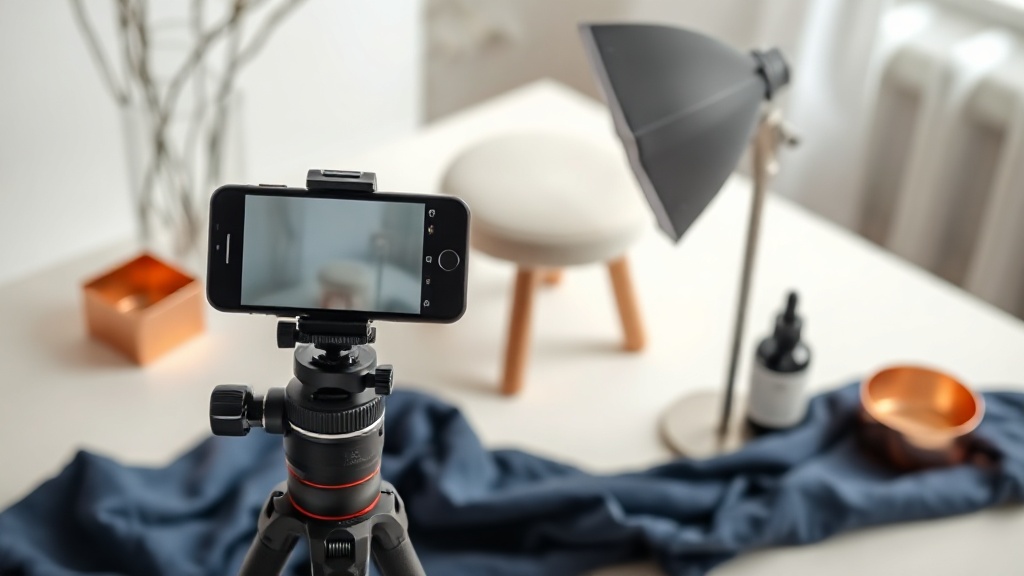
The same face photographs very differently depending on camera height, angle and lighting - the real engine behind most before-and-after pairs.
What the research actually shows
Every claim below maps to a named, peer-reviewed source in the Sources section. According to PubMed.
| Claim | Evidence | Source |
|---|---|---|
| Craniofacial skeletal growth is clinically insignificant after the second decade of life - so in adults there is no growth window for tongue posture to reshape the jaw between a before and an after. | Cephalometric cohort study of facial growth after puberty. | Fudalej et al., 2007 |
| There is no significant association between adult tongue position and vertical facial morphology. | Study of tongue position and facial morphology in adults. | Ghafoor et al., 2024 |
| The most-cited before-and-after style proof is a lay-panel attractiveness comparison of just 12 identical twins treated by the originator - a high risk-of-bias case series, not evidence of bone change. | Facial changes in identical twins treated by different techniques. | Mew, 2007 |
| Six months of gum-chewing training raised maximum bite force but left masseter muscle thickness and mandibular shape unchanged - real training does not visibly reshape the jaw. | Randomised controlled trial of gum-chewing training. | Jung et al., 2024 |
| A thicker chewing muscle is associated with a wider, shorter, more square lower face - so building jaw muscle widens the face rather than sculpting a slimmer after. | Cross-sectional study relating masseter thickness to facial morphology. | Raadsheer et al., 1996 |
What the after photo is really showing
| What you notice in the after | The real reason | Bone changed? |
|---|---|---|
| A sharper jaw angle | Chin lifted, neck lengthened, head tilted back | No |
| A more defined jawline | Lighting from above and a downward camera angle | No |
| A leaner lower face | Lower body fat between the two photos | No |
| A better overall look | Improved posture, grooming and confidence | No |
| A wider, stronger jaw from chewing | A bigger chewing muscle widens the face | Muscle, not bone |
What genuinely changes - and what does not
It is worth being fair to mewing here, because something real can happen - it is just not what the caption claims. Rest your tongue on the palate with lips sealed and you do subtly lift the floor of the mouth and hold your head a little better, and over time a nose-breathing, lips-together habit can make your resting posture look tidier. That is a genuine, if modest, appearance change. What does not change is the skeleton. The mandible and maxilla you have as an adult are finished structures, and no amount of tongue pressure remodels them. Muscle is the one tissue that can grow - but the honest lesson from that is the opposite of the hope: in controlled training the chewing muscle got stronger without visibly changing the jaw, and where muscle does bulk up it widens and squares the face rather than carving it. So the truthful summary of a mewing before-and-after is this: the posture and framing are doing the visible work, the bone is doing nothing, and chasing a bigger jaw muscle would move you away from the slim, sharp look most people are actually after.
Evidence you can act on.
Occasional emails — new research, new protocols, no noise.
How to take an honest before-and-after
You can settle this for yourself. The reason mewing photos look dramatic is that everything changes between them - so hold the variables still, and you will see what is genuinely happening rather than what the lighting is doing.
- 1
Fix the camera angle and height
setupPut the camera at eye level, straight on, at a set distance. A downward angle alone can fake a sharper jaw, so decide the position once and match it every time.
- 2
Fix the lighting
setupUse the same light source, from the same direction, at the same time of day. Soft overhead light versus front light changes how defined a jaw looks more than months of any habit.
- 3
Fix your head and posture
each photoHold your head neutral - not chin-forward, not tilted back. Since posture is the single biggest driver of a photogenic jawline, freezing it is what makes the comparison honest.
- 4
Relax your face the same way
each photoSame neutral expression, lips gently closed, no jaw flexing or clenching. Flexing the jaw for the after shot is the most common way people fool themselves.
- 5
Note your body weight
each photoWrite down your weight beside each photo. Lower-face fat changes how sharp a jaw looks independently of bone, so a few kilos lost between shots can masquerade as a mewing result.
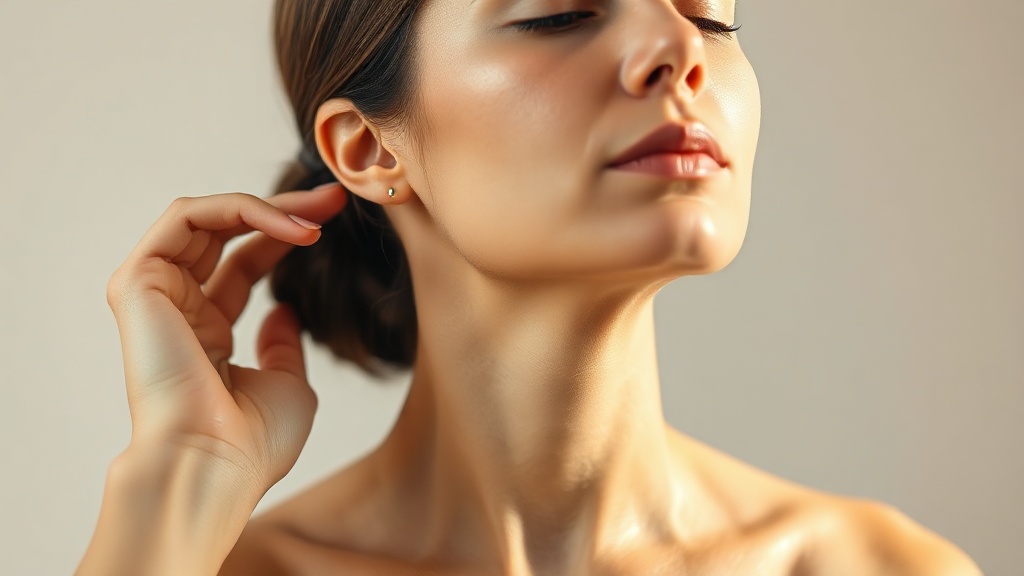
Lifting the chin and lengthening the neck sharpens a jawline instantly - which is why posture, not bone, powers most transformations.
Comparing photos of your own face for months can quietly become distressing. If chasing a before-and-after is affecting your mood, your self-image or how you feel about your appearance, that is a genuine reason to talk to a professional - a dentist, an orthodontist or a mental-health professional. And if forcing tongue posture has left you with jaw pain, clicking or clenching, see a dentist. A photo is not worth your wellbeing, and real structural change is a clinical decision, not a self-improvement project.
Frequently asked questions
Sources
- 1.
- 2.
- 3.
- 4.
- 5.
- 6.
- 7.
- 8.

Fix your breath at the source.
The complete science-backed protocol — engineered to eliminate volatile sulfur compounds at the biological source.
Start the Breath Protocol →Related reading
Educational purposes only. The content on this page is not medical advice and is not a substitute for consultation with a qualified dental or medical professional.
More from the library
 Guides9 min
Does Mewing Actually Work? An Honest, Evidence-Based Breakdown
The honest, evidence-based answer to whether tongue posture can reshape an adult jaw — what the research really shows, and why forcing it can backfire.
Read →→ Guides8 min
How to Mew Properly: The Honest, Evidence-Based Guide
The correct tongue-posture technique, described plainly - and the honest science on why it will not reshape an adult jawbone, and how to keep it from doing harm.
Read →→ Guides8 min
How to Get a Sharper Jawline: What Works and What Does Not
The jawline advice online is mostly hype. Here is what genuinely changes how defined your jaw looks, what does nothing, and where the real (sometimes medical) levers are.
Read →→ Guides8 min
How to Improve Facial Asymmetry: Jaw & Posture Approaches
The honest version: mild asymmetry is normal, exercises will not reshape bone, and new asymmetry deserves a check-up.
Read →→ Guides8 min
Jaw Relaxation Exercises: A Step-by-Step Comfort Guide
A step-by-step down-regulation routine for a tight, clenched jaw, built on gentle relaxation rather than force.
Read →→ Guides8 min
How to Unlock a Locked Jaw: Gentle Self-Relief Steps
Calm, evidence-based ways to coax a recently stuck jaw open again — and the red flags that mean it is time to get help.
Read →→