How to Get Rid of TMJ: An Honest Step-by-Step Approach
The honest conservative-care ladder for managing TMJ (TMD), from self-care to professional treatment, and when to escalate to a specialist.

- The honest truth is that you do not get rid of TMJ the way you get rid of a splinter. TMJ is a joint everyone has, and what flares is TMD, the disorder around it, which you manage and calm rather than remove.
- The good news is that most jaw problems respond well to simple, low-cost, conservative care, and a meaningful share settle down over time, so a realistic goal is comfort and control, not a permanent one-time fix.
- The best evidence favours coping and movement. For chronic TMD pain, the most effective options were behavioral therapy with biofeedback, therapist-guided jaw movement, and manual therapy, not appliances or procedures.
- Climb the ladder in order: start with self-care and education, add gentle exercise, tackle the clenching habit, and only then bring in a professional. Save irreversible procedures for a genuine last resort.
- See a dentist or TMJ specialist if self-care is not helping after a few weeks, and get urgent care for a locked jaw, an injury, or pain with swelling, fever or trouble swallowing.
You cannot literally get rid of your jaw joint, so the honest goal is to manage TMD until it settles. Work up a ladder: self-care and education first, then gentle jaw and neck exercise, then addressing clenching and stress, then a dentist or TMJ specialist. Most cases improve with conservative care, and irreversible procedures are a last resort.
Why you manage TMJ, rather than get rid of it
It helps to be precise about words. TMJ is your temporomandibular joint, the hinge in front of each ear that everyone has and nobody wants to be without. When people ask how to get rid of TMJ, what they really mean is how to stop the pain and dysfunction of TMD, a temporomandibular disorder. You are not trying to remove a joint, you are trying to calm an irritated one and the tired muscles around it. That distinction changes the whole plan for the better. A sign or symptom of TMD is very common, affecting roughly a third of adults, yet for most people it is mild and manageable rather than a permanent affliction. Grinding and clenching, which drive a lot of jaw pain, are understood as behaviours and risk factors, not a disease with a single cure. So the realistic target is not eradication but control: fewer flares, less intensity, and a jaw that works comfortably. Framed that way, success is completely achievable for most people, and it usually comes from a series of small, low-risk steps rather than one dramatic intervention.

Managing TMJ works best as a ladder: start simple and low-risk, and only climb to more involved care if you need to.
What the research actually shows
Every claim below maps to a named, peer-reviewed source in the Sources section. According to PubMed.
| Claim | Evidence | Source |
|---|---|---|
| The most effective interventions for chronic TMD pain were coping- and movement-based: cognitive behavioral therapy with biofeedback, therapist-assisted jaw mobilization, and manual therapy. | Network meta-analysis of 153 RCTs, 8,713 patients. | Yao, Busse et al., 2023 |
| The clinical practice guideline made a conditional recommendation against reversible occlusal splints for chronic TMD pain, favouring conservative care that encourages movement and coping. | BMJ Rapid Recommendations (GRADE). | Busse et al., 2023 |
| Low-cost self-care matched a hard splint and a soft guard for jaw pain at 3, 6 and 12 months. | 200-subject randomized controlled trial. | Truelove et al., 2006 |
| There is insufficient evidence that occlusal splints reduce TMD, with only very low certainty across trials. | Cochrane systematic review of 57 RCTs. | Singh et al., 2024 |
| Gentle jaw exercise therapy produced a moderate reduction in TMD pain, a low-cost and low-risk option. | Meta-analysis, 16 RCTs, 812 participants (SMD -0.58). | de Melo et al., 2023 |
The conservative-care ladder, rung by rung
| Rung | What it involves | Where the evidence points |
|---|---|---|
| Self-care and education | Jaw rest, warmth, soft diet, unclenching, reassurance | First-line; matched appliances in trials |
| Gentle exercise and physical therapy | Jaw and neck exercises, therapist manual therapy | Moderate benefit, low risk |
| Behavioral therapy | CBT and biofeedback for clenching and stress | Among the most effective for chronic pain |
| Dental and specialist input | Assessment, a guard if you grind, a tailored plan | For persistent or complex cases |
| Irreversible procedures | Surgery or permanent bite changes | Last resort; little support for routine use |
The order that actually works
The temptation with a painful jaw is to jump straight to the most dramatic option, the surgery, the permanent bite adjustment, the expensive appliance, on the assumption that a bigger intervention must work better. The evidence points firmly the other way. When researchers ranked treatments for chronic jaw pain, the winners were the ones that get you moving and coping: behavioral therapy with biofeedback, hands-on jaw mobilization, and manual therapy. Meanwhile, a major clinical guideline issued a recommendation against routinely reaching for reversible splints, and permanent, irreversible bite changes have no solid basis in the evidence. This is why the sensible path is a ladder. You begin on the lowest, safest rung, simple self-care and education, which in head-to-head trials held up against far pricier appliances. If that is not enough, you add gentle exercise and physical therapy, then work on the clenching habit and the stress behind it, and only then involve a dentist or specialist for a tailored plan. Irreversible procedures sit at the very top, reserved for the minority who genuinely need them and always under specialist guidance. Climbing slowly means most people find relief long before they reach the expensive or permanent options.
Evidence you can act on.
Occasional emails — new research, new protocols, no noise.
The step-by-step path to managing TMJ
This is a ladder, not a race. Give each rung a fair trial before climbing to the next, and do not skip straight to irreversible options. None of this cures a disorder; it calms and controls it. If things are not improving, that is the signal to bring in a professional.
- 1
Start with self-care and education
the first few weeksRest the jaw with soft foods, apply gentle warmth, keep your teeth apart through the day, and avoid gum and wide yawns. Simply understanding that most jaw pain is muscle overload, not a failing joint, lowers the fear that keeps muscles tense. In trials, this basic care matched costly appliances.
- 2
Add gentle jaw and neck movement
alongside self-careEasy, unforced range-of-motion for the jaw, along with attention to the neck, keeps things moving and reduces guarding. A physical therapist can guide jaw exercises and hands-on manual therapy, both of which have moderate, low-risk evidence behind them for easing jaw pain.
- 3
Tackle the clenching habit and the stress behind it
ongoingSince clenching and grinding drive so much jaw pain, learning to notice and release them matters. Behavioral approaches such as cognitive behavioral therapy and biofeedback ranked among the most effective options for chronic jaw pain, because they target the habit itself rather than just the symptom.
- 4
Bring in a dentist or TMJ specialist
if self-care is not enoughIf a few weeks of conservative care have not helped, or symptoms are significant, see a professional. They can confirm what is going on, advise on a properly fitted guard if you grind, and build a tailored plan. This is the right moment for expert input, before considering anything irreversible.
- 5
Reserve irreversible options for last
only if truly neededSurgery and permanent changes to your bite are a genuine last resort for a small minority, and only under specialist guidance. The evidence does not support them as routine treatment, so they should never be an early or self-directed choice. Most people never need to climb this far.

If several weeks of self-care are not enough, a dentist or TMJ specialist is the right next rung, before any irreversible step.
See a dentist or TMJ specialist if self-care has not helped after a few weeks, if pain keeps returning or is worsening, if your jaw locks, catches or will not open and close normally, or if chewing is consistently difficult. They can rule out other causes and build a plan tailored to you. Get urgent, same-day care for a jaw locked open or shut, jaw pain after a blow or injury, or pain with facial swelling, fever, or any difficulty swallowing or breathing. Sudden severe jaw pain with chest discomfort, breathlessness or sweating can signal a heart problem and is an emergency.
Frequently asked questions
Sources
- 1.
- 2.
- 3.
- 4.
- 5.
- 6.
- 7.
- 8.

Fix your breath at the source.
The complete science-backed protocol — engineered to eliminate volatile sulfur compounds at the biological source.
Start the Breath Protocol →Related reading
Educational purposes only. The content on this page is not medical advice and is not a substitute for consultation with a qualified dental or medical professional.
More from the library
 Guides8 min
TMJ Physical Therapy: Exercises, Timeline, and What to Expect
A clear-eyed look at what physical therapy can and cannot do for jaw pain — and how to start safely.
Read →→ Guides9 min
TMJ Flare-Up: How to Calm Jaw Pain Fast
What a TMJ flare is, why it happens, and the gentle, proven steps that calm jaw pain fastest — plus when to get help.
Read →→ Guides8 min
TMJ Treatment Cost: What You Pay OTC vs Dentist (2026)
The conservative-care ladder, priced out rung by rung, with a candid note on what each option actually buys you.
Read →→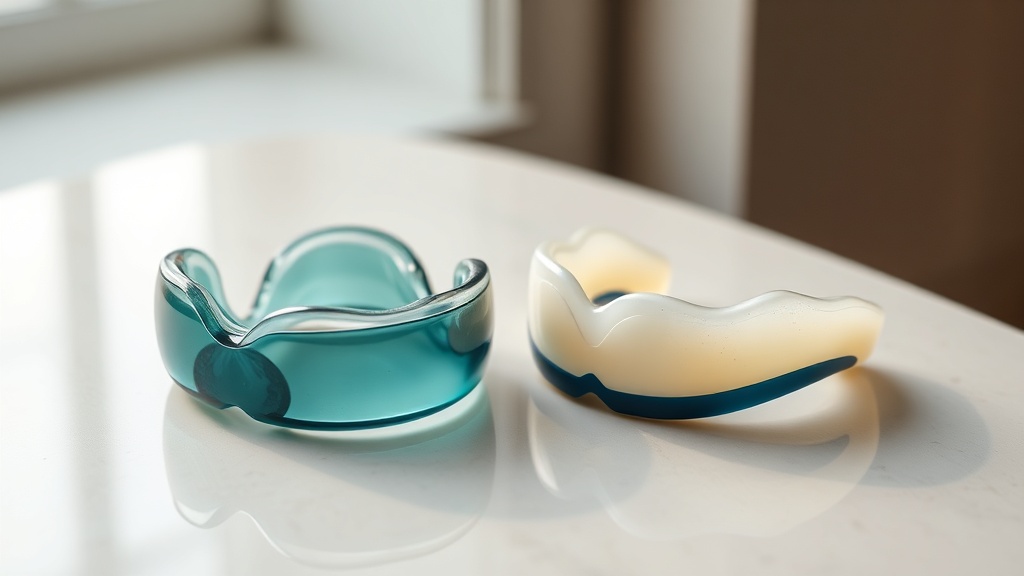 Best Of8 min
Best Mouth Guard for TMJ: An Honest 2026 Buyer's Guide
A night guard reliably protects your teeth from grinding, but the evidence that it eases jaw pain is surprisingly thin, so choose one with clear eyes.
Read →→ Guides8 min
Jaw Relaxation Exercises: A Step-by-Step Comfort Guide
A step-by-step down-regulation routine for a tight, clenched jaw, built on gentle relaxation rather than force.
Read →→ Guides9 min
Does Mewing Actually Work? An Honest, Evidence-Based Breakdown
The honest, evidence-based answer to whether tongue posture can reshape an adult jaw — what the research really shows, and why forcing it can backfire.
Read →→