How to Dislodge a Tonsil Stone: Gentle, Low-Pressure Technique
Dislodging a tonsil stone is about loosening its grip, not forcing it out. Here's the gentle, low-pressure technique — and the one thing you should never do.
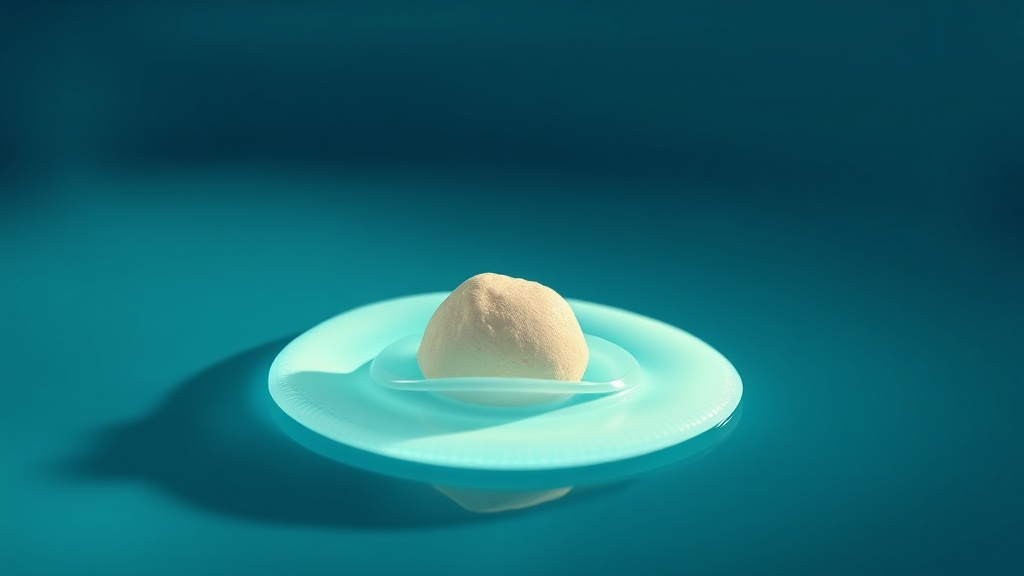
- Dislodging a tonsil stone means loosening its physical grip on the crypt — not dissolving it. That is why rinses alone rarely work and why gentle mechanical loosening is the sensible approach.
- Low-pressure water is the best first tool: a soft stream aimed at the base of the stone uses hydraulic pressure to lift it out with no gouging.
- If water is not enough, a soft cotton swab rolled gently from below the stone can lever it free — light, brief contact, never a hard press.
- The single rule that matters most: loosen, never gouge. Metal picks, bobby pins, pins and fingernails can puncture delicate tissue, and the tonsil bed bleeds readily.
- If a stone will not budge with gentle means, leave it — most tonsil stones migrate toward the throat opening and clear on their own, and a professional can safely remove a stubborn one.
To dislodge a tonsil stone, loosen its grip rather than digging it out. Start with a gentle gargle to soften surface debris, then aim a low-pressure water flosser at the base of the stone in short bursts to float it free. If that is not enough, roll a soft, damp cotton swab gently upward from below. Never use metal or sharp tools, and stop if you feel pain or see bleeding.
What dislodging a tonsil stone really means
It helps to picture what you are actually dealing with. A tonsil stone is not an inert pebble sitting loose in a pocket; it is a living biofilm — an organised community of bacteria bound together and partly gripping the walls of the crypt — that has slowly taken on some calcium and firmed up. That single fact explains why dislodging works the way it does. Because the stone is anchored by biofilm, chemical rinses on their own struggle to shift it: studies of mature biofilm show that even minutes of a strong antiseptic leave the deep core alive and intact, because liquid simply cannot penetrate and lift the whole structure. What does work is physical disruption. Mechanical action — the same principle by which brushing ruptures and removes plaque biofilm — breaks the stone's hold so it can come away. The goal of dislodging, then, is mechanical but gentle: you want to loosen the grip and lift the stone out of its pocket, not scrape or crush it. Get that mental model right and every safe technique below follows from it — water pressure, a rolling swab, a light push from below — all of them loosen rather than gouge.
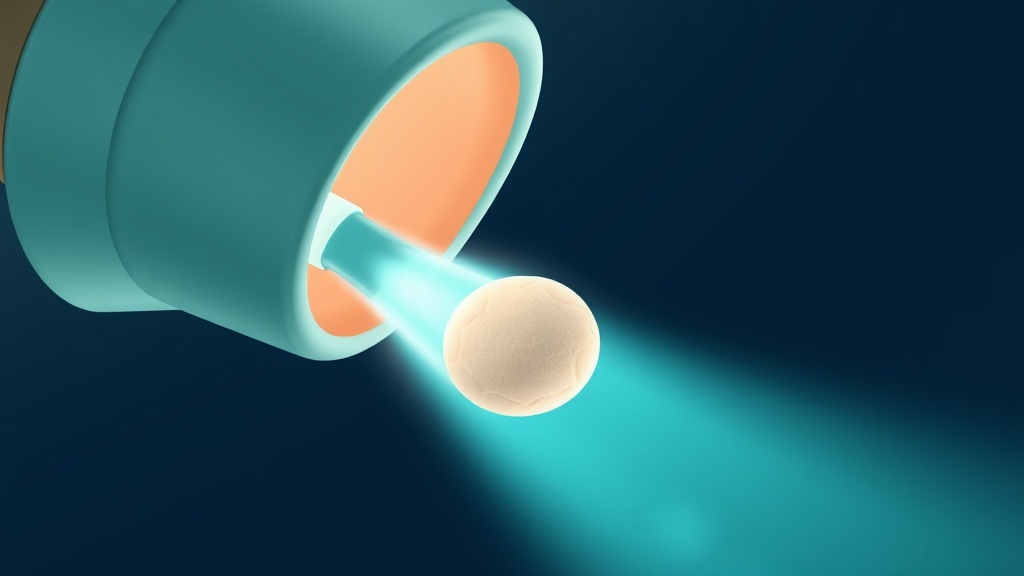
Dislodging works by loosening the stone's grip from below with gentle hydraulic pressure — not by digging at it.
What the research actually shows
Every claim below maps to a named, peer-reviewed source in the Sources section. According to PubMed.
| Claim | Evidence | Source |
|---|---|---|
| A tonsil stone is a living, structured biofilm gripping the crypt — not an inert pebble — which is why it must be physically loosened. | Confocal microscopy and microelectrode study of 16 adults. | Stoodley et al., 2009 |
| Chemical rinses alone cannot clear a mature biofilm's deep core, so physical disruption is required to dislodge it. | Real-time microsensor analysis of natural dental biofilm. | von Ohle et al., 2010 |
| Mechanical action physically ruptures biofilm — brushing removed roughly 90% of a P. gingivalis biofilm, releasing cell contents. | In-vitro biofilm disruption study. | Sato et al., 2015 |
| A pulsatile water jet removed about 99.9% of biofilm in three seconds — the mechanistic anchor for hydraulic dislodging. | Ex-vivo biofilm removal study (industry-funded). | Gorur et al., 2009 |
| Rigid tools near the throat can cause severe injury — a case series documented serious oropharyngeal trauma from a toothbrush. | Case plus review of 13 injuries. | Kumar et al., 2008 |
Which dislodging method should you use?
| Method | How it dislodges the stone | Verdict |
|---|---|---|
| Low-pressure water flush | Hydraulic pressure loosens the biofilm's grip and floats debris out | Best first choice |
| Gentle gargle or throat flex | Muscle movement and moving fluid nudge a loose stone free | Safe — try this first |
| Cotton swab rolled from below | Light leverage lifts the stone up and out of the pocket | Fine if gentle and brief |
| Clean fingertip pad, light pressure | A gentle push from below the stone | Only with clean hands and no nails |
| Metal pick, bobby pin or sharp tool | Gouges the tissue — high risk of puncture and bleeding | Never |
Why gentle beats forceful — every time
Once you know a stone is biofilm gripping delicate tissue, the case for gentleness is obvious. The tonsil bed is fragile and richly supplied with blood vessels; it bleeds readily, which is exactly why forceful digging is the wrong instinct. Rigid and sharp tools are the real danger — the literature includes serious throat injuries from something as ordinary as a toothbrush pushed too hard, and a metal pick or bobby pin is far worse. Forcing also tends not to work: crushing a stone deeper into its pocket or scraping the surface leaves the anchored base behind and traumatises the tissue around it. Low-pressure water and light leverage do the opposite. They loosen the biofilm's hold along its whole edge and lift the stone out intact, and a single gentle irrigation cycle even lowers the sulfur gases behind the smell as it clears debris. There is also a reassuring backstop: most tonsil stones are only lightly held, and on repeat imaging the ones that move drift toward the throat opening, where they are swallowed or coughed out — with a meaningful share disappearing entirely. Small tonsil stones are, in fact, managed expectantly by clinicians. So if gentle methods do not free a stone today, the right move is to stop, not escalate. Patience clears more stones safely than force ever will.
Evidence you can act on.
Occasional emails — new research, new protocols, no noise.
How to dislodge a tonsil stone safely
Work from the gentlest method up, and stop the moment you feel pain, see bleeding or start to gag. None of this treats a disease — it simply loosens and clears trapped debris.
- 1
Soften it first with a gargle
30 secondsA warm salt-water gargle loosens surface debris and hydrates the area, so a stone that was clinging lets go more easily. Treat this as debris-loosening and soothing rather than a germ-killer — salt water is not a strong antimicrobial, but it is low-risk and a sensible first move that sometimes frees a loose stone on its own.
- 2
Flush from below with low pressure
under a minuteAim a low-pressure water flosser at the base of the stone, where it meets the pocket, in short bursts and let the hydraulic pressure lift it up and out. Working from below rather than straight on is what levers it free. Keep the pressure gentle — forceful jets can bruise or bleed the tissue and are unnecessary.
- 3
If flushing is not enough, use a soft swab
seconds at a timeDampen a soft cotton swab, approach from below the stone, and roll it gently upward to lever the stone out of its pocket rather than pressing inward. Keep contact light and brief. If it does not come with gentle rolling, it is anchored more firmly than is worth forcing — move on.
- 4
A light fingertip, only if clean and comfortable
secondsWith freshly washed hands and no fingernail contact, some people can ease a stone up and out with a gentle push from below using the pad of a finger. Only do this if you can reach comfortably without gagging, and never dig or scrape. Stop if the area feels sore.
- 5
Loosen, never gouge — the one unbreakable rule
alwaysNever use a metal pick, bobby pin, cocktail stick, fingernail or any sharp object. They can puncture delicate tissue, cause bleeding and drive infection, and the tonsil bed bleeds readily. If a stone will not release with gentle means, leave it to work loose on its own or have a professional clear it.
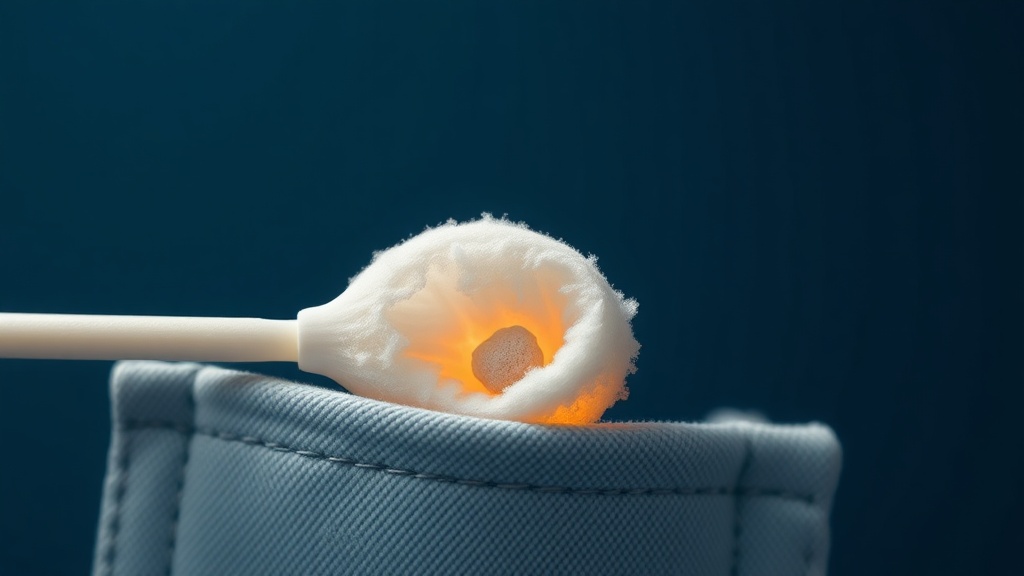
If water is not enough, a soft swab rolled gently from below the stone lifts it out — light, brief, never a hard press.
Stop and see a dentist or ENT if you notice bleeding that does not quickly settle, ongoing pain, or a stone too large or deep to reach safely. Also seek an in-person check if one tonsil stays visibly larger than the other for more than a couple of weeks, if swallowing becomes difficult, or if a lump is growing. Having a professional clear a stubborn stone is a routine, sensible request — always preferable to forcing it at home.
Frequently asked questions
Sources
- 1.
- 2.
- 3.
- 4.
- 5.
- 6.
- 7.
- 8.
- 9.
- 10.
- 11.

Fix your breath at the source.
The complete science-backed protocol — engineered to eliminate volatile sulfur compounds at the biological source.
Start the Breath Protocol →Related reading
Educational purposes only. The content on this page is not medical advice and is not a substitute for consultation with a qualified dental or medical professional.
More from the library
 Guides9 min
How to Make Tonsil Stones Fall Out (Gently and Safely)
Why most tonsil stones fall out by themselves, and the gentle, low-pressure way to help one along without ever gouging at delicate tonsil tissue.
Read →→ Guides8 min
How to Get Rid of Tonsil Stones: A Step-by-Step Guide
The safe, evidence-informed way to dislodge tonsil stones and keep the crypts from refilling.
Read →→ Best Of8 min
The Best Tonsil Stone Removal Tools (and the One to Never Use)
A calm, evidence-led guide to the tools that clear tonsil stone debris without hurting the delicate crypt tissue — and the one category you should never put near your throat.
Read →→ Causes8 min
How Do Tonsil Stones Form? The Biology, Honestly Explained
The unglamorous truth about what a tonsil stone is, how it builds up in the folds of your tonsils, and why the crypts that make them are simply part of your anatomy.
Read →→ Answers8 min
Can Tonsil Stones Make You Sick? An Honest Look
A calm, honest look at whether tonsil stones can actually make you unwell, the local nuisances they do cause, and the red flags worth taking seriously.
Read →→ Answers8 min
Can a Dentist Remove Tonsil Stones? Your Professional Options
Who actually removes tonsil stones, the in-office options from simple expression to crypt reshaping, and how to know when a professional is worth it.
Read →→