
Dry Mouth While Sleeping: Why Your Mouth Dries Out Overnight
Why your mouth dries out overnight, what it can signal, and simple ways to stay comfortable until morning.

- Your salivary glands naturally slow at night — resting saliva falls to its lowest point during sleep, so even a healthy mouth feels drier by morning and problems that go unnoticed by day become obvious overnight.
- Mouth-breathing is the biggest overnight amplifier: the mouth only loses water to evaporation while air moves through it, and the thin film of saliva coating the roof of the mouth is the first thing to dry.
- The submandibular gland under your jaw is the night gland that keeps your mouth moist at rest, so anything that lowers resting saliva — many common medications, aging, menopause — hits hardest while you sleep.
- Dry mouth at night is a symptom, not a disease; medications are the single most common cause, and the fix usually starts with your dentist or doctor reviewing them — never by stopping a prescribed medicine on your own.
- Overnight comfort is very achievable with moist air, careful hydration, nasal breathing and saliva-supporting products, even though none of them restore your own saliva permanently.
Your mouth dries out while you sleep because saliva flow naturally drops to its lowest level overnight, and any mouth-breathing lets that thin protective film evaporate. Medications, aging, menopause and nasal congestion make it worse. It is a symptom to manage for comfort, not a disease — and persistent or severe cases deserve a professional review.
Why the sleeping mouth runs dry
Saliva does not flow at a steady rate around the clock. It follows a daily rhythm, and unstimulated flow — the slow resting trickle that keeps your mouth comfortable when you are not eating — falls to its lowest point during sleep. That alone leaves most mouths drier by morning. On top of that natural dip, the mouth only loses water to evaporation while air is moving through it, which is why mouth-breathing and snoring are such powerful amplifiers: research measuring resting airflow found the mouth can shed close to a fifth of a millilitre of water a minute this way, and the very first thing to dry is the ultra-thin film of saliva coating the roof of the mouth. The gland doing most of the resting, moistening work is the submandibular gland under your jaw. It is the night gland, so anything that lowers resting saliva — a great many everyday medications, natural aging, the hormonal shifts of menopause — is felt most sharply in the quiet hours when you have nothing to stimulate flow.
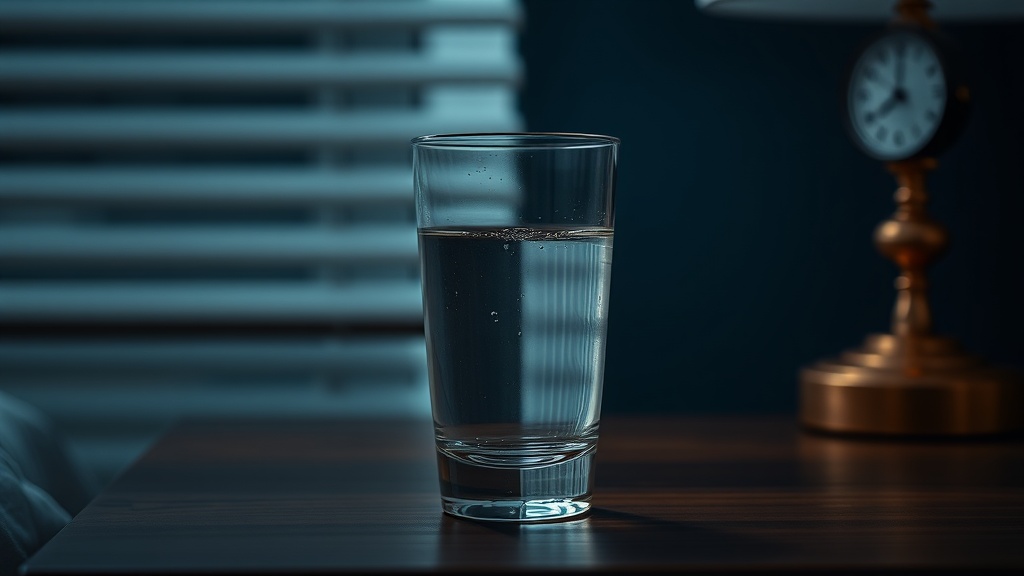
Overnight, resting saliva falls to its lowest point — which is why a glass of water by the bed is such a familiar sight.
What the research actually shows
Every claim below maps to a named, peer-reviewed source in the Sources section. According to PubMed.
| Claim | Evidence | Source |
|---|---|---|
| Evaporative water loss from the mouth happens only during mouth-breathing (up to about 0.21 mL per minute at rest), and dryness appears when that loss outpaces saliva flow. | Analysis of oral moisture balance and evaporation. | Dawes, 2004 |
| Aging reduces resting (submandibular and sublingual) saliva while parotid reserve is largely preserved — so the gland that moistens the mouth at rest is the one that declines. | Meta-analysis of 47 studies of salivary flow. | Affoo et al., 2015 |
| Oral (mouth) breathing significantly lowered measured oral moisture (p=0.001) and worsened dryness scores (p=0.002). | Direct human measurement during ventilation. | Oto et al., 2013 |
| Overnight heated humidified air significantly improved night-time (p=0.005) and early-morning oral comfort (p=0.008) in dry-mouth patients. | Pilot study using nocturnal humidification. | Hay & Morton, 2006 |
| Nocturnal oral dryness was an independent predictor of waking two or more times to urinate and tracked poorer sleep quality in older adults. | Study of nocturia correlates in older adults. | Natsume et al., 2025 |
What drives dryness overnight
| Overnight driver | Why it dries the mouth at night | Can you change it? |
|---|---|---|
| Natural night-time dip in saliva | Resting flow falls to its lowest point during sleep | No — it is normal biology |
| Mouth-breathing or snoring | Air moving over the mouth evaporates the thin saliva film | Often — nasal breathing and humid air help |
| Medications (very common) | Many everyday drugs lower resting saliva, and the effect can peak overnight | Sometimes — ask your prescriber about timing or alternatives |
| Aging and menopause | Resting saliva declines and hormonal change adds dryness | Partly — comfort measures help a lot |
| Dry or heated bedroom air | Low humidity pulls moisture from an already-dry mouth | Yes — add moisture to the air |
When night-time dryness is telling you something
Night-time dryness is worth listening to, because it can mean different things. Clinicians separate the feeling of a dry mouth (xerostomia) from a measured drop in saliva (hyposalivation), and the two only overlap about half the time — you can feel bone-dry with near-normal flow, or have low flow with little complaint. That is why chasing the sensation alone can mislead. The single most common driver, by a wide margin, is medication: hundreds of common drugs list dry mouth as a side effect, and many people notice it most overnight. There is also a frustrating loop many people fall into — waking thirsty, drinking more water, then waking again to use the bathroom, all without restoring the thin protective film that actually keeps the mouth comfortable. And when dryness pairs with dry eyes, or arrives suddenly and severely, it can point to something a professional should look at, such as Sjögren syndrome. None of this is cause for alarm on its own, but persistent night dryness is a nudge to find out why rather than simply cope.
Evidence you can act on.
Occasional emails — new research, new protocols, no noise.
How to stay comfortable overnight
None of these steps restore your own saliva or fix an underlying cause — they simply make the overnight hours more comfortable while you and your dentist or doctor work out what is driving the dryness.
- 1
Add moisture to your bedroom air
nightlyDry bedroom air, common with central heating or air-conditioning, pulls moisture from an already-dry mouth. A cool- or warm-mist humidifier keeps the air moist so less evaporates overnight; in dry-mouth patients, overnight humidified air significantly eased night-time and early-morning discomfort.
- 2
Breathe through your nose where you can
all nightBecause the mouth only loses water while air moves through it, breathing through your nose is one of the most effective changes you can make. Treat nasal congestion or allergies so your nose stays clear, and raise persistent stuffiness with a clinician.
- 3
Support saliva and keep water within reach
bedtime and on wakingKeep water at the bedside for small sips rather than big gulps, and consider a saliva-substitute gel or spray made to coat the mouth before bed. A sugar-free lozenge or gum earlier in the evening can prompt your own flow while your glands are still active.
- 4
Protect your teeth
nightlyLow saliva leaves teeth more exposed, so brushing with a fluoride toothpaste last thing at night matters more than usual. If dryness is ongoing, ask your dentist whether a high-fluoride toothpaste is right for you.
- 5
Review medications with your prescriber
at your next visitThis is the highest-value step of all. Many cases trace back to a medication, and a prescriber may be able to adjust the dose, the timing, or the drug. Book that review — but never stop or change a prescribed medicine on your own.
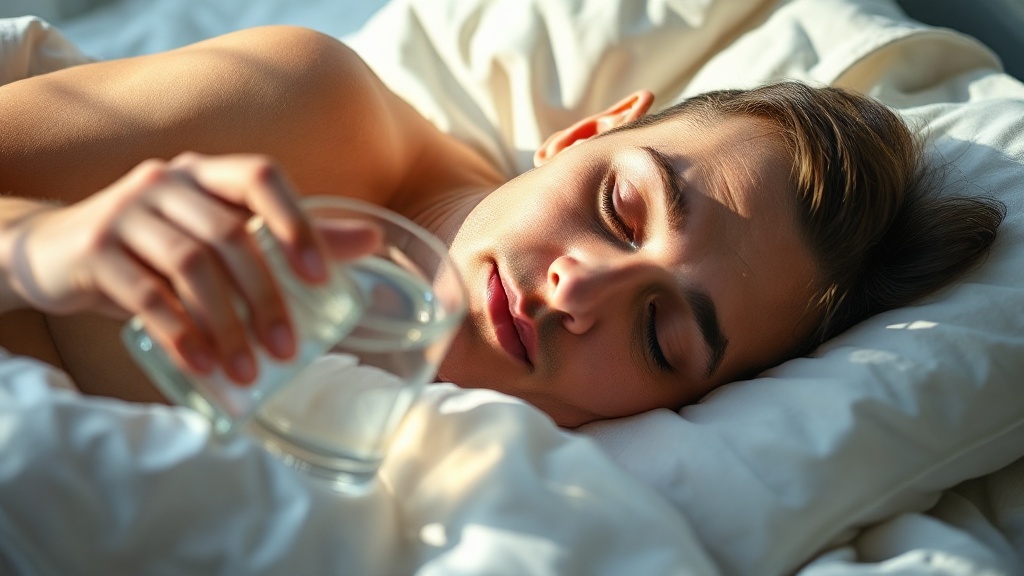
Waking with a parched mouth is common; the goal is overnight comfort while you find the cause.
Most night-time dry mouth can be managed comfortably at home, but see a dentist or doctor if it is persistent or severe, if it arrives with dry eyes, if it started soon after a new medication, or if you notice trouble swallowing or speaking, or mounting tooth and gum problems. A professional can identify the cause and check for conditions such as Sjögren syndrome. Whatever you do, do not stop a prescribed medicine on your own — ask the person who prescribed it.
Frequently asked questions
Sources
- 1.
- 2.
- 3.
- 4.
- 5.
- 6.
- 7.
- 8.

Fix your breath at the source.
The complete science-backed protocol — engineered to eliminate volatile sulfur compounds at the biological source.
Start the Breath Protocol →Related reading
Educational purposes only. The content on this page is not medical advice and is not a substitute for consultation with a qualified dental or medical professional.
More from the library
 Guides9 min
How to Prevent Dry Mouth While You Sleep
The practical, evidence-led bedtime plan for a mouth that stays comfortable through the night.
Read →→ Guides8 min
Dry Mouth at Night: Why It Happens and How to Sleep Easier
Nighttime dryness is common because your saliva naturally slows while you sleep, and a few targeted habits can make a real difference.
Read →→ Guides8 min
What Causes Dry Mouth? The Common Triggers, Explained
Dry mouth almost always has an identifiable trigger, and knowing yours is the first step toward relief.
Read →→ Guides8 min
Waking Up With Dry Mouth: Why It Happens and How to Sleep Easier
Why a parched, sticky mouth on waking usually comes down to night-time breathing, a blocked nose, or a medication, and what actually helps.
Read →→ Guides8 min
How to Fix Dry Mouth: An Evidence-Based Guide
Dry mouth is usually manageable once you know what is driving it and which supportive habits actually move the needle.
Read →→ Best Of8 min
Best Mouthwash for Dry Mouth: What to Look For
The best dry-mouth rinse is the one that soothes without drying, and the label tells you more than the marketing.
Read →→