
The Dry Mouth Comfort Protocol: A Daily Saliva-Support Routine
Dry mouth is easiest to manage as a daily rhythm, not a single fix. This morning-to-night protocol matches small habits to the moments your mouth needs them most.

- Saliva naturally slows overnight, which is why dry mouth is usually worst first thing in the morning - so a good routine front-loads comfort at night and on waking.
- The routine has three simple aims through the day: keep tissue hydrated, wake up your own saliva with chewing, and add moisture from outside when your glands cannot keep up.
- Breathing through your nose matters more than most people realize - moisture is lost from the mouth only during mouth-breathing, so nose-breathing keeps the tissue film intact.
- Overnight humidified air has real evidence: in a study of people with dry mouth, it significantly eased night-time and early-morning discomfort.
- A daily protocol is comfort care, not a substitute for a professional evaluation - if dryness is constant, see a dentist or doctor, and never stop a prescribed medicine on your own.
The dry mouth comfort protocol runs from morning to night: rehydrate and clean gently on waking, sip water and chew sugar-free gum through the day, use a moisturizing spray or gel when tissue feels tight, and cover the night with an overnight option and humidified air. Small habits at the right moments beat one big fix.
Why a daily rhythm beats a single fix
Your saliva is not a steady stream - it rises when you eat and talk and falls when you rest, dropping to its lowest during sleep. That daily rhythm is the whole reason a routine works better than a one-time remedy: the moments your mouth feels driest are predictable, so you can meet each one with the right small habit. Mornings are usually the hardest, because saliva has been at its overnight low for hours. Midday brings its own challenge from coffee, talking and busy stretches when you forget to drink. And nights are their own problem, since the tissue can dry out while you are not there to sip or swallow. Research on how dryness actually develops shows it is not a total absence of fluid but thin, dry patches - especially on the palate - that form when the moisture film drops below a critical thickness. A protocol keeps that film topped up across the day, so you rarely hit the point where dryness becomes uncomfortable in the first place.
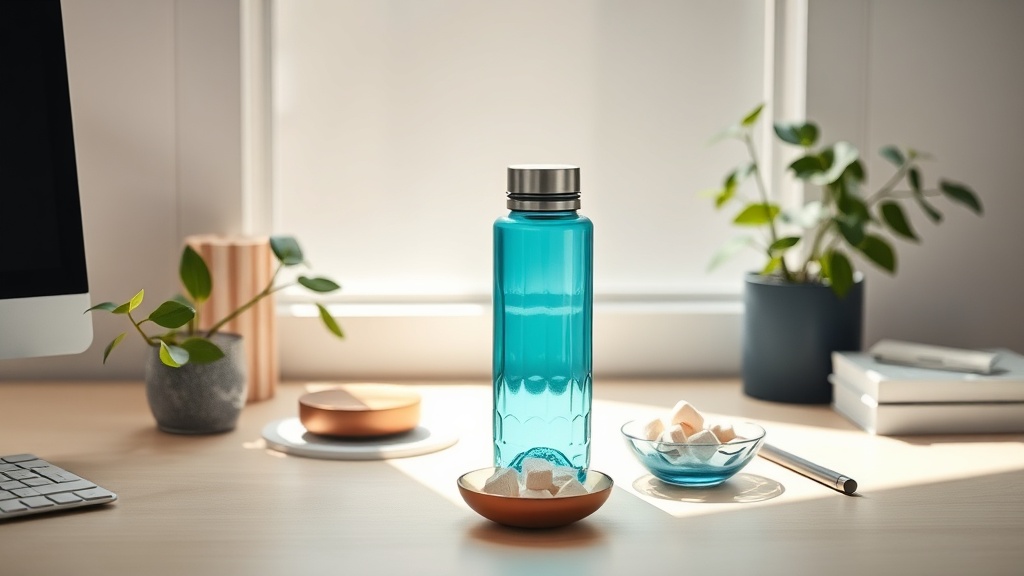
Daytime is about steady sips and a little chewing - small, repeatable habits that keep the moisture film from ever running low.
The evidence behind each part of the routine
Every claim below maps to a named, peer-reviewed source in the Sources section. According to PubMed.
| Claim | Evidence | Source |
|---|---|---|
| Moisture is lost from the mouth by evaporation only during mouth-breathing, and an unstimulated flow above about 0.1-0.3 mL/min is needed to avoid the dry feeling - so hydration and nose-breathing matter. | Review of oral fluid balance and the palatal moisture film. | Dawes, 2004 |
| Breathing through the mouth measurably reduced oral moisture and worsened the feeling of dryness compared with nasal breathing. | Direct measurement study of oral moisture and dryness scores. | Oto et al., 2013 |
| Overnight heated, humidified air significantly reduced night-time and early-morning oral discomfort and dry cough in people with dry mouth. | Pilot study using nocturnal humidification (p=0.005 night-time). | Hay and Morton, 2006 |
| Chewing sugar-free gum through the day measurably increases unstimulated saliva flow in older and medically compromised people. | Systematic review and meta-analysis (SMD 0.44). | Dodds et al., 2023 |
| A high-fluoride (5000 ppm) toothpaste kept vulnerable root surfaces significantly harder than a regular paste - a key dental safeguard when saliva is low. | Multicenter randomized controlled trial in adults (p<0.0001). | Srinivasan et al., 2014 |
What your mouth needs at each part of the day
| Time of day | Why it is dry | What the routine does |
|---|---|---|
| On waking | Saliva has been at its overnight low for hours | Rehydrate, rinse gently, clean the tongue |
| Mid-morning to afternoon | Coffee, talking and busy stretches dry the tissue | Sip water, chew sugar-free gum, reapply as needed |
| Evening | Winding down; flow starts to slow again | Moisturizing gel, high-fluoride brushing |
| Overnight | Saliva drops to its lowest during sleep | Overnight disc, humidified air, nose-breathing |
Why keeping the mouth clean is part of comfort
A comfort routine is not only about moisture - it is also about keeping the mouth environment healthy, because a dry mouth changes it in ways that feel unpleasant. With less saliva to rinse things away, the balance shifts: research shows dry mouth roughly doubles to triples the chance of oral thrush, a fungal overgrowth that leaves the mouth sore and coated. Very low resting saliva also lets sulfur-producing bacteria and tongue coating build up, which is why morning breath is often worse with dry mouth. Two gentle habits handle most of this. First, clean your tongue and brush morning and night, which keeps the coating and odor-causing bacteria down. Second, protect the teeth themselves: with saliva no longer buffering acids, a high-fluoride toothpaste keeps the exposed surfaces hard. None of this is about fighting a disease with a product - it is basic upkeep that keeps a dry mouth feeling and smelling fresher, and it slots naturally into the morning and evening steps of the routine.
Evidence you can act on.
Occasional emails — new research, new protocols, no noise.
The morning-to-night comfort protocol
Run these in order across your day. You will not need every step every day - use the ones that match how dry you feel. None of this replaces care from a professional.
- 1
On waking - rehydrate and reset
2-3 minutesStart with a glass of water, then gently clean your tongue and brush with a high-fluoride toothpaste. An alcohol-free rinse freshens without the drying sting. This clears the overnight buildup and gets moisture back into the driest stretch of your day.
- 2
Mid-morning - sip and chew
ongoingKeep water within reach and take small sips rather than waiting until you feel parched. When dryness creeps in, chew a piece of sugar-free gum or dissolve a xylitol lozenge to coax your own saliva to flow.
- 3
Afternoon - coat when needed
as neededBusy, talkative afternoons dry the tissue fast. Before a meeting or a meal, use a moisturizing spray or gel to lay down an outside moisture layer. Reapply freely - the relief is genuine but short-lived.
- 4
Evening - protect and soothe
3-4 minutesBrush again with your high-fluoride paste and apply a moisturizing gel, which lingers longer than a spray. This is the moment to safeguard the teeth a dry mouth leaves exposed and to settle the tissue before sleep.
- 5
Overnight - hold the moisture
overnightNights are the hardest, so give them the most help: tuck in a slow-dissolving overnight disc, run a bedroom humidifier for moist air, keep water on the nightstand, and breathe through your nose where you can to keep the tissue film intact.

Overnight is where the routine pays off most - humidified air and an overnight option carry you through saliva's lowest hours.
A comfort routine manages the feeling of dry mouth, but it does not explain why it is happening. See a dentist or doctor if dryness is constant, if it began after starting a new medicine, if you also have dry eyes, or if you notice new decay, mouth sores, or trouble swallowing. Dry mouth is very often a medication side effect, and the right step is a professional review of your prescriptions - never stop a prescribed medicine on your own. A clinician can help identify the cause and keep your teeth protected while you handle daily comfort.
Frequently asked questions
Sources
- 1.
- 2.
- 3.
- 4.
- 5.
- 6.
- 7.
- 8.

Fix your breath at the source.
The complete science-backed protocol — engineered to eliminate volatile sulfur compounds at the biological source.
Start the Breath Protocol →Related reading
Educational purposes only. The content on this page is not medical advice and is not a substitute for consultation with a qualified dental or medical professional.
More from the library
 Guides8 min
Dry Mouth at Night: Why It Happens and How to Sleep Easier
Nighttime dryness is common because your saliva naturally slows while you sleep, and a few targeted habits can make a real difference.
Read →→ Answers8 min
How to Produce More Saliva Naturally: 12 Ways to Stimulate Salivary Flow
The honest answer: the physical act of chewing and tasting is your strongest natural saliva switch — here is how to use it, and when it will not be enough.
Read →→ Guides8 min
Dry Mouth in the Morning: Why It Happens and How to Feel Fresher
Morning dryness is mostly overnight physiology, not a disease — and your first waking hour is where the simplest fixes pay off.
Read →→ Best Of8 min
Best Products for Dry Mouth
An evidence-based roundup of the product categories that ease dry mouth, and how to assemble a small kit that covers your worst moments day and night.
Read →→ Guides8 min
How to Fix Dry Mouth: An Evidence-Based Guide
Dry mouth is usually manageable once you know what is driving it and which supportive habits actually move the needle.
Read →→ Guides8 min
What Causes Dry Mouth? The Common Triggers, Explained
Dry mouth almost always has an identifiable trigger, and knowing yours is the first step toward relief.
Read →→