Does Chewing Gum Help Your Jawline?
Gum-chewing gets sold as a jawline hack. The evidence says it trains bite force, not bone - and pushed too far it can bulk and ache the very muscle you are trying to define.
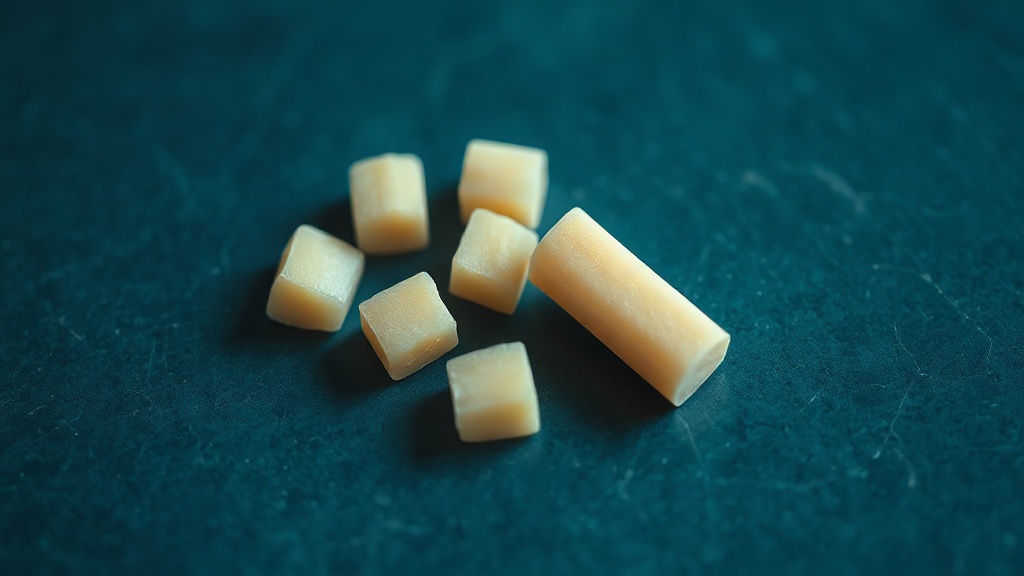
- Chewing gum genuinely strengthens your bite - the force your jaw can generate goes up - but that is a muscle-performance change, not a change to the shape of your jawbone or your face.
- In the best controlled trial, six months of daily gum-chewing raised bite force yet left masseter (jaw-muscle) thickness and mandibular shape completely unchanged, so it did not sculpt the jaw.
- If anything, heavily working the masseter tends to make the lower face look wider and more square - the opposite of the popular chiselled-jawline promise.
- A visible jawline is mostly down to body-fat level, genetics and posture, none of which chewing gum changes.
- Gentle, occasional chewing is harmless; hours of hard one-sided chewing can fatigue the jaw muscle and, in some people, feed clenching and discomfort. If your jaw aches, clicks or locks, see a dentist.
Not the way the trend claims. Chewing gum trains your bite muscles and can increase bite force, but controlled research shows it does not change the thickness of the jaw muscle or the shape of the jawbone. A sharper-looking jawline comes mainly from lower body fat, genetics and posture - not from gum.
What chewing actually trains
Your jawline is shaped by three separate things that people constantly blur together: a muscle, a bone, and a layer of fat and skin. Chewing gum acts on only one of them - the muscle. The big chewing muscle you can feel bulge when you clench, the masseter, is an ordinary skeletal muscle, and like any muscle it responds to resistance. Chew regularly and it gets stronger, so your maximum bite force climbs. In a four-week study, an hour a day of hard gum raised bite force measurably, and a longer six-month trial found the same strength gain. But strength is not shape. The jawbone underneath is largely finished growing by your late teens or early twenties, and no amount of chewing re-carves adult bone - growth research is clear that skeletal change after the second decade of life is minimal. And the fat and skin that soften a jawline are governed by your overall body composition, not by how hard you chew. So gum trains the engine; it does not redesign the chassis.

Work the masseter hard enough and it thickens - but a thicker jaw muscle widens and squares the lower face rather than sharpening it.
What the research actually shows
Every claim below maps to a named, peer-reviewed source in the Sources section. According to PubMed.
| Claim | Evidence | Source |
|---|---|---|
| Six months of daily gum-chewing raised maximum bite force, but masseter thickness and mandibular shape did not change. | Randomised controlled trial in 58 healthy adults. | Jung et al., 2024 |
| Four weeks of hard gum training (one hour a day) increased maximum bite force but did not improve muscle endurance. | Controlled chewing-training study in 25 adults. | Kiliaridis et al., 1995 |
| A thicker masseter is linked to a wider and shorter lower face (greater intergonial and bizygomatic width), not a slimmer one. | Ultrasound and facial-morphology study of 329 individuals. | Raadsheer et al., 1996 |
| To slim a wide-looking lower face, cosmetic medicine shrinks the masseter with botulinum toxin, cutting lower-face width by about 5 mm. | Phase 3 randomised placebo-controlled trial. | Sun et al., 2026 |
| Ten minutes of one-sided gum-chewing raised masseter muscle activity by over a thousand per cent and caused fatigue in most people. | Surface EMG study of eight healthy adults. | Christensen et al., 1996 |
Muscle, bone, and how your jaw looks
| Factor | Does chewing gum affect it? | Why |
|---|---|---|
| Bite force / jaw-muscle strength | Yes - it goes up with training | Muscle adapts to resistance, like any exercise |
| Masseter (jaw-muscle) thickness | Barely, if at all | Controlled trials show no meaningful change from gum |
| Jawbone shape and width | No | Adult facial bone is largely set after the growth years |
| Body fat over the jaw | No | Fat loss is driven by overall diet and activity, not chewing |
| How sharp the jawline looks | No - it can look wider | A bulkier masseter widens and squares the lower face |
Why chewing can make a jaw look wider, not sharper
Here is the twist the trend never mentions. Suppose you actually could bulk up the masseter through relentless chewing. That would not sharpen your jaw - it would broaden it. Morphology studies consistently link a thicker masseter to a wider, shorter, more square lower face, because the muscle sits right at the angle of the jaw and pushes the outline outward. This is not a fringe idea; it is why aesthetic clinics do the exact opposite of chewing to slim a face. They inject botulinum toxin to shrink an overworked masseter, and a recent Phase 3 trial measured an average lower-face width reduction of roughly five millimetres from that muscle-shrinking approach. In other words, the entire cosmetic playbook for a slimmer jaw is built on making the masseter smaller, while the chewing-gum hack tries to make it bigger. On top of that, grinding away with hard, one-sided chewing is a known way to fatigue the muscle - one classic experiment saw masseter activity rise well over a thousand per cent during ten minutes of one-sided gum-chewing, with most people reporting muscle fatigue. Pushed to extremes, that same overload can feed jaw-clenching and soreness, which is a comfort problem, not a beauty upgrade.
Evidence you can act on.
Occasional emails — new research, new protocols, no noise.
A sensible way to think about gum and your jaw
Gum is fine to enjoy - just for the right reasons. None of this treats a medical condition; it simply keeps your expectations and your jaw comfortable.
- 1
Chew for what gum is actually good at
anytimeSugar-free gum freshens breath, stimulates saliva and can help you focus. Those are real, sensible benefits. Reshaping your jawbone is not on the list, so enjoy gum without expecting it to sculpt your face.
- 2
Keep it gentle and even
ongoingIf you do chew a lot, alternate sides and avoid marathon sessions on very hard gum. Hours of hard, one-sided chewing is the pattern most likely to fatigue the masseter and leave the jaw tight or achy.
- 3
Work on the levers that actually define a jawline
weeks to monthsA visible jawline tracks mostly with lower body fat, your underlying bone structure and good head-and-neck posture. Overall fat loss and standing tall do far more for jaw definition than any chewing routine.
- 4
Watch for the warning signs
as neededJaw ache, clicking, morning soreness, headaches or a feeling of tightness are signals to ease off chewing - they can point to clenching or a jaw-joint issue rather than a training effect worth pushing through.
- 5
Skip the resistance jaw gadgets
-Silicone jaw-trainer balls apply the same logic as hard gum, only harder. They bulk and strain the masseter rather than slim it, so they work against the sharper look most buyers are chasing.

The look of a defined jawline owes far more to body composition, bone structure and posture than to how much you chew.
Chewing should never hurt. If you have ongoing jaw pain, clicking or locking, morning jaw soreness or headaches, or you catch yourself clenching, see a dentist or a jaw (TMJ) specialist. Jaw-muscle and joint issues are common - roughly a third of adults report a jaw sign or symptom at some point, and about one in five grind or clench - and they are managed with gentle conservative care, not by chewing harder.
Frequently asked questions
Sources
- 1.
- 2.
- 3.
- 4.
- 5.
- 6.
- 7.
- 8.

Fix your breath at the source.
The complete science-backed protocol — engineered to eliminate volatile sulfur compounds at the biological source.
Start the Breath Protocol →Related reading
More from the library
 Ingredients8 min
Falim Gum for Jawline: What It Is and What It Really Does
The firm Turkish gum sold as a jaw workout - what it actually does to the muscle, why that is not a sharper jaw, and how to chew it without overloading your jaw.
Read →→ Guides9 min
Does Mewing Actually Work? An Honest, Evidence-Based Breakdown
The honest, evidence-based answer to whether tongue posture can reshape an adult jaw — what the research really shows, and why forcing it can backfire.
Read →→ Guides8 min
How to Get a Sharper Jawline: What Works and What Does Not
The jawline advice online is mostly hype. Here is what genuinely changes how defined your jaw looks, what does nothing, and where the real (sometimes medical) levers are.
Read →→ Reviews8 min
Jawzrsize Review: Does This Jaw Exerciser Actually Work?
Jaw exercisers promise a chiselled jaw. The science says they enlarge the very muscle that widens a face - and can strain the jaw. Our honest, non-endorsing verdict.
Read →→ Guides8 min
Jaw Relaxation Exercises: A Step-by-Step Comfort Guide
A step-by-step down-regulation routine for a tight, clenched jaw, built on gentle relaxation rather than force.
Read →→ Guides8 min
How to Unlock a Locked Jaw: Gentle Self-Relief Steps
Calm, evidence-based ways to coax a recently stuck jaw open again — and the red flags that mean it is time to get help.
Read →→