Why Do My Gums Hurt?
A calm, evidence-based look at what makes gums ache — and when tenderness is a sign to see a dentist.

- Sore or aching gums are usually a sign of inflammation at the gum line — most often the body's response to plaque bacteria left to build up where the gum meets the tooth.
- Tenderness has many everyday causes beyond plaque: brushing too hard, a sharp new flossing habit, food wedged between teeth, canker sores, hormonal shifts, or an ill-fitting night guard or denture.
- Plaque-driven gum inflammation (gingivitis) is reversible — when plaque is cleared consistently, the soreness, redness and bleeding typically settle back to baseline within a couple of weeks.
- Brushing harder is a common cause, not a cure: heavy scrubbing abrades the gum and can drive it back, so gentle technique matters far more than force.
- Pain that is severe, one-sided, swelling the face, coming with fever, or lasting more than a week or two is not a home-care problem — see a dentist, because only a professional can clear what a toothbrush cannot reach.
Most sore gums come from inflammation where plaque collects along the gum line — the earliest, reversible stage of gum trouble. Brushing too hard, trapped food, canker sores and hormonal changes are common culprits too. Gentle, consistent cleaning usually calms it; persistent, severe or one-sided pain needs a dentist.
Why gums become sore in the first place
Your gums are a living seal around each tooth, and like any tissue they get tender when they are irritated or inflamed. By far the most common trigger is dental plaque — a soft, sticky film of bacteria that reforms along the gum line every few hours. When plaque is not cleared, the bacteria at the margin provoke the immune system, and the gum responds the way skin responds to a splinter: it swells, reddens, warms and becomes tender. That is gingivitis, the earliest and most reversible stage of gum disease. The soreness you feel is not the bacteria attacking the tissue directly so much as your own inflammatory response working at the gum edge. This is why tenderness so often arrives hand in hand with puffiness and a little bleeding when you brush. The encouraging part is that this early inflammation is not permanent damage. In the classic experimental-gingivitis studies, healthy volunteers who stopped cleaning developed inflamed, tender gums within two to three weeks — and every measure returned to baseline once normal plaque control resumed. In other words, the gum is designed to recover once the irritation is removed.
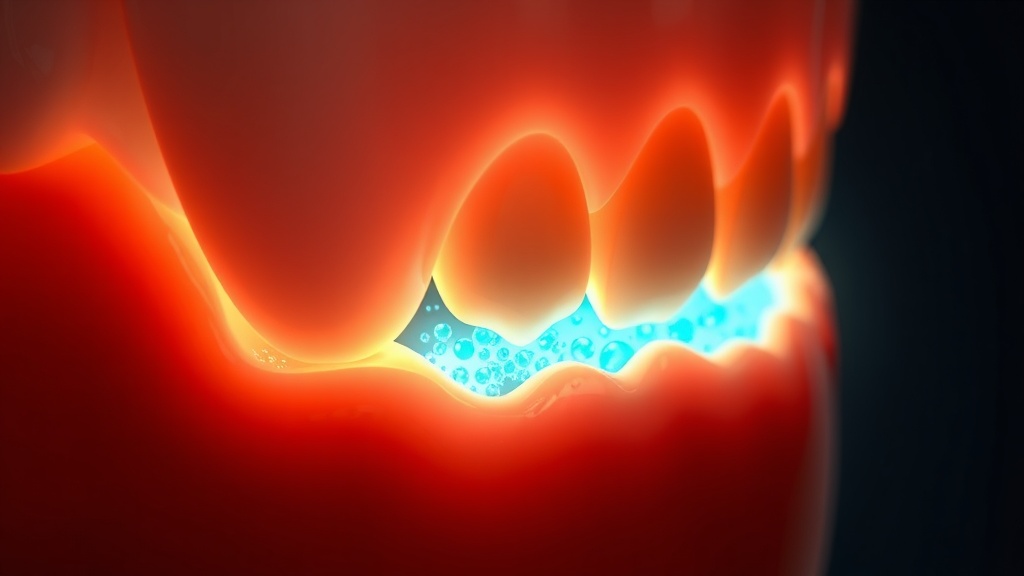
Sore gums usually begin where plaque meets the gum margin and the tissue responds with inflammation.
What the research actually shows
Every claim below maps to a named, peer-reviewed source in the Sources section. According to PubMed.
| Claim | Evidence | Source |
|---|---|---|
| Gingival bleeding is the single most prevalent sign of gum inflammation worldwide — the tenderness that comes with it is extremely common, not rare. | Global periodontal-health review. | Petersen & Ogawa, 2012 |
| Stopping plaque control triggers gum inflammation within about 2–3 weeks; resuming it returns bleeding, redness and pocket depth to baseline. | Experimental-gingivitis model. | Wellappuli et al., 2017 |
| Gum recession is more common and more severe on the cheek-facing surfaces — the signature of mechanical abrasion (over-brushing) rather than bacteria. | US national survey (NHANES III). | Albandar & Kingman, 1999 |
| Brushing twice daily for at least two minutes using the Bass technique improved plaque and gum-health scores. | Scoping review of brushing method. | Kaneyasu et al., 2024 |
| An alcohol-free essential-oil rinse reduced gingival inflammation about 24% over six months as an add-on to brushing. | 6-month randomized trial. | Cortelli et al., 2013 |
The common causes of sore gums, compared
| Likely cause | What it feels like / signals | Reversible at home? |
|---|---|---|
| Plaque-induced gingivitis | Tender, puffy, red margins that bleed a little when brushed | Yes — with consistent, gentle plaque control |
| Brushing too hard | Soreness with notched or receding gum on the cheek side | The habit, yes; already-lost gum tissue, no |
| Food trapped between teeth | A localised ache or pressure at one spot | Yes — clear it gently, do not dig |
| Canker sore or minor irritation | A single painful ulcer or raw patch away from a tooth | Usually heals on its own in 1–2 weeks |
| Deep-pocket periodontitis | Deep, dull ache, bad taste, loose or drifting teeth | No — needs professional assessment and cleaning |
When soreness is more than a passing irritation
Most sore gums are simple surface inflammation that calms down with better cleaning. But there is a second, more serious layer worth understanding. If early inflammation is ignored for long enough in a susceptible person, the plaque at the margin can mineralise into hardened calculus (tartar) and the space between gum and tooth can deepen into a pocket. Once a true pocket forms, a home toothbrush and rinse physically cannot reach the calculus lodged beneath the gum — and that residual deposit keeps the inflammation, and the ache, going. This is the point at which professional care stops being optional. A dental scaling and root planing removes what you cannot, and on average it reduces pocket depth and closes the majority of shallow-to-moderate pockets. The stakes are real: research following treated patients found that deep residual pockets left behind carried dramatically higher odds of eventually losing the tooth. None of this means a sore gum is an emergency — the vast majority are not. It simply means that soreness which will not settle, or that comes with looseness, pus or a receding gum, is the body asking for a professional set of eyes rather than another week of home remedies.
Evidence you can act on.
Occasional emails — new research, new protocols, no noise.
How to calm sore gums at home
None of these steps treats a disease — they lower the irritation that makes gums ache and give the tissue room to recover. If the soreness is not clearly improving within a week or two, move to the see-a-professional step.
- 1
Clean gently along the gum line, not harder
2 minutes, twice dailyUse a soft-bristled brush angled at about 45 degrees to the gum and small, light strokes. The goal is to disrupt plaque at the margin, and that takes gentleness and consistency, not pressure. Scrubbing hard is one of the most common causes of sore, receding gums — so if in doubt, ease off.
- 2
Clean between the teeth once a day
about 1 minute dailyMuch of the plaque that irritates gums sits between the teeth where a brush cannot reach. Floss or an interdental brush clears it. If you have just started and your gums are sore and bleed a little at first, that is common — keep the technique gentle and it usually settles within a week or two.
- 3
Soothe with a warm salt-water rinse
30 seconds, as neededA warm salt-water rinse can soothe tender tissue and support healing while inflammation settles. Think of it as comfort care that keeps the area clean, not a cure — it complements gentle cleaning rather than replacing it.
- 4
Consider an alcohol-free antimicrobial rinse
as directedAn alcohol-free essential-oil rinse used alongside brushing can help reduce the bacterial load on the between-teeth surfaces a brush misses, which supports calmer gums. Use it as an add-on, not a substitute for mechanical cleaning.
- 5
Protect your gums and remove obvious triggers
ongoingStay hydrated, favour softer foods while gums are tender, and gently remove any food packed between teeth. If a night guard, retainer or denture rubs a sore spot, stop wearing it until a dentist can adjust it. Not smoking helps too — tobacco makes gums more prone to inflammation and slower to recover.
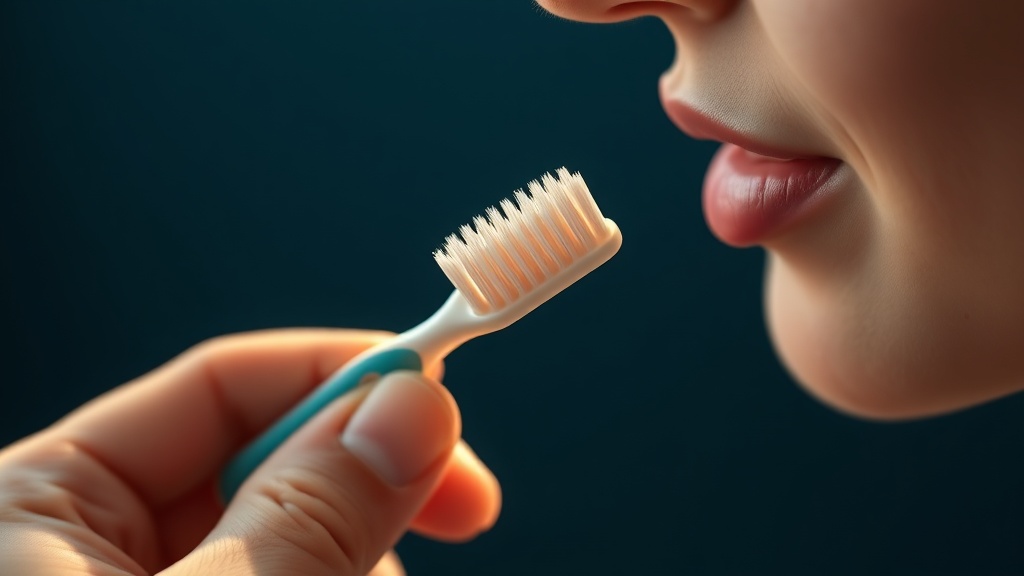
A soft brush at a gentle angle protects the gum; heavy scrubbing is a cause of soreness, not a fix.
Home care calms most sore gums, but book a dental visit if the pain is severe, throbbing or one-sided, if a gum is visibly swollen or the swelling reaches your face, if there is pus, a bad taste, a loose tooth, or a fever, or if soreness lasts longer than one to two weeks despite gentle cleaning. These signs can point to something a toothbrush cannot fix — trapped calculus below the gum, an abscess, or a tooth problem — and only an in-person exam can find the cause. Seeing a dentist early keeps a small, reversible problem from becoming a bigger one.
Frequently asked questions
Sources
- 1.
- 2.
- 3.
- 4.
- 5.
- 6.
- 7.
- 8.
- 9.

Fix your breath at the source.
The complete science-backed protocol — engineered to eliminate volatile sulfur compounds at the biological source.
Start the Breath Protocol →Related reading
Educational purposes only. The content on this page is not medical advice and is not a substitute for consultation with a qualified dental or medical professional.
More from the library
 Guides9 min
Gum Inflammation: How It Works and How to Calm It
The mechanism behind red, swollen, bleeding gums — and the evidence-based ways to settle it.
Read →→ Causes8 min
Itchy Gums: The Causes of That Itch and What Helps
Why gums itch, what the sensation is telling you, and when an itch is worth a dental visit.
Read →→ Guides8 min
How to Stop Receding Gums: What Actually Slows It
You cannot will your gum line back up, but you can often stop it from dropping further. Here is what the evidence supports.
Read →→ Answers8 min
Can Receding Gums Grow Back? The Honest Answer
It is the question everyone with recession asks. The straight answer, and what you can realistically do instead.
Read →→ Guides8 min
Gum Disease Symptoms: The Early Warnings You Can Feel
The symptoms of gum disease you can feel and notice yourself, why bleeding comes first, and when a symptom means see a dentist now.
Read →→ Guides8 min
Periodontal Disease: The Full Spectrum, Explained
A clear, honest overview of periodontal disease as a spectrum: the difference between gingivitis and periodontitis, what the colloquial phrase gum disease misses, and why early bleeding is the signal to act.
Read →→