
What Causes Itchy Gums?
Why gums itch, what the sensation is telling you, and when an itch is worth a dental visit.

- An itchy or tingling gum is most often a low-grade inflammation signal — the earliest whisper of plaque building up at the gum line, before soreness or bleeding sets in.
- The itch has other common triggers too: allergic or irritant reactions (to a food, a toothpaste ingredient, or a denture material), a dry mouth, hormonal changes, or tissue that is healing after dental work.
- Because the itch is usually driven by irritation rather than damage, gentle, consistent cleaning that removes the trigger tends to calm it — often within days to a couple of weeks.
- Resist the urge to scratch or dig at an itchy gum with a fingernail, toothpick or hard brushing; that adds injury to already-irritated tissue and can start the very soreness you are trying to avoid.
- An itch that comes with swelling of the lips or face, hives, trouble breathing, spreading pain, or that simply will not settle deserves prompt professional attention — a severe allergic reaction is a medical emergency.
Itchy gums are usually an early, mild inflammation signal from plaque gathering at the gum line, but allergic reactions, a dry mouth, hormonal shifts and healing tissue can all itch too. Gentle, consistent cleaning that removes the irritant tends to settle it. An itch with facial swelling or trouble breathing needs emergency care.
What an itchy gum is actually telling you
An itch is the body's early-warning sensation — the feeling it uses when tissue is mildly irritated rather than injured. In the mouth, the most frequent reason for that signal is the very start of plaque-related inflammation. Long before a gum becomes visibly red, swollen or prone to bleeding, the immune system is already responding to bacteria gathering at the margin, and that low-grade activity can register as a tingle or itch you cannot quite ignore. In that sense an itchy gum is often gingivitis catching you early — which is genuinely useful, because early inflammation is the reversible kind. The other big source of gum itch is a hypersensitivity or irritant response: histamine released after contact with a food you are mildly allergic to, an ingredient in a toothpaste or mouthwash, or the material of a denture or retainer. Here the itch is a classic allergic-type sensation rather than a plaque problem. Dryness matters too — saliva keeps the gums comfortable and rinsed, so a dry mouth can leave tissue feeling itchy and tight. Reading the context — what is new, what you have eaten or used, whether the whole gum line or one patch is affected — is the fastest way to tell these apart.

An itch is an early irritation signal — often the first hint of plaque at the gum line, before soreness appears.
What the research actually shows
Every claim below maps to a named, peer-reviewed source in the Sources section. According to PubMed.
| Claim | Evidence | Source |
|---|---|---|
| Stopping plaque control triggers gum inflammation within about 2–3 weeks; resuming it returns the gums to baseline — so removing the trigger reverses the early signal. | Experimental-gingivitis model. | Wellappuli et al., 2017 |
| Gingival inflammation is the most prevalent sign of gum trouble worldwide — early irritation of the gums is very common, not unusual. | Global periodontal-health review. | Petersen & Ogawa, 2012 |
| Powered brushing reduced plaque and gingivitis over the long term versus manual brushing — better plaque removal calms the inflammation that can itch. | Systematic review of trials. | Yaacob et al., 2014 (Cochrane) |
| Cleaning between the teeth adds to gum-health improvement that brushing alone misses. | Interdental-device review. | Worthington et al., 2019 (Cochrane) |
| An alcohol-free essential-oil rinse cut gingival inflammation about 24% over six months as an add-on to brushing. | 6-month randomized trial. | Cortelli et al., 2013 |
Common causes of itchy gums, compared
| Likely cause | Tell-tale clue | Reversible at home? |
|---|---|---|
| Early plaque-related inflammation | Itch along the whole gum line, worse when cleaning is skipped | Yes — with consistent gentle cleaning |
| Allergic / irritant reaction | Itch soon after a food, new toothpaste, rinse or appliance | Yes — identify and avoid the trigger |
| Dry mouth | Itchy, tight, parched feeling, worse on waking | Yes — hydrate and protect saliva |
| Hormonal change | Itch that tracks a cycle, pregnancy or menopause | Often eases; extra hygiene helps |
| Healing after dental work | Itch at a specific treated site as tissue knits | Usually settles as it heals |
| Severe allergic reaction | Itch with lip/face swelling or breathing trouble | No — seek emergency care now |
Itch, allergy and the line to watch
Most gum itches are harmless and self-limiting, but it helps to know which direction a given itch is pointing. When the itch spreads along the whole gum line and eases as your cleaning improves, it is almost always the plaque-inflammation story, and the fix is mechanical: better, gentler plaque removal so the tissue stops being provoked. When the itch appears quickly after contact with something — a particular fruit, a new whitening toothpaste, a mouthwash, or the acrylic of a fresh denture — it behaves like an allergy or irritant response, and the fix is to identify and remove the culprit rather than to clean harder. The important safety line is the difference between an ordinary local itch and a systemic allergic reaction. An itch that arrives with swelling of the lips, tongue or face, with hives, or with any tightness in the throat or difficulty breathing is not a dental-hygiene issue at all — it is a potential anaphylactic reaction and a medical emergency. Short of that, an itch that lingers for weeks, keeps returning to one spot, or comes with growing redness, soreness or bleeding is worth a dental visit, because a professional can tell early gingivitis, an allergy, and something needing treatment apart far better than guesswork can.
Evidence you can act on.
Occasional emails — new research, new protocols, no noise.
How to settle itchy gums
These steps calm the irritation behind most gum itches — they are comfort and prevention, not treatment of a disease. If an itch will not settle, or ever comes with facial swelling or breathing trouble, skip to professional care immediately.
- 1
Clean gently and consistently along the gum line
2 minutes, twice dailyIf the itch is early plaque inflammation, thorough but gentle brushing with a soft brush is the direct answer — it removes the bacteria provoking the tissue. Do not scrub harder to scratch the itch; light, consistent technique settles the gum far better.
- 2
Clean between the teeth daily
about 1 minute dailyPlaque tucked between the teeth is a common source of a nagging gum itch a brush never reaches. Floss or an interdental brush clears it and adds gum-health benefit that brushing alone cannot.
- 3
Hunt for a trigger you can remove
a few days of observationIf the itch started after a new toothpaste, mouthwash, food or dental appliance, pause or switch it and see whether the itch fades. An irritant or mild-allergy itch resolves when the source goes, not when you clean more.
- 4
Rehydrate and soothe
ongoingSip water through the day, especially after coffee or alcohol, to keep the gums moist and rinsed; a dry mouth itches. A warm salt-water rinse can soothe irritated tissue and keep the area clean while it recovers.
- 5
Do not scratch or dig
—Fingernails, toothpicks and hard-bristled brushes turn an itch into a sore. Keep tools soft and gentle, and let the irritation calm rather than picking at it.
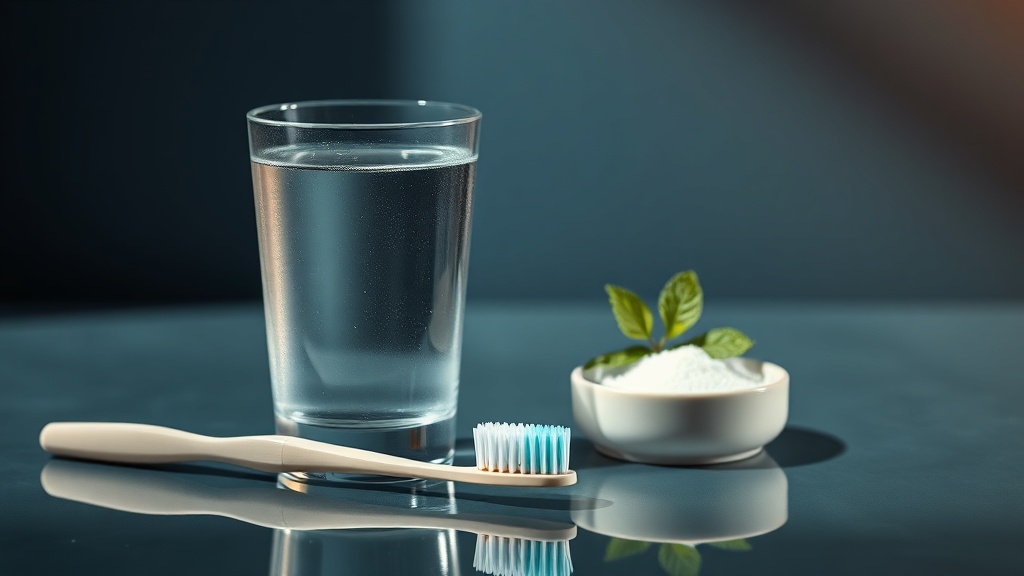
Hydration, gentle cleaning and removing an irritant settle most gum itches without any harsh scratching.
An itchy gum with swelling of the lips, tongue or face, hives, or any tightness in the throat or difficulty breathing is a possible severe allergic reaction — treat it as an emergency and seek immediate medical help. Short of that, see a dentist if the itch lingers beyond a couple of weeks, keeps returning to the same spot, or comes with growing redness, soreness, bleeding or a bad taste. A professional can distinguish early gingivitis, an allergy and a problem needing treatment, and can remove any hardened deposits a toothbrush cannot reach.
Frequently asked questions
Sources
- 1.
- 2.
- 3.
- 4.
- 5.
- 6.
- 7.

Fix your breath at the source.
The complete science-backed protocol — engineered to eliminate volatile sulfur compounds at the biological source.
Start the Breath Protocol →Related reading
Educational purposes only. The content on this page is not medical advice and is not a substitute for consultation with a qualified dental or medical professional.
More from the library
 Causes8 min
Why Do My Gums Hurt? The Real Causes of Sore Gums
A calm, evidence-based look at what makes gums ache — and when tenderness is a sign to see a dentist.
Read →→ Guides9 min
Gum Inflammation: How It Works and How to Calm It
The mechanism behind red, swollen, bleeding gums — and the evidence-based ways to settle it.
Read →→ Guides8 min
How to Stop Receding Gums: What Actually Slows It
You cannot will your gum line back up, but you can often stop it from dropping further. Here is what the evidence supports.
Read →→ Answers8 min
Can Receding Gums Grow Back? The Honest Answer
It is the question everyone with recession asks. The straight answer, and what you can realistically do instead.
Read →→ Guides8 min
Gum Disease Symptoms: The Early Warnings You Can Feel
The symptoms of gum disease you can feel and notice yourself, why bleeding comes first, and when a symptom means see a dentist now.
Read →→ Guides8 min
Periodontal Disease: The Full Spectrum, Explained
A clear, honest overview of periodontal disease as a spectrum: the difference between gingivitis and periodontitis, what the colloquial phrase gum disease misses, and why early bleeding is the signal to act.
Read →→