What Causes Gum Recession? The Clinical Causes, Grouped
The clinical causes of gum recession, grouped the way dentists think about them — mechanical, inflammatory, and predisposing.
- Clinicians group the causes of gum recession into three buckets: mechanical trauma, inflammatory disease, and predisposing anatomy — and most real cases are a combination of them.
- Mechanical causes (forceful or abrasive brushing, oral habits, piercings) explain the classic cheek-side recession seen on otherwise healthy-looking gums.
- Inflammatory causes (plaque, gingivitis, periodontitis) destroy the attachment from below; the attachment loss of periodontitis is permanent.
- Predisposing factors — a thin gum type, prominent roots, high muscle attachments, and prior orthodontics — decide how little force it takes to trigger recession.
- Knowing which bucket is driving your case determines everything downstream, because the tissue itself does not regenerate without surgery.
Gum recession has three families of causes: mechanical trauma (hard, abrasive brushing and habits), inflammatory gum disease (plaque, gingivitis, periodontitis), and predisposing anatomy (thin gums, prominent roots, past braces). Most cases blend them. Identifying the driver matters because lost gum is only re-covered through surgery.
Mechanical trauma: the abrasion story
The most under-appreciated cause of recession is not bacteria at all — it is friction. Repeated, forceful scrubbing with a stiff brush, often paired with an abrasive toothpaste, mechanically wears down the thin band of gum on the outer surface of the teeth. The tell-tale evidence is in the distribution: across large national surveys, recession is consistently more frequent and more severe on the buccal, cheek-facing surfaces than on the interproximal surfaces between the teeth. An infection would not politely confine itself to the side you brush hardest; a scrubbing habit would. Other mechanical culprits belong to the same family — lip and tongue piercings that rub a specific gum margin, fingernail or object habits, and even a toothbrush angle that hammers one prominent tooth. Because this cause is purely physical, the encouraging news is that it responds immediately to changing the mechanics: a soft brush, a gentle grip, and a non-abrasive paste stop the wear. The discouraging news is the same as for every cause — stopping the abrasion protects what is left but does not rebuild the gum that has already gone.
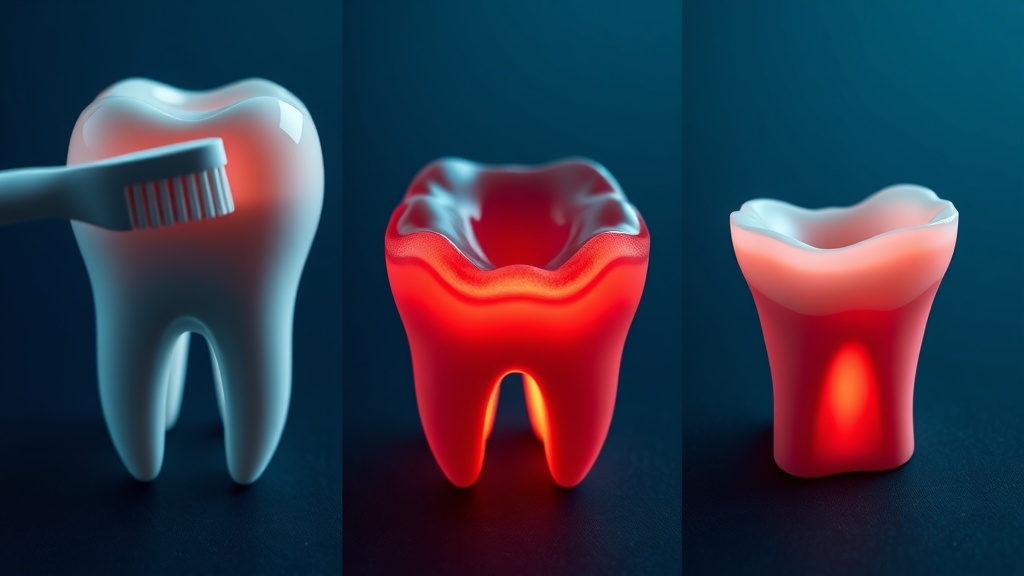
Dentists sort recession into three overlapping families: mechanical wear, inflammatory disease, and the anatomy that predisposes a site.
What the research actually shows
Every claim below maps to a named, peer-reviewed source in the Sources section. According to PubMed.
| Claim | Evidence | Source |
|---|---|---|
| Recession predominates on buccal over interproximal surfaces — the mechanical-abrasion signature. | NHANES III national survey. | Albandar & Kingman, 1999 |
| Modern recession is classified by interproximal attachment loss (Cairo RT1–RT3), which predicts how much root coverage is achievable. | Classification study. | Cairo et al., 2011 |
| Gingivitis is reversible with plaque control; the attachment loss of periodontitis is irreversible. | EFP consensus report. | Chapple et al., 2015 |
| Smoking independently raises recession odds (about OR 1.84) and reduces the gum improvement gained after professional cleaning. | Systematic reviews. | Marschner 2025; Chang 2021 |
| Untreated recession sites progress further apically over years. | 10–27 year split-mouth study. | Agudio et al., 2009 |
The three cause families at a glance
| Cause family | Typical picture | Reversible? |
|---|---|---|
| Mechanical (brushing / abrasion) | Cheek-side recession, healthy pink gums, sensitivity | Stoppable, but the tissue does not self-cover |
| Plaque gingivitis | Red, puffy, bleeding margins | Inflammation reverses; lost tissue does not return |
| Periodontitis | Deep pockets, bone loss, loosening teeth | Arrestable, not reversible |
| Predisposing anatomy | Localised, thin gum or prominent root | Unchangeable; manage the forces on it |
| Iatrogenic (orthodontics, restorations) | Follows the treated tooth or area | Manage the trigger; refer as needed |
Inflammation and anatomy: the attachment story
The second family works from the inside. Plaque left along the gumline provokes inflammation; in its early, reversible stage — gingivitis — the gum is red and swollen but the underlying support is intact, and diligent plaque control returns it to health. If inflammation persists and progresses to periodontitis, the body's response destroys the fibres and bone that anchor the gum, and that attachment loss does not come back. A treated patient is described in the literature as having periodontitis on a reduced periodontium: the disease is controlled, but the lost structure is permanent. Layered over both mechanical and inflammatory causes is the third family — anatomy. Some people simply have a thin gum type, a prominent tooth root sitting near the edge of its bone, or a high muscle attachment that tugs the margin. These traits do not cause recession by themselves, but they lower the threshold, so a modest amount of brushing force or plaque produces recession that a thicker, well-positioned site would shrug off. This is also why dentists classify recession by the attachment between the teeth: that measurement, not the visible gap alone, sets the ceiling on how much of an exposed root can ever be surgically covered.
Evidence you can act on.
Occasional emails — new research, new protocols, no noise.
Addressing each cause
Effective care matches the intervention to the family driving your recession. None of this treats a disease at home — it removes the cause so the recession stops advancing.
- 1
Neutralise mechanical trauma
every brushMove to a soft, end-rounded brush and a low-abrasion paste, and use a gentle angled technique rather than horizontal scrubbing. Remove local irritants such as a rubbing piercing.
- 2
Control the inflammation
daily + periodicThorough daily plaque removal plus professional cleaning addresses the inflammatory family. Where pockets have formed, only professional instrumentation can reach the subgingival deposits a brush cannot.
- 3
Respect the anatomy
ongoingWhere the gum is thin or a root is prominent, use lighter forces and ask a periodontist whether grafting is warranted to thicken or cover the site.
- 4
Remove modifiers
ongoingStopping smoking lowers recession risk and restores more of the healing response after professional therapy.
- 5
Get staged and measured
one visitAsk for the recession depth and the interproximal attachment to be recorded, so your cause is documented and coverage options can be judged accurately.
Dentists classify recession by the attachment measured between the teeth — that number sets the ceiling for how much can be covered.
Because recession usually blends mechanical, inflammatory, and anatomical causes, distinguishing them reliably needs an in-person examination with measurements. See a dentist or periodontist if your recession is progressing, if you have deep pockets, bleeding, or loosening teeth, or if you want a root covered — only surgery can do that. Prompt assessment is especially important when attachment loss is suspected. This article is educational and is not a diagnosis.
Frequently asked questions
Sources
- 1.
- 2.
- 3.
- 4.
- 5.
- 6.
- 7.
- 8.
- 9.
- 10.

Fix your breath at the source.
The complete science-backed protocol — engineered to eliminate volatile sulfur compounds at the biological source.
Start the Breath Protocol →Related reading
Educational purposes only. The content on this page is not medical advice and is not a substitute for consultation with a qualified dental or medical professional.
More from the library
 Causes8 min
What Causes Receding Gums? Everyday Causes
The plain-language guide to what makes gums recede — the daily habits and health factors that quietly drive it.
Read →→ Causes8 min
Why Are My Gums Receding? The Real Causes
A personal walk-through of why gums recede, how to spot which cause is driving yours, and what to do about each one.
Read →→ Guides8 min
Gum Recession Treatment: Every Option, Compared
The right treatment depends on why your gums receded and how far. Here is the full ladder, with what each rung can honestly deliver.
Read →→ Guides8 min
Periodontitis: Stages, Bone Loss, and How It Is Managed
An honest, evidence-based guide to periodontitis: what it does to bone and attachment, how dentists stage and grade it, and why professional care is the non-negotiable core of managing it.
Read →→ Guides8 min
Gum Disease Symptoms: The Early Warnings You Can Feel
The symptoms of gum disease you can feel and notice yourself, why bleeding comes first, and when a symptom means see a dentist now.
Read →→ Answers8 min
Can Receding Gums Grow Back? The Honest Answer
It is the question everyone with recession asks. The straight answer, and what you can realistically do instead.
Read →→