
Why Are My Gums Receding? How to Find the Cause That's Yours
A personal walk-through of why gums recede, how to spot which cause is driving yours, and what to do about each one.

- If your gums are receding, the cause is almost always one — or a mix — of three things: brushing too hard, plaque-driven gum inflammation, or the anatomy you were born with.
- The location is a clue: recession mainly on the smooth, cheek-side surfaces points to mechanical wear, while recession with bleeding, swelling and bad breath points to gum disease.
- Some drivers are firmly in your control — brushing force, plaque, smoking — and changing them is what actually stops the slide.
- Some drivers are not your fault and not your control — thin gum tissue, tooth position, past orthodontics, and simply getting older — and those call for gentler care, not guilt.
- Whatever the cause, the receded tissue itself will not grow back on its own; pinning down your cause matters because it is how you stop losing more.
Gums usually recede for one of three reasons: brushing too hard or with a stiff brush, plaque-related gum disease, or naturally thin gums and crowded teeth. Smoking, grinding, and age make each worse. Pinpointing which one is yours is the key to stopping it — because receded gum does not grow back by itself.
Start with where it is happening
The single most useful thing you can do is look closely in a mirror and notice the pattern, because the location of recession tells you a great deal about its cause. If the gum is pulling back mainly on the outer, cheek-facing surfaces of otherwise pink, firm-looking teeth, and the area is sensitive to cold, that is the classic signature of mechanical wear — too much brushing force, a stiff brush, or an abrasive technique grinding the thin outer gum away. Recession is measurably more common and more severe on these buccal surfaces than between the teeth, which is exactly what you would expect from something physical rubbing the outside rather than an infection working from within. If instead your gums are red, puffy, or bleed when you brush or floss, and the recession comes with bad breath or a bad taste, that points toward plaque-driven inflammation. And if teeth feel loose or you can see deep gaps opening between them, that suggests the deeper, more serious attachment loss of periodontitis. Most people are a blend — but the pattern is where the answer starts.

The pattern of your recession — cheek-side and smooth versus red and bleeding — is the first clue to which cause is driving it.
What the research actually shows
Every claim below maps to a named, peer-reviewed source in the Sources section. According to PubMed.
| Claim | Evidence | Source |
|---|---|---|
| Recession is more common and more severe on the cheek-side surfaces than between the teeth — the signature of mechanical abrasion rather than infection alone. | NHANES III national survey. | Albandar & Kingman, 1999 |
| In young adults, essentially everyone already had some recession, and 42% had a deep 4–8 mm site — the everyday causes act early. | Young-adult cohort. | Seong et al., 2018 |
| Smoking raises the odds of gingival recession (about OR 1.84) and blunts gum healing. | Systematic review. | Marschner et al., 2025 |
| Gingivitis (plaque inflammation) is reversible, but the deeper attachment loss of periodontitis is not. | EFP consensus report. | Chapple et al., 2015 |
| Untreated recession sites drift further apically over the years while the cause stays in place. | 10–27 year split-mouth study. | Agudio et al., 2009 |
Match your signs to a likely cause
| What you notice | Likely driver | First move |
|---|---|---|
| Teeth look longer, cold-sensitive, gums look healthy pink | Brushing trauma / abrasion | Soft brush; ease off the pressure |
| Gums bleed when brushing or flossing, look puffy or red | Plaque gingivitis | Daily gentle plaque control; a dental clean |
| Recession with deep gaps, loose teeth, bad breath | Periodontitis | See a dentist promptly |
| Recession around one crowded or prominent tooth | Tooth position / thin gum | Gentle care; professional assessment |
| Recession plus you smoke or grind | Risk multiplier | Address the habit; consider a nightguard |
The risk factors stacked on top
Even when one main cause is doing the damage, a handful of background factors quietly decide how fast it moves — and several of them are not your fault. Some people are simply born with a thin gum type or with teeth that sit forward in the arch, so their roots are prominent and covered by very little tissue; it takes far less force or plaque to trigger recession there. Past orthodontic treatment can move teeth toward the edge of their bony envelope, thinning the gum over the moved surface. Age plays a role too — recession becomes steadily more common with each decade, though it is never the whole story. Then there are the true multipliers you can influence: smoking measurably raises recession risk and slows the gum's ability to recover, and habitual clenching or grinding loads the gumline in ways that can accelerate wear. None of these regrow lost tissue, and none of them are a reason for guilt. They are simply the dials that determine how gently you need to treat the gums you have — and which levers are actually worth pulling.
Evidence you can act on.
Occasional emails — new research, new protocols, no noise.
How to find and fix your cause
The aim is to identify what is stressing your gums and remove it, so the recession stops advancing. None of this treats a disease — it protects the tissue you still have.
- 1
Do the mirror test
2 minutesNote whether your recession is mostly cheek-side and smooth (a wear pattern) or comes with red, puffy, bleeding margins (an inflammation pattern). This one observation steers everything that follows.
- 2
Audit your brushing
every brushSwitch to soft bristles, hold the brush loosely, and angle it gently toward the gumline rather than scrubbing straight across. In well-instructed, motivated brushers, technique matters more than whether the brush is manual or powered.
- 3
Fix between-teeth plaque, gently
once dailyInterdental brushes or a low-pressure water flosser clear the plaque that keeps a margin inflamed, without the abrasion of aggressive flossing.
- 4
Remove the multipliers
ongoingIf you smoke, a quit plan lowers your recession risk over time; if you grind, ask your dentist about a nightguard. Both take pressure off the gumline.
- 5
Get a professional to confirm it
one visitA dentist or periodontist can measure the recession, check the attachment between your teeth, and tell you definitively whether you are dealing with wear, disease, or both.
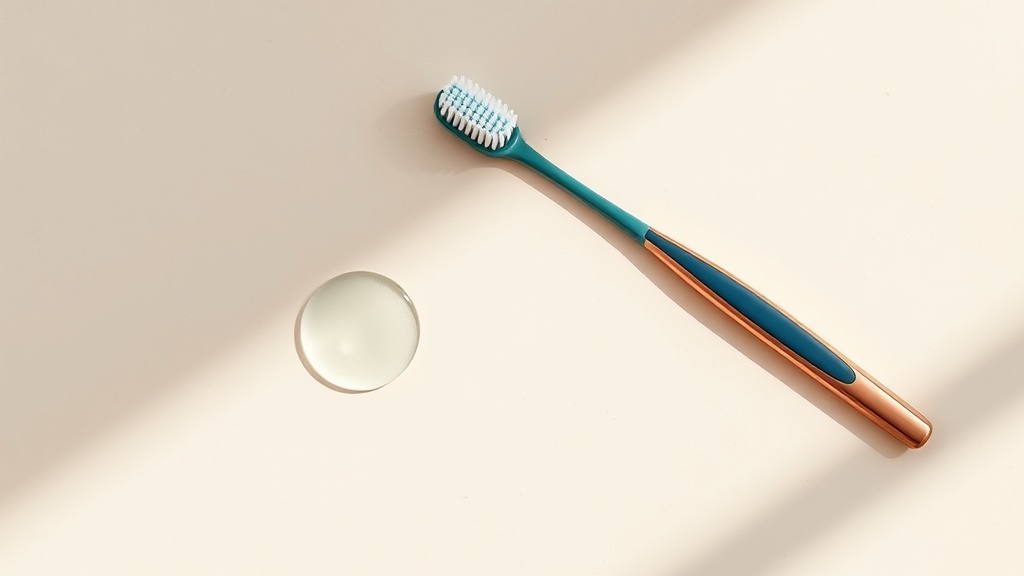
Once you know your pattern, the fix is usually simple tools used gently — a soft brush and daily, careful between-teeth cleaning.
If your gums are receding quickly, bleeding, or accompanied by loosening teeth, deep gaps, or persistent bad breath, book a dental visit soon rather than experimenting at home. Rapid change in particular deserves prompt in-person assessment. A dentist or periodontist can identify your exact cause, measure it, and — if a root is exposed — discuss whether grafting is worthwhile. This article is educational and is not a diagnosis.
Frequently asked questions
Sources
- 1.
- 2.
- 3.
- 4.
- 5.
- 6.
- 7.
- 8.
- 9.

Fix your breath at the source.
The complete science-backed protocol — engineered to eliminate volatile sulfur compounds at the biological source.
Start the Breath Protocol →Related reading
Educational purposes only. The content on this page is not medical advice and is not a substitute for consultation with a qualified dental or medical professional.
More from the library
 Causes8 min
What Causes Gum Recession? A Clinical Look
The clinical causes of gum recession, grouped the way dentists think about them — mechanical, inflammatory, and predisposing.
Read →→ Guides8 min
How to Stop Receding Gums: What Actually Slows It
You cannot will your gum line back up, but you can often stop it from dropping further. Here is what the evidence supports.
Read →→ Guides8 min
Gum Recession Treatment: Every Option, Compared
The right treatment depends on why your gums receded and how far. Here is the full ladder, with what each rung can honestly deliver.
Read →→ Guides8 min
Gum Recession: The Complete, Honest Guide
A clear, evidence-based map of gum recession — what it is, what drives it, and the honest truth about what you can and cannot change at home.
Read →→ Guides8 min
Gum Disease Symptoms: The Early Warnings You Can Feel
The symptoms of gum disease you can feel and notice yourself, why bleeding comes first, and when a symptom means see a dentist now.
Read →→ Answers8 min
Can Receding Gums Grow Back? The Honest Answer
It is the question everyone with recession asks. The straight answer, and what you can realistically do instead.
Read →→