
How to Get Rid of Onion Breath
Why onion breath lingers, the food-first tricks that research supports, and how it compares with its cousin, garlic breath.
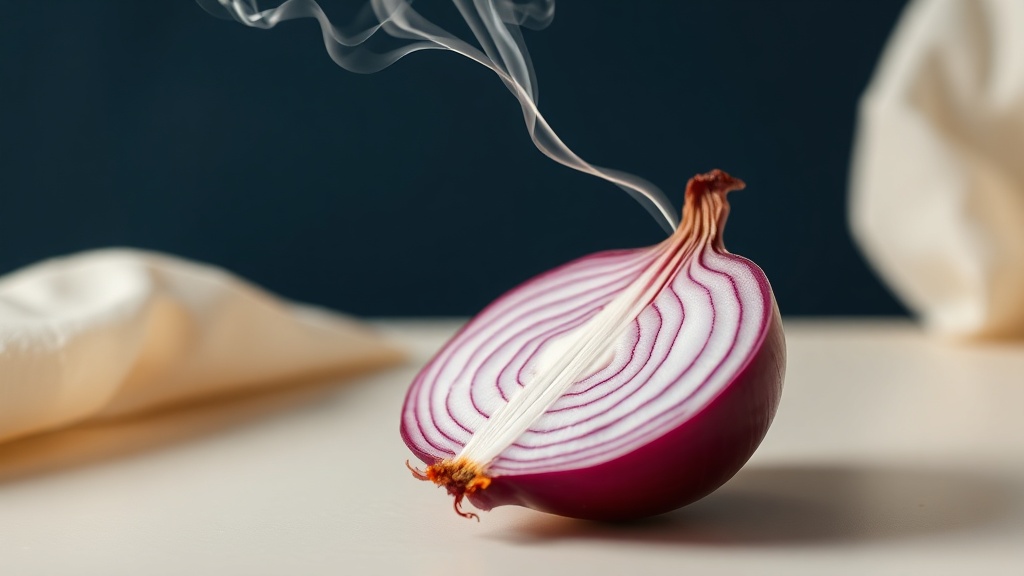
- Onion breath is sulfur chemistry: onions belong to the same allium family as garlic, and chewing them releases pungent sulfur compounds that cling to the mouth and get carried in your breath.
- Because part of the odour is chemical rather than bacterial, brushing helps the mouth but does not erase it - some sulfur compounds are absorbed and released as you breathe out.
- The most effective quick fix is food, not gum: raw apple, mint, parsley, spinach and green tea contain polyphenols shown to neutralise allium sulfur breath compounds, ideally eaten with the onion.
- Onion breath and garlic breath are close cousins, but garlic carries a longer lung-based tail; onion odour tends to lean more on the mouth phase, so good oral care goes a little further with onion.
- This is cosmetic odour control, not a medical issue - onion breath always clears on its own, and the aim is simply to keep your breath fresher in the meantime.
Onion breath comes from pungent sulfur compounds released when you chew onion; some cling to the mouth and some are absorbed and exhaled. Clean your mouth and tongue to handle the mouth phase, and eat deodorising foods like raw apple, mint or green tea to neutralise the compounds. Brushing alone will not fully clear it - but onion fades faster than garlic.
What makes onion breath so persistent
Onions, like garlic, are alliums, and their bite comes from sulfur. When you cut or chew an onion, an enzyme converts stored compounds into a rush of volatile sulfur molecules - the same chemistry that stings your eyes and coats your palate. Two things then happen. Most of the odour sits in the mouth, on the tongue and around the teeth, where it mixes with the sulfur gases your normal mouth bacteria already produce; this is the part good oral care can clear. But some sulfur compounds are small enough to be absorbed into the bloodstream and released through the lungs as you exhale, which is why a strong onion smell can outlast brushing. This lung-based route is best documented for garlic, whose compound AMS lingers on the breath for hours; onion shares the same family chemistry but tends to lean more heavily on the mouth phase, so it usually fades somewhat faster than garlic. The takeaway is the same for both: because part of the odour is chemical and not just bacterial, you cannot simply scrub it away - you have to neutralise the compounds and let the rest clear.

Onion breath is mostly a mouth-phase sulfur odour, with a smaller exhaled component - which is why hygiene helps but does not fully erase it.
What the research actually shows
Every claim below maps to a named, peer-reviewed source in the Sources section. According to PubMed.
| Claim | Evidence | Source |
|---|---|---|
| The large majority of everyday bad breath originates in the mouth, so food odours like onion respond well to mouth-focused care. | Clinical review of halitosis, BMJ. | Scully & Porter, 2008 |
| Raw apple, parsley, spinach, mint and green tea significantly reduce allium (garlic) sulfur breath volatiles, mainly by oxidising their polyphenols - the same food chemistry that helps with onion. | In-vivo breath and headspace study of garlic breath deodorisation. | Munch & Barringer, 2014 |
| For alliums, some sulfur compounds are absorbed and released through the lungs - shown for garlic AMS - which is why food odours can outlast brushing. | Study distinguishing mouth versus gut/lung origin of garlic breath gases. | Suarez et al., 1999 |
| Everyday mouth odour comes from anaerobic bacteria turning proteins into volatile sulfur compounds, the mouth-phase odour that hygiene targets. | Review of the microbiology and treatment of halitosis. | Loesche & Kazor, 2002 |
| Mechanical cleaning and antibacterial measures both reduce oral malodour, though neither reaches odour carried in the blood. | Cochrane review of interventions for halitosis. | Kumbargere Nagraj et al., 2019 |
Onion breath vs garlic breath
| Feature | Onion breath | Garlic breath |
|---|---|---|
| Source family | Allium sulfur compounds | Allium sulfur compounds |
| Main phase | Leans on the mouth phase | Strong mouth phase plus a notable lung tail |
| How long it lingers | Usually shorter | Can persist for many hours (AMS) |
| Does oral care help? | Yes, and it goes a bit further here | Yes, but cannot touch the lung phase |
| Best quick fix | Deodorising foods + tongue cleaning | Deodorising foods; time for the lung phase |
Why food beats a breath mint
A mint changes the smell for a few minutes; it does nothing to the sulfur compounds underneath. What actually works is chemistry. Foods rich in polyphenols and the enzymes that oxidise them - raw apple, mint, parsley, spinach - produce oxidised compounds that bind and break down allium sulfur molecules, in the mouth and as they are processed. In controlled breath testing on garlic, which shares onion chemistry, raw apple, parsley and mint cut sulfur volatiles substantially, while a plain mint sweet did far less. Two practical points follow. First, timing: eat the deodorising food with or right after the onion, while the compounds are still forming, rather than an hour later. Second, keep it raw where you can - raw apple outperformed cooked, because heat disables the enzymes doing the work. Green tea and a squeeze of lemon can help too, through their polyphenols and acidity. Combine that chemistry with tongue cleaning to clear the mouth-phase residue, and onion breath fades quickly - faster than garlic, because onion leans less on the exhaled route. None of this treats a condition; it simply neutralises odour and keeps your breath fresher while the rest clears.
Evidence you can act on.
Occasional emails — new research, new protocols, no noise.
How to actually cut onion breath
Handle both halves: neutralise the sulfur compounds and clear the mouth-phase residue. This is cosmetic odour control, not treatment of any illness.
- 1
Eat a deodorising food with the onion
during or right after the mealThe single best move. Raw apple, fresh mint, parsley, spinach or a cup of green tea carry polyphenols shown to neutralise allium sulfur compounds. Eat them alongside the onion while the compounds are still forming, and favour raw over cooked, since heat disables the helpful enzymes.
- 2
Clean the tongue and teeth
a couple of minutesBrush, floss and gently scrape the tongue to lift the onion residue and the bacterial coating that drives the mouth-phase smell. Because onion leans more on this mouth phase than garlic does, thorough cleaning goes a genuinely useful distance here - just do not expect it to reach the small exhaled component.
- 3
Rinse and keep saliva flowing
ongoingAn alcohol-free rinse freshens and lowers mouth bacteria, and sipping water keeps saliva washing residue away rather than letting it sit. A dry mouth makes any odour read stronger, so hydration is quietly one of the most reliable steps.
- 4
Give any exhaled remainder time
an hour or twoWhatever small amount was absorbed leaves as you breathe out over the next hour or two - shorter than garlic. There is no way to scrub it out early, so for an important moment, time the onion or lean hard on the food step rather than a last-second mint.

Raw apple, mint, parsley and green tea are the evidence-backed foods that chemically blunt allium breath - best eaten with the meal.
Onion breath is temporary and harmless - it clears once your mouth is cleaned and your body finishes exhaling the small absorbed portion, usually within a few hours. The kind of bad breath worth a professional look is the sort that has nothing to do with what you ate: an odour that is constant, returns every day regardless of diet, or comes with red or bleeding gums, a heavily coated tongue, or a lingering bad taste. That points to an oral cause a dentist should assess, rather than a meal you can wait out.
Frequently asked questions
Sources
- 1.
- 2.
- 3.
- 4.
- 5.

Fix your breath at the source.
The complete science-backed protocol — engineered to eliminate volatile sulfur compounds at the biological source.
Start the Breath Protocol →Related reading
Educational purposes only. The content on this page is not medical advice and is not a substitute for consultation with a qualified dental or medical professional.
More from the library
 Causes8 min
How to Get Rid of Garlic Breath: What Actually Works
The reason garlic breath outlasts a toothbrush, and the food-first tricks that research shows actually cut it down.
Read →→ Guides9 min
How to Fix Bad Breath: A Practical, Step-by-Step Action Plan
The practical fix-it plan: four everyday moves — tongue, teeth, hydration, and microbiome — that target where bad breath actually starts.
Read →→ Best Of8 min
The Best Mouthwash for Bad Breath, by Active Ingredient
There is no single winner, only the right rinse for the right job. Here is how the active ingredients compare on the evidence, and which suits everyday fresh breath.
Read →→ Guides8 min
How to Get Rid of Bad Breath Permanently: An Evidence-Based Plan
The honest version: "permanently" means ongoing control, not a one-time fix. Here is the daily routine the research actually supports, and when to get help.
Read →→ Guides7 min
Bad Breath Even After Brushing? The Biological Reason (and Fix)
You brushed, flossed and rinsed — and the smell is still there. The reason usually isn't hygiene; it's where the odour-causing bacteria actually live.
Read →→ Ingredients9 min
Probiotics for Bad Breath: Do Oral Probiotics Actually Work?
Oral probiotics try to fix bad breath at the source, by shifting which bacteria live on your tongue. The idea is promising; the evidence is still early.
Read →→