What Causes Cotton Mouth?
The thick, sticky, cotton-wool feeling of a mouth low on saliva - what turns the flow down, and the honest way to get comfortable again.

- Cotton mouth is the thick, sticky, cotton-wool feeling of a mouth that has run low on saliva - a symptom, not a disease, and usually a temporary one.
- The everyday triggers are simple: not drinking enough, alcohol, cannabis, stress and adrenaline, mouth-breathing, and - most often of all - the side effects of common medications.
- Cannabis earns the nickname honestly: THC acts on cannabinoid receptors on the nerves that switch on your saliva glands, turning the flow down.
- Medications are the single most frequently reported cause of a dry mouth, with dozens of common drugs listed as culprits - which is why a medication review, never stopping a drug on your own, is the sensible first move.
- Most cotton mouth clears once the trigger passes and you rehydrate; a dry mouth that lingers for weeks, or comes with dry eyes, is worth having a dentist or doctor check.
Cotton mouth is short-term dry mouth: your saliva has dropped enough that the mouth feels thick and sticky. The usual causes are dehydration, alcohol, cannabis, stress, mouth-breathing and medication side effects. It is a symptom, not a disease, and it usually eases once you rehydrate and the trigger passes.
What cotton mouth actually is
Cotton mouth is a nickname for the moment your saliva supply falls behind demand. Healthy salivary glands push out a steady film of fluid that coats the tongue, cheeks and teeth; when that film thins, the surfaces start to catch against each other and the whole mouth feels dry, sticky and cotton-like. It helps to be clear about what this is and is not. Cotton mouth is a symptom - a description of how a low-saliva mouth feels - not an illness in its own right, and in most cases it is short-lived. The flow drops because something has temporarily turned it down or dried it out, and it returns once that something passes. The medical word for the sensation is xerostomia, and clinicians deliberately separate the feeling of dryness from a measured drop in saliva, because the two do not always line up - you can feel parched with near-normal flow, especially when stress or attention is involved. What unites every cause below is the same simple arithmetic: either your glands are making less saliva, or your mouth is losing moisture faster than they can replace it.
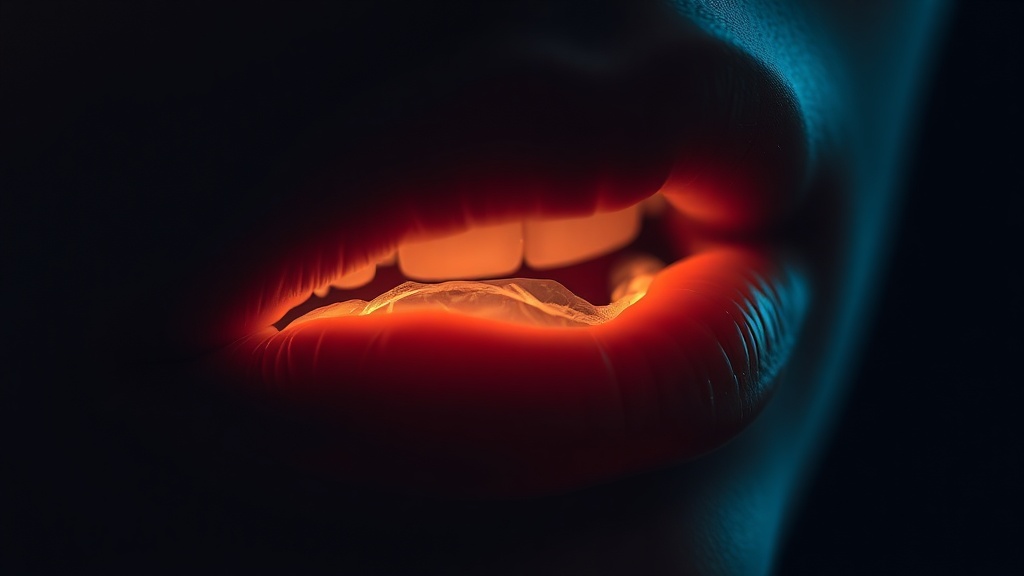
Cotton mouth is what a thinning saliva film feels like - the surfaces of the mouth catch instead of gliding.
What the research actually shows
Every claim below maps to a named, peer-reviewed source in the Sources section. According to PubMed.
| Claim | Evidence | Source |
|---|---|---|
| Medications are the single most frequently reported cause of a dry mouth. | 20-year clinical and scientific literature review of xerostomia. | Guggenheimer & Moore, 2003 |
| At least 56 substances carry higher-level evidence of causing salivary dysfunction or dry mouth, spanning most major drug classes. | World Workshop on Oral Medicine systematic review. | Wolff et al., 2017 |
| THC reduces saliva by acting on CB1 cannabinoid receptors on the nerves that supply the submandibular gland - the mechanism behind cannabis cottonmouth. | Immunohistochemistry plus THC dosing in a controlled model. | Andreis et al., 2022 |
| Daily cannabis use was linked to roughly twice the odds of frequent dry mouth; cigarettes and e-cigarettes raised the odds too. | Nationally representative survey of 29,721 US adults. | Chaffee, 2025 |
| Evaporative water loss from the mouth happens during mouth breathing, and dryness appears when that loss outpaces saliva flow. | Analysis of oral fluid balance and the palatal saliva film. | Dawes, 2004 |
The everyday triggers, side by side
| Trigger | Why it dries your mouth | Usually temporary? |
|---|---|---|
| Dehydration | Less body water means thinner, scarcer saliva | Yes - rehydrate and it returns |
| Alcohol | Acts as a diuretic and, in mouthwashes and spirits, dries the tissue directly | Yes - as it clears your system |
| Cannabis (THC) | Switches down the nerve signal that tells glands to make saliva | Yes - eases as effects wear off |
| Stress and adrenaline | The fight-or-flight response pauses saliva to prioritise other systems | Yes - settles as you calm |
| Mouth-breathing | Air moving over the mouth evaporates the saliva film | Partly - manage the cause of the blocked nose |
| Medications | Many common drugs list dry mouth as a side effect | Often ongoing - review with your prescriber |
Where cotton mouth really comes from
Dehydration is the most obvious driver: saliva is more than 99 percent water, so when the rest of the body is short, the glands have less to work with. That is why cotton mouth so often follows a hot day, a hard workout, a fever, or a night of poor fluid intake. Alcohol pushes the same way from two directions - it is a diuretic that sends water out through the kidneys, and in strong drinks and alcohol-based mouthwashes it also strips moisture from the tissue on contact. Cannabis has earned the nickname cottonmouth for a genuine biological reason: THC plugs into cannabinoid receptors sitting on the nerves that switch your salivary glands on, and the result is a measurable drop in flow rather than a mere feeling. Stress belongs on the list too. When adrenaline takes over, the body treats digestion - and saliva - as non-urgent and quietly pauses it, which is why a dry mouth shows up before a presentation or during a panicky night. Mouth-breathing, whether from a blocked nose, allergies or simply sleeping with the mouth open, dries the film by evaporation. And running underneath all of these is the most common cause of a persistent dry mouth of all: medication. Antidepressants, antihistamines, blood-pressure drugs, bladder medicines and many more list it as a side effect - which is a conversation for your prescriber, never a reason to stop a medicine on your own.
Evidence you can act on.
Occasional emails — new research, new protocols, no noise.
How to ease cotton mouth
None of this treats a disease - it simply helps a low-saliva mouth feel comfortable again while the trigger passes. If dryness is constant, use these alongside a visit to your dentist or doctor.
- 1
Rehydrate steadily, not in gulps
through the daySip water regularly rather than drinking a lot at once. Frequent small sips keep the mouth coated better than an occasional flood, and they rebuild the body-water that thin saliva depends on.
- 2
Ease off the drying inputs
as neededAlcohol, tobacco and heavy caffeine all pull moisture out. Cutting back - and choosing an alcohol-free mouthwash - takes pressure off glands that are already behind.
- 3
Get saliva moving
a few minutesSugar-free gum or a sugar-free lozenge uses the simple act of chewing or sucking to prompt more flow. Where some gland function remains, this is one of the better-supported everyday fixes.
- 4
Breathe through your nose
ongoingIf a blocked nose is pushing you to mouth-breathe, especially at night, treating the congestion at its source cuts the evaporation that dries the film. A bedroom humidifier can help overnight.
- 5
Bring a list of your medicines to your next visit
one appointmentIf dry mouth started with a new prescription, your dentist or doctor can weigh a review, a timing change or an alternative. Never stop or change a prescribed medicine on your own.

Steady sipping and easing off drying inputs is usually enough to settle short-term cotton mouth.
Occasional cotton mouth after a workout, a few drinks or a stressful day is normal and settles on its own. See a dentist or doctor if your mouth stays dry for weeks with no clear trigger, if it comes alongside dry eyes or difficulty swallowing, if you suspect a medication is behind it, or if you are getting more cavities, mouth sores or a burning tongue. Persistent dryness deserves a proper look - it is not something to simply push through, and the underlying cause is worth identifying.
Frequently asked questions
Sources
- 1.
- 2.
- 3.
- 4.
- 5.
- 6.
- 7.
- 8.

Fix your breath at the source.
The complete science-backed protocol — engineered to eliminate volatile sulfur compounds at the biological source.
Start the Breath Protocol →Related reading
Educational purposes only. The content on this page is not medical advice and is not a substitute for consultation with a qualified dental or medical professional.
More from the library
 Guides8 min
What Causes Dry Mouth? The Common Triggers, Explained
Dry mouth almost always has an identifiable trigger, and knowing yours is the first step toward relief.
Read →→ Causes8 min
Adderall Tongue: Why Stimulant Medication Dries Out Your Mouth
The honest science behind the dry, sticky, sometimes sore tongue that so often comes with stimulant medication for ADHD.
Read →→ Causes8 min
Can a CPAP Cause Dry Mouth? Why It Happens and How to Fix It
A dry mouth is one of the most common CPAP complaints, and it almost always has a fixable cause. Here is what is really drying you out overnight, and how to fix it without giving up the therapy that helps you breathe.
Read →→ Answers8 min
Does Dry Mouth Cause Bad Breath?
Low saliva and bad breath are closely linked, and understanding the connection points straight to what helps.
Read →→ Guides8 min
How to Fix Dry Mouth: An Evidence-Based Guide
Dry mouth is usually manageable once you know what is driving it and which supportive habits actually move the needle.
Read →→ Guides8 min
Dry Mouth at Night: Why It Happens and How to Sleep Easier
Nighttime dryness is common because your saliva naturally slows while you sleep, and a few targeted habits can make a real difference.
Read →→