Is Gingivitis Curable? The Honest Answer
Early gingivitis is genuinely reversible - but the cure is a professional cleaning and daily hygiene, not a product, and periodontitis is a different story.
- Early gingivitis is genuinely reversible - one of the few honest yes answers in gum health. When the plaque driving the inflammation is removed, healthy gums can return completely.
- The actual cure is not a product. It is a professional dental cleaning that removes the plaque and hardened calculus you cannot reach at home, followed by consistent daily brushing and cleaning between the teeth.
- In the classic experimental-gingivitis studies, stopping oral hygiene made gums inflame within two to three weeks - and resuming it returned bleeding, redness and swelling to baseline.
- There is a hard limit: once gingivitis progresses to periodontitis and bone or attachment is lost, that damage is not curable - it can only be managed and stabilised.
- Toothpastes and rinses can support gum health by helping reduce plaque, but no over-the-counter product cures gingivitis on its own, and none can substitute for a dentist assessment.
Yes - early gingivitis is reversible. Because it is inflammation driven by plaque rather than permanent tissue damage, removing that plaque lets the gums heal. The genuine cure is a professional cleaning plus consistent daily hygiene, not a single product. Once it advances to periodontitis, however, the damage is managed, not cured.
Why gingivitis can actually reverse
Gingivitis is inflammation, not injury - and that distinction is the whole reason it can be cured. The trigger is dental plaque: a soft, living film of bacteria that settles along the gumline within hours of the last clean. Left there, it irritates the gum margin, which responds with redness, puffiness and the classic sign of bleeding when you brush. Crucially, no gum tissue has been destroyed at this stage; the gums are simply reacting to what is sitting on them. The classic experimental-gingivitis studies proved the point in both directions: when volunteers stopped all oral hygiene, inflammation reliably appeared within two to three weeks, and when they resumed cleaning, every measured sign - bleeding, redness, swelling and plaque scores - returned to baseline. Remove the cause and the effect resolves. That is what curable actually means here: not a magic ingredient, but taking away the plaque, and the hardened deposits it leaves behind, so the tissue can settle back to health.
Early gingivitis is inflammation, not permanent damage - removing the plaque that drives it lets the gum tissue return to health.
What the research actually shows
Every claim below maps to a named, peer-reviewed source in the Sources section. According to PubMed.
| Claim | Evidence | Source |
|---|---|---|
| Gingivitis is an early, reversible stage of gum disease: in the experimental model, every clinical sign that rose during two weeks without brushing returned to baseline once hygiene resumed. | Experimental-gingivitis clinical study. | Wellappuli et al., 2017 |
| Managing gingivitis is framed as the primary prevention of periodontitis - the reversible stage is the window of opportunity. | European Federation of Periodontology consensus report. | Chapple et al., 2015 (EFP consensus) |
| Once periodontitis has caused attachment and bone loss the condition is irreversible; treatment leaves a reduced periodontium that is stabilised, not restored. | 2017 World Workshop consensus classification. | Papapanou et al., 2018 (World Workshop) |
| A professional deep clean reduces pocket depth by about 1.4 mm and closes roughly 74 percent of pockets - the mechanical core of resolving gum inflammation. | Systematic review and meta-analysis. | Suvan et al., 2020 (EFP) |
| Hardened calculus below the gumline rises steeply with pocket depth and cannot be reached by a home toothbrush, which is why professional removal is non-substitutable. | Clinical study of residual subgingival calculus. | Rabbani et al., 1981 |
Curable, or only manageable?
| Stage | Is it curable? | What it takes |
|---|---|---|
| Early gingivitis (inflammation only) | Yes - fully reversible | Plaque removal: a professional cleaning plus daily hygiene |
| Established gingivitis with heavy calculus | Yes, but not at home alone | Professional scaling first, then home maintenance |
| Early periodontitis (attachment loss begins) | No - manageable, not curable | Professional therapy to arrest and stabilise it |
| Advanced periodontitis (bone loss) | No - irreversible damage | Ongoing professional maintenance; surgery in some cases |
Why a product alone cannot cure it
If a rinse or paste could truly cure gingivitis by itself, gum disease would not be the most prevalent inflammatory condition on earth. The honest limit is mechanical: much of the plaque that drives gingivitis, and all of the hardened calculus it mineralises into, sits in places a toothbrush and a swished rinse never reach - between the teeth and, in more advanced cases, below the gumline. Studies of residual calculus show that once deposits harden onto the root surface, the amount left behind climbs steeply with pocket depth, and a home brush simply cannot remove it. This is why the genuine cure always has a professional step. Over-the-counter products still matter: an antiseptic or essential-oil rinse used as a short adjunct can help reduce the plaque load, and a good toothpaste supports daily control. But they work alongside cleaning, not instead of it - and none should be marketed, or believed, as a standalone cure for a disease.
Evidence you can act on.
Occasional emails — new research, new protocols, no noise.
What actually resolves early gingivitis
None of this treats a disease with a product. It is the sequence that removes the plaque and calculus driving the inflammation, then keeps them from returning.
- 1
Start with a professional assessment and cleaning
one visitA dentist or hygienist can confirm it is gingivitis rather than something further along, and remove the hardened calculus you cannot reach at home. This is the step that makes the difference between a stubborn case and a resolved one.
- 2
Brush twice daily for two minutes
twice dailyUse a soft, end-rounded brush and the gentle Bass technique, angling the bristles into the gumline. Twice-daily, two-minute brushing with good technique is the single best-evidenced habit for lowering plaque and gingival inflammation.
- 3
Clean between the teeth every day
dailyA brush only reaches three of the five tooth surfaces. Interdental brushes or floss clear the plaque lodged between teeth where gingivitis so often starts - interdental brushes in particular have the strongest evidence for reducing bleeding.
- 4
Add a short adjunct rinse if advised
a short courseFor a flare, a brief course of an antiseptic or essential-oil rinse can help reduce bacteria as an adjunct. These are support, not a cure, and antiseptic rinses like chlorhexidine are meant for short-term use, not forever.
- 5
Recheck and keep the habit
a few weeks onBecause reversal depends on consistent plaque control, the gains hold only while the routine does. Expect visible improvement within a few weeks, and keep your recall cleanings so it does not quietly return.
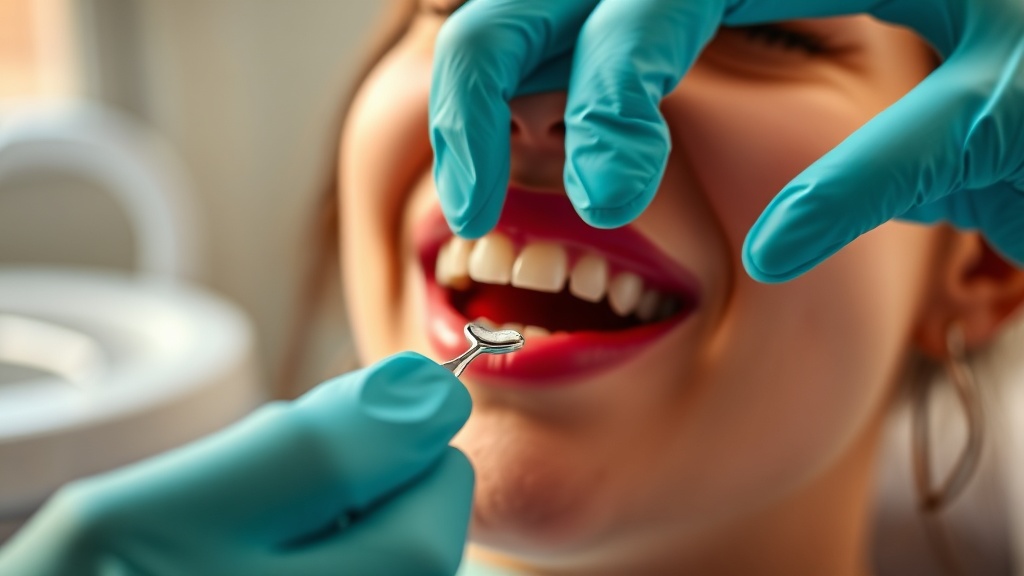
The genuine cure is mechanical: a professional cleaning removes the hardened calculus a home toothbrush cannot reach.
Persistent bleeding, redness, swelling, tenderness or bad breath should be assessed in person. A dentist or hygienist can tell reversible gingivitis apart from early periodontitis - the difference matters enormously - remove calculus you cannot reach, and set a plan. If your gums have receded, feel loose, or you notice a bad taste that will not clear, do not wait: these can signal that the condition has moved past the reversible stage.
Frequently asked questions
Sources
- 1.
- 2.
- 3.
- 4.
- 5.
- 6.
- 7.

Fix your breath at the source.
The complete science-backed protocol — engineered to eliminate volatile sulfur compounds at the biological source.
Start the Breath Protocol →Related reading
Educational purposes only. The content on this page is not medical advice and is not a substitute for consultation with a qualified dental or medical professional.
More from the library
 Comparisons8 min
Gingivitis vs Periodontitis: The Two-Stage Difference
Two stages of the same disease - one reversible, one not. Here is exactly how gingivitis and periodontitis differ, and why the line between them matters so much.
Read →→ Answers8 min
How to Cure Gingivitis: What a Cure Actually Means
Gingivitis can be cured - but the cure is a professional cleaning plus daily hygiene, not a bottle. Here is what a genuine cure looks like, and the myths to ignore.
Read →→ Answers8 min
Can Receding Gums Grow Back? The Honest Answer
It is the question everyone with recession asks. The straight answer, and what you can realistically do instead.
Read →→ Guides8 min
How to Stop Receding Gums: What Actually Slows It
You cannot will your gum line back up, but you can often stop it from dropping further. Here is what the evidence supports.
Read →→ Guides8 min
Gum Disease Symptoms: The Early Warnings You Can Feel
The symptoms of gum disease you can feel and notice yourself, why bleeding comes first, and when a symptom means see a dentist now.
Read →→ Guides8 min
Periodontal Disease: The Full Spectrum, Explained
A clear, honest overview of periodontal disease as a spectrum: the difference between gingivitis and periodontitis, what the colloquial phrase gum disease misses, and why early bleeding is the signal to act.
Read →→