How to Cure Gingivitis: What a Cure Actually Means
Gingivitis can be cured - but the cure is a professional cleaning plus daily hygiene, not a bottle. Here is what a genuine cure looks like, and the myths to ignore.

- Early gingivitis can genuinely be cured, because it is reversible inflammation rather than permanent damage. Remove the cause and the gums heal.
- The cure is a process, not a product: a professional cleaning to remove plaque and hardened calculus, followed by consistent daily brushing and cleaning between the teeth.
- No toothpaste, rinse or natural remedy cures gingivitis on its own. These can support gum health by helping reduce plaque, but the mechanical removal of plaque and calculus is what actually resolves it.
- There is no overnight cure. Bleeding and redness usually settle over about two to three weeks of consistent plaque control, not in hours.
- The word cure has a hard limit: gingivitis can be cured, but once it becomes periodontitis the damage is irreversible and can only be managed.
Yes, early gingivitis can be cured, because it is reversible. But the cure is not a product - it is a professional cleaning that removes plaque and calculus, plus consistent daily hygiene that keeps them off. No rinse or natural remedy cures it alone, and there is no overnight fix. Periodontitis, by contrast, cannot be cured.
What curing gingivitis actually means
When people ask how to cure gingivitis, they often picture a product that makes it disappear. The reality is both simpler and more reassuring. Gingivitis is inflammation driven by dental plaque, and it involves no permanent tissue damage at this stage - the gums are only reacting to what is sitting on them. So the cure is literally the removal of that cause. Take the plaque and hardened calculus away, keep them away, and the inflammation resolves. The experimental studies show gums returning fully to baseline once plaque control resumes. That is what a cure means here: not a special ingredient, but a change of state, from a mouth where plaque accumulates to one where it does not. This also explains why the cure has two halves that cannot be skipped. A professional cleaning removes what you physically cannot, and your daily routine keeps the surfaces clean afterward. Neither alone is a reliable cure; together they are.
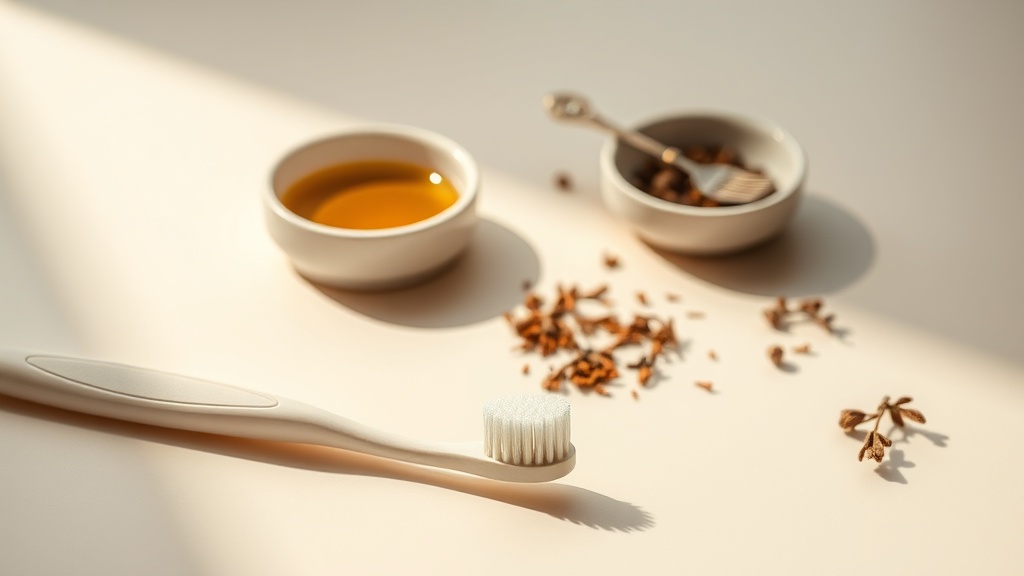
A genuine cure is mechanical: removing plaque and calculus, then keeping them off - not any single product or remedy.
What the research actually shows
Every claim below maps to a named, peer-reviewed source in the Sources section. According to PubMed.
| Claim | Evidence | Source |
|---|---|---|
| Gingivitis is reversible: clinical signs that rose without brushing returned to baseline once plaque control resumed - the basis for a genuine cure. | Experimental-gingivitis clinical study. | Wellappuli et al., 2017 |
| The mechanical core of the cure: professional instrumentation reduces pocket depth by about 1.4 mm and closes roughly 74 percent of pockets. | Systematic review and meta-analysis. | Suvan et al., 2020 (EFP) |
| A home routine cannot remove calculus: residual hardened deposits rise steeply with pocket depth, beyond the reach of a toothbrush. | Clinical study of residual subgingival calculus. | Rabbani et al., 1981 |
| Products and adjuncts add only about 0.2 to 0.6 mm beyond a proper cleaning - no adjunct is a standalone cure. | Systematic review and meta-analysis. | Smiley et al., 2015 (ADA) |
| Oil pulling may be recommended only as an adjuvant to mechanical cleaning and produced no significant change in the gingival index - it is not a cure. | Clinical review of oil pulling. | Zurcher et al., 2025 |
What curing gingivitis really means
| The claim | The reality |
|---|---|
| A rinse or paste cures gingivitis | No product cures it; they help reduce plaque as support |
| Natural remedies cure gingivitis | Oil pulling and similar are adjuncts at best, not cures |
| You can cure gingivitis overnight | Bleeding typically settles over two to three weeks, not hours |
| A professional cleaning plus daily hygiene cures it | Yes - this is what a genuine cure looks like |
| Gingivitis and periodontitis can both be cured | No - periodontitis is irreversible and can only be managed |
The myths that promise a cure
The gingivitis market is crowded with promises, and the honest ones are quieter than the loud ones. Natural remedies are the most common: oil pulling, herbal rinses, salt water. The best evidence puts these in a clear place - oil pulling, for example, is at most an adjuvant to mechanical cleaning and did not significantly change gingival inflammation in review. They are not cures, and leaning on them while skipping a cleaning is exactly how a reversible problem gets time to progress. The overnight promise is another myth: because the cure depends on removing plaque and letting tissue settle, it follows the biology, which takes days to a few weeks, not hours. And the strongest antiseptic you can buy, chlorhexidine, is meant for short courses because of staining - powerful, but not a permanent cure you swish forever. None of this means products are useless. It means their honest role is support: helping reduce plaque alongside the routine and the professional cleaning that do the actual curing.
Evidence you can act on.
Occasional emails — new research, new protocols, no noise.
What actually cures it
A cure is a sequence, not a purchase. Each step either removes the cause or keeps it from returning - which is all curing gingivitis really is.
- 1
Understand what you are curing
-Gingivitis is plaque-caused inflammation with no lasting damage yet. Knowing that reframes the goal: you are not treating a wound, you are removing a cause. That is why removal, not a remedy, is the cure.
- 2
Remove what you cannot reach
one visitSee a dentist or hygienist for a cleaning that clears the hardened calculus a toothbrush cannot. For anyone with more than the mildest case, this professional step is the part of the cure that home effort cannot replicate.
- 3
Remove what you can, every day
twice dailyTwice-daily two-minute brushing with the Bass technique plus daily cleaning between the teeth keeps plaque from rebuilding. This is the half of the cure that only you can do, and it is what makes it last.
- 4
Use products for what they are
as neededAn alcohol-free essential-oil or short-course antiseptic rinse can support the cure by helping reduce plaque. Use them as helpers during a flare - never as the cure itself, and never in place of cleaning between the teeth.
- 5
Know the limit
-If the condition has advanced to periodontitis, cure is the wrong word - the lost attachment and bone are not recoverable, and the goal shifts to managing and stabilising. A dentist can tell you which side of that line you are on.
There is no overnight cure - inflammation settles over about two to three weeks of consistent plaque control.
Because a genuine cure usually needs a professional cleaning, and because only a dentist can tell reversible gingivitis from irreversible periodontitis, an in-person assessment is the right first move. See a dentist promptly if your gums bleed persistently, look red or swollen, have receded, or if a bad taste or loose teeth appear - these can signal that the condition has moved past the curable stage.
Frequently asked questions
Sources
- 1.
- 2.
- 3.
- 4.
- 5.
- 6.

Fix your breath at the source.
The complete science-backed protocol — engineered to eliminate volatile sulfur compounds at the biological source.
Start the Breath Protocol →Related reading
Educational purposes only. The content on this page is not medical advice and is not a substitute for consultation with a qualified dental or medical professional.
More from the library
 Answers8 min
Is Gingivitis Curable? The Honest Answer
Early gingivitis is genuinely reversible - but the cure is a professional cleaning and daily hygiene, not a product, and periodontitis is a different story.
Read →→ Answers8 min
How to Treat Gingivitis: The Full Professional and Home Path
The complete treatment pathway for gingivitis - what the dentist does, what you do at home, and the risk factors that decide whether it holds.
Read →→ Guides8 min
How to Stop Receding Gums: What Actually Slows It
You cannot will your gum line back up, but you can often stop it from dropping further. Here is what the evidence supports.
Read →→ Answers8 min
Can Receding Gums Grow Back? The Honest Answer
It is the question everyone with recession asks. The straight answer, and what you can realistically do instead.
Read →→ Guides8 min
Gum Disease Symptoms: The Early Warnings You Can Feel
The symptoms of gum disease you can feel and notice yourself, why bleeding comes first, and when a symptom means see a dentist now.
Read →→ Guides8 min
Periodontal Disease: The Full Spectrum, Explained
A clear, honest overview of periodontal disease as a spectrum: the difference between gingivitis and periodontitis, what the colloquial phrase gum disease misses, and why early bleeding is the signal to act.
Read →→