
How to Treat Gingivitis: The Full Professional and Home Path
The complete treatment pathway for gingivitis - what the dentist does, what you do at home, and the risk factors that decide whether it holds.

- Treating gingivitis is a pathway, not a single act: professional cleaning, daily home care, risk-factor changes and maintenance all work together.
- The professional step is non-negotiable when calculus is present. Scaling removes the hardened deposits a toothbrush cannot reach and is the mechanical core of treatment.
- Your daily routine is what makes the treatment hold. Twice-daily brushing and daily cleaning between the teeth keep the surfaces clean between professional visits.
- Adjuncts - antiseptic rinses, essential-oil rinses, probiotics - add only a modest amount on top of cleaning and good hygiene. They support the treatment; they are not the treatment.
- Risk factors decide the outcome. Smoking in particular nearly doubles gum-disease risk and blunts how well treatment works, so addressing it is part of the plan.
Gingivitis is treated by removing the plaque and calculus that cause it, then keeping them off. That means a professional cleaning, a consistent daily home routine of brushing and interdental cleaning, addressing risk factors like smoking, and regular maintenance visits. Adjunct rinses help modestly but do not replace the core steps.
What treating gingivitis actually targets
Effective treatment aims at three things at once: the soft plaque along the gumline, the hardened calculus it turns into, and the conditions in your mouth and body that let it flare. The plaque is handled by your daily routine; the calculus, which cements onto teeth and cannot be brushed away, is handled by a professional scaling. Together these remove the physical cause, and because gingivitis is reversible inflammation rather than lasting damage, the gums settle once the cause is gone. The third target is the reason two people with the same cleaning can get different results: host and lifestyle factors. Smoking, poorly controlled diabetes and inconsistent hygiene all tilt the gums toward inflammation. This is why professional guidance frames managing gingivitis as the primary prevention of periodontitis - treat it thoroughly at the reversible stage and you close the door on the irreversible one. Treatment, in other words, is not one procedure but a coordinated removal of cause plus a change in the conditions that invited it.
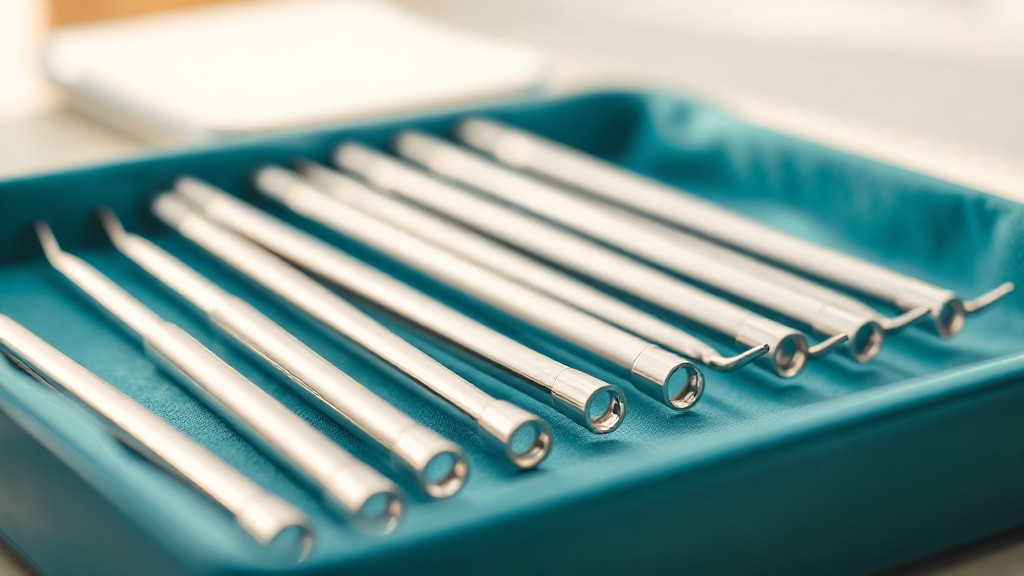
Scaling removes the hardened calculus a home routine cannot - the mechanical core of treating gingivitis.
What the research actually shows
Every claim below maps to a named, peer-reviewed source in the Sources section. According to PubMed.
| Claim | Evidence | Source |
|---|---|---|
| Professional subgingival instrumentation reduces pocket depth by about 1.4 mm and closes roughly 74 percent of pockets - the mechanical core of treatment. | Systematic review and meta-analysis. | Suvan et al., 2020 (EFP) |
| Scaling and root planing yields about 0.5 mm attachment gain; adjuncts such as antibiotics, local antimicrobials and probiotics add only about 0.2 to 0.6 mm on top. | Systematic review and meta-analysis. | Smiley et al., 2015 (ADA) |
| Chlorhexidine produces a large reduction in plaque as a short-course antiseptic, but causes tooth staining that makes it unsuitable for daily long-term use. | Cochrane systematic review. | James et al., 2017 (Cochrane) |
| Managing gingivitis is framed as the primary prevention of periodontitis - thorough treatment at the reversible stage prevents the irreversible one. | European Federation of Periodontology consensus. | Chapple et al., 2015 (EFP consensus) |
| Smoking nearly doubles the risk of gum disease progression (relative risk 1.85), which is why addressing it is part of treatment. | Prospective meta-analysis. | Leite et al., 2018 |
The treatment pathway at a glance
| Step | What it addresses | Who does it |
|---|---|---|
| Assessment and diagnosis | Confirms gingivitis versus periodontitis | Dentist |
| Professional cleaning (scaling) | Removes plaque and calculus you cannot reach | Dentist or hygienist |
| Daily home hygiene | Keeps surfaces clean between visits | You |
| Risk-factor changes (e.g. smoking) | Lowers the drivers of inflammation | You, with support |
| Maintenance recall | Catches any recurrence early | Dentist and you |
Why adjuncts help a little, not a lot
It is tempting to think a strong rinse or a probiotic is the real treatment. The evidence says otherwise, and being honest about it protects you. Across careful reviews, adjuncts added to a proper cleaning - antiseptics, local antimicrobials, probiotics - contribute only around a fifth to just over half a millimetre of extra benefit on top of the mechanical work. Chlorhexidine is the most powerful antiseptic available over the counter and it still comes with a catch: it stains teeth with prolonged use, so it is meant for short courses, not daily forever. Essential-oil rinses and probiotics have their place as helpers, but none removes calculus or substitutes for cleaning between the teeth. The practical takeaway is to spend your effort where the leverage is: get the professional cleaning done, master the daily routine, and address your biggest risk factor. Use an adjunct to nudge things along during a flare - not as the plan itself. Chasing a product while skipping the core is the most common reason treatment quietly fails.
Evidence you can act on.
Occasional emails — new research, new protocols, no noise.
The full treatment path, step by step
This is the complete pathway a dentist would recognise. Each step removes cause or changes the conditions that invite it - none of it is a product that treats disease on its own.
- 1
Get a proper diagnosis
one visitA dentist confirms whether this is reversible gingivitis or early periodontitis, because the two need different plans. This step alone prevents a lot of wasted effort and false reassurance.
- 2
Have the professional cleaning done
one to two visitsScaling removes the plaque and hardened calculus above and, where needed, just below the gumline. This is the mechanical core - the part your home routine physically cannot do.
- 3
Build and hold the daily home routine
ongoingTwice-daily two-minute brushing with the Bass technique plus daily cleaning between the teeth. This is what keeps the surfaces clean between visits and makes the professional work last.
- 4
Address your biggest risk factor
ongoingFor many people that is smoking, which nearly doubles risk and blunts healing; for others it is glycemic control in diabetes. Changing this is genuinely part of treatment, not an afterthought, and support from your dentist or doctor helps.
- 5
Keep a maintenance schedule
every 6 months or as advisedRegular recall cleanings catch recurrence early and keep calculus from rebuilding. Gingivitis returns whenever plaque is left to accumulate, so maintenance is what turns a one-time fix into a lasting result.
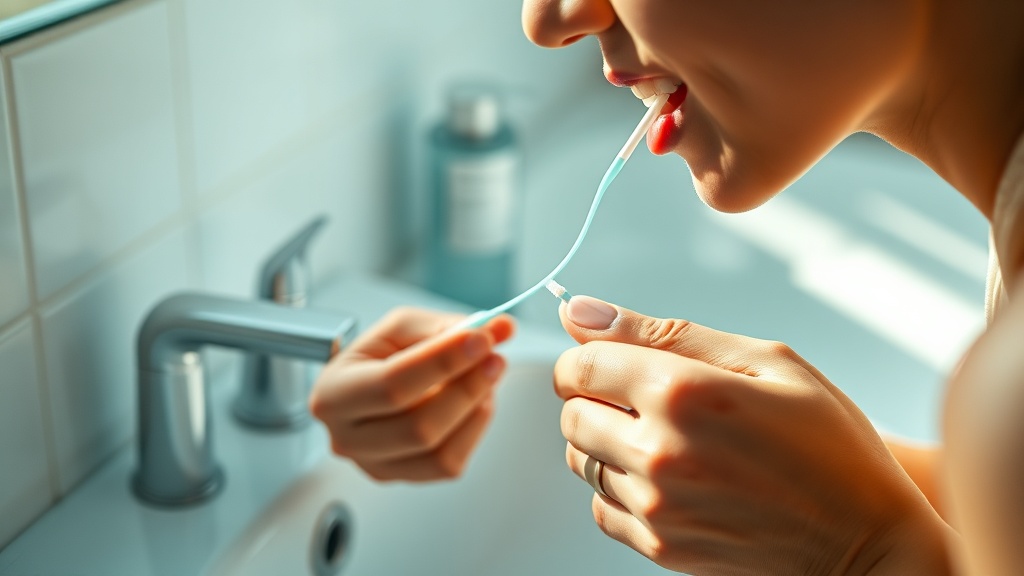
The professional cleaning resets the surfaces; a consistent daily routine is what makes the treatment hold.
Treatment should always start with a dentist or hygienist. They diagnose whether it is reversible gingivitis or early periodontitis, remove the calculus you cannot reach, and tailor a plan to your risk factors. If your gums bleed persistently, feel tender, have receded, or if teeth feel loose, book an assessment promptly rather than treating blind at home - the right plan depends on the right diagnosis.
Frequently asked questions
Sources
- 1.
- 2.
- 3.
- 4.
- 5.
- 6.

Fix your breath at the source.
The complete science-backed protocol — engineered to eliminate volatile sulfur compounds at the biological source.
Start the Breath Protocol →Related reading
Educational purposes only. The content on this page is not medical advice and is not a substitute for consultation with a qualified dental or medical professional.
More from the library
 Answers8 min
How to Get Rid of Gingivitis: A Fast, Practical Routine
The fast, practical routine that clears the plaque driving gingivitis - and roughly how long it takes for the bleeding to stop.
Read →→ Comparisons8 min
Gingivitis vs Periodontitis: The Two-Stage Difference
Two stages of the same disease - one reversible, one not. Here is exactly how gingivitis and periodontitis differ, and why the line between them matters so much.
Read →→ Guides8 min
Gum Recession Treatment: Every Option, Compared
The right treatment depends on why your gums receded and how far. Here is the full ladder, with what each rung can honestly deliver.
Read →→ Answers8 min
Can Receding Gums Grow Back? The Honest Answer
It is the question everyone with recession asks. The straight answer, and what you can realistically do instead.
Read →→ Guides8 min
Gum Disease Symptoms: The Early Warnings You Can Feel
The symptoms of gum disease you can feel and notice yourself, why bleeding comes first, and when a symptom means see a dentist now.
Read →→ Guides8 min
Periodontal Disease: The Full Spectrum, Explained
A clear, honest overview of periodontal disease as a spectrum: the difference between gingivitis and periodontitis, what the colloquial phrase gum disease misses, and why early bleeding is the signal to act.
Read →→