How to Get Rid of Dry Mouth
The practical, evidence-based steps that ease a dry mouth - and an honest note on where relief ends and a professional begins.

- You cannot always cure dry mouth - but you can almost always make it far more comfortable, and the steps that help most are simple and cheap.
- Start with water, sugar-free gum and cutting the drying inputs (alcohol, tobacco, heavy caffeine); these are the best-supported everyday moves.
- For lasting relief, saliva sprays and gels, an overnight adhering disc, and a bedroom humidifier all help - though the evidence says relief is partial, not total.
- Because a dry mouth strips away saliva protection, protect your teeth with a high-fluoride toothpaste and regular dental visits.
- If a medication is the cause, or dryness lasts for weeks, see your dentist or doctor - the answer may be a medication review, never stopping a drug on your own.
You get rid of dry mouth by keeping the mouth moist and treating the cause: sip water often, chew sugar-free gum, cut alcohol and tobacco, use a saliva spray or gel, and run a humidifier at night. Relief is usually partial rather than a full cure, so protect your teeth and see a professional if it lasts.
The honest starting point
Here is the truth most quick-fix lists skip: whether you can truly get rid of dry mouth depends on why it is happening. If the cause is passing - a hot day, a few drinks, a stressful stretch - it clears once you rehydrate. If the cause is ongoing, such as a medication you need or an autoimmune condition, the realistic goal is not a cure but excellent comfort: keeping the mouth moist, protecting the teeth that lose saliva protection, and easing the symptom day to day. That distinction matters because the research on dry-mouth products is honest to a fault. A major review of topical treatments found no single product reliably eliminates dry mouth; the best performers give partial relief - roughly a couple of points of improvement on a ten-point dryness scale. That is not a reason to give up. It is a reason to stack several simple, well-tolerated steps rather than chase one miracle. The steps below are ordered from the cheapest and best-supported to the more targeted, and every one is about comfort and protection, never treating a disease.
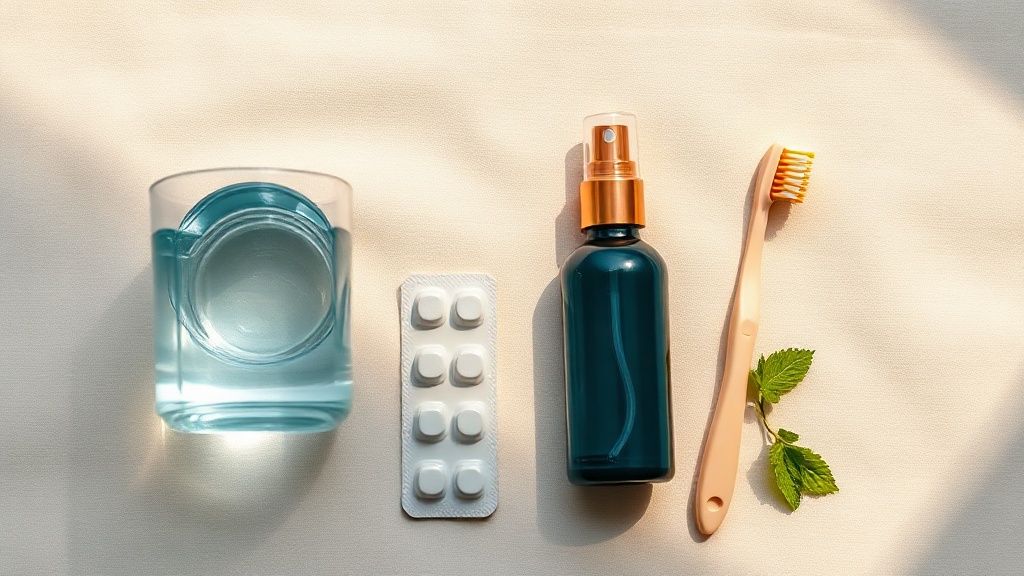
Most relief comes from stacking simple, well-tolerated steps rather than chasing a single cure.
What the research actually shows
Every claim below maps to a named, peer-reviewed source in the Sources section. According to PubMed.
| Claim | Evidence | Source |
|---|---|---|
| No topical therapy reliably eliminates dry mouth; the best-supported signal, an oxygenated glycerol spray, gave about a 2-point gain on a 10-point dryness scale. | Cochrane review of 36 randomised trials (1,597 participants). | Furness et al., 2011 |
| Chewing sugar-free gum significantly raised unstimulated saliva flow in elderly and medically compromised people. | Systematic review and meta-analysis (SMD 0.44). | Dodds et al., 2023 |
| Moisturising gels and an edible jelly significantly improved dry-mouth and swallowing comfort. | Randomised trial after radiotherapy (n=62). | Nuchit et al., 2019 |
| An overnight xylitol adhering disc raised perceived night-time wetness more than threefold and improved morning discomfort. | Small uncontrolled pilot (n=15) - promising, not proof. | Burgess & Lee, 2011 |
| Overnight heated humidification significantly reduced night-time and early-morning oral dryness. | Controlled pilot in dry-mouth patients. | Hay & Morton, 2006 |
What helps, and how much
| Step | What it does | How strong is the evidence? |
|---|---|---|
| Sip water often | Coats the mouth and rebuilds body-water saliva is made from | Foundational, low-cost |
| Sugar-free gum or lozenge | Chewing and sucking prompt more flow where glands still work | Moderate - a real flow gain |
| Saliva spray or gel | Adds a moisture layer when your own saliva is short | Moderate - partial relief |
| Overnight adhering disc | Slow-release comfort through the night | Weak but promising pilot |
| Bedroom humidifier | Reduces evaporation while you sleep | Moderate for night dryness |
| High-fluoride toothpaste | Protects teeth that have lost saliva defence | Recommended protection |
When getting rid of it means fixing the cause
The single most effective move is often not a product at all - it is addressing why the mouth is dry. Medications are the most common ongoing cause, so if dryness began with a new prescription, the highest-value step is a medication review with the person who prescribed it. They may adjust a dose, change the timing, or offer an alternative. This is squarely a clinician decision: never stop or change a prescribed medicine on your own. If a blocked nose has you breathing through your mouth, especially overnight, treating the congestion cuts the evaporation that dries the film. If you are simply not drinking enough, or alcohol and tobacco are pulling moisture out, those are direct levers you control. And it is worth being honest about the harder cases. When dry mouth comes from Sjogren syndrome or from radiation to the head and neck, home steps genuinely help comfort but will not restore full flow, and these situations need medical management - sometimes including prescription saliva stimulants that a doctor oversees. Knowing which situation you are in is what turns scattered effort into a plan that actually works.
Evidence you can act on.
Occasional emails — new research, new protocols, no noise.
Your step-by-step relief routine
Work down this list - the earlier steps are cheapest and best-supported. All of it is about comfort and protecting your teeth, not treating a disease.
- 1
Keep water within reach and sip all day
ongoingFrequent small sips beat occasional big drinks for keeping the mouth coated. Keep a bottle on your desk and by the bed, and take a mouthful whenever it feels sticky.
- 2
Chew sugar-free gum or suck a lozenge
as neededThe act of chewing or sucking is what drives flow, so choose sugar-free (xylitol-sweetened is tooth-friendly). This is one of the better-evidenced everyday boosts where some gland function remains.
- 3
Add a saliva spray or gel for coverage
as neededWhen your own saliva is short, a spray or gel lays down a moisture layer. Gels are especially useful before bed because they cling longer than a rinse.
- 4
Fix the night with a humidifier and nasal breathing
overnightA bedroom humidifier and clearing a blocked nose reduce overnight evaporation - the reason so many people wake up parched. An overnight adhering disc can add slow-release comfort.
- 5
Cut the drying inputs
ongoingEase off alcohol, tobacco and heavy caffeine, and switch to an alcohol-free mouthwash. Each one you reduce takes load off glands that are already behind.
- 6
Protect your teeth and book a check-up
twice daily plus regular visitsA dry mouth loses saliva protection, so use a high-fluoride toothpaste and keep up dental visits. If dryness lasts for weeks or a medicine is the cause, let a professional guide the next step.
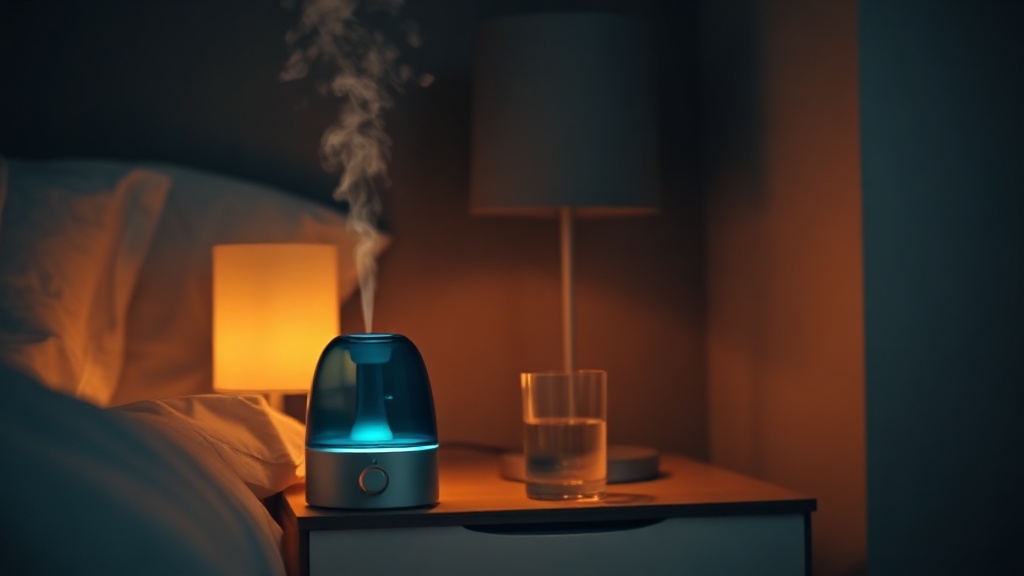
Night-time is where dryness bites hardest - a humidifier and nasal breathing cut overnight evaporation.
Home steps are the right first move, but see a dentist or doctor if your mouth stays dry for more than a couple of weeks, if you think a medication is behind it, if you also have dry eyes or trouble swallowing, or if you are noticing more cavities, mouth sores or a burning tongue. A professional can identify the cause, review any medicines, and - where appropriate - discuss prescription options. Severe dryness from an autoimmune condition or past radiation should always be managed with medical support, not self-care alone.
Frequently asked questions
Sources
- 1.
- 2.
- 3.
- 4.
- 5.
- 6.
- 7.
- 8.

Fix your breath at the source.
The complete science-backed protocol — engineered to eliminate volatile sulfur compounds at the biological source.
Start the Breath Protocol →Related reading
Educational purposes only. The content on this page is not medical advice and is not a substitute for consultation with a qualified dental or medical professional.
More from the library
 Best Of8 min
Best Mouthwash for Dry Mouth: What to Look For
The best dry-mouth rinse is the one that soothes without drying, and the label tells you more than the marketing.
Read →→ Best Of8 min
Best Dry Mouth Sprays: What the Evidence Actually Shows
The honest, evidence-led guide to choosing a dry mouth spray that genuinely eases the dry feeling.
Read →→ Ingredients8 min
Sugar-Free Gum for Dry Mouth: What the Evidence Says
It is not the flavour and it is not magic, it is the chewing. Here is why sugar-free gum is one of the few dry-mouth self-care steps with real evidence behind it, and where it stops helping.
Read →→ Guides8 min
Dry Mouth at Night: Why It Happens and How to Sleep Easier
Nighttime dryness is common because your saliva naturally slows while you sleep, and a few targeted habits can make a real difference.
Read →→ Guides8 min
How to Fix Dry Mouth: An Evidence-Based Guide
Dry mouth is usually manageable once you know what is driving it and which supportive habits actually move the needle.
Read →→ Guides8 min
What Causes Dry Mouth? The Common Triggers, Explained
Dry mouth almost always has an identifiable trigger, and knowing yours is the first step toward relief.
Read →→