Can Gums Grow Back?
The real biology behind the internet's favourite gum question: why a socket heals after an extraction, why swollen gums shrink back, and why a receded margin does not return.
- Gums do not grow back over an exposed root once they have receded. No paste, rinse, oil, diet, or routine regrows the lost tissue; the only re-coverage documented in the research happens after surgery.
- The biology is more nuanced than a flat no, which is why the question is so confusing: some gum tissue does heal, so people reasonably assume all of it can.
- Swollen, inflamed gums can shrink back to a healthy contour once the inflammation settles, and that visible improvement is often mistaken for regrowth.
- After a tooth is removed, the gum heals over the socket, ordinary wound healing, which is why people wonder why receded gums behave differently.
- The difference is that re-covering a smooth, exposed root that is still surrounded by a tooth is a reconstructive task the body cannot do alone, so it needs a periodontist.
Not over an exposed root. Once gum tissue has receded, it does not grow back on its own, and no product regrows it. Inflamed gums can shrink back to a healthy shape as swelling settles, and a socket heals after an extraction, but a receded margin is only restored by surgery.
Why some gum heals but receded gum does not
The reason can gums grow back is such a persistent question is that the honest answer is not a simple no, it is it depends what you mean by gum. Three different things get lumped together. First, inflammation: gums that are swollen and puffy from plaque can settle and firm up once you clean well, and as the swelling goes down the tissue looks tighter and healthier. That is real recovery, but it is the gum returning to its own healthy shape, not new tissue growing over a root. Second, wound healing: when a tooth is extracted, the gum grows across the empty socket and closes it, because that is ordinary soft-tissue healing over a wound with a rich blood supply. Third, recession: the gum margin has migrated down a tooth that is still in place, leaving a smooth, exposed root surface. This last one is where regrowth fails, and the reason is specific. A bare root is not a wound the body knows how to close; there is no clot-filled socket, no scaffold, and the attachment fibres that once held the gum there are gone. So the body has no route to send tissue climbing back up. People conflate all three because they all involve gums getting better, but only recession involves permanently lost position, and only that one needs surgery.
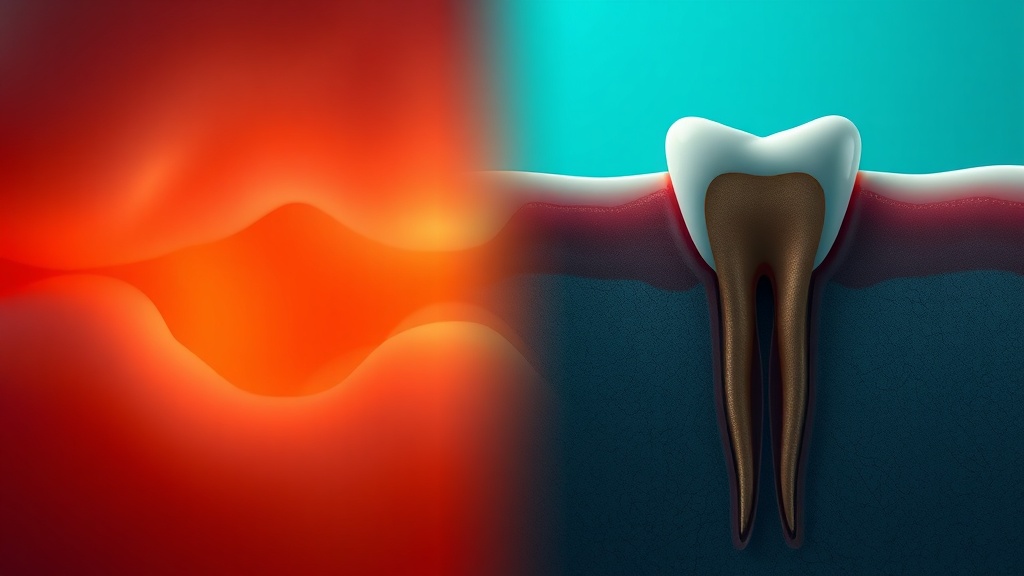
A socket heals because it is a wound the body can close; an exposed root is not, which is why the gum cannot climb back.
What the research actually shows
Every claim below maps to a named, peer-reviewed source in the Sources section. According to PubMed.
| Claim | Evidence | Source |
|---|---|---|
| The only spontaneous coronal tissue migration in the literature (creeping attachment) occurs only after mucogingival surgery, and even then is not always complete or predictable. | Review of creeping attachment. | Wan et al., 2020 |
| Re-covering an exposed root is achieved by periodontal plastic surgery; no source describes a root re-covering itself. | Review of periodontal plastic surgery. | Zucchelli & Mounssif, 2015 |
| Gingivitis is reversible: inflamed gums return to a healthy baseline once plaque is controlled, which is recovery of shape, not regrowth of lost tissue. | European workshop consensus report. | Chapple et al., 2015 (EFP consensus) |
| After periodontitis, the patient is classed as periodontitis on a reduced periodontium: inflammation is controlled but lost attachment and bone are not regained. | Consensus classification report. | Papapanou et al., 2018 (World Workshop) |
| Gingival recession is very common, affecting about 22.5% of US adults aged 30 and over on at least one surface, and is more severe on cheek-facing surfaces, a mechanical signature. | National survey (NHANES III). | Albandar & Kingman, 1999 |
Three kinds of gum change, three different answers
| Situation | Does the gum come back? | Why |
|---|---|---|
| Swollen gums from inflammation | Yes, to its own healthy shape | Swelling settles once plaque is controlled |
| Gum over an extraction socket | Yes | Ordinary wound healing over a clot |
| Receded gum over an exposed root | No, not on its own | No wound or scaffold for tissue to climb |
| Lost bone from periodontitis | No | Structural loss; managed, not regained |
| A root re-covered surgically | Yes | A graft brings new tissue and blood supply |
What about the gums and bone lost to gum disease
There is a second layer to this question that deserves a straight answer, because receding gums and gum disease overlap. In periodontitis, the advanced stage of gum disease, the body loses not just gum position but the attachment fibres and the bone that anchor the tooth. When that disease is treated, the inflammation is brought under control and the gums can firm up, but the attachment and bone that were destroyed do not simply grow back. The consensus language is precise and worth knowing: a treated patient is described as having periodontitis on a reduced periodontium, meaning the disease is stabilised on a foundation that is now permanently smaller. This is not a counsel of despair, quite the opposite. Stabilising the disease is what saves the teeth, and people who do so can keep their teeth for decades. There are specialised regenerative procedures a periodontist can sometimes use to rebuild a limited amount of bone in specific defect shapes, but these are targeted surgical treatments, not a general promise that lost bone and gum return, and certainly nothing a home product delivers. So the fullest honest answer to can gums grow back covers both tissues: neither receded gum nor lost bone comes back on its own, both can be stabilised, and only a surgeon can restore either, in the right circumstances.
Evidence you can act on.
Occasional emails — new research, new protocols, no noise.
What to do with this knowledge
Since gums do not grow back on their own, the productive response is to protect what you have and get lost tissue assessed by someone who can actually restore it.
- 1
Stop mistaking soothing for regrowth
todayIf a product or routine makes your gums look better, credit reduced inflammation, not regrowth. This keeps you from relying on a soothing remedy while a real cause, like forceful brushing or gum disease, continues unaddressed.
- 2
Protect the gum you still have
dailyBrush gently with a soft brush, control plaque, and clean between the teeth. Since recession is often mechanical and clusters where hard brushing lands, easing your technique is the most protective single habit.
- 3
Get gum disease treated if present
as advisedA professional clean halts the disease that destroys attachment and bone. Stabilising it is what preserves the teeth, even though it does not regrow what was lost.
- 4
Ask a periodontist what can be restored
onceOnly a specialist can judge whether a graft can cover a root, or whether a specific bone defect is suited to a regenerative procedure. This is where real restoration is decided, in person, not online.
The honest answer opens a useful conversation: protect what you have, and let a specialist judge what can be restored.
See a dentist or periodontist if your gums are receding, look longer than they used to, bleed, feel loose, or are sensitive. Only an in-person exam can find the cause, tell you what is stabilised versus permanently lost, and judge whether surgical restoration fits. This article is general information, not a diagnosis, and does not replace a professional assessment.
Frequently asked questions
Sources
- 1.
- 2.
- 3.
- 4.
- 5.
- 6.

Fix your breath at the source.
The complete science-backed protocol — engineered to eliminate volatile sulfur compounds at the biological source.
Start the Breath Protocol →Related reading
Educational purposes only. The content on this page is not medical advice and is not a substitute for consultation with a qualified dental or medical professional.
More from the library
 Answers8 min
Can Receding Gums Grow Back? The Honest Answer
It is the question everyone with recession asks. The straight answer, and what you can realistically do instead.
Read →→ Answers8 min
Can Receding Gums Be Reversed? The Honest Clinical Answer
A precise, evidence-based answer that separates the inflammation you can reverse from the lost tissue you cannot, and explains the one true way gums are physically restored.
Read →→ Guides8 min
How to Stop Receding Gums: What Actually Slows It
You cannot will your gum line back up, but you can often stop it from dropping further. Here is what the evidence supports.
Read →→ Guides8 min
Periodontitis: Stages, Bone Loss, and How It Is Managed
An honest, evidence-based guide to periodontitis: what it does to bone and attachment, how dentists stage and grade it, and why professional care is the non-negotiable core of managing it.
Read →→ Guides8 min
Gum Disease Symptoms: The Early Warnings You Can Feel
The symptoms of gum disease you can feel and notice yourself, why bleeding comes first, and when a symptom means see a dentist now.
Read →→ Guides8 min
Periodontal Disease: The Full Spectrum, Explained
A clear, honest overview of periodontal disease as a spectrum: the difference between gingivitis and periodontitis, what the colloquial phrase gum disease misses, and why early bleeding is the signal to act.
Read →→