Can Receding Gums Be Reversed?
A precise, evidence-based answer that separates the inflammation you can reverse from the lost tissue you cannot, and explains the one true way gums are physically restored.
- Receding gums cannot be reversed in the way most people mean it: once tissue has pulled back and exposed the root, it does not climb back up on its own, and no toothpaste, rinse, oil, or supplement makes lost gum tissue return.
- What can be reversed is the inflammation around the gums. Gingivitis-stage swelling and bleeding return to a healthy baseline with consistent plaque control, which makes gums look and feel better even though the recession itself remains.
- The only way to physically re-cover an exposed root is periodontal plastic surgery, such as a gum graft or a pinhole procedure, performed by a periodontist. That is the sole documented way tissue moves back over a root.
- The realistic and genuinely important goal of everyday care is to stop the recession getting worse and to keep the remaining gum healthy. Untreated, recession tends to creep further over the years.
- Because recession has real mechanical and disease-related causes, an in-person assessment matters: a dentist identifies why it is happening so the right cause is addressed before more tissue is lost.
Not in the way it is usually meant. Gum tissue that has already receded and exposed the root does not grow back on its own, and no product reverses it. Good care can reverse the surrounding inflammation and halt further recession; only surgical root coverage by a periodontist physically restores lost tissue.
What “reversible” actually means for gums
The word reversible does a lot of quiet work in gum-health marketing, and it is worth pulling apart. Two very different things happen at the gumline, and only one of them can be undone. The first is inflammation: when plaque builds up, the gum swells, reddens, and bleeds. This is gingivitis, and it is genuinely reversible. In the classic experimental-gingivitis studies, researchers had healthy volunteers stop cleaning their teeth, watched inflammation appear within two to three weeks, then had them resume brushing, and every clinical measure returned to baseline. The tissue was irritated, not lost. The second thing is recession: the gum margin migrates down the tooth and the attachment that held it there is gone. That is a structural change, not an irritation, and there is no natural signal that tells the tissue to climb back up. So when a product promises to reverse receding gums, it is quietly borrowing the reversibility of the first process to make a claim about the second. Calming inflammation can make a receded gum look pinker and less puffy, which is real and worthwhile, but the tissue that has already retreated does not return.
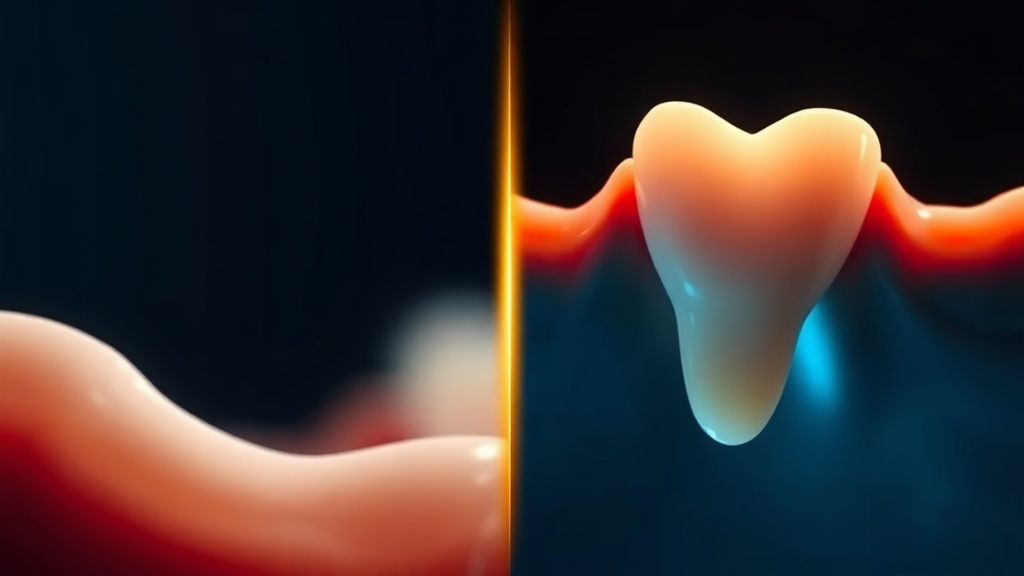
Inflammation at the gumline can rise and settle; recession is a one-way move that leaves the root exposed.
What the research actually shows
Every claim below maps to a named, peer-reviewed source in the Sources section. According to PubMed.
| Claim | Evidence | Source |
|---|---|---|
| Gingivitis is reversible: during the resolution phase of experimental gingivitis, pocket depth, bleeding, and gingival and plaque indices all return to baseline. | Experimental-gingivitis clinical study. | Wellappuli et al., 2017 |
| Periodontitis is described as a ubiquitous and irreversible inflammatory condition: lost attachment and bone are not regained, only the inflammation is controlled. | European workshop consensus report. | Chapple et al., 2015 (EFP consensus) |
| Gums do not self-cover an exposed root; the only spontaneous coronal tissue migration reported (creeping attachment) occurs only after mucogingival surgery and is not always complete or predictable. | Review of creeping attachment literature. | Wan et al., 2020 |
| Left untreated, recession trends worse over decades: over 10 to 27 years, untreated sites migrated a further 0.7 to 1.0 mm apically while grafted sites gained and held coverage. | Long-term split-mouth study. | Agudio et al., 2009 |
| Root coverage of an exposed root is achieved by periodontal plastic surgery, such as a coronally advanced flap with a connective-tissue graft; no source describes spontaneous regrowth over an exposed root. | Review of periodontal plastic surgery. | Zucchelli & Mounssif, 2015 |
What reverses, and what does not
| At the gumline | Can it be reversed? | What it takes |
|---|---|---|
| Gum inflammation and bleeding (gingivitis) | Yes | Consistent daily plaque control |
| The position of the gum after recession | No, not on its own | Surgical root coverage by a periodontist |
| Lost attachment and bone (periodontitis) | No | Professional care to arrest and stabilise it |
| Sensitivity from an exposed root | Manageable | Desensitising care, not tissue regrowth |
| Further recession in the future | Preventable | Addressing the underlying cause early |
Why the tissue cannot simply climb back
To understand why receded gums do not return, it helps to know what the gum was attached to in the first place. Healthy gum tissue is anchored to the tooth and the underlying bone by a delicate collar of connective fibres and a thin band of attachment near the neck of the tooth. Recession happens when that attachment is lost and the margin slides down, whether from long-term plaque and inflammation, years of forceful brushing, a thin gum type, tooth position, or grinding. Once the fibres and the local attachment are gone, the body has no built-in program to regenerate them upward across a bare root surface, which is smooth, exposed, and poorly suited to new attachment. This is exactly why surgery is the only reliable route back: a graft or a pinhole technique physically relocates healthy tissue over the root and brings with it the blood supply and cells needed for it to take hold. It is not that dentists are gatekeeping a simpler home method. It is that re-covering a root is a reconstructive act, not a matter of encouraging tissue to regrow. Knowing this changes the goal in a useful way: instead of chasing a reversal that cannot happen at home, you protect what remains and stop the slide.
Evidence you can act on.
Occasional emails — new research, new protocols, no noise.
What you can realistically do
You cannot reverse recession at home, but you have real influence over whether it gets worse and how healthy the remaining gum stays. None of the following treats a disease; it protects tissue and calms inflammation.
- 1
Fix the brushing that may be causing it
every brushRecession is more common and more severe on the cheek-facing surfaces of teeth, the signature of mechanical abrasion rather than bacteria. Switch to a soft, end-rounded brush, hold it at a gentle angle, and use light pressure with small movements rather than a hard horizontal scrub. A powered brush with a pressure sensor can retrain a heavy hand within a couple of weeks.
- 2
Keep plaque off the gumline consistently
twice dailyWhere recession is driven by inflammation, controlling plaque calms the tissue and stops it retreating further. Brush twice daily for two minutes and clean between the teeth every day; interdental brushes suit many people better than string floss for the gums.
- 3
Address the risk factors you can change
ongoingSmoking roughly doubles the risk of gum problems and is independently linked to recession, and quitting measurably shifts risk back toward that of a non-smoker. If you clench or grind, a night guard reduces the mechanical strain that can pull the gumline down.
- 4
Manage sensitivity honestly
as neededAn exposed root can twinge with cold or brushing. A desensitising toothpaste and a fluoride varnish from your dentist calm the nerve and protect the softer root surface. This eases the symptom; it does not regrow the gum.
- 5
See a periodontist about coverage options
once, then reviewedIf recession is advanced, affecting appearance, or still progressing, a periodontist can assess whether a graft or pinhole procedure is appropriate. This is the only path that physically restores lost tissue, and the earlier it is assessed, the more options tend to be available.
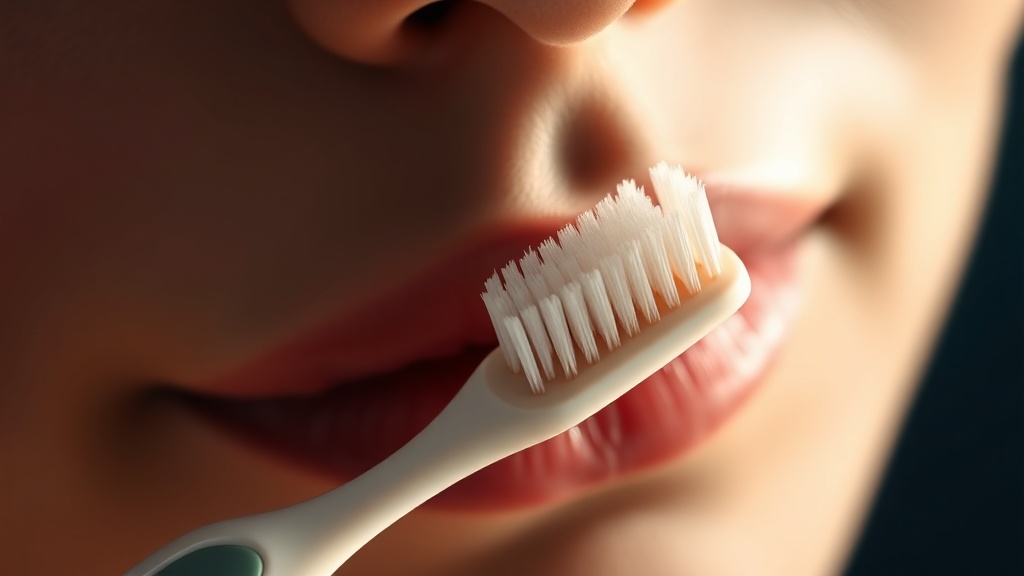
Gentle, light-pressure brushing protects the gumline; forceful scrubbing is a common cause of the recession people hope to reverse.
See a dentist or periodontist if your gums are visibly receding, if a tooth looks longer than it used to, if you have sensitivity, bleeding, or looseness, or if recession seems to be advancing. Only an in-person exam can find the cause and tell you whether the tissue can be surgically restored. This article is general information, not a diagnosis, and it does not replace a professional assessment.
Frequently asked questions
Sources
- 1.
- 2.
- 3.
- 4.
- 5.
- 6.
- 7.

Fix your breath at the source.
The complete science-backed protocol — engineered to eliminate volatile sulfur compounds at the biological source.
Start the Breath Protocol →Related reading
Educational purposes only. The content on this page is not medical advice and is not a substitute for consultation with a qualified dental or medical professional.
More from the library
 Answers9 min
Can Gums Grow Back? The Biology of Gum Regrowth, Honestly
The real biology behind the internet's favourite gum question: why a socket heals after an extraction, why swollen gums shrink back, and why a receded margin does not return.
Read →→ Guides8 min
How to Stop Receding Gums: What Actually Slows It
You cannot will your gum line back up, but you can often stop it from dropping further. Here is what the evidence supports.
Read →→ Guides8 min
Gum Recession Treatment: Every Option, Compared
The right treatment depends on why your gums receded and how far. Here is the full ladder, with what each rung can honestly deliver.
Read →→ Answers9 min
Is Gingivitis Reversible? The Honest Answer
The honest, evidence-based answer on whether gingivitis is reversible, how it happens, and the point at which it no longer is.
Read →→ Guides8 min
Gum Disease Symptoms: The Early Warnings You Can Feel
The symptoms of gum disease you can feel and notice yourself, why bleeding comes first, and when a symptom means see a dentist now.
Read →→ Answers8 min
Can Receding Gums Grow Back? The Honest Answer
It is the question everyone with recession asks. The straight answer, and what you can realistically do instead.
Read →→