
The Biofilm Glue: Tonsil Stones and Grapefruit Seed Extract
A popular remedy promises to break down the biofilm that binds a tonsil stone — but the evidence is thinner, and stranger, than the internet lets on.

- Tonsil stones — tonsilloliths — are small, calcified concretions that form when dead cells, food particles, mucus and bacteria collect in the folds of the tonsils and slowly harden. They are common and, in most people, harmless.
- They earn their reputation for odour honestly: the bacteria packed inside them are the same sulfur-producing anaerobes behind much of chronic bad breath, and a visible stone sharply raises the odds of measurable mouth odour.
- A sticky bacterial film called biofilm acts like the glue that holds a stone together — which is the entire logic behind the popular idea of using grapefruit seed extract (GSE) to break that glue apart.
- Here is the uncomfortable part: the evidence that GSE itself is antimicrobial is thin, and repeated laboratory analyses found the activity of commercial GSE products came from synthetic preservatives and disinfectants added to them — not from the grapefruit seed at all.
- The dependable path is not a bottle: gentle dislodging, warm-water gargling and good hydration handle most stones, and anything large, painful or stubborn is a conversation for a doctor or ENT.
A tonsil stone is a cluster of trapped debris and bacteria that calcifies in the crevices of your tonsils. Grapefruit seed extract is a popular remedy for 'dissolving' the biofilm that binds it — but the evidence is thin and clouded by a real contamination controversy. Gentle removal, gargling and hydration are the safer, sounder bets.
What a tonsil stone actually is
The tonsils are not smooth. Their surface is pitted with deep pockets called crypts. In some people the crypts are shallow; in others they are wide, branching caverns. Into these pockets falls the ordinary debris of a working mouth — dead surface cells shed from the throat, tiny food remnants, mucus, and bacteria. When that mixture lingers, packs down and slowly mineralises with calcium salts, it becomes a tonsillolith: a pale, gritty concretion wedged in the crypt. Imaging studies put them at roughly a quarter to a third of scanned adults, most often small (a millimetre or two), ovoid, and sitting squarely in the centre of a tonsillar crypt. What makes a stone more than a curiosity is what lives inside it. When researchers examined the bacterial makeup of tonsilloliths, they found them dense with anaerobic bacteria — the genera Fusobacterium, Porphyromonas, Prevotella, Selenomonas, Tannerella and their neighbours — the very organisms that manufacture volatile sulfur compounds, the gases responsible for the rotten-egg and decay notes of chronic bad breath. Under the electron microscope, the stones were coated and threaded with these microbes, surface and core alike. A tonsil stone, in other words, is a self-contained odour factory. For the vast majority of people, that is the whole story: a harmless, occasionally annoying, sometimes smelly visitor that comes and goes. Tonsil stones are not a sign of poor hygiene, they are not contagious, and they are rarely dangerous. But because they smell, and because they can feel like a lump in the throat, they send a lot of people searching for a way to make them disappear — which is where the grapefruit arrives.
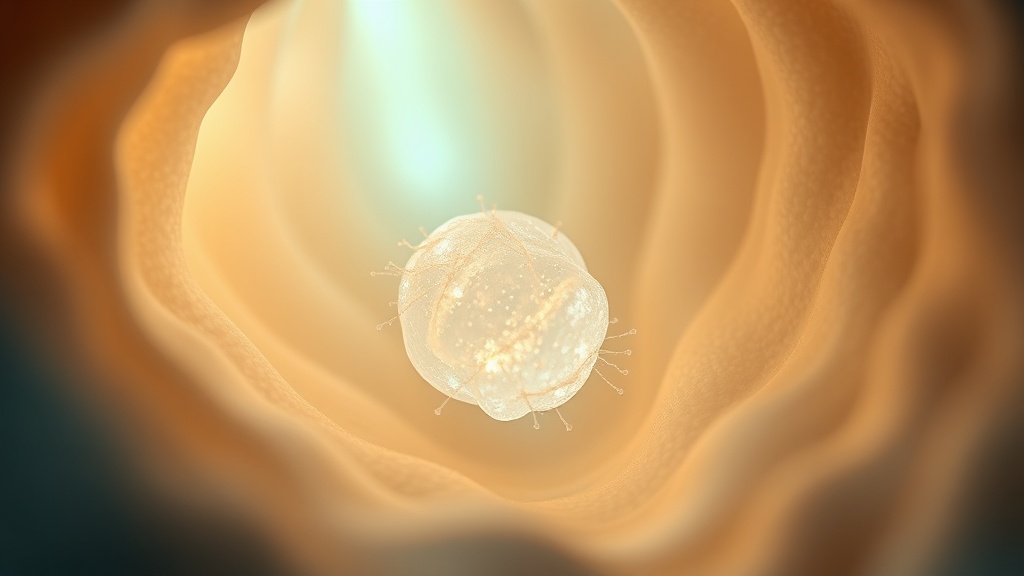
How a stone forms: debris and bacteria collect in a tonsillar crypt, and a sticky biofilm binds them into a concretion that slowly hardens.
What the research shows
Every claim below maps to a named, peer-reviewed study. According to PubMed.
| Claim | Evidence | Source |
|---|---|---|
| Tonsil stones are packed with the sulfur-producing bacteria behind bad breath | Molecular and electron-microscopy analysis of tonsilloliths found them dominated by anaerobic genera (Fusobacterium, Porphyromonas, Prevotella, Tannerella and others) associated with volatile sulfur compound production, supporting the stone as an origin of oral malodour. | Tsuneishi et al., Microbes Infect, 2006 |
| Having a tonsil stone dramatically raises the odds of measurable bad breath | In patients with chronic caseous tonsillitis, a tonsillolith was present in 75% of those with abnormal breath-sulfur readings versus only 6% of those with normal readings — a roughly tenfold higher risk of abnormal halitometry. | Dal Rio et al., Br Dent J, 2007 |
| Tonsil stones are common calcified concretions that form in the tonsillar crypts | A CT review of 3,886 people found palatine tonsilloliths in 30.3%, most located in the centres of the tonsillar crypts and becoming more frequent with age. | Kim et al., Oral Surg Oral Med Oral Pathol Oral Radiol, 2018 |
| The antimicrobial activity of commercial grapefruit seed extract has been traced to synthetic additives, not the seed | Of six commercial GSE products, the five with antimicrobial activity all contained the synthetic disinfectant benzethonium chloride (three also had triclosan and methylparaben); the preservative-free product and lab-made grapefruit extracts showed no activity, leading the authors to attribute the effect to the added agents. | von Woedtke et al., Pharmazie, 1999 |
| Commercial grapefruit seed extracts are frequently adulterated with synthetic disinfectants | A validated HPLC/UV/MS analysis found seven of nine grapefruit seed extract products adulterated with preservatives — containing benzethonium chloride (2.5-176.9 mg/mL) or benzalkonium chloride (138.2-236.3 mg/mL) plus smaller amounts of parabens and benzoic acid. | Ganzera et al., J Agric Food Chem, 2006 |
The popular claim vs. what the studies found
| The GSE remedy story | What the evidence shows | |
|---|---|---|
| The active ingredient | Natural compounds from grapefruit seed | Activity in tested products traced to synthetic preservatives |
| Product purity | A pure botanical extract | Seven of nine samples adulterated in one analysis |
| The 'biofilm glue' | GSE dissolves it and frees the stone | No sound human evidence it breaks down tonsil-stone biofilm |
| Safety framing | Gentle, natural, harmless | Gargling a contaminant-laced extract is a genuine concern |
| Realistic role | A daily at-home fix | Unproven; gentle removal and gargling are safer |
Where the 'biofilm glue' idea meets the evidence
The logic behind the grapefruit remedy is genuinely tidy, which is part of why it spread. A tonsil stone is held together by biofilm — a matrix of bacteria and the sticky substances they secrete. Grapefruit seed extract has a reputation as a broad antimicrobial. So, the reasoning goes, swishing or gargling GSE should attack the biofilm, loosen the glue, and let the stone crumble away. On a whiteboard, it is elegant. The problem is the middle step: does GSE actually do what its reputation claims? Here the story takes a turn that most remedy blogs never mention. When German researchers tested six commercial grapefruit seed extracts, five of them did inhibit bacteria — but every one of those five contained benzethonium chloride, a synthetic disinfectant, and three also carried triclosan and a paraben preservative. The single product with no added preservative, along with extracts the team prepared themselves from real grapefruit seeds and pulp, showed no antimicrobial activity at all. Their conclusion was blunt: the effect being sold as natural grapefruit power was, in reality, the work of industrial disinfectants added to the bottle. A later, more sophisticated chemical analysis landed in the same place, finding seven of nine products adulterated with benzethonium or benzalkonium chloride. To be fair and precise: these findings do not prove that grapefruit compounds can never help, and formulations vary from brand to brand and year to year. But they do mean that a glowing 'GSE worked for me' testimonial may be describing the effect of a disinfectant, not a fruit — and that gargling an extract of uncertain contents carries a real, under-discussed safety question. When the evidence for a remedy is this thin and this tangled, the honest move is not to endorse it. It is to reach for the approaches that are gentler, cheaper and far better understood.
Evidence you can act on.
Occasional emails — new research, new protocols, no noise.
A gentler, evidence-aligned routine
You rarely need a special elixir to manage tonsil stones. Most respond to patience, moisture and a soft touch. Here is a routine built on what actually holds up.
- 1
Gargle with warm salt water
DailyA simple warm saline gargle flushes loose debris from the crypts, soothes the tissue, and can nudge a shallow stone free without any tools. It is the single most reliable at-home habit — no purchase, no risk, and easy to repeat whenever your throat feels full.
- 2
Dislodge gently — never dig
As neededIf a stone is visible and bothering you, ease it out with something soft: the back of a clean, wet cotton swab, or a water flosser on its lowest setting angled across the crypt. Let gentle pressure and water do the work. Sharp objects and hard probing bruise delicate tissue and can push debris deeper.
- 3
Tend the whole mouth
Twice dailyBrush, clean between the teeth, and gently clean the tongue, where the same odour-producing bacteria gather. Staying on top of everyday oral hygiene gives the crypts less raw material to collect and keeps your breath fresher while you are at it.
- 4
Be skeptical of miracle rinses
OptionalIf you still want to try grapefruit seed extract, hold the marketing at arm's length: choose a reputable brand, never swallow it, dilute it as directed, and understand that the evidence it does anything for tonsil stones is thin. Treat it as an experiment, not a solution — and stop if anything stings or irritates.
- 5
Watch the pattern
OngoingNote how often stones return and whether they are getting larger or more uncomfortable. A stone or two now and then is normal. A steady, worsening cycle — or stones you simply cannot reach — is information worth taking to a professional rather than fighting alone at the bathroom mirror.

Popular belief meets scrutiny: when the grapefruit remedy was tested, the antimicrobial effect traced back to synthetic additives, not the seed.
See a doctor or an ENT if your tonsil stones are large, painful or keep coming back; if you have trouble swallowing, a persistent one-sided sore throat, or ear pain on one side; or if you can feel a stone you simply cannot dislodge. Recurrent stones can sometimes be addressed with in-office procedures that smooth the crypts, and lingering throat symptoms deserve a proper look — this article is honest education, not a substitute for a professional's assessment. Please do not gouge at your tonsils with sharp tools; the tissue bruises and bleeds easily, and you can push debris further in.
Frequently asked questions
Sources
- 1.
- 2.
- 3.
- 4.
- 5.
- 6.
- 7.

Fix your breath at the source.
The complete science-backed protocol — engineered to eliminate volatile sulfur compounds at the biological source.
Start the Breath Protocol →Related reading
Educational purposes only. The content on this page is not medical advice and is not a substitute for consultation with a qualified dental or medical professional.
More from the library
 Causes8 min
How Do Tonsil Stones Form? The Biology, Honestly Explained
The unglamorous truth about what a tonsil stone is, how it builds up in the folds of your tonsils, and why the crypts that make them are simply part of your anatomy.
Read →→ Answers8 min
Can Tonsil Stones Cause Bad Breath? What the Evidence Says
Why a small stone in the throat can create an outsized smell, and how to know if it is yours.
Read →→ Guides8 min
How to Remove Tonsil Stones at Home: The Complete Toolkit
A practical, tool-by-tool guide to clearing tonsil stones safely at home — and to the honest limits of each method.
Read →→ The Journal9 min
The Oral Microbiome: Your Body's Command Center
Most of the bacteria in your mouth are allies — and keeping them in balance may matter far beyond your breath.
Read →→ Answers8 min
Can Tonsil Stones Make You Sick? An Honest Look
A calm, honest look at whether tonsil stones can actually make you unwell, the local nuisances they do cause, and the red flags worth taking seriously.
Read →→ Answers8 min
Can a Dentist Remove Tonsil Stones? Your Professional Options
Who actually removes tonsil stones, the in-office options from simple expression to crypt reshaping, and how to know when a professional is worth it.
Read →→