
Xerostomia Treatment: What Clinicians Actually Do
True xerostomia is managed, not resolved overnight. Here is how clinicians actually approach it - and why the right first step is almost always an in-person evaluation.

- Xerostomia is the medical term for the feeling of dry mouth; when it comes with genuinely low saliva flow, clinicians confirm it by measuring - an unstimulated flow at or below 0.1 mL/min is the recognized threshold.
- The first step in real treatment is almost never a product - it is finding the cause, because medications, Sjogren's disease and radiation each call for a different plan.
- Prescription saliva stimulants such as pilocarpine and cevimeline can raise flow two- to three-fold, but they are physician-managed, relieve symptoms rather than restore glands, and carry side effects.
- For head and neck cancer, the strongest move is preventive: tissue-sparing radiation techniques roughly halve the rate of severe long-term dry mouth.
- Persistent dry mouth with dry eyes should be assessed by a specialist - Sjogren's carries other health risks - and no one should ever stop a prescribed medicine on their own.
Xerostomia treatment starts with finding the cause, not buying a product. Clinicians review xerogenic medications, protect the teeth with high-fluoride care, and add saliva substitutes for comfort. For low-flow cases from Sjogren's or radiation, prescription stimulants like pilocarpine can help under a doctor's care. Persistent dry mouth, especially with dry eyes, needs an in-person evaluation.
What true xerostomia is - and how clinicians confirm it
Xerostomia is simply the medical name for the sensation of a dry mouth. It matters because that feeling and the actual amount of saliva do not always match: a person can feel dry with normal flow, or have measurably low flow with few complaints. When clinicians suspect the low-flow kind - known as hyposalivation - they measure it, and an unstimulated whole-saliva flow at or below 0.1 mL/min is the recognized marker used in classifying conditions like Sjogren's disease. That distinction shapes everything that follows. Most everyday dry mouth is driven by medications, which are by far the most common cause, and there the answer is a prescription review rather than a new pill. A smaller share comes from Sjogren's, an autoimmune condition where the immune system targets the saliva and tear glands, or from radiation to the head and neck, which can damage the glands directly. Because these paths are so different, real treatment begins with identifying which one you are on - something only an in-person evaluation can do.
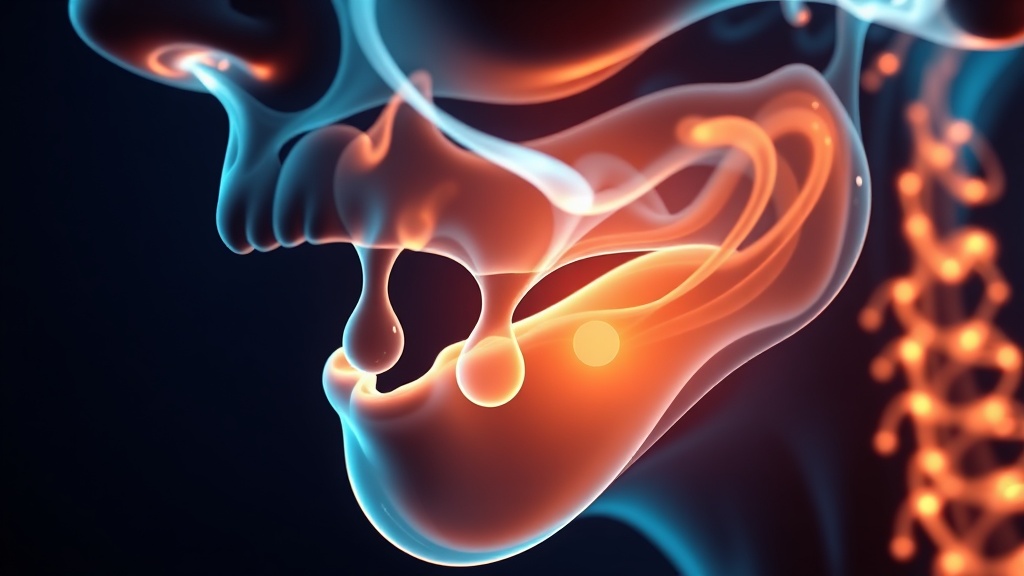
True xerostomia treatment targets the salivary glands themselves - whether the problem is a drug, an autoimmune process, or radiation.
What the clinical research shows
Every claim below maps to a named, peer-reviewed source in the Sources section. According to PubMed.
| Claim | Evidence | Source |
|---|---|---|
| Clinicians classify Sjogren's using set criteria that include an unstimulated whole-saliva flow at or below 0.1 mL/min - the recognized low-flow threshold. | International consensus classification criteria (three patient cohorts). | Shiboski et al., 2016 |
| Oral pilocarpine produced significant symptomatic improvement in radiation-related xerostomia, with best results after 8-12 weeks of continued use. | Multicenter, randomized, double-blind, placebo-controlled trial (162 patients). | LeVeque et al., 1993 |
| In Sjogren's, pilocarpine tablets significantly improved dry-mouth and dry-eye symptoms and raised saliva flow two- to three-fold. | Randomized, placebo-controlled trial (373 patients). | Vivino et al., 1999 |
| Parotid-sparing intensity-modulated radiotherapy roughly halved severe dry mouth - 29% versus 83% with conventional radiotherapy at 24 months. | Phase 3 randomized controlled trial (PARSPORT). | Nutting et al., 2011 |
| Topical fluoride is strongly recommended for every Sjogren's patient with dry mouth to protect teeth left exposed by low saliva. | National expert clinical practice guideline. | Zero et al., 2016 |
How treatment differs by cause
| Cause | What clinicians look at first | Typical approach |
|---|---|---|
| Medication-induced | Which drugs are xerogenic; is a change possible | Prescription review or dose adjustment, then comfort care |
| Sjogren's disease | Autoimmune workup; referral to rheumatology | Symptom relief, saliva stimulants, topical fluoride, monitoring |
| Radiation-related | Extent of gland damage; timing | Tissue-sparing radiation, stimulants, intensive dental protection |
| No clear cause | Measured saliva flow and full history | Confirm hyposalivation, then match therapy to findings |
How prescription saliva stimulants fit in
When comfort measures are not enough and the glands still have some working tissue, doctors may prescribe a saliva stimulant, most often pilocarpine or cevimeline. These are muscarinic agonists - they nudge the nervous-system signal that tells the glands to secrete, and in trials they raised saliva flow two- to three-fold and improved symptoms in both radiation-related and Sjogren's dry mouth. It is important to be clear about what they do and do not do. They relieve symptoms and boost flow while you take them; they do not restore or rebuild a damaged gland, and the benefit can take eight to twelve weeks to settle in. They also have side effects - sweating is the most common - and they are not suitable for everyone, which is exactly why they are prescription-only and managed by a physician. Major rheumatology and oncology guidelines frame the whole goal of care as relief of symptoms rather than a permanent fix, and they place these drugs alongside topical lubricants, saliva substitutes and sugar-free lozenges rather than in place of them. This section is informational - any decision about these medicines belongs with your own clinician.
Evidence you can act on.
Occasional emails — new research, new protocols, no noise.
The clinical pathway, step by step
This is what a thorough work-up for persistent xerostomia tends to look like. It is a description of clinical care, not self-treatment - the point is to know what to expect and to get evaluated.
- 1
Get an in-person evaluation
first stepA dentist or doctor takes a full history, reviews your medicines, and may measure your saliva flow. This is where the crucial question - feeling of dryness versus genuinely low flow - gets answered, because it steers everything else.
- 2
Review the medications
with your prescriberSince drugs are the leading cause, a clinician looks at whether a xerogenic medicine can be switched, re-timed or dose-adjusted. This is done only with the prescriber - you should never stop or change a prescribed medicine on your own.
- 3
Protect the teeth
ongoingWith saliva no longer buffering acids, teeth are vulnerable, so guidelines strongly recommend high-fluoride care for anyone with low flow. Your dentist may prescribe a stronger fluoride paste or in-office applications to keep the surfaces hard.
- 4
Layer comfort measures
dailySaliva substitutes, moisturizing gels, sugar-free lozenges and gum give day-to-day relief and are recommended across the guidelines. They coat and stimulate, buying comfort while the underlying cause is managed.
- 5
Consider prescription stimulants or referral
as advisedIf flow is low and glands retain function, a doctor may add pilocarpine or cevimeline. Ongoing dry mouth with dry eyes warrants referral to a rheumatologist, since Sjogren's needs monitoring beyond the mouth. Radiation patients benefit most when tissue-sparing techniques are planned from the start.

Real care layers together: a prescription review, high-fluoride dental protection, and comfort measures - guided by a clinician.
Xerostomia that lasts is a reason to be seen, not to self-manage indefinitely. Book an evaluation if dry mouth is constant, if it began after a new medicine, if you have dry eyes alongside it, or if you notice new decay, mouth sores, or trouble swallowing. Dry mouth with dry eyes in particular should be assessed by a specialist, because Sjogren's carries health risks beyond the mouth that need monitoring. Whatever the cause, never stop a prescribed medicine on your own - bring the question to the clinician who prescribed it.
Frequently asked questions
Sources
- 1.
- 2.
- 3.
- 4.
- 5.
- 6.
- 7.
- 8.

Fix your breath at the source.
The complete science-backed protocol — engineered to eliminate volatile sulfur compounds at the biological source.
Start the Breath Protocol →Related reading
Educational purposes only. The content on this page is not medical advice and is not a substitute for consultation with a qualified dental or medical professional.
More from the library
 Guides9 min
Dry Mouth and Medication: What Causes It and the Prescription Options
Two sides of the same story: the everyday medications that most often dry out your mouth, and the prescription options a doctor may consider when dryness is severe — with a firm reminder never to change a prescription on your own.
Read →→ Ingredients10 min
Pilocarpine for Dry Mouth: What to Know
A neutral, educational look at pilocarpine, the prescription salivary-stimulant medicine doctors use for severe dry mouth.
Read →→ Guides8 min
What Causes Dry Mouth? The Common Triggers, Explained
Dry mouth almost always has an identifiable trigger, and knowing yours is the first step toward relief.
Read →→ Guides9 min
Chronic Dry Mouth: Managing Long-Term Comfort
An honest guide to persistent dry mouth: what makes it chronic, the causes a professional will look for, and how to stay comfortable and protect your teeth.
Read →→ Guides8 min
How to Fix Dry Mouth: An Evidence-Based Guide
Dry mouth is usually manageable once you know what is driving it and which supportive habits actually move the needle.
Read →→ Guides8 min
Dry Mouth at Night: Why It Happens and How to Sleep Easier
Nighttime dryness is common because your saliva naturally slows while you sleep, and a few targeted habits can make a real difference.
Read →→