Dry Mouth and Medication: What Causes It and the Prescription Options
Two sides of the same story: the everyday medications that most often dry out your mouth, and the prescription options a doctor may consider when dryness is severe — with a firm reminder never to change a prescription on your own.

- Medications are the single most common cause of dry mouth — one review counted 56 drugs with strong evidence of drying the mouth, spanning most major drug classes.
- Tricyclic antidepressants are the strongest offenders in head-to-head trials; antihistamines, overactive-bladder drugs, antipsychotics, diuretics, and some blood-pressure medicines are common culprits too.
- Most of these drugs dry the mouth through an anticholinergic effect — they quiet the nerve signal that tells your salivary glands to produce saliva.
- When dryness is severe, a doctor may consider a prescription that does the opposite — pilocarpine or cevimeline stimulate saliva — but these are physician-managed, take weeks to judge, and carry side effects like sweating.
- The first step is never to stop your medicine on your own: bring a full medication list to your prescriber, who can review doses or alternatives, while a dentist helps protect your teeth.
Medications are the most common cause of dry mouth, especially tricyclic antidepressants, antihistamines, overactive-bladder drugs, and some blood-pressure medicines, which quiet the saliva-making signal. When dryness is severe, a doctor may prescribe pilocarpine or cevimeline to stimulate saliva. Never start or stop a medication yourself — talk to your prescriber.
How medications dry out your mouth
Your salivary glands do not run on their own — they wait for a chemical go-signal. Nerves release a messenger called acetylcholine, which lands on receptors on the gland cells and tells them to push out watery saliva. A large share of medications interfere with exactly this step. Drugs with an anticholinergic effect block acetylcholine from reaching those receptors, so the glands quiet down and the mouth turns dry. This is not a rare quirk: a major review identified 56 substances with strong evidence of causing salivary dysfunction, spread across nine of the fourteen main drug classes, which is why medications are considered the single most frequently reported cause of dry mouth. The effect is often dose-related and adds up when several drying medicines are taken together — a common situation for older adults managing multiple conditions. The important thing to understand is that this is a side effect of how the drug works, not a sign the medicine is wrong for you. That judgement belongs to the prescriber, who can weigh the benefit of the drug against the dryness and decide whether anything should change.

Many drugs dry the mouth by blocking acetylcholine, the signal that tells the glands to release saliva.
What the research actually shows
Every claim below maps to a named, peer-reviewed source in the Sources section. According to PubMed.
| Claim | Evidence | Source |
|---|---|---|
| Medications are the single most frequently reported cause of dry mouth. | Clinical review of xerostomia etiology and recognition. | Guggenheimer & Moore, 2003 |
| A guide to drying medications identified 56 substances with strong evidence of causing salivary dysfunction, across most drug classes. | Systematic review (World Workshop on Oral Medicine VI). | Wolff et al., 2017 |
| Tricyclic antidepressants caused more severe dry mouth than placebo or other classes; SSRIs were generally milder. | Systematic review of 18 randomised trials, 605 participants. | Teoh et al., 2023 |
| First-line management is a prescriber-led medication review or dose adjustment — not stopping a drug on your own. | Clinical review of medication-induced xerostomia in older adults. | Barbe, 2018 |
| The prescription stimulant pilocarpine improved dry-mouth symptoms and raised saliva flow versus placebo, with benefit needing more than eight weeks. | Multicentre randomised, placebo-controlled dose-titration trial. | LeVeque et al., 1993 |
Drug classes that commonly cause dry mouth
| Drug class | Where it is often used | Why it dries the mouth |
|---|---|---|
| Tricyclic antidepressants | Older antidepressants; some nerve-pain uses | Strong anticholinergic action — the worst offenders in trials |
| Antihistamines | Allergy and cold remedies | Block the signal that tells glands to make saliva |
| Overactive-bladder antimuscarinics | Urinary urgency and frequency | Dry mouth is their most common side effect |
| Antipsychotics and some antidepressants | Mental-health conditions | Reduce saliva, though SSRIs are usually milder than tricyclics |
| Diuretics and some blood-pressure drugs | High blood pressure, fluid balance | Reduce available fluid, contributing to dryness |
The prescription options a doctor may consider
When dry mouth is severe and persistent — often in people whose saliva glands have been affected by radiation or Sjogren syndrome — a doctor may consider a prescription that works in the opposite direction from the drying drugs above. Two medicines, pilocarpine and cevimeline, are muscarinic stimulants: instead of blocking the saliva signal, they switch it on, prompting any working gland tissue to produce more saliva. In landmark trials pilocarpine improved dryness and raised salivary flow compared with placebo, though the benefit typically needs more than eight weeks to judge and is modest rather than complete. These medicines are firmly physician-managed for good reason. They only help where some functioning gland tissue remains, they are not suitable for everyone, and they carry side effects — sweating is the most common, and there are conditions in which they should not be used at all. This is educational context, not a recommendation: whether a saliva-stimulating prescription is appropriate, and at what dose, is a decision for your doctor, who will also weigh simpler measures and any drugs already contributing to the dryness.
Evidence you can act on.
Occasional emails — new research, new protocols, no noise.
What to do if you think a medication is drying your mouth
Suspecting your medicine is behind a dry mouth is a good reason to talk to your prescriber — and never a reason to stop taking it on your own. Here is a sensible order of steps.
- 1
Do not stop or change your medicine yourself
first, alwaysSuddenly stopping a prescribed drug can be more harmful than the dry mouth. Whatever you suspect, keep taking it as prescribed until a professional advises otherwise.
- 2
Make a complete medication list
a few minutesWrite down everything you take — prescriptions, plus over-the-counter antihistamines, sleep aids, and supplements. Because dryness adds up across several drugs, the full picture helps your prescriber spot the contributors.
- 3
Ask your prescriber about a review
at your appointmentA doctor or pharmacist can look for a less-drying alternative, a lower dose, or a change in timing — for example, taking a drying medicine earlier so its peak effect is not overnight. This is the evidence-based first step for medication-related dry mouth.
- 4
Add comfort measures in the meantime
ongoingWhile the review happens, sugar-free gum, sips of water, a humidifier, and saliva substitutes can ease the feeling. These do not interfere with your medication and are safe to combine.
- 5
Protect your teeth and see a dentist
twice daily + check-upsBecause dry mouth raises decay risk, keep up fluoride brushing and regular dental visits. A dentist can recommend high-fluoride products and, with your doctor, help manage the oral effects.
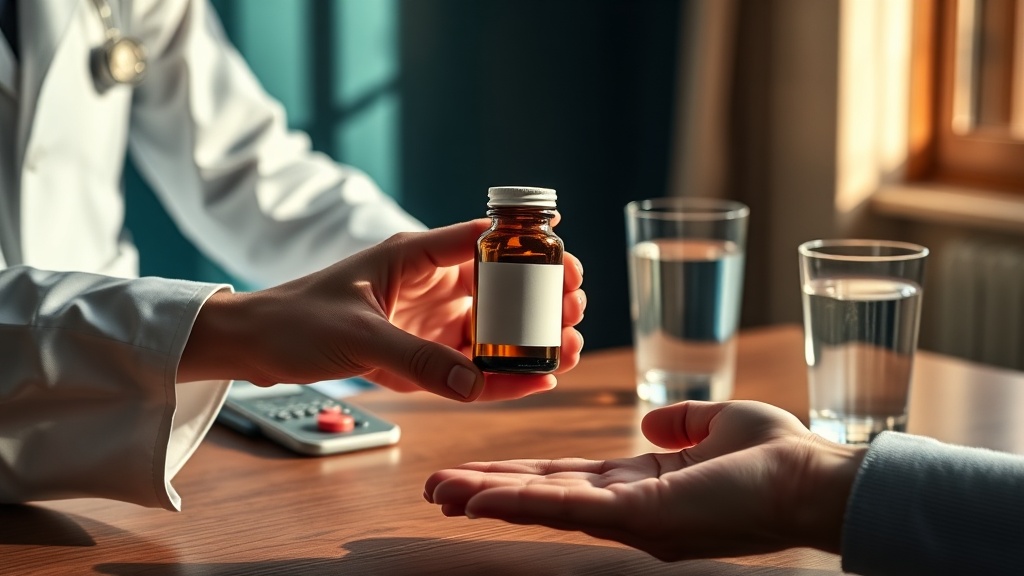
Saliva-stimulating prescriptions like pilocarpine are physician-managed — never started or stopped on your own.
Talk to your prescriber if you think a medication is drying your mouth, especially if the dryness is severe, disrupts sleep or eating, or comes with dry eyes or difficulty swallowing. Only a doctor can weigh the benefits of your medicine against the dryness, consider alternatives, or decide whether a saliva-stimulating prescription like pilocarpine or cevimeline is appropriate for you. Never start, stop, or change a prescription on your own. A dentist should also be part of the team, because dry mouth needs active protection against tooth decay.
Frequently asked questions
Sources
- 1.
- 2.
- 3.
- 4.
- 5.
- 6.
- 7.
- 8.

Fix your breath at the source.
The complete science-backed protocol — engineered to eliminate volatile sulfur compounds at the biological source.
Start the Breath Protocol →Related reading
Educational purposes only. The content on this page is not medical advice and is not a substitute for consultation with a qualified dental or medical professional.
More from the library
 Ingredients10 min
Pilocarpine for Dry Mouth: What to Know
A neutral, educational look at pilocarpine, the prescription salivary-stimulant medicine doctors use for severe dry mouth.
Read →→ Causes8 min
Adderall Tongue: Why Stimulant Medication Dries Out Your Mouth
The honest science behind the dry, sticky, sometimes sore tongue that so often comes with stimulant medication for ADHD.
Read →→ Guides8 min
What Causes Dry Mouth? The Common Triggers, Explained
Dry mouth almost always has an identifiable trigger, and knowing yours is the first step toward relief.
Read →→ Answers8 min
Can You Cure Dry Mouth? What Actually Helps
Dry mouth is usually a symptom, not a disease — here is why it is managed rather than cured, and the realistic steps that bring relief.
Read →→ Guides8 min
How to Fix Dry Mouth: An Evidence-Based Guide
Dry mouth is usually manageable once you know what is driving it and which supportive habits actually move the needle.
Read →→ Guides8 min
Dry Mouth at Night: Why It Happens and How to Sleep Easier
Nighttime dryness is common because your saliva naturally slows while you sleep, and a few targeted habits can make a real difference.
Read →→