
Signs of Gum Disease You Can See
The observable signs of gum disease you can spot yourself, what each one reveals about the stage, and when a sign means act now.
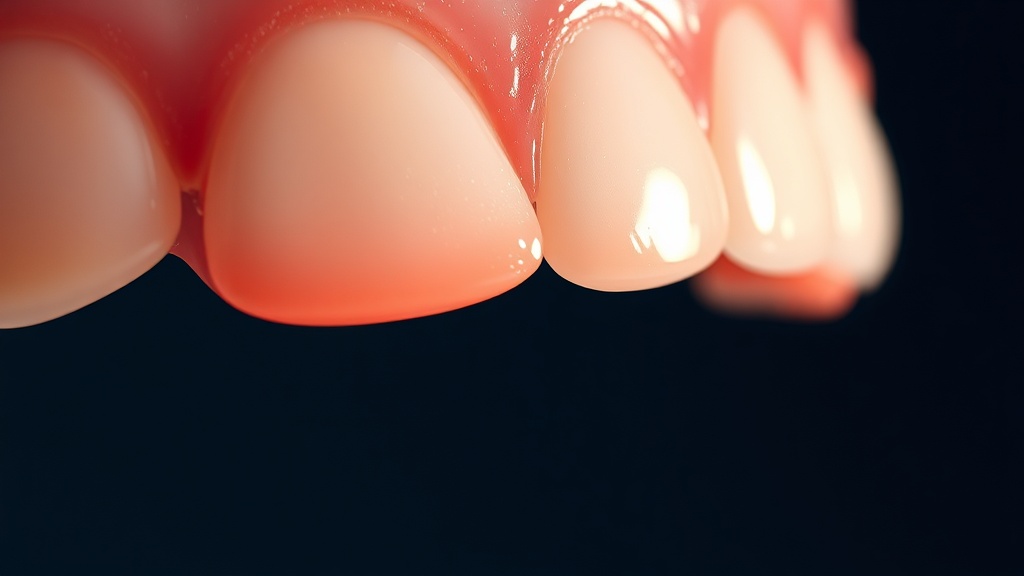
- Signs of gum disease are what you can observe — colour, shape, bleeding, recession — as opposed to what you feel; they often appear before any discomfort.
- A red or purplish, puffy gumline and bleeding after brushing are the earliest visible signs, and at this gingivitis stage they are fully reversible.
- Gums that have pulled back so teeth look longer, visible tartar at the gumline, and gaps opening between teeth are signs of the advanced, non-reversible stage.
- Recession affects a large share of adults — over one in five US adults over 30 have at least 3 mm of it — and it does not grow back on its own.
- Any pus at the gumline, a persistent lump, or teeth that have visibly shifted are signs to have assessed promptly rather than watched.
The visible signs of gum disease progress from red, swollen gums that bleed when brushed — the reversible gingivitis stage — to gums receding so teeth look longer, tartar building at the gumline, spaces opening between teeth, and eventually shifting or loose teeth. Early signs are easy to miss because they rarely hurt, so checking your gums in the mirror matters.
What healthy and unhealthy gums look like
Healthy gums have a firm, stippled surface a little like orange peel, sit snugly around each tooth, and are usually a pale coral pink — though naturally darker in people with more pigmentation, which is perfectly normal. The first visible sign of gum disease is a change in that picture: the margin turns redder or slightly purple, loses its firm stippling, and looks swollen or glossy as fluid gathers in the inflamed tissue. Touch it with a brush and it bleeds. This is gingivitis, and visually it is still entirely recoverable. As the disease advances, the signs change character because the damage is now structural. The gum recedes, so more of the tooth — and sometimes the yellower root — becomes visible, and teeth appear longer. Hardened tartar shows as a rough tan or brown deposit at the gumline. Because bone is being lost underneath, teeth can drift, tip or space apart, and in a flare you may see pus at the margin. These later signs reflect permanent change, which is why spotting the early, reversible ones is worth the habit of looking.
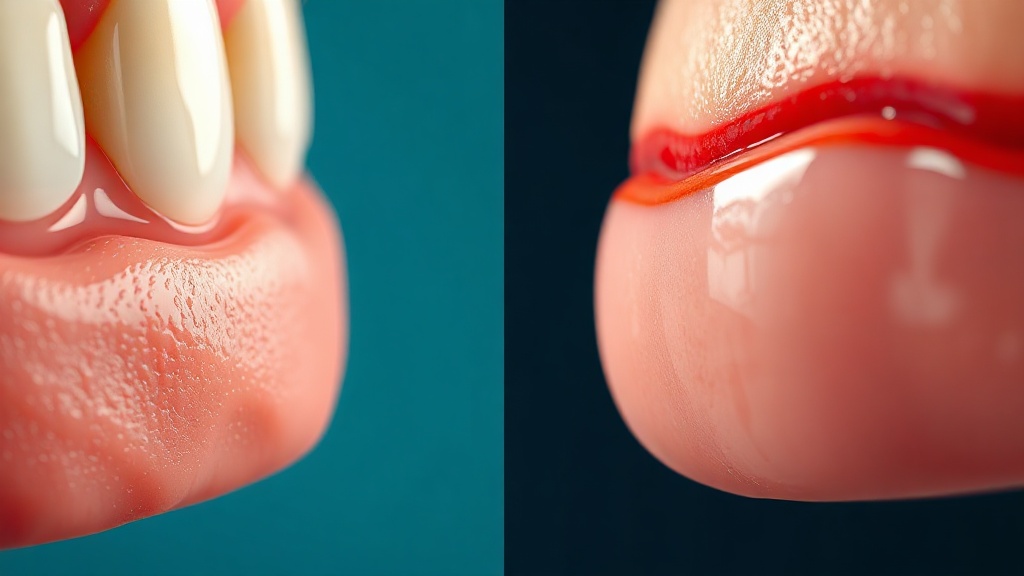
Healthy gums are firm, stippled and snug; the first visible sign of disease is a red, glossy, swollen margin that bleeds.
What the research actually shows
Every claim below maps to a named, peer-reviewed source in the Sources section. According to PubMed.
| Claim | Evidence | Source |
|---|---|---|
| Gingival bleeding is the most prevalent sign of gum disease; the deep pockets of advanced disease affect only about 10–15% of adults. | Global review of periodontal disease burden. | Petersen & Ogawa, 2012 |
| About 22.5% of US adults aged 30 and over have gum recession of at least 3 mm on at least one tooth. | US national survey of recession, bleeding and calculus. | Albandar & Kingman, NHANES III |
| Recession of at least 1 mm was seen in 87.9% of adults across seven European countries. | Multi-country prevalence study. | West et al., 2024 |
| Early gingivitis signs are reversible — all clinical measures returned to baseline once plaque control resumed. | Experimental-gingivitis clinical study. | Wellappuli et al., 2017 |
| The attachment and bone loss behind advanced signs is irreversible; it can be controlled but not regrown. | EFP consensus on prevention of periodontitis. | Chapple et al., 2015 |
Visible signs and what they mean
| Visible sign | What it looks like | Stage |
|---|---|---|
| Red or purplish gumline | Loss of firm pink stippling; glossy, swollen margin | Early (gingivitis) |
| Bleeding after brushing | Pink on the brush or in the sink | Early (gingivitis) |
| Receding gums | Teeth look longer; root may show | Advanced (periodontitis) |
| Visible tartar | Rough tan or brown deposit at the gumline | Ongoing — needs professional removal |
| Spacing or drifting teeth, pus | Gaps opening; teeth tipping; discharge at margin | Advanced (periodontitis) |
Why the pattern of the signs is a clue
Where the signs show up tells a story clinicians use to work out what is driving them. Recession that is worse on the cheek-facing surfaces of teeth, for instance, tends to point to mechanical causes — aggressive brushing, a hard brush, or tooth position — rather than to bacterial periodontitis, which typically damages the tissue between the teeth first. That is why a dentist looks not just at whether recession is present but at its shape and location. Generalised redness and bleeding across the whole gumline suggests widespread plaque-driven inflammation; a single angry, swollen spot with pus suggests a localised problem such as an abscess that needs prompt attention. The visible signs are also a staging tool: if the changes are limited to colour, swelling and bleeding, the disease is almost certainly still at the reversible surface stage. Once you can see recession, exposed roots, tartar built up below the margin, or teeth that have shifted, the process has reached the tissues underneath and become permanent. Reading the pattern is ultimately a professional job — but knowing what the signs mean helps you decide, sensibly, when to be seen.
Evidence you can act on.
Occasional emails — new research, new protocols, no noise.
How to check your gums at home
A one-minute mirror check done regularly catches the reversible signs early. It does not replace a dental exam, which can measure what you cannot see.
- 1
Look at the colour and shape of the gumline
weeklyIn good light, run your eye along where gum meets tooth. Firm, snug and pale coral pink (or evenly darker if that is your natural tone) is healthy. Redness, glossiness or puffiness at the margin is an early sign worth acting on.
- 2
Watch for bleeding as you clean
dailyNotice any pink on the brush, floss or in the sink. Occasional bleeding from a new spot can settle with better cleaning; regular bleeding is a genuine sign of inflammation, not of brushing too hard.
- 3
Check whether teeth look longer than they did
monthlyCompare against old photos if you can. Gums pulling back so more tooth or root shows is a sign of recession — which does not reverse on its own and is worth having assessed.
- 4
Look for tartar, gaps and shifting
monthlyRough tan or brown buildup at the gumline needs professional removal. New gaps between teeth, tipping, or a tooth that looks out of line are advanced signs that should prompt a visit.
- 5
Act on the early signs, escalate the advanced ones
as neededRedness and bleeding are your cue to sharpen daily plaque control and reassess in two weeks. Recession, pus, a lump or shifting teeth are cues to book a dentist rather than wait.

A regular look in the mirror is how you catch the red, bleeding, still-reversible signs before they become permanent ones.
A mirror check spots signs but cannot diagnose the disease or its stage — only a dentist or periodontist can measure pockets and bone. See one if you notice redness or bleeding that does not settle within a couple of weeks of good cleaning, if your gums are receding, if you can see or feel tartar at the gumline, or promptly if you see pus, a lump, or teeth that have shifted or loosened. Gum disease is a medical condition; visible signs are a reason to be assessed, not to self-treat with home remedies that cannot reach the cause.
Frequently asked questions
Sources
- 1.
- 2.
- 3.
- 4.
- 5.
- 6.

Fix your breath at the source.
The complete science-backed protocol — engineered to eliminate volatile sulfur compounds at the biological source.
Start the Breath Protocol →Related reading
Educational purposes only. The content on this page is not medical advice and is not a substitute for consultation with a qualified dental or medical professional.
More from the library
 Answers8 min
What Does Gum Disease Look Like? A Stage-by-Stage Visual Guide
A plain visual walk-through of how gum disease appears at every stage, and how to tell healthy gums from early and advanced disease.
Read →→ Guides8 min
Gum Disease Symptoms: The Early Warnings You Can Feel
The symptoms of gum disease you can feel and notice yourself, why bleeding comes first, and when a symptom means see a dentist now.
Read →→ Guides8 min
Gum Disease: The Complete Guide to Gingivitis and Periodontitis
What gum disease is, how it moves from reversible bleeding to permanent bone loss, and where home care actually helps.
Read →→ Guides8 min
How to Stop Receding Gums: What Actually Slows It
You cannot will your gum line back up, but you can often stop it from dropping further. Here is what the evidence supports.
Read →→ Answers8 min
Can Receding Gums Grow Back? The Honest Answer
It is the question everyone with recession asks. The straight answer, and what you can realistically do instead.
Read →→ Guides8 min
Periodontal Disease: The Full Spectrum, Explained
A clear, honest overview of periodontal disease as a spectrum: the difference between gingivitis and periodontitis, what the colloquial phrase gum disease misses, and why early bleeding is the signal to act.
Read →→