
Oral Hygiene for Tonsil Stones
What brushing, tongue cleaning, mouthwash and irrigation genuinely do for tonsil stones - and the honest reason ordinary hygiene can't reach the crypt where they form.
- Good oral hygiene genuinely helps with tonsil stones - but mainly by lowering the overall bacterial load and the sulfur gases behind the smell, not by removing the stones themselves.
- The honest limit: a toothbrush, floss and mouthwash cannot reach inside a tonsil crypt. In one study, a month of tongue scraping and a zinc rinse cut general mouth odour but barely touched the odour coming from the tonsils.
- Most bad breath - around 85% - starts with bacteria in the mouth, and the tongue is the single biggest source, so tongue cleaning and a good rinse do meaningful work.
- Chemical rinses alone struggle against a mature biofilm; the deep core survives, which is why gentle physical clearing of the crypt is the piece hygiene cannot supply.
- Hygiene is the foundation, not the whole fix: pair a solid daily routine with gentle, low-pressure crypt clearing, and never gouge with sharp tools.
Oral hygiene helps tonsil stones by reducing the overall bacterial load and the sulfur gases that cause the smell, but it cannot reach inside the tonsil crypts where stones form. Brushing, tongue cleaning and an alcohol-free rinse are the foundation; pair them with gentle, low-pressure crypt clearing for the part hygiene simply cannot do.
What hygiene actually does
It helps to be precise about what oral hygiene can and cannot do for tonsil stones, because the two get muddled constantly. Start with what it does well. The large majority of bad breath - commonly put at around 85% - originates from bacterial activity in the mouth, and the tongue coated surface is the single biggest reservoir of the sulfur-producing bacteria involved. Cleaning the tongue and lowering plaque therefore does real, measurable work: removing tongue coating has been shown to sharply cut the volatile sulfur compounds in mouth air, and plaque control is widely described as the basis of odour control. A good routine also thins out the general bacterial population that seeds the crypts in the first place. So hygiene is not window dressing - it improves the whole environment your tonsils sit in, and for many people it noticeably reduces day-to-day breath and taste problems. What it cannot do is reach the one place a tonsil stone actually lives. That distinction - powerful across the mouth, blind to the inside of a crypt - is the key to using hygiene well without expecting it to do a job it was never built for.
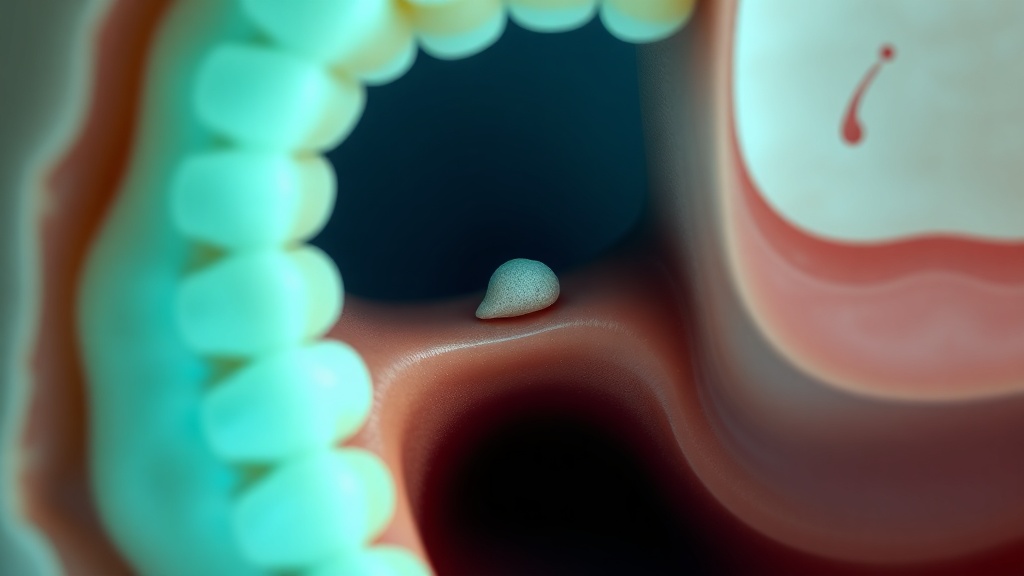
Brushing and rinsing cover the teeth, tongue and gums, but the shadowed depth of a tonsil crypt stays out of reach.
What the research actually shows
Every claim below maps to a named, peer-reviewed source in the Sources section. According to PubMed.
| Claim | Evidence | Source |
|---|---|---|
| Ordinary hygiene does not clear tonsil odour: a month of tongue scraping plus a zinc rinse cut general mouth malodour from 4.2 to 2.2 but left tonsil odour almost unchanged (3.7 to 3.0). | One-month oral-hygiene intervention with odour scoring. | Talebian et al., 2008 |
| Cleaning the tongue does meaningful work: removing tongue coating cut mouth-air volatile sulfur compounds to about 49% of the starting level. | Controlled tongue-coating removal study. | Yaegaki & Sanada, 1992 |
| A cetylpyridinium chloride rinse added to brushing lowered malodour about 49% at four hours, with sulfur gases falling only in the rinse group. | Randomised controlled trial (n=70). | Feres et al., 2015 |
| Chemicals alone cannot finish the job: even after 10 minutes of chlorhexidine, measurable respiration and fermentation continued deep inside a natural biofilm. | Real-time microsensor analysis of dental biofilm. | von Ohle et al., 2010 |
| A single oral-irrigation cycle significantly reduced total volatile sulfur compounds and methyl mercaptan - direct evidence that a gentle flush lowers odour gases. | Independent trial of a multi-channel oral irrigator (n=20). | Karm et al., 2025 |
What each step does - and its limit
| Hygiene step | What it does well | Its honest limit |
|---|---|---|
| Brushing and flossing | Lowers overall plaque and bacterial load | Cannot reach inside a tonsil crypt |
| Tongue cleaning | Cuts the biggest single source of sulfur gases | The effect fades within about half an hour |
| Alcohol-free / CPC rinse | Reduces malodour for a few hours | Rinses over the crypt, not into it |
| Low-pressure water irrigation | Gently flushes debris toward release | Needs care - never high pressure |
| Staying hydrated | Keeps saliva flushing debris away | Supportive, not a stand-alone fix |
Why chemicals can't finish the job
There is a deeper reason mouthwash alone rarely settles tonsil stones, and it comes down to what a stone is. A tonsil stone is not an inert pebble but a living biofilm - an organised bacterial community with its own internal chemistry and a nearly oxygen-free core. Biofilms are famously resistant to being killed from the outside. In real-time studies of natural dental biofilm, even after ten minutes of chlorhexidine - one of the strongest antiseptics in dentistry - measurable respiration and fermentation continued deep inside; the surface layers took the hit while the core carried on. The practical lesson is that a chemical washing over the outside of a crypt cannot dismantle the material packed within it. What actually works against a mature biofilm is physical disruption: gently dislodging and flushing the debris out so it cannot keep regenerating. That is exactly the gap a good hygiene routine leaves open, and exactly why the sensible approach pairs everyday brushing, tongue cleaning and rinsing with a gentle, low-pressure flush aimed at the crypt itself. Neither half is enough alone; together they cover both the whole-mouth environment and the specific pocket where a stone forms.
Evidence you can act on.
Occasional emails — new research, new protocols, no noise.
A tonsil-stone-aware daily routine
None of this treats a disease - it keeps the mouth clean and the crypts clear so debris never sits long enough to organise and smell. Build the routine in this order.
- 1
Clean your tongue every day
under a minuteThe tongue coated surface is the single biggest source of the sulfur gases behind bad breath, and clearing it measurably lowers those gases. A gentle scraper or a soft brush along the back of the tongue is the highest-value habit for breath, though the effect is temporary, so make it daily.
- 2
Brush and floss thoroughly, twice a day
twice dailyPlaque control is described as the basis of odour control, so a complete brush-and-floss routine thins the general bacterial population that seeds the crypts. It will not empty a crypt, but it lowers the background load that keeps feeding it.
- 3
Add an alcohol-free rinse
once or twice dailyA cetylpyridinium-chloride or zinc rinse can lower malodour for several hours; zinc works by binding sulfur into non-volatile, non-smelly compounds - a cosmetic deodorant action. Choose alcohol-free to avoid drying the mouth, which would let debris sit.
- 4
Add a gentle low-pressure crypt flush
under a minuteThis is the step ordinary hygiene cannot cover. A gentle, low-pressure water rinse aimed at the tonsil area physically dislodges debris; a single irrigation cycle has been shown to lower odour gases, and oral irrigation is considered safe when used appropriately. Keep the pressure low.
- 5
Never gouge with sharp or rigid tools
-Rigid picks, metal tools and fingernails can puncture the delicate tonsil tissue and cause bleeding or infection - the literature includes cases of serious oropharyngeal injury from self-instrumentation. If a stone will not release gently, leave it or see a professional.
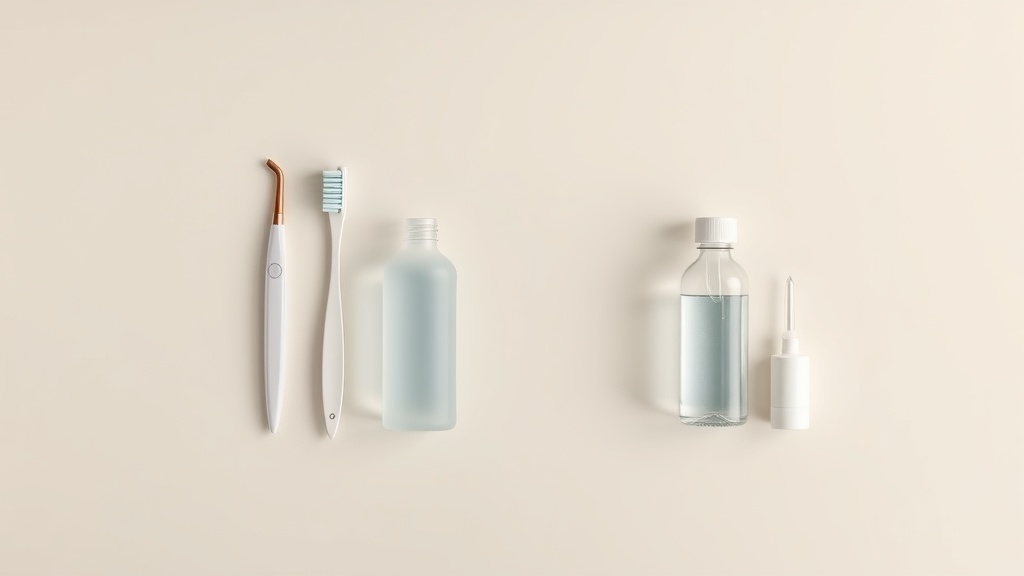
A tonsil-stone-aware routine layers whole-mouth hygiene with one gentle, crypt-directed flush.
Good hygiene manages most tonsil stones, but some signs need an in-person look. See a dentist or ENT if one tonsil stays visibly larger than the other, if you have repeated throat infections, ongoing pain or difficulty swallowing, persistent ear pain, or any bleeding. A lasting one-sided tonsil enlargement in particular should be assessed by a professional to rule out other causes rather than managed with hygiene alone.
Frequently asked questions
Sources
- 1.
- 2.
- 3.
- 4.
- 5.
- 6.
- 7.
- 8.
- 9.
- 10.
- 11.
- 12.

Fix your breath at the source.
The complete science-backed protocol — engineered to eliminate volatile sulfur compounds at the biological source.
Start the Breath Protocol →Related reading
Educational purposes only. The content on this page is not medical advice and is not a substitute for consultation with a qualified dental or medical professional.
More from the library
 Guides9 min
How to Prevent Tonsil Stones (Reduce How Often They Come Back)
Why prevention really means reducing recurrence, and the honest, low-effort habits that keep debris from settling in your crypts long enough to harden.
Read →→ Causes8 min
How Do Tonsil Stones Form? The Biology, Honestly Explained
The unglamorous truth about what a tonsil stone is, how it builds up in the folds of your tonsils, and why the crypts that make them are simply part of your anatomy.
Read →→ Best Of8 min
Best Mouthwash for Tonsil Stones: What Actually Helps
A rinse can freshen and flush, but it cannot dislodge a deep stone. Here is how to choose well.
Read →→ Answers8 min
Why Do My Tonsil Stones Smell So Bad? The Sulfur Science
The unmistakable, sulfurous smell of a tonsil stone has a specific bacterial chemistry behind it — and understanding it points straight to what actually helps.
Read →→ Answers8 min
Can Tonsil Stones Make You Sick? An Honest Look
A calm, honest look at whether tonsil stones can actually make you unwell, the local nuisances they do cause, and the red flags worth taking seriously.
Read →→ Answers8 min
Can a Dentist Remove Tonsil Stones? Your Professional Options
Who actually removes tonsil stones, the in-office options from simple expression to crypt reshaping, and how to know when a professional is worth it.
Read →→