Natural Cure for Receding Gums: An Honest Guide
Why there is no natural cure that regrows gums, and what gentle, natural care can genuinely do instead.

- There is no natural remedy that regrows lost gum tissue. Oil pulling, aloe, salt-water rinses and herbal pastes cannot rebuild a receded margin — the only thing that re-covers an exposed root is gum surgery.
- That is the honest headline much of the internet buries. But no cure is not the same as nothing helps: gentle, natural care can genuinely slow or stop recession from getting worse and support healthier gums.
- Oil pulling is the most over-claimed of all. In controlled research it acts, at best, as a minor add-on to normal brushing and produced no significant change in gum inflammation — it is not a cure and should never replace brushing or the dentist.
- What natural approaches can honestly do is remove the causes of recession: controlling plaque gently, eating an anti-inflammatory diet, and getting enough vitamin C to keep gums from bleeding.
- If you already have visible recession, a periodontist is the right call. Modern grafting can cover exposed roots; natural care protects the rest of your mouth but does not replace that assessment.
No natural remedy regrows receding gums — not oil pulling, not aloe, not salt water. An exposed tooth root is re-covered only by gum surgery. What gentle, natural care can honestly do is slow or halt further recession by controlling the plaque and inflammation behind it and supporting your remaining healthy gum. For tissue already lost, see a periodontist.
Why cure is the wrong word
To see why no rinse or oil can cure receding gums, it helps to understand what recession actually is. It is not a stain or a film sitting on the surface; it is a loss of attachment — the gum and its underlying fibres have detached and migrated down the root, and that tissue is simply gone. The body does not spontaneously rebuild it. In the entire clinical literature, the only documented case of gum tissue creeping back up over an exposed root is a phenomenon called creeping attachment, and it happens only after mucogingival surgery has already been performed — and even then it is described as not always complete nor entirely predictable. Re-covering an exposed root reliably is a surgical procedure, typically a connective-tissue graft combined with a coronally advanced flap. No paste, oil, tea or supplement re-grows the attachment. This matters because desperate, honest people search for a natural cure precisely when they are most vulnerable — and the market is full of pages happy to sell them a false promise. The compassionate, truthful answer is the one a good dentist gives: the gum you have lost will not grow back on its own, but you have real power to stop losing more, and surgery exists for what is already gone.
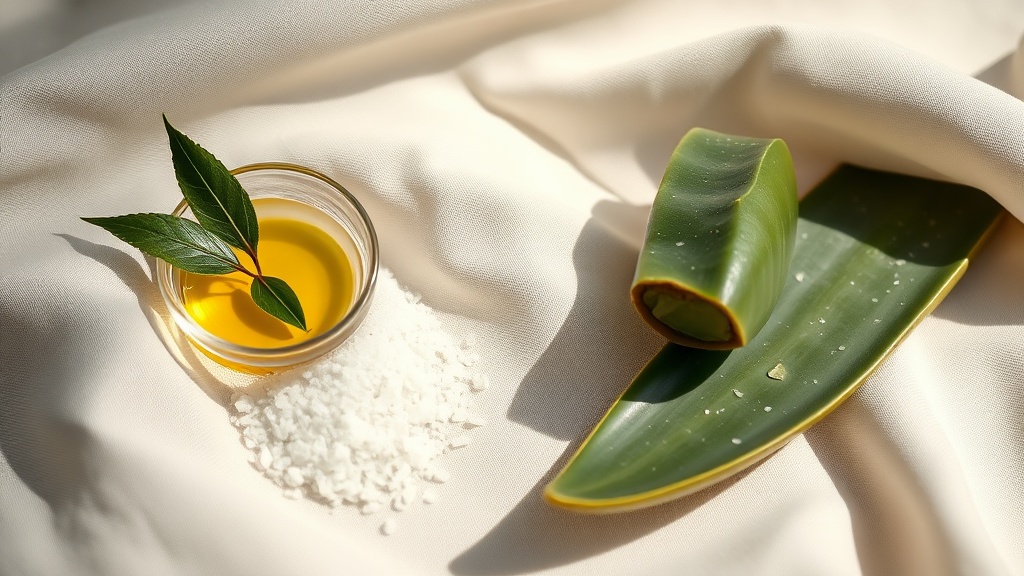
Natural ingredients can support a clean, calm mouth — but none of them rebuilds gum tissue that has already receded.
What the research actually shows
Every claim below maps to a named, peer-reviewed source in the Sources section. According to PubMed.
| Claim | Evidence | Source |
|---|---|---|
| The only spontaneous re-coverage of an exposed root in the literature (creeping attachment) occurs after gum surgery, and even then is not always complete or predictable. | Review of creeping attachment. | Wan et al., 2020 |
| Oil pulling may be recommended only as an adjuvant to mechanical dental cleaning, and produced no significant change in the gingival index — it is not a standalone treatment. | Systematic review. | Zurcher et al., 2025 |
| Adjuncts added to professional care improve outcomes by only about 0.2-0.6 mm — described as of little clinical relevance on their own. | ADA systematic review / meta-analysis. | Smiley et al., 2015 |
| Vitamin C supplementation improves gingival bleeding but does not reduce pocket depth or restore lost attachment in periodontitis. | Systematic review. | Fageeh et al., 2021 |
| Covering an exposed root reliably is achieved by a connective-tissue graft with a coronally advanced flap, which ranks best among surgical techniques — not by any topical remedy. | Network meta-analysis. | Chambrone et al., 2022 |
Popular natural remedies: claim vs reality
| Remedy | Common online claim | What it can honestly do |
|---|---|---|
| Oil pulling | Regrows gums and cures recession | Minor plaque adjunct at best; no gum regrowth, and it must not replace brushing |
| Aloe vera gel | Rebuilds receded gum tissue | May soothe irritated tissue; no evidence it regrows a lost margin |
| Salt-water rinse | Draws out infection and heals gums back | Soothes and supports tissue healing; does not draw out infection or regrow gum |
| Green tea | Reverses gum disease on its own | Modest added benefit alongside professional care; not a standalone reversal |
| Vitamin C | Regrows gums | Fixes deficiency-related bleeding and supports collagen; does not restore lost attachment |
What natural care can honestly do
Reframed honestly, natural care is not about regrowth — it is about removing the causes so you stop losing ground. Recession is driven by mechanical wear and by plaque-fuelled inflammation, and gentle, low-tech habits attack both. Softening your brushing and cleaning between the teeth quietly removes the plaque that inflames the margin. Diet plays a real, if modest, role: in a controlled trial an anti-inflammatory diet lowered gum bleeding even though plaque levels were unchanged, meaning what you eat can calm gums independently of brushing. Vitamin C has a legitimate, specific place, too — it is an obligatory cofactor for building collagen, and correcting a low intake reliably resolves the bleeding that deficiency causes; note the important distinction that vitamin C builds collagen, whereas eating collagen has no gum evidence at all. Even the humble salt rinse has an honest story: warm saline supports the gum's own healing by encouraging the repair cells that rebuild tissue, rather than by drawing out infection as folklore claims. None of this is a cure, and none of it should displace a professional. But taken together, gentle natural habits are a genuine, evidence-consistent way to protect the gum you still have.
Evidence you can act on.
Occasional emails — new research, new protocols, no noise.
A natural gum-care routine that actually helps
This is what natural care can honestly deliver: slowing recession and supporting healthy gums by removing the causes. None of these steps cures recession or regrows tissue — for that, see the callout below.
- 1
Fix the mechanical cause first
every brushThe most natural thing you can do is stop wearing your gums away. Switch to a soft brush, hold it lightly, and use gentle angled strokes instead of a hard horizontal scrub. This removes the single most common driver of recession at no cost.
- 2
Control gumline plaque gently
dailyClean between the teeth every day with interdental brushes or gentle floss. If you enjoy oil pulling, treat it strictly as an optional extra after brushing — the evidence supports it only as a minor adjunct, never as a replacement for mechanical cleaning.
- 3
Eat for calmer gums
ongoingFavour an anti-inflammatory pattern — vegetables, oily fish, less refined sugar — which has been shown to lower gum bleeding on its own. Get enough vitamin C from food to support collagen and prevent deficiency bleeding; more is not better, and megadoses are unnecessary.
- 4
Use soothing rinses for what they are
as neededA warm salt-water rinse can soothe a sore area and support the tissue's natural healing after gentle cleaning. Use it for comfort and support, not with the expectation that it draws out infection or grows gum back.
- 5
Get anything already receded assessed
once, then as advisedIf root is already exposed, natural care cannot cover it. Book a periodontist to measure the recession, find its cause, and tell you whether grafting is worthwhile. This is the step that addresses lost tissue — the rest protects what remains.

A warm salt rinse soothes and supports healing — a fair, honest role, and a world away from a cure.
If you can already see exposed root, a tooth looks longer than its neighbours, or recession seems to be advancing, see a periodontist rather than reaching for another remedy. Root coverage is a surgical procedure — most often a connective-tissue graft with a coronally advanced flap — and it is the only reliable way to cover tissue that is already gone. A specialist can also tell you whether a particular site even needs surgery or simply needs stabilising. Please do not let a distrust of dentists, or a promising online cure, delay an assessment: recession is easier to address the earlier it is caught.
Frequently asked questions
Sources
- 1.
- 2.
- 3.
- 4.
- 5.
- 6.
- 7.
- 8.
- 9.
- 10.

Fix your breath at the source.
The complete science-backed protocol — engineered to eliminate volatile sulfur compounds at the biological source.
Start the Breath Protocol →Related reading
Educational purposes only. The content on this page is not medical advice and is not a substitute for consultation with a qualified dental or medical professional.
More from the library
 Answers8 min
Can Receding Gums Grow Back? The Honest Answer
It is the question everyone with recession asks. The straight answer, and what you can realistically do instead.
Read →→ Guides8 min
Gum Recession Treatment: Every Option, Compared
The right treatment depends on why your gums receded and how far. Here is the full ladder, with what each rung can honestly deliver.
Read →→ Guides8 min
How to Stop Receding Gums: What Actually Slows It
You cannot will your gum line back up, but you can often stop it from dropping further. Here is what the evidence supports.
Read →→ Guides8 min
How to Prevent Gum Recession: The Complete Playbook
The two real causes of receding gums, and the daily habits that protect the gum tissue you still have.
Read →→ Guides8 min
Gum Disease Symptoms: The Early Warnings You Can Feel
The symptoms of gum disease you can feel and notice yourself, why bleeding comes first, and when a symptom means see a dentist now.
Read →→ Guides8 min
Periodontal Disease: The Full Spectrum, Explained
A clear, honest overview of periodontal disease as a spectrum: the difference between gingivitis and periodontitis, what the colloquial phrase gum disease misses, and why early bleeding is the signal to act.
Read →→