How to Remove Tonsil Stones You Can't See
Why you can feel a tonsil stone you can never spot in the mirror — how to locate a deep, hidden stone, coax it loose safely, and when to leave it to clear on its own.
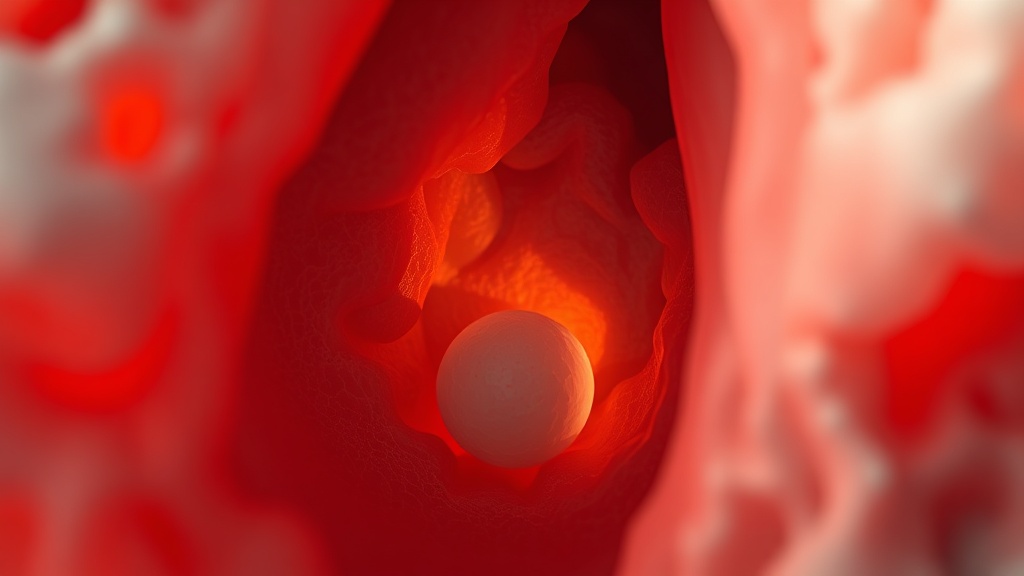
- Many tonsil stones are tiny and wedged deep in the folds of the tonsil, so you feel them — a scratch, a foul taste, a sense of something stuck — long before you could ever see one in the mirror.
- Most tonsil stones are small: in one large imaging study 86.7% were 3 mm or smaller, which is exactly why so many stay hidden in the shadow of a crypt.
- A stone you cannot see is usually one you should not dig for. The safest first move is gentle, low-pressure water irrigation — never a pick, a fingernail or a cotton bud jammed into the throat.
- Hidden stones very often clear themselves: on repeat scans most stones that shifted drifted toward the throat opening, and a meaningful share disappeared entirely on their own.
- This is about clearing debris and freshening breath, not treating a disease — and a stone that stays stuck, or a tonsil that stays one-sidedly swollen, is a reason to see a professional rather than to push harder.
You often cannot see a tonsil stone because it is small and lodged deep inside a crypt, out of your line of sight. Do not dig for it. Instead use gentle low-pressure water irrigation, warm salt-water gargles and light coughing to coax it loose — and know that many hidden stones work their own way out over time.
Why you can feel a stone you cannot see
The surface of your tonsils is folded into deep pockets called crypts, and a hidden stone is almost always sitting down inside one of them, behind a narrow opening that throws the whole pocket into shadow. Size is the second half of the story. When researchers measured tonsil stones on scans, the overwhelming majority were only a couple of millimetres across — small enough to disappear entirely into a fold while still being large enough to irritate the tissue around it. That mismatch is why the sensation and the visibility come apart: studies of people with tonsil stones find that symptoms such as a foreign-body feeling, an irritable cough or a foul taste are not related to how big the stone is. A speck you will never spot can still rub against the crypt wall and, more tellingly, can still smell. The debris inside a stone is colonised by sulfur-producing anaerobic bacteria, the same class behind ordinary bad breath, so a hidden stone often announces itself as a metallic or rotten taste that appears from nowhere. In short: you are not imagining it, and you do not need to see a stone to know one is there.
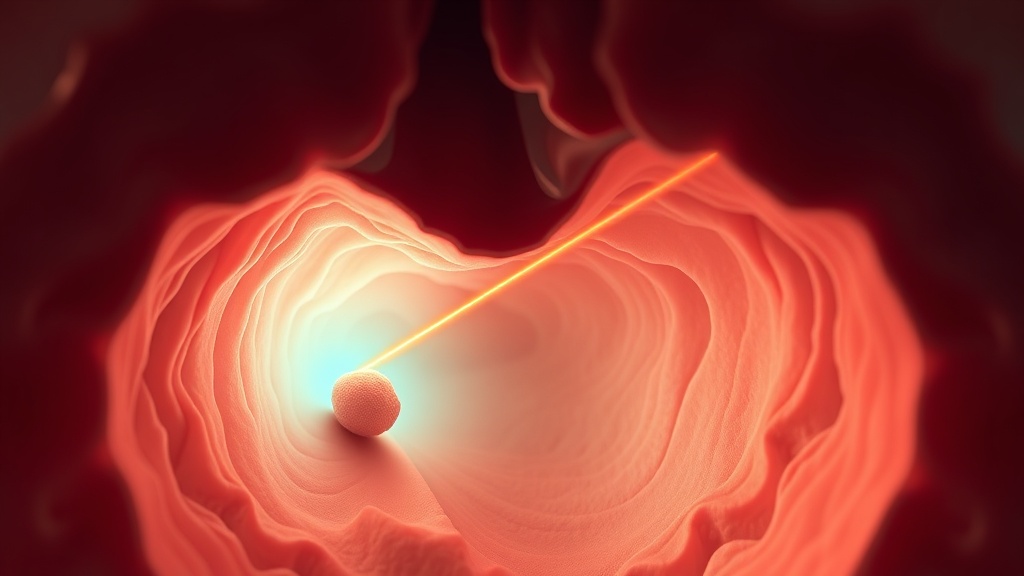
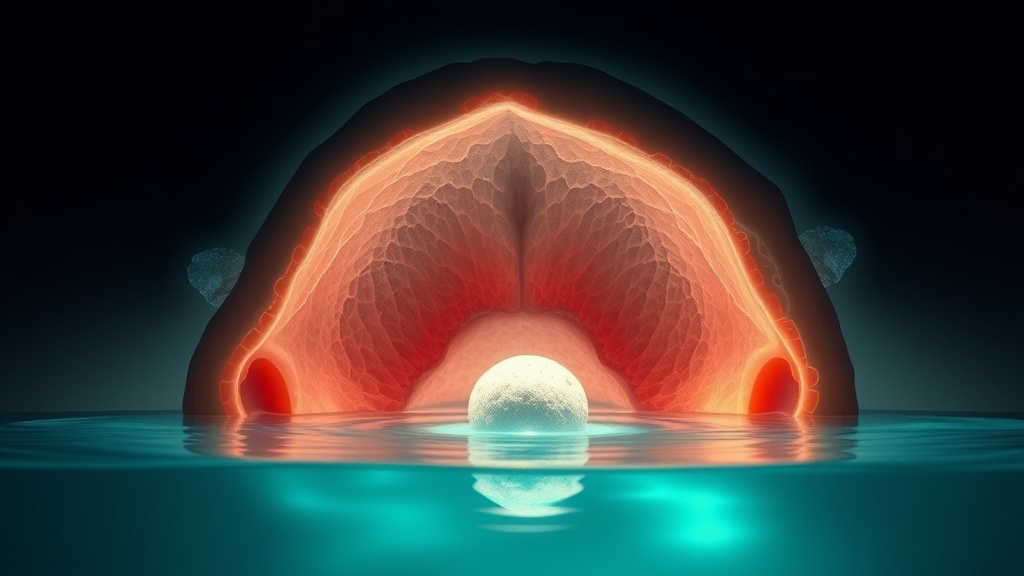
A hidden stone usually sits deep in a narrow crypt, in shadow and out of your line of sight — felt long before it can be seen.
What the research actually shows
Every claim below maps to a named, peer-reviewed source in the Sources section. According to PubMed.
| Claim | Evidence | Source |
|---|---|---|
| Most tonsil stones are tiny — in one large CT study 86.7% were 3 mm or smaller, with a mean of about 2.3 mm — which is why so many stay out of sight. | CT review of 2,710 head-and-neck scans. | Yu et al., 2017 |
| Tonsil stones appear on roughly 30% of CT scans, averaging about 2.7 per person, and most are small and cause no symptoms at all. | Largest CT prevalence series (n=3,886). | Kim et al., 2018 |
| The symptoms of a tonsil stone — foreign-body sensation, irritable cough, foul taste — are unrelated to its size, so a stone too small to see can still be felt. | Clinical review of tonsillolith presentation. | Crameri et al., 2016 |
| Hidden stones tend to clear themselves: of those that moved on repeat imaging, 92% migrated toward the throat opening and 12.1% disappeared entirely. | Follow-up CT of 326 scan pairs. | Yamashita et al., 2021 |
| A single gentle water-irrigation cycle significantly lowered the volatile sulfur gases behind the smell — evidence that flushing helps even when you cannot reach a stone directly. | Independent trial of a single oral-irrigation cycle. | Karm et al., 2025 |
Where hidden stones hide — and the safe first move
| Where it is stuck | Why you cannot see it | Safe first move |
|---|---|---|
| Deep in a branched crypt | The opening is narrow and shadowed, hiding the stone behind a fold of tissue | A low-pressure water rinse aimed at the whole tonsil area |
| High on the upper pole of the tonsil | It sits above your normal line of sight in a mirror | Tip the head back, use a small torch, and gargle — not a rigid probe |
| Submerged in the crypt | Only a faint pale tip shows, if anything | Leave it be; most surface over time or wash out with rinsing |
| Felt but genuinely invisible | It may be very small, or already on the move toward the opening | Warm salt-water gargle and a few gentle coughs |
Why digging for a hidden stone backfires
The instinct to reach in and pop out a stone you can feel is completely understandable — and it is the one thing most likely to go wrong. The tissue at the back of the throat is delicate and richly supplied with blood; the tonsil bed bleeds readily, and among people who had tonsils removed specifically for stones, the stone group had the highest raw rate of post-operative bleeding of any group. Rigid tools make it worse: doctors have documented serious oropharyngeal injuries caused by nothing more exotic than a toothbrush pushed too far back. When you cannot see what you are aiming at, a pick, a bobby pin or a fingernail is far more likely to gouge the crypt wall, push the stone deeper, or trigger a violent gag than to lift a stone cleanly out. There is a gentler logic that actually works. A stone is a soft, living biofilm before it hardens, and biofilm is dislodged by hydraulic force — a cushion of moving water — rather than by scraping. That is why a low-pressure irrigator is the tool of choice: it disrupts and floats debris out of a pocket you can neither see nor safely touch, and reviews of these devices find them safe and well accepted when used appropriately.
Evidence you can act on.
Occasional emails — new research, new protocols, no noise.
How to coax out a stone you cannot see
You cannot aim precisely at something you cannot see, so the goal shifts from targeting the stone to flushing and loosening the whole area until the stone surfaces or washes free. None of this treats a disease — it simply clears debris and freshens breath.
- 1
Start with gentle, low-pressure water irrigation
under a minuteA slim irrigator tip on its lowest setting, aimed across the tonsil rather than straight into it, floods the crypts with a cushion of water that lifts debris out. A single irrigation cycle has been shown to lower the sulfur gases behind the smell. Keep the pressure low — forceful jets can bruise or bleed the tissue.
- 2
Loosen and soothe with a warm salt-water gargle
30 seconds, twice dailyA warm salt-water gargle will not kill the bacteria, but it loosens surface debris and calms the irritated tissue around a hidden stone, making it easier for the stone to shift toward the opening. It is low-risk and comforting, which matters when a crypt is sore.
- 3
Locate gently, and work with your gag reflex
as neededIn good light, with a small torch and mirror, tip your head and say a long ahh to expose more of the tonsil. If you gag easily, the smart move is to reduce the trigger — a smaller tip, less contact with the very back of the mouth — rather than to fight the reflex. If you still cannot see the stone, that is your cue to stop looking and let flushing do the work.
- 4
Give it time — the body tends to expel them
days to weeksMost stones that move drift toward the throat opening, where they are swallowed or coughed out, and small tonsil stones are generally managed by watchful waiting rather than intervention. A hidden stone you leave alone is very often a stone that quietly disappears.
- 5
Never gouge with sharp, metal or rigid tools
—No fingernails, pins, picks or cotton-bud sticks jabbed toward a stone you cannot see. The risk of bleeding, deeper impaction and infection outweighs any benefit. If a stone will not release with gentle rinsing, leave it — or ask a professional to remove it.
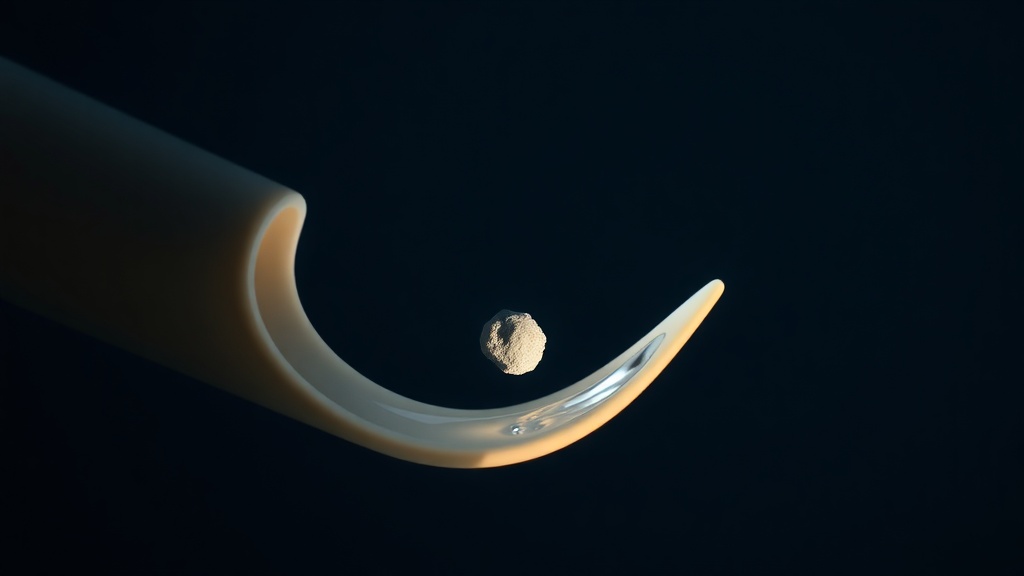
When you cannot see the stone, a low-pressure cushion of water flushes the whole crypt — floating debris out without scraping delicate tissue.
A stone you cannot see is rarely an emergency, but stop trying to remove it and get assessed in person if one tonsil is visibly larger than the other and stays that way, if you have persistent difficulty or pain swallowing, ongoing ear pain, repeated throat infections, or any bleeding. Do not use the absence of a fever as reassurance — serious throat infections often present without one. A lasting one-sided difference in your tonsils in particular should always be checked by a clinician rather than probed at home.
Frequently asked questions
Sources
- 1.
- 2.
- 3.
- 4.
- 5.
- 6.
- 7.
- 8.
- 9.
- 10.

Fix your breath at the source.
The complete science-backed protocol — engineered to eliminate volatile sulfur compounds at the biological source.
Start the Breath Protocol →Related reading
Educational purposes only. The content on this page is not medical advice and is not a substitute for consultation with a qualified dental or medical professional.
More from the library
 Guides9 min
How to Make Tonsil Stones Fall Out (Gently and Safely)
Why most tonsil stones fall out by themselves, and the gentle, low-pressure way to help one along without ever gouging at delicate tonsil tissue.
Read →→ Best Of8 min
Low-Pressure Water Flosser for Tonsil Stones
Why a low-pressure flosser is the tonsil-safe choice, what pressure range to look for, and how to clear crypt debris without bruising the tissue.
Read →→ Answers8 min
What Do Tonsil Stones Smell Like? The Science of the Odour
Why tonsil stones smell the way they do, which gases are responsible, and how to lower the odour without simply masking it.
Read →→ Causes8 min
How Do Tonsil Stones Form? The Biology, Honestly Explained
The unglamorous truth about what a tonsil stone is, how it builds up in the folds of your tonsils, and why the crypts that make them are simply part of your anatomy.
Read →→ Answers8 min
Can Tonsil Stones Make You Sick? An Honest Look
A calm, honest look at whether tonsil stones can actually make you unwell, the local nuisances they do cause, and the red flags worth taking seriously.
Read →→ Answers8 min
Can a Dentist Remove Tonsil Stones? Your Professional Options
Who actually removes tonsil stones, the in-office options from simple expression to crypt reshaping, and how to know when a professional is worth it.
Read →→