How to Get Rid of a Metallic Taste in Your Mouth
Practical, honest steps to freshen a metallic or coin-like taste - and how to tell a passing nuisance from something worth a professional eye.

- A metallic taste (a form of dysgeusia) is almost always a symptom of something else - a dry mouth, a coated tongue, a medication, or a passing infection - so the fastest relief comes from easing that trigger rather than masking the taste.
- Saliva is your mouth's built-in rinse, and a dry mouth is one of the most common companions of a metallic taste, so sipping water and gently stimulating saliva is often the single most useful thing you can do.
- Much of what we experience as taste is really the bacterial coating on the back of the tongue, which is why gentle tongue cleaning can noticeably freshen both taste and breath.
- Many everyday medications and supplements list a metallic taste as a known side effect; you cannot stop a prescription on your own, but you can review timing, food and rinsing around it with your prescriber.
- Most metallic tastes are short-lived and harmless, but one that lingers for weeks, or arrives with pain, swelling or bleeding gums, is a signal to have a dentist or doctor take a look.
To clear a metallic taste, treat the cause rather than the sensation. Keep your mouth well hydrated so saliva can rinse, clean your tongue gently once a day, rule out a medication or supplement trigger with your prescriber, and tighten up daily oral hygiene. If the taste lingers for weeks, have a professional take a look.
Why your mouth tastes like metal
What we casually call taste is really a blend of three things working together: the taste buds on your tongue, the smell receptors in your nose, and the thin film of saliva that carries flavour molecules to both. A metallic or coin-like taste - clinicians call any distorted taste dysgeusia - usually means one of those three has been nudged off balance. The most common nudge is a dry mouth. When saliva runs low, it stops rinsing the tongue, ions and bacteria concentrate on its surface, and the taste that reaches your buds turns sharp and coppery. A second common source is the living coating on the back of the tongue, an organised community of sulfur-producing bacteria that colours both taste and breath. A third is anything that literally reaches the taste buds through the bloodstream or saliva - a new tablet, a supplement, or even a trace of blood from tender gums, whose iron reads as metal. Understanding which of these is at work is the whole game, because each one has a gentle, everyday fix.
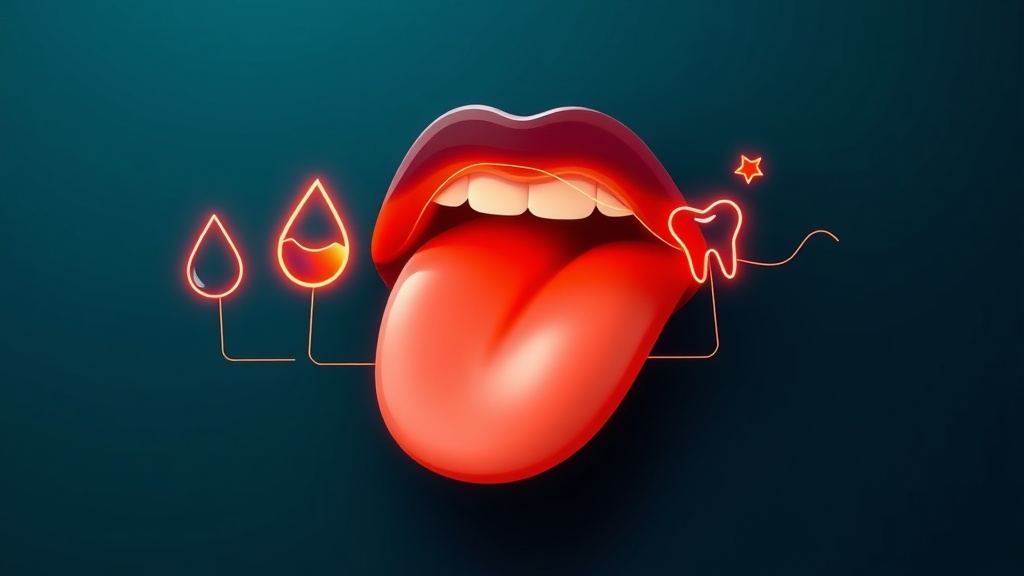
A metallic taste usually traces back to one of a few everyday sources - dryness, a coated tongue, a medication, or tender gums.
What the research actually shows
Every claim below maps to a named, peer-reviewed source in the Sources section. According to PubMed.
| Claim | Evidence | Source |
|---|---|---|
| A dry mouth is common and closely tied to altered taste: a meta-analysis put the global prevalence of dry-mouth symptoms at about 23%, and lists dysgeusia and halitosis among its direct consequences. | Clinical review in JAMA synthesising 26 population studies. | Stoopler et al., 2024 |
| Dysgeusia has many identifiable and often reversible causes - medications, systemic conditions, infections and nutritional gaps - so pinning down the trigger guides the fix. | Literature review of the etiologies and management of taste disorders. | Jafari et al., 2021 |
| A large share of taste and odour comes from the bacterial coating on the tongue; mechanical tongue cleaning measurably lowers the volatile sulfur compounds behind it. | Cochrane systematic review of tongue scraping. | Outhouse et al., 2006 |
| The great majority of bad-taste and bad-breath complaints originate inside the mouth itself, which is why simple oral measures resolve most cases. | Clinical review of halitosis in the BMJ. | Scully & Porter, 2008 |
| Taste disturbance is a well-documented effect of some cancer treatments, underlining that taste tracks whatever is happening to the mouth and body. | Review of early side effects of head-and-neck radiotherapy. | Brook, 2021 |
Common triggers and what you can do
| Trigger | Why it can taste metallic | Can you ease it yourself? |
|---|---|---|
| Dry mouth / low saliva | Less rinsing, so ions and bacteria concentrate on the tongue | Yes - hydrate and stimulate saliva |
| A coated tongue | Sulfur-producing bacteria distort both taste and smell | Yes - gentle daily cleaning |
| Medications or supplements | The drug or a metabolite reaches saliva and taste buds | Partly - never stop a prescription; ask about timing |
| Tender, bleeding gums | Iron in a trace of blood reads as a coppery taste | Partly - gentle hygiene helps; persistent bleeding needs a check |
| A cold or sinus infection | Inflammation and mucus distort taste and smell | Usually - it fades as you recover |
Why just brushing harder often is not enough
When a taste will not shift, the instinct is to scrub harder and reach for the strongest mouthwash on the shelf. That usually backfires. The metallic taste sits largely on the surface of the tongue and in the saliva film, not on the teeth, so aggressive brushing misses it - while a high-alcohol rinse can dry the mouth further and leave the tongue even more hospitable to the bacteria that started the problem. The more reliable approach is to change the environment rather than attack it: keep saliva flowing, lift the coating off the tongue gently, and lower the overall bacterial load without stripping the mouth dry. Think of it as tidying the room rather than sandblasting it. This is also why a metallic taste that comes with a new medication rarely responds to any amount of hygiene - there the answer is a conversation with the prescriber about timing or alternatives, not a harder toothbrush.
Evidence you can act on.
Occasional emails — new research, new protocols, no noise.
How to freshen a metallic taste, step by step
None of this treats a disease - it simply removes the everyday triggers of a distorted taste and keeps your mouth in a fresher, better-rinsed state. Work through them in order and give each a few days.
- 1
Rehydrate and wake up your saliva
all dayBecause a dry mouth is the most common companion of a metallic taste, this comes first. Sip water steadily through the day rather than in large gulps, and stimulate saliva with sugar-free gum or a xylitol lozenge, especially after coffee, alcohol or a long stretch of talking. If you breathe through your mouth at night, a glass of water by the bed and nasal breathing where you can both help.
- 2
Clean your tongue gently, once a day
under a minuteSince a large share of taste and odour lives in the tongue coating, lifting it makes a real difference. Use a scraper or a soft brush, draw it from back to front a few times, rinse, and stop - there is no benefit to scrubbing until it stings. Once daily is plenty.
- 3
Audit your medications and supplements
one appointmentBring a full list of everything you take - prescriptions, iron or zinc supplements, and over-the-counter tablets - to your pharmacist or doctor and ask whether any are known to alter taste. Never stop a prescription on your own; often the fix is as simple as taking it with food, at a different time of day, or rinsing afterwards.
- 4
Rinse smart, not harsh
twice dailyChoose an alcohol-free rinse so you are not drying the mouth you are trying to freshen. If you take iron or a strong-tasting supplement, rinse with water afterwards. A rinse supports the whole environment but does not reach into the tongue coating, so it works alongside gentle cleaning, not instead of it.
- 5
Freshen the whole environment
ongoingBrush twice a day, floss to settle tender gums that can leak a coppery taste, and ease off very acidic drinks that dry and sour the mouth. As the overall bacterial load falls and saliva returns, most short-lived metallic tastes fade on their own.
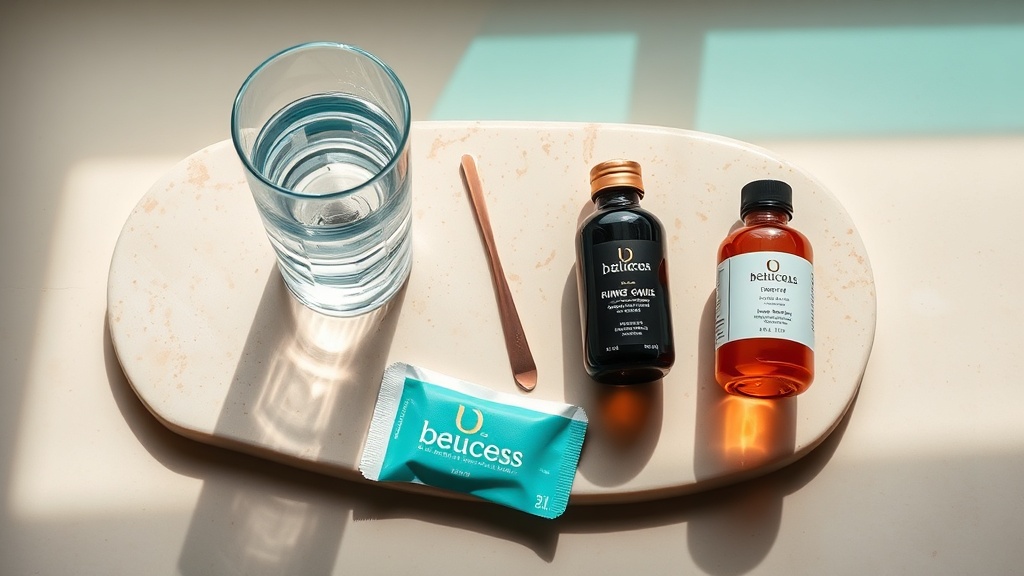
A simple daily reset - hydrate, clean the tongue gently, rinse without drying - clears most short-lived metallic tastes.
A metallic taste is usually harmless and short-lived, but see a dentist or doctor if it lasts more than two to three weeks, if it arrives with painful, swollen or bleeding gums, or if it starts right after a new medication so the two can be weighed together. A sudden change in taste alongside numbness, weakness or trouble speaking should be treated as urgent and assessed the same day. Persistent taste changes deserve an in-person look rather than indefinite self-management, because the goal is to find and ease the cause, not to mask it.
Frequently asked questions
Sources
- 1.
- 2.
- 3.
- 4.
- 5.
- 6.

Fix your breath at the source.
The complete science-backed protocol — engineered to eliminate volatile sulfur compounds at the biological source.
Start the Breath Protocol →Related reading
Educational purposes only. The content on this page is not medical advice and is not a substitute for consultation with a qualified dental or medical professional.
More from the library
 Causes8 min
Why Do I Have a Metallic Taste in My Mouth?
A metallic taste has a handful of usual suspects. Here is what actually causes dysgeusia, why each one distorts taste, and when a lingering coppery taste is worth a professional look.
Read →→ Answers9 min
How to Get Rid of White Tongue: The Coating, Cleared Honestly
The honest, science-based way to clear the soft coating behind a white tongue — and how to tell simple biofilm from a patch that needs a professional.
Read →→ Causes8 min
Types of Bad Breath Smells and What They Can Mean
Not all bad breath smells alike. The character of the odour is a genuine clue to where it is coming from, and occasionally to something worth checking.
Read →→ Guides9 min
How to Fix Bad Breath: A Practical, Step-by-Step Action Plan
The practical fix-it plan: four everyday moves — tongue, teeth, hydration, and microbiome — that target where bad breath actually starts.
Read →→ Guides8 min
How to Get Rid of Bad Breath Permanently: An Evidence-Based Plan
The honest version: "permanently" means ongoing control, not a one-time fix. Here is the daily routine the research actually supports, and when to get help.
Read →→ Guides7 min
Bad Breath Even After Brushing? The Biological Reason (and Fix)
You brushed, flossed and rinsed — and the smell is still there. The reason usually isn't hygiene; it's where the odour-causing bacteria actually live.
Read →→